
The short answer
An autonomous forklift makes sense in Charlotte when your site repeats the same pallet moves on mapped routes often enough to keep a unit busy, and it makes less sense when irregular loads, yards and exceptions fill most of the day. For most autonomous forklift vs forklift operator decisions in Charlotte, the practical answer is a robot plus fewer staff, with trained operators kept for the variable work. A free site assessment settles the fit, because your own move counts and night coverage gaps matter more than any general rule.
Key takeaways
- A robot forklift fits repeated, predictable pallet routes inside a mapped area.
- Operators still handle irregular loads, trailers, outdoor yards and exceptions.
- Transportation and material moving was 10.8 percent of Charlotte employment, according to BLS.
- Pedestrians being struck is the leading cause of lift truck fatalities, according to OSHA.
- Plan on a robot plus fewer staff, with a lease quoted after a free site assessment.
Does an autonomous forklift make sense for a Charlotte business?
When you weigh an autonomous forklift vs forklift operator in Charlotte, an autonomous forklift makes sense when your site moves the same kinds of pallets along the same mapped routes, shift after shift, and when that work is steady enough to keep the machine busy. It is a weaker fit when loads are irregular, when much of the work happens in outdoor yards or on uneven trailers, or when each shift changes the job list. In those cases a skilled operator is usually the better tool.
The useful question is not whether a robot can drive a forklift. It is whether enough of your moves are repeatable that a robot can finish them without a person stepping in. Count the moves between fixed points, such as receiving staging to racking or racking to the dock, and compare that count with the exceptions your people handle by hand. A building of long, identical aisles is a better candidate than one where every pallet is a special case.
Forklift staffing in Charlotte competes with a large logistics job market. The government wage data on this page shows the local wage for the job, which is one input. The bigger inputs are how many shifts you must cover, including nights, and how hard those shifts are to fill.
What does a forklift operator actually do in a shift?
A forklift operator in a distribution or manufacturing building does much more than drive. A shift typically starts with a walk around the truck to check forks, chains, tires, horn and seat belt, then the operator takes an assignment list from the supervisor. Work runs in bursts: a trailer to unload, a replenishment run to the pick faces, a load staged for outbound, then a pause while a damaged pallet is rebuilt.
Operators also make judgment calls that rarely appear on a route sheet. A pallet that leans gets rewrapped or sent back. A crushed carton gets flagged before it goes to racking. An operator reads the aisle, notices a spill or a blocked lane, and calls it in. Those small decisions are most of what a person adds, and they are hard to write into a fixed program.
Operators also cover for absences, train new hires informally and move between tasks as the day changes. On a short-staffed night, one person may run the truck, load a trailer and count stock. Any honest plan has to account for that flexibility before assuming a robot can replace it.
Median hourly wage, Laborers and Freight, Stock, and Material Movers, Hand
$4,130
Monthly cost of one full-time worker in Charlotte, NC, at the median wage plus payroll costs (an estimate, not a quote).
- Repeat moves on fixed routes
Autonomous Forklift
Runs the same mapped route without fatigue, but a route change needs remapping
Forklift Operator
Adjusts the route on the fly as the day changes
- Night coverage
Autonomous Forklift
Can run unattended on a mapped route when the building is set up for it
Forklift Operator
Needs a scheduled shift, with the usual gaps from absences and sick days
- Exception handling
Autonomous Forklift
Stops and alerts staff when it meets a blockage it does not understand
Forklift Operator
Makes judgment calls on damaged loads, spills and mismatched labels
- Irregular loads and outdoor yards
Autonomous Forklift
Poor fit for varied cargo, uneven ground and open yards
Forklift Operator
Handles varied loads and terrain with training
- Time to go live
Autonomous Forklift
Site mapping and integration come before the first shift
Forklift Operator
Hiring, onboarding and certification come before the first shift
- Training the next person
Autonomous Forklift
Program changes are handled through the integrator
Forklift Operator
Experienced operators teach newer staff on the floor
Which forklift tasks can a robot take over, and which can it not?
Robots handle the repeatable transport layer well. The strongest candidates share three traits: they start and end at known points, they follow aisles that rarely change, and they run often enough to keep a unit working through the shift. In practice that usually means these transfers.
Tasks a robot cannot take well include trailer unloading where the cargo arrangement changes each time, pallets that need inspection or rewrapping, hazardous or oversize goods that need specific handling, yard moves on gravel or uneven concrete, and any move that requires a person to read a label or confirm a count. Anything that needs a human to judge a load at height stays with an operator.
Most sites end up with a mix. The robot covers predictable transfers during the day and at night, and the operators handle variable work. The split should come from a site walk and a count of moves, not from a general rule about what forklifts can do.
- Staging-to-racking transfers on fixed routes
- Outbound pallet runs from pack-out to a staging lane
- Return of empty pallets to a set station
- Repetitive replenishment between two known zones
What does an autonomous forklift's shift look like?
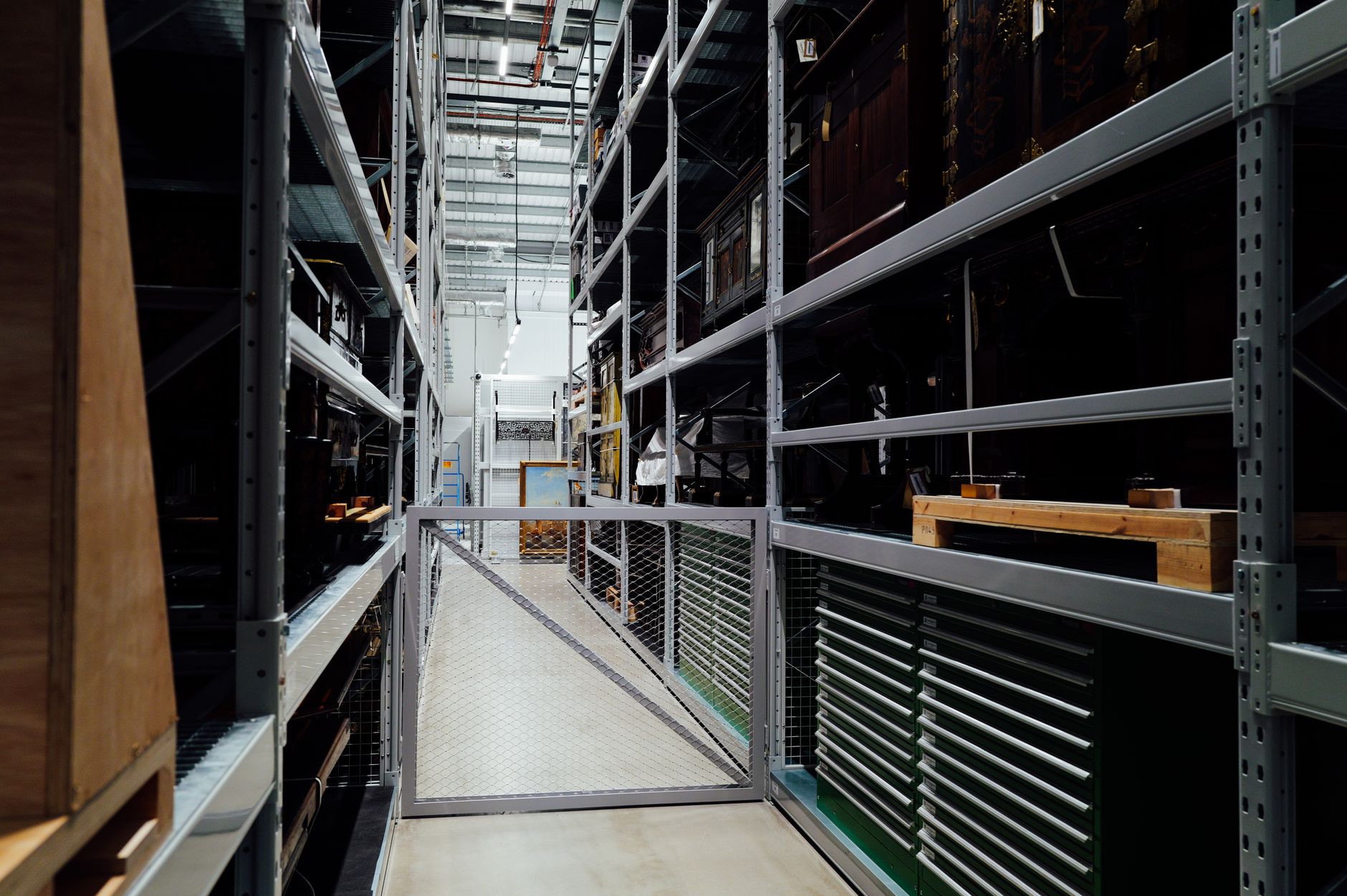
A robot's shift is a schedule of routes, not a person walking the floor. Before the shift, the system checks battery, confirms the map and receives the day's move list from the warehouse system. Missions run in sequence and the unit reports each completed move. When it meets an obstacle, it slows, waits or reroutes, and it alerts staff if it cannot clear the path.
The people on the floor change their role. A supervisor or technician watches fleet status and clears blockages, while operators focus on trailers and exceptions. At the end of the shift the robot returns to its charging point and logs what it moved and what stopped it. Those logs show which routes need remapping.
Expect more alerts in the first weeks, as staff learn how the robot behaves around their carts and pallets. Plan for that period with a supervisor on the floor. The timeline below is illustrative, not a measured Charlotte schedule.
What do Charlotte labor numbers say about staffing forklifts?
According to the Bureau of Labor Statistics May 2024 release for the Charlotte-Concord-Gastonia metro, transportation and material moving was 10.8 percent of local employment, second only to office and administrative support at 11.1 percent and ahead of sales at 10.2 percent. That is a large pool of workers and many employers competing for them. The same release notes that the metro definition changed with that release, based on the 2020 census, so compare it carefully with older tables.
According to FRED, the federal economic data service, transportation and warehousing employment in the Charlotte metro was 75.3 thousand in 2024 and 81.3 thousand in December 2025. That series covers a wider industry than warehousing alone, so it measures the local market for logistics work rather than the forklift job itself. According to the Bureau of Labor Statistics Occupational Outlook Handbook, there were 3,004,800 jobs for laborers and freight, stock, and material movers, hand, within a group of about 7.1 million hand laborers and material movers in 2023, nationally.
The government wage data on this page gives the local wage for the Laborers and Freight, Stock, and Material Movers, Hand job. Read it alongside your own overtime, shift premium and vacancy records, which public data does not show. We did not verify current Charlotte forklift turnover, overtime or sick day rates for this page, so check your own history rather than borrowing a figure from elsewhere.
How serious are forklift safety risks at a site?
According to OSHA's directive on powered industrial trucks, about 1.5 million workers operate more than 855,900 powered industrial trucks. That is an older estimate, so treat the count as a scale marker rather than a current census. The same directive cites roughly 85 forklift fatalities and 34,900 serious injuries per year, also from an older estimate.
The same OSHA directive says pedestrians being struck is the leading cause of lift truck fatalities. That matters for the robot decision because the hazard is people moving through the same aisles, not only the truck itself. A robot does not remove that risk on its own. It needs marked pedestrian routes, sensors that stop the unit, and a firm rule that staff do not step into a robot path.
Robots reduce some exposure by running fixed routes at set speeds, but they raise new questions. Who responds when a unit stops in a lane? How are staff trained to walk around it? How do alerts reach a person quickly during a shift? Those questions belong in the site assessment, before any lease is signed.
How does a team work with a robot?
The setup that holds up best is a robot plus fewer staff, not a robot in place of a crew. The robot takes the repeat transfers, and one or two operators keep variable work moving, handle exceptions and cover trailers. Staffing drops only where the moves were truly repeatable, and usually by fewer people than a full replacement plan would suggest.
The team needs a few new habits. A named person owns the fleet during each shift. Stops get reported in a consistent way. Someone triggers a remap whenever aisles or pallet patterns change. Operators need short training, while supervisors need more, because they must read alerts and decide what to clear and what to escalate.
We pick the robot for the site, lease it through financing, deploy and integrate it, train staff and service it nationwide. That covers the handoff from site mapping to the first live shift, so your team is not learning the system alone on the night something stops.
What can an autonomous forklift not do?
An autonomous forklift does not judge loads the way a person does. It cannot tell that a wrapped pallet is leaning, read a handwritten label, or decide that a crushed corner means goods must be held. It also cannot redesign a building when a customer changes its order pattern overnight.
It is a poor fit for a site that changes layout often, for yards with weather and uneven ground, for hazardous goods that need specific handling, and for any job where the route is not stable long enough to justify the lease decision. A robot can stop safely, but stopping is not the same as finishing the job.
It also does not remove the need for forklift capability on site. Keep trained operators and at least one manual forklift available for exceptions, and plan a backup path for days when the robot is down. Ask for spare unit coverage and an on-site dispatch plan in writing before you commit.
How do you get started with an autonomous forklift in Charlotte?
Start with a site walk. Measure the fixed routes, count moves per shift from your own records, and list the exceptions your operators handle each week. Those three inputs decide whether a pilot is worth discussing. We provide a free site assessment, and the lease payment is quoted after that assessment, so you see the full picture before committing.
A common path is a phased start with one leased unit on a single route, a supervisor trained on alerts, and a review after several weeks of real shifts. That shows you stops, completed moves and exceptions before you add units. Keep the operators you need for variable work throughout the pilot.
Bring your overtime, shift premium, vacancy and sick day history to the assessment. The government wage data on this page is a starting point. Your own labor history shows whether a robot changes the schedule you actually run.
Frequently asked questions
Put a robot to work in Charlotte.
We walk your site, learn the job, and recommend the unit that fits. Then we quote the lease, deploy it, and keep it serviced.