
The short answer
For most Chicago sites, the autonomous forklift vs forklift operator decision depends on whether the moves repeat on a fixed route. An autonomous forklift makes sense for steady, predictable pallet transport when a site struggles to staff nights or has hours to fill, and it works best alongside staff, never in place of them. A forklift operator remains the better fit for irregular loads, damaged goods, yard work and any task that needs a person to judge what is in front of them.
Key takeaways
- Autonomous forklifts fit repeatable fixed routes, while operators keep irregular loads, yard work and judgment calls.
- According to the National Safety Council, forklift-related nonfatal injuries produced 25,110 DART cases in 2023 to 2024.
- Chicago metro transportation, warehousing and utilities employment was 292.5 thousand in January 2026, not seasonally adjusted.
- Plan for a robot plus fewer staff, never a robot with zero staff, so exceptions and night coverage stay covered.
- The lease is quoted only after a free site assessment that maps your routes, loads and pedestrian zones.
Autonomous forklift vs forklift operator in Chicago: which makes sense?
An autonomous forklift makes sense in Chicago when the moves repeat, the routes stay fixed and the site has trouble filling the shifts that matter most. A forklift operator is still the better choice when loads vary, the work spans yards and mixed floors, or the task calls for judgment about damaged goods and shifting priorities. Most sites land between those two cases, so the useful question is which specific moves can be handed to a machine, not whether the whole job can go.
This page works through the job from the floor up. It covers what an operator does in a shift, which parts a robot can take, what the injury and labor figures show, and how a team should work with one. The local wage for this job appears in the government wage data panel beside this text. Treat it as one input among several, because the decision turns on hours covered and exposure as much as on pay.
What does a forklift operator actually do in a Chicago shift?
An operator on a Chicago warehouse or distribution floor rarely drives all day. The shift usually starts with a pre-use check of the truck, including forks, mast, tires, horn and the operator's own safety gear. From there the work moves between receiving, put-away to racking, replenishment to pick faces and staging for outbound trailers, often within the same hour.
A large share of the job is judgment. An operator notices a leaning pallet, a wrapped load that will not clear a door, a spill near a rack or a pedestrian stepping out at a corner. They decide whether a load is safe to move, whether it needs to be broken down and when to stop and report. Those decisions do not appear in a route log, which is one reason job descriptions undercount the work.
Operators also handle the work around the truck: loading and unloading trailers, matching labels to the order, charging or swapping batteries and clearing jams in the flow. On many sites the forklift is one part of a broader role, so removing the driving leaves those tasks behind and they must be reassigned.
Median hourly wage, Laborers and Freight, Stock, and Material Movers, Hand
$4,504
Monthly cost of one full-time worker in Chicago, IL, at the median wage plus payroll costs (an estimate, not a quote).
Which parts of the forklift job can an autonomous forklift take?
An autonomous forklift is best at transport between fixed points on a mapped route. Typical fits are dock to staging, staging to a reserve zone, reserve to pick line replenishment and repeated moves between two known areas. These moves are long enough to add up across a shift and regular enough that a route can be taught and checked.
Loads and layout set the limits. A robot does poorly when the load is irregular, the pallet is damaged, the rack is deep with varying reach, or the floor is shared with heavy yard traffic on uneven ground. Trailer loading and unloading is usually a poor fit unless the site has been specifically set up and assessed for it, which is one reason a site assessment comes first.
The useful split is by move, not by job title. Map every recurring move across a week, mark which ones follow a fixed route with the same load and the same endpoints, and treat the rest as operator work. A 2025 survey, as summarized by an industry news site, reports robotics adoption at 48%, but that figure covers robotics broadly and says nothing about forklifts specifically, so it should not settle the question for your site.
- Fixed route, same load, same endpoints
Autonomous Forklift
Runs the route repeatedly without fatigue and without breaks in the same pattern
Forklift Operator
Can do it, but the work consumes a full shift and leaves the operator idle for other tasks
- Night coverage
Autonomous Forklift
Can run mapped routes through the night when hiring is hardest
Forklift Operator
Needs to be scheduled, paid and supervised, and absences must be covered
- Damaged or unusual loads
Autonomous Forklift
Follows sensors and load limits and will not judge a load by eye
Forklift Operator
Wins: spots damage, unstable stacks and load problems before they become incidents
- Yard work and mixed open floors
Autonomous Forklift
Struggles with uneven ground, mixed traffic and unpredictable pedestrians
Forklift Operator
Wins: adapts to conditions a route plan did not anticipate
- Layout changes
Autonomous Forklift
Needs map updates before a changed route runs cleanly
Forklift Operator
Wins: adjusts in minutes without any system change
- Staffing when someone calls out
Autonomous Forklift
Keeps the route running if a unit is available and the scope is planned
Forklift Operator
Requires a replacement, which can be hard to find on short notice
- Weekly hours on repeat moves
Autonomous Forklift
Takes the repeated hours so people can cover exceptions and other work
Forklift Operator
Keeps those hours in the crew's day, which can be the right use if the moves are irregular
How risky is forklift work, and what do the injury figures show?
Forklift work remains a major source of serious workplace harm. According to the National Safety Council's InjuryFacts summary, there were 25,110 DART cases and 15,460 DAFW cases for forklift-related nonfatal injuries in 2023 to 2024. DART cases are injuries that led to days away, restriction or transfer, which is the measure a safety lead will recognize.
The age pattern matters for staffing. NSC notes that most forklift-related injuries occur among workers aged 25 to 34, while fatalities are more common among workers aged 55 to 64. A site that rotates in younger operators while keeping older ones on the same trucks carries two different kinds of risk, and neither group should be treated as the default.
Fatality counts moved the wrong way recently. According to MHEDA, summarizing National Safety Council and Bureau of Labor Statistics data, 84 workers died in incidents involving forklifts, order pickers or powered platform trucks in 2024, up from 67 in 2023. That is a secondary summary, and the BLS injury tables now publish on a biennial schedule, so check the primary tables before citing a year-over-year change in an internal document.
A robot removes the driver from the travel path. It does not remove the pedestrian. Any deployment has to plan walkway separation, dock edge marking and clear rules for when people may enter a robot route, because people on foot remain part of the hazard on any floor with moving trucks.
What do the labor numbers mean for staffing, overtime and night shifts?
Local data is useful here, but none of it is specific to forklift work. FRED's series for the Chicago-Naperville-Elgin metro puts transportation, warehousing and utilities employment at 292.5 thousand in January 2026, 302.5 thousand in December 2025 and 282.0 thousand as an annual figure for 2024, all not seasonally adjusted. Metro definitions vary across series, so use these as context for the labor pool, not as a count of forklift operators.
Statewide warehousing and storage employment in Illinois moved from 80.8 thousand in January 2026 to 78.2 thousand in February and 77.0 thousand in March, according to FRED. That is one series reading over one quarter, not a trend, so read it alongside your own staffing records before drawing conclusions.
Turnover is harder to pin down. The BLS JOLTS release for November 2025 reported 325,000 job openings in transportation, warehousing and utilities, down from 433,000 in October, with an openings rate of 4.3% in November. The BLS January 2026 release reported an all-industry annual quits rate of 2.0% for 2025, and annual quits fell by 1.3 million that year. These are national figures across industries, so they show how volatile hiring has been, not the turnover rate for operators at one site.
The figure that decides most staffing debates is missing here: operator turnover, overtime hours and sick-day rates for forklift work in the Chicago area. We did not verify those for this page. Pull them from your own payroll and time records for the last twelve months, and include night-shift share and absence patterns in the same review.
How does a team work with an autonomous forklift?
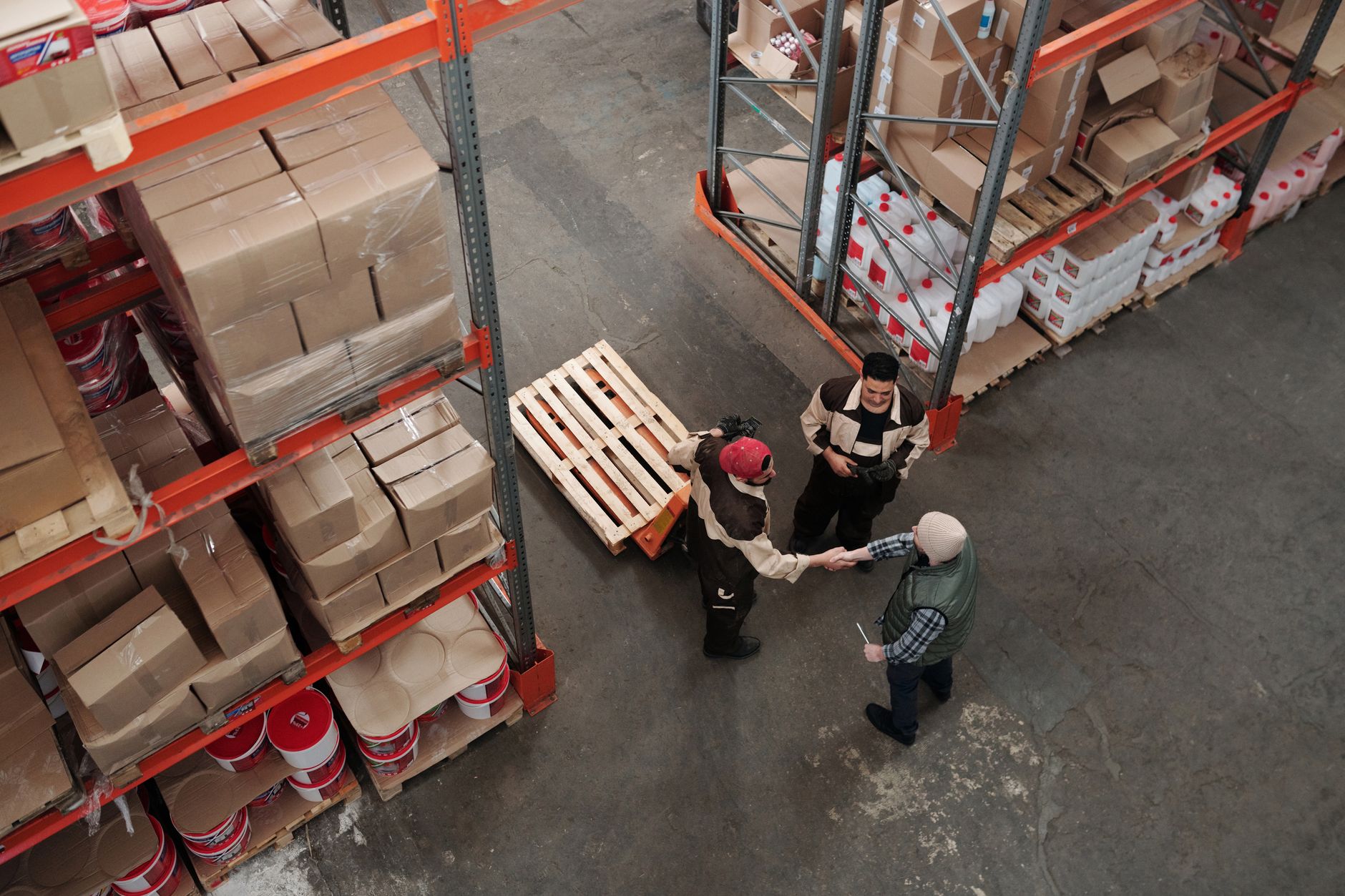
The model we recommend is a robot plus fewer staff, never a robot with zero staff. The robot takes the repeated fixed-route moves in the stretch of the day or night where those moves are hardest to staff. People keep the exceptions, the loads that need judgment, the trailer work, the safety walks and the decision about when a route should stop.
The staffing change shows up in how crew hours are used. Instead of one operator spending a whole shift on a single route, a team member covers several zones, responds to flags and handles the work the robot cannot take. Plan this up front so that someone is named as the owner of alerts and exceptions before go-live, not after the first missed flag.
We select the unit for the site, lease it through financing, deploy and integrate it, train the staff who will work alongside it and service it nationwide. Training should cover the new workflow and the exception steps, which matter most in the first week, when habits are still forming on both sides of the aisle.
What can an autonomous forklift not do?
It cannot judge a load. A robot follows its sensors and its load limits. It will not notice that a wrapped pallet is shifting, that a board is cracked under the stack or that a spill has made a lane unsafe unless the site has set up detection for that condition. The first check on any load belongs to a person.
It handles unplanned change poorly. A pallet left in a lane, a pallet of a new size or a re-slotted rack can stop a route until someone clears it or updates the map. Frequent layout changes are a reason to slow the rollout and plan map updates, not a reason to skip the robot entirely.
It cannot take yard work or open-floor disorder. Uneven pavement, mixed traffic, trailers at the wrong height and people walking in unpredictable paths are conditions where a trained operator remains the safer tool.
It cannot manage itself in every season. Chicago winters bring cold floors and cold docks, and battery performance and charging plans must be checked against the actual temperatures in the areas where the robot will run. Ask for those specifications before the route is set.
It does not replace supervision of the work. Someone still owns the flags, the faults and the decision to stop a run. Sites that leave that owner unnamed end up with alarms nobody answers.
What should you check before you decide on a lease?
Before anyone signs off, check the points below. Each one can move the answer toward or away from a robot, and none of them requires a figure from outside your own site. Treat the list as the agenda for the site assessment.
How do you get started with a lease?
Start with a free site assessment. We map the candidate routes, measure the floor and the load patterns, identify pedestrian zones and dock edges and decide whether the work fits one unit or a phased deployment. A lease is quoted only after that assessment, because the route, load and coverage set the scope of the unit and the service around it.
Financing is handled through our lease programs, so the fixed robot lease payment is set in the quote rather than assumed up front. Ask the quote to show what is covered, including maintenance, on-site dispatch, spare unit coverage and training, and what is excluded. A quote with no hidden fees should list every service line.
Go live in phases. A pilot on one route shows the exception rate and the staff time it creates before any wider rollout is decided. Keep existing operators on the floor during the pilot, and set a review date at which the route scope is confirmed or changed.
Does the local wage data change the decision?
The government wage data on this page gives the local wage for this job in the Chicago metro area. Use it to compare the cost of covering a route with people against the cost of covering it with a leased unit and a smaller crew. It is a comparison input, not a verdict.
Wage alone does not settle it. A site with easy night staffing, low turnover and irregular loads gets little from a robot, even if its wages are high. A site with hard-to-fill night shifts, steady fixed routes and growing overtime has a stronger case, because the hours a robot covers are hours that would otherwise go to overtime, open shifts or extra supervision.
For a Chicago decision on autonomous forklift vs forklift operator, put the wage next to the hours, the exception rate and the injury exposure on your own floor. That combined view is what the decision should rest on, and it is what a site assessment is designed to produce.
Frequently asked questions
Put a robot to work in Chicago.
We walk your site, learn the job, and recommend the unit that fits. Then we quote the lease, deploy it, and keep it serviced.
Sources
- US Bureau of Labor Statistics, Occupational Employment and Wage Statistics (OEWS May 2024)
- MHEDA, 2026 National Forklift Safety Day statistics
- National Safety Council InjuryFacts, forklifts
- Guide to the three-year forklift operator evaluation
- BLS JOLTS release, November 2025 data
- BLS JOLTS release, January 2026
- FRED, Chicago-Naperville-Elgin transportation, warehousing and utilities employment
- FRED, Illinois warehousing and storage employment
- Industry news summary of a 2025 robotics adoption survey