
The short answer
In an autonomous mobile robot vs material handler in Chicago decision, the robot makes sense when the same pallet or tote legs repeat on a fixed route and those hours are hard to staff, while a material handler stays the better fit when loads, aisles and exceptions change from day to day. Use the government wage data on this page to value the repeat hours, and expect a robot to take those legs while people keep loading, judgment and fault handling. Plan for a robot plus fewer staff, never zero staff.
Key takeaways
- A robot fits repeat, fixed-route moves, while people keep judgment, loading and exception handling.
- FRED puts Chicago-metro warehousing and storage employment at 53.5 thousand for December 2024.
- Measure your own repeat transport hours before comparing them with a quoted lease.
- The BLS JOLTS annual quits rate for all industries was 2.0% in 2025, so check turnover in your own records.
- Plan a robot plus fewer staff, never zero staff, and pilot one route before scaling.
Does an autonomous mobile robot or a material handler make more sense in Chicago?
The choice turns on the route, not the city. A Chicago site where the same pallet or tote legs run between receiving, reserve storage and staging every shift is a good candidate for an autonomous mobile robot. A site where loads vary, aisles shift often, or most work is exception handling is a poor candidate, and a material handler is the better fit.
Chicago matters on the labor side. FRED reports Chicago-metro warehousing and storage employment at 53.5 thousand for December 2024, not seasonally adjusted, up from 52.2 thousand in the October 2024 monthly estimate. That is a large local labor pool. The case for a robot usually rests on the hours your site cannot fill on time, not on whether workers exist in the area.
Before you compare options, be clear about what a robot is for. It is for moves that repeat. It is not a general replacement for a person on the floor, and any plan that assumes otherwise will disappoint the team and the budget owner alike.
What does a material handler actually do in a shift?
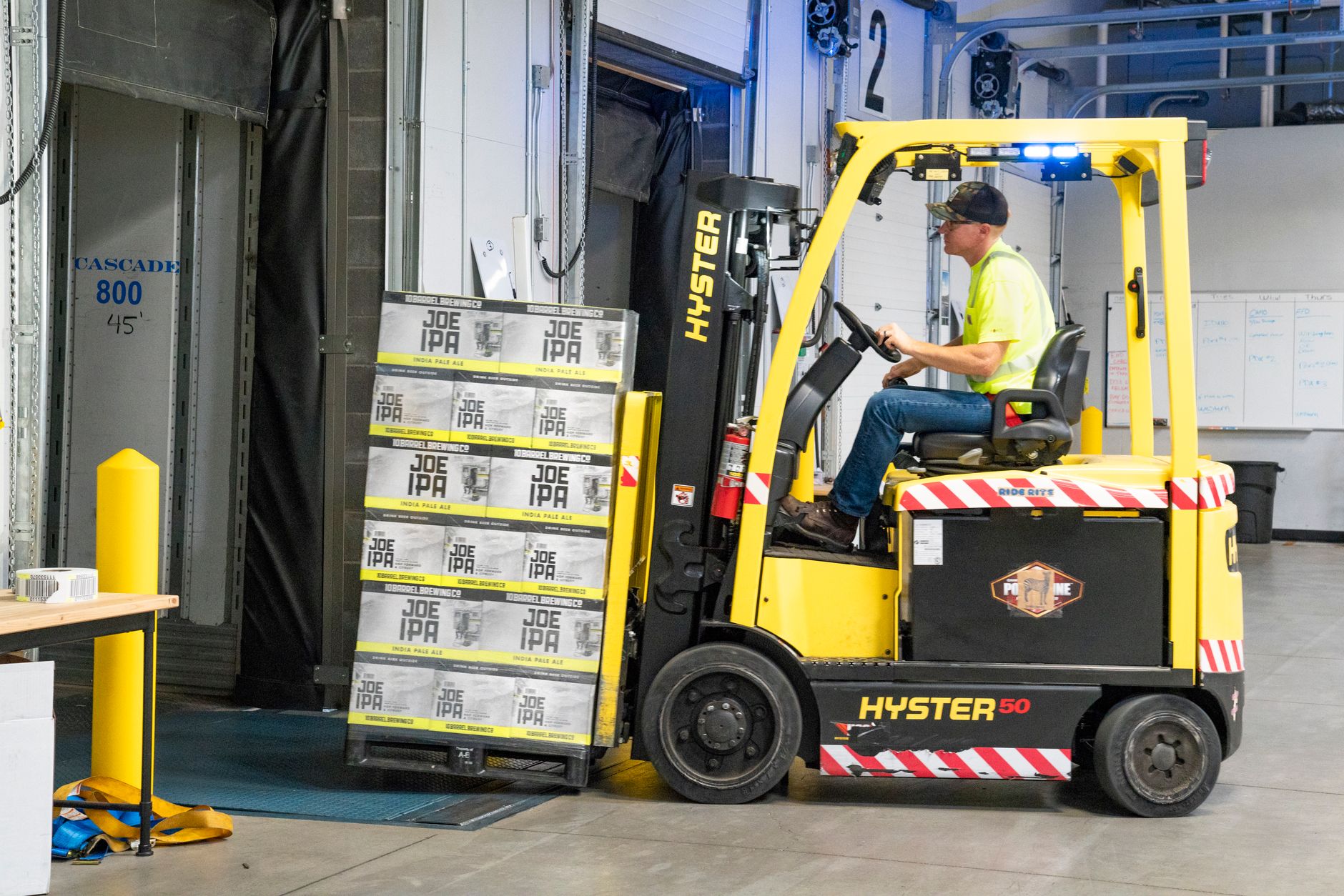
A material handler in a warehouse or plant moves material in many small trips. Typical work includes staging inbound pallets, carrying totes from receiving to a pick line or production cell, restocking reserve locations, clearing empty containers, and keeping lanes open so forklifts can move. A large share of the shift is walking, waiting and checking whether the next load is ready.
The government wage data on this page covers laborers and freight, stock and material movers, hand. Nationally, the BLS OEWS May 2023 estimates counted 445,780 workers in this occupation in warehousing and storage. Those are the people most exposed to repeat hand-off work, which is why the task split matters more than the headcount.
Before any robot decision, log one full shift for each material handler role in short blocks. Mark each trip with its start point, end point, load type and whether it repeats. Trips that start and end at fixed points are the candidates. Everything else stays on the people list.
Median hourly wage, Laborers and Freight, Stock, and Material Movers, Hand
$4,504
Monthly cost of one full-time worker in Chicago, IL, at the median wage plus payroll costs (an estimate, not a quote).
Which parts of the work can a robot take, and which can it not?
A robot takes the repeat transport legs: a fixed pickup point, a fixed drop point, and a route that stays roughly the same from shift to shift. It can carry a pallet or cart between known stations, wait at a door, and report its position. It runs on schedule without breaks or shift handoffs.
People keep the work that depends on judgment. That includes deciding whether a pallet is damaged, reading a handwritten label, building a tight trailer load from mixed freight, handling a spill, and deciding whether to hold a load. A robot also cannot decide what to do when a route is blocked by something that should not be there.
Those hours stay with people, so the robot plan should be sized on the repeat legs only. A plan that counts judgment work as robot work will overstate the savings and understate the staff still needed.
- Repeat fixed route at night
Autonomous Mobile Robot
Runs the same route on schedule with no break room or shift change
Material Handler
Needs breaks, shift handoffs and supervision
- Route changes
Autonomous Mobile Robot
Needs a re-mapped or planned route change
Material Handler
Adjusts on the spot when an aisle is blocked
- Damaged or unusual loads
Autonomous Mobile Robot
Stops and reports, but does not judge
Material Handler
Decides what to move, hold or flag
- Trailer loading
Autonomous Mobile Robot
Limited to the tasks it is set up for
Material Handler
Handles mixed freight and tight loads with care
- Hours that are hard to fill
Autonomous Mobile Robot
Can cover repeat hours on fixed routes
Material Handler
Covers any hour, but those hours may be hard to staff and keep
- Fault recovery
Autonomous Mobile Robot
Stops at a blockage and waits for a person
Material Handler
Clears the blockage and keeps the work moving
What do the hours and labor numbers look like for this job?
Hours decide this. The government wage data on this page gives the local wage for this job, which sets what an hour of material handler time costs. It does not tell you how many of those hours are repeat transport, so measure that on your floor. A time study of several representative shifts usually answers the question.
Turnover is the other labor cost. According to the BLS JOLTS release for 2025, the annual quits rate across all industries was 2.0%. A FRED series shows a quits rate of 2.6 for trade, transportation and utilities in December 2025, but that is one month, seasonally adjusted, and a broad sector, so it does not stand in for warehouse turnover. Pull the figure for your own material handler roles from your HR records.
Overtime, night shift coverage and sick days were not verified for this job in our research, so this page gives no figures for them. Track overtime hours and unfilled shifts over the last twelve months. Those two counts show whether a robot would take over hours you already pay for or hours you cannot staff at all, and the answer changes the decision.
| Task | Today | With a robot |
|---|---|---|
| Repeat pallet moves from receiving to staging | A large share of the shift, to be measured | Robot runs the fixed leg, staff load and verify |
| Tote runs to a fixed pick line | Steady trips through the shift, to be measured | Scheduled route, staff stage totes at the line |
| Restocking reserve locations on nights | A block of night and weekend hours, to be measured | Robot covers repeat legs, a person covers exceptions |
| Damaged loads and mixed freight | Small but unpredictable | Stays with people |
| Clearing a blocked lane | Unplanned, handled by whoever is nearest | Robot stops and reports, staff clear the lane |
Hour figures must be measured on your own floor. This page gives no shift-hour figures for this job because our research did not verify them for Chicago, so the entries stay qualitative until a time study replaces them.
How common are robots in US warehouses right now?
Adoption is broad but still uneven. A 2025 automation survey reported in trade press found that 41% of respondents use shuttle systems or mobile robotic storage and retrieval, or both, and 59% plan to upgrade or implement within two years. That sample was 139 respondents, and the category is wide, so the figures describe intent as much as installed sites.
A separate trade press reader survey of about 200 respondents found 37% had already moved toward robots and 43% planned to do so within three years. Together these point to a market that is partway through adoption. Treat any figure from a survey run by a robot seller with extra caution, since the seller benefits from showing growth.
How does a team work with a robot?
The pattern that works is a robot plus fewer staff, never zero staff. The robot takes the repeat legs. People load and verify, handle exceptions, watch the fleet, and keep lanes clear. A site that tries to run with no one on the floor usually ends up with stalled routes and exceptions nobody owns.
Staff change their work rather than disappear. A material handler becomes the person who clears blockages, resolves a damaged load, and keeps staging lanes ready so the robot can run on schedule. Training covers stop and resume rules, how to report a fault, and when to call for help.
We handle this whole path for the businesses we serve: we pick the robot for the site, lease it through financing, deploy and integrate it, train the staff and service it nationwide. Safety is a reason to measure rather than assume. BLS reported a rate of 4.0 for transportation and warehousing over 2016 to 2020, in a snapshot that is not comparable with recent years, so check your own incident log before setting expectations for injury reduction.
What can an autonomous mobile robot not do?
A robot cannot fix a poor site. If aisles are narrow and regularly blocked, floors are uneven, or pallets are routinely stacked in travel lanes, the robot will stop often. Fix the layout first, or the robot will log the same faults every shift and the team will stop trusting it.
It cannot load a trailer the way a person handles mixed freight, judge a damaged load, or make a call when a situation is new. It cannot replace someone who must be on the floor for safety checks, inspections or conversations with drivers. Those responsibilities stay with people, and any lease plan should be sized on the repeat hours alone.
A robot also fails in a team that has not been trained. If staff do not know the stop and resume rules, the robot becomes an obstacle that people walk around. Plan training and a written change in duties before the robot arrives, not after the first fault.
Is leasing a robot worth it compared with keeping material handlers?
It depends on three things: the repeat hours you measured, the local wage for this job from the government data on this page, and the hours you cannot fill. A lease turns the robot into a fixed robot lease payment through financing, so it can be compared with the cost of covering the same hours with staff, including overtime and unfilled shifts. The lease is quoted after a site assessment, because the route layout drives the number.
Ask the quote to show what is included: maintenance, on-site dispatch, remote triage, training, and what backup coverage applies if the robot is down. A simple payback check works well. Take the repeat hours from your time study, cost them at the local wage for this job plus the overtime you pay to cover gaps, and compare that with the quoted lease over the same period.
The check only works if the hours are measured rather than estimated. An estimate that is off by a shift a week can flip the answer, so do the time study before you ask for a quote.
How do you get started with a robot lease?
Start with a free site assessment. Our team maps the routes, measures the repeat legs, and checks floors, doors and lanes. We then recommend the robot for the site, quote the lease through financing, and handle deployment and integration. Staff training comes before go live, and service runs nationwide afterward.
Pilot one robot on one route before scaling. A single leased unit on the repeat route shows real stop counts, fault rates and staff time over a trial period you set, which tells you more than a demonstration does. Ask for a plan covering a spare unit so one fault does not stall the route.
Bring three inputs to the assessment: your time study, your incident log, and your overtime and unfilled shift counts. Those records make the quote and the decision accurate, and they show quickly whether a robot is the right answer for this site.
Frequently asked questions
Put a robot to work in Chicago.
We walk your site, learn the job, and recommend the unit that fits. Then we quote the lease, deploy it, and keep it serviced.
Sources
- US Bureau of Labor Statistics, Occupational Employment and Wage Statistics (OEWS May 2024)
- Federal Reserve Bank of St. Louis (FRED), Chicago-metro warehousing and storage employment
- U.S. Bureau of Labor Statistics, OEWS May 2023 estimates for hand laborers and material movers
- U.S. Bureau of Labor Statistics, JOLTS 2025 annual release
- Federal Reserve Bank of St. Louis (FRED), JOLTS quits rate for trade, transportation and utilities
- U.S. Bureau of Labor Statistics, injury and illness snapshot for transportation and warehousing, 2016 to 2020
- Trade press, 2025 warehouse automation survey (139 respondents)
- Trade press, 2025 warehouse automation reader survey (about 200 respondents)