
The short answer
For the autonomous mobile robot vs material handler in Bridgeport choice, the robot makes sense when a site has steady, repeated transport on fixed routes that is hard to staff on nights or weekends. It does not make sense when most moves are irregular, when loads vary in ways a robot cannot handle, or when routes change every week, and a material handler is the better fit in those cases. Time the moves on your own floor before comparing options, because the answer turns on hours, not job titles.
Key takeaways
- Robots suit repeated transport on fixed routes, while people keep exception and judgment work.
- Decide from timed moves on your own floor, not from job titles.
- Overexertion accounts for most nonfatal cases in this occupational group, according to BLS.
- The right model is a robot plus fewer staff, never a robot in place of the whole crew.
- Start with a free site assessment and one leased unit, then widen only if the hours support it.
When does an autonomous mobile robot make sense in Bridgeport, CT?
The short answer is yes when a site moves the same loads along the same paths many times a shift and has trouble filling those hours. An autonomous mobile robot fits pallets, totes and carts that travel between a dock, a staging area, a production line or a sortation zone on routes that rarely change. It is a poor fit when the moves change from hour to hour, when loads arrive in odd sizes that need a person to judge them, or when the floor layout is still being reworked.
For the autonomous mobile robot vs material handler in Bridgeport choice, a material handler remains the better pick where the work is mostly exceptions. That covers damaged freight, mixed loads that need sorting, returns, hazardous materials, and moves through busy foot traffic that a fixed route cannot plan around. Plenty of sites land somewhere in between, which is why the decision should rest on a timed count of the moves rather than a general rule.
Adoption is growing, but the figures need careful reading. According to the Association for Advancing Automation, North American industrial robot orders reached 36,766 units in full-year 2025, up 6.6 percent from 2024, and cobot orders were 7,212, or 19.6 percent of units. Those counts cover robot arms, not mobile robots, so they show general automation demand rather than material handling adoption.
What does a material handler actually do in a shift?
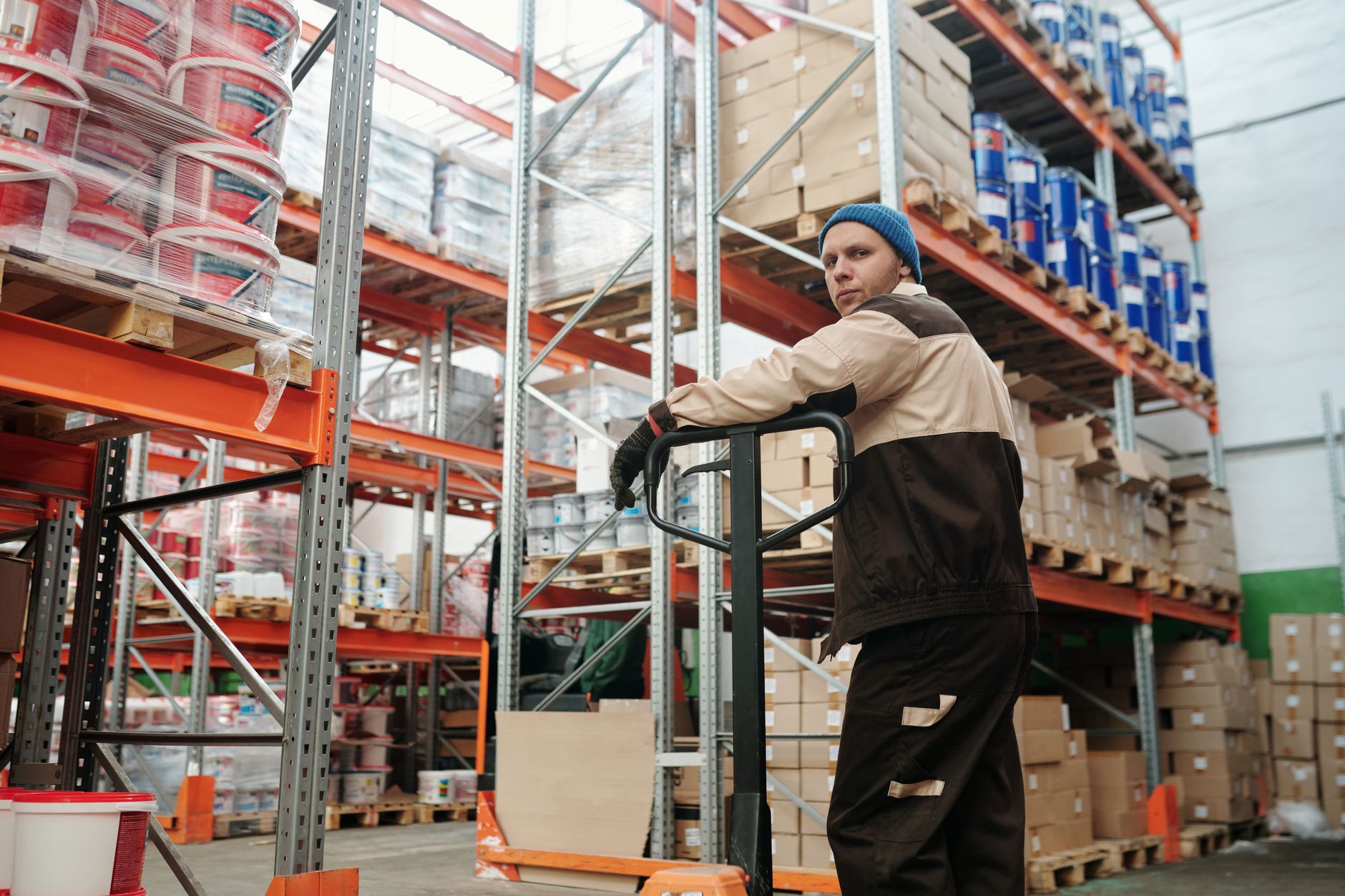
In most facilities a material handler works through a loop of small jobs rather than one task. A typical loop pulls orders or pallets from storage, moves them to a staging point, loads or unloads a truck, checks counts against a list, and clears whatever blocked the last move. On many floors, walking and waiting between those jobs take a large share of the shift, and that is where an autonomous vehicle can recover the most time. Watch the handoffs too, since a gap that repeats at the same point every shift is easier to fill than one that moves around.
The physical load matters as much as the schedule. According to a BLS Economics Daily analysis, transportation and material moving occupations recorded 835,040 nonfatal injuries and illnesses for 2021 and 2022 combined, the highest count of any major occupational group, and most of those cases were overexertion and bodily reaction. The group includes drivers as well as movers, so the figure describes a broad category rather than the handler job alone.
The fatal injury picture is serious too. According to the BLS fatal injury release, this group recorded 1,391 fatalities in 2024, down 7.0 percent from 1,495 in 2023, with a rate of 12.5 per 100,000 full-time equivalent workers, down from 13.6. California's Department of Industrial Relations reports a days away, restricted or transferred rate of 493.9 per 10,000 full-time workers for this group in private industry for 2023 to 2024. That is a California figure, since we did not find a Connecticut rate for it.
Median hourly wage, Laborers and Freight, Stock, and Material Movers, Hand
$4,486
Monthly cost of one full-time worker in Bridgeport, CT, at the median wage plus payroll costs (an estimate, not a quote).
Which parts of the job can a robot take, and which can it not?
A robot takes the repeated, path based share of the work well. It can carry a standard pallet or tote along a mapped route, return to a charging point, stop for a sensed obstacle, and wait at a door or dock for a staff member to confirm a load. Those trips look the same every time, so a fixed route pays off most where the same run repeats across the shift.
It cannot take the judgment share. It cannot decide that a pallet is cracked, read a handwritten label, sign a delivery document, or reroute around a blockage that a person must clear. Trailer loading and unloading usually stays with staff because loads sit unevenly and the trailer interior changes at every door. Anything lifted off a shelf above the vehicle's reach also stays with people.
Mixed steps are the hardest to split. A material handler who pulls a pallet, scans it, and then decides whether it goes to the line or to a hold area is doing two jobs in one motion. The transport part can move to a vehicle, but the decision and the scan may still need a person at the handoff, so plan the handoff points before you plan the route.
- Repeated fixed route trips
Autonomous Mobile Robot
Runs the same path every trip and does not tire during a shift
Material Handler
Repeats the trip well, but speed and attention can fall off late in a shift
- Night and weekend coverage
Autonomous Mobile Robot
Runs while the building is quiet, once the route is mapped and cleared
Material Handler
Covers only if staffed, and filling those hours can be hard
- Judgment on damaged freight
Autonomous Mobile Robot
Flags a fault, but cannot decide whether freight is acceptable
Material Handler
Inspects, decides and documents the exception
- Trailer loading and unloading
Autonomous Mobile Robot
Not a fit for most trailer work with uneven loads
Material Handler
Handles uneven loads and adapts to each trailer
- Blocked aisle
Autonomous Mobile Robot
Stops or waits and reports, but cannot clear a jam
Material Handler
Clears the blockage or finds another path
- Lifting from shelves
Autonomous Mobile Robot
Moves loads on the vehicle and does not lift them off high shelving
Material Handler
Lifts and places loads, which carries the overexertion risk the BLS data describes
What do the hours and labor numbers look like for this job?
We did not find a published count of material movers or a turnover rate for the Bridgeport metro in the sources we checked. Fairfield County, where Bridgeport sits, had 42,061 private establishments in the fourth quarter of 2023, according to FRED, the economic data service of the St. Louis Fed. That counts businesses, not handling jobs, so it shows the size of the local market rather than the labor on any one floor.
The government wage data on this page gives the local wage for this job, which shows what one person on a route costs per hour. It does not show how many hours a shift holds, and that is the number that decides this. Your own headcount, timed moves and open requisitions are the figures to use.
The national labor data is thin at the level of this job. According to the Bureau of Labor Statistics, total separations across the whole economy ran at 3.3 percent in 2025, unchanged from 2024, with quits at 2.0 percent and layoffs at 1.1 percent. The Job Openings and Labor Turnover Survey does not break out material moving occupations, so those rates describe general churn rather than turnover on a dock.
Overtime, night shift coverage and sick days are the rest of the picture, and we did not find a published rate for any of them for this occupation. Pull those three from your own time records for the last twelve months. A site that runs heavy overtime on one shift makes a separate case from one that is simply short on night staff, and the two call for other route plans.
How does a team work with a robot, and what is the staffing mix?
The working model we deploy is a robot plus fewer people, never a robot in place of the whole crew. Staff keep the exception work, the trailer loading and unloading, damaged or unusual items, and supervision of the vehicles. The robot takes the repeated trips, which frees the remaining staff for the tasks that need hands and judgment.
The change in headcount tends to be gradual. A site can start with one unit on its busiest route, run it through a few shifts with its own crew, and only then decide whether to widen. Staff train on loading practice, exception clearing and status checks, so whoever is on shift can handle a stop without waiting for a specialist.
Shift handoffs need a clear status report. The crew coming on should know what the robot has moved, what is staged, and what is waiting for a person. Build that report into the handoff rather than leaving it to memory. A useful test is whether each shift still has enough people to clear exceptions when the vehicles pause. If it does not, add staff before adding units.
What can an autonomous mobile robot not do?
A robot does not map itself and it does not learn new routes on its own. Any change to layout, racking or door placement means remapping, and a site that rearranges its floor every few weeks will feel that cost. Route planning belongs in the site assessment, before installation, not after the first complaint.
It is also limited by what it can sense and carry. Narrow doors, uneven thresholds, elevators that cannot be integrated, slick floors, and loads outside the rated weight or dimensions will all stop it. A robot can wait for a person or report a fault, but it cannot clear a jam by itself, and it does not replace the person who must sign off on a damaged shipment.
It also does not remove the need for a supervisor. Someone still reads the exception log, confirms the morning load plan and decides when a route needs a change. Plan for the day a unit is down as well. A site with one vehicle on a route has no fallback until the unit is back, so decide in advance whether staff will cover that route by hand and who will call the service line.
What changes the number, and what should you check before you decide?
The decision turns on a few measurable inputs. The biggest is the share of the shift spent on repeated, fixed route transport. Next is route stability over the coming year, and then whether the coverage gaps fall on nights and weekends, when a missing person hurts most. Each input shifts the answer, so measure them before comparing options.
Think about the shift as a sequence rather than a total. A robot that takes repeated trips in the middle of the night matters most when the staff who would do those trips are not on the floor. A robot that takes trips in the daytime, when people are already there, may free time without changing staffing levels, and the case looks weaker on paper.
The checklist below lists what to measure on site and why each item matters. None of these can be settled by a general rule for the autonomous mobile robot vs material handler in Bridgeport choice, so treat the checklist as a working list for the site assessment.
How do you get started with a robot lease in Bridgeport?
We are a US commercial robot integrator. We pick the robot for the site, lease it through financing, deploy and integrate it, train the staff and service it nationwide, so one partner carries the project from the first walk through to go live support.
We start with a free site assessment. We map the route, time the moves with your team, check doors, lifts and floor condition, and identify zones where a unit can work without stopping the line. The lease quote is built from that scope, so the financing follows the site you actually have rather than a generic plan.
A common starting point is one leased unit on the busiest route, with a pilot period before any wider decision. Service runs through our teams nationwide, including remote triage and on-site dispatch, and for shifts where a stopped unit would halt work, spare unit coverage can be included in the quote.
How should you read the local wage data on this page?
The panel beside this text shows the government wage data for this job in Bridgeport. Use it to understand what one person on a route costs per hour, then weigh that against the timed hours on the route rather than against a headline comparison. The wage line is one input among several.
A robot does not remove the wage bill for the staff who stay. What it can change is how those staff spend their hours, and whether an unfilled shift stops the line. Compare the lease quote with those effects, not with the wage alone.
Frequently asked questions
Put a robot to work in Bridgeport.
We walk your site, learn the job, and recommend the unit that fits. Then we quote the lease, deploy it, and keep it serviced.
Sources
- US Bureau of Labor Statistics, Occupational Employment and Wage Statistics (OEWS May 2024)
- BLS fatal occupational injuries release, 2024 data
- BLS Economics Daily, nonfatal injuries and illnesses 2021 to 2022
- California Department of Industrial Relations, DART rates by industry 2023 to 2024
- FRED, St. Louis Fed, establishments in Fairfield County, Connecticut
- BLS Job Openings and Labor Turnover Survey release, 2025
- Association for Advancing Automation, 2025 industrial robot orders