
The short answer
The autonomous forklift cost in Bridgeport, CT depends on the size and layout of your building, how many hours the truck works, how busy the aisles are, how much mapping and integration the site needs, and how many units you run. We set the lease quote after a free site assessment, so the number reflects your floor rather than a generic list. In a Bridgeport warehouse or distribution setting, those site factors usually move the quote more than the choice of truck itself.
Key takeaways
- Site layout, aisle traffic and shift hours usually move a lease quote more than any other factor.
- Mapping, integration, training, insurance and downtime planning are the costs people most often leave out.
- The latest Bridgeport operator count we could verify dates from 2018, so local staffing needs checking during the assessment.
- High turnover in some reported warehouse data means training time recurs, so plan for it in the lease comparison.
- A free site assessment is the only reliable way to get a lease quote for your floor.
What is the autonomous forklift cost in Bridgeport, CT?
There is no single figure that answers this for every warehouse in Bridgeport. A lease for an autonomous forklift is built around the work the truck does on your floor, so two buildings of the same size can get separate quotes. The starting point is an accurate picture of your aisles, loads, shifts and the number of units you want running at once.
We are a US commercial robot integrator. We choose the robot that fits the site, lease it through financing, deploy and integrate it, train the staff who work beside it, and service it nationwide. Because the lease comes from your site, the first step is a free site assessment rather than a catalog figure.
The sections below explain what moves the number up or down in this market, which costs people tend to miss, and how to decide whether the lease makes sense for your operation.
How large is the local labor base for this work?
The clearest local labor figure we could verify is dated. The Bureau of Labor Statistics counted 220 industrial truck and tractor operators in the Bridgeport-Stamford-Norwalk metro in May 2018. We could not retrieve the latest metro row, so treat that count as a baseline and confirm current staffing during the site assessment.
Statewide data points the same way. According to the Federal Reserve Bank of St. Louis series built on BLS data, Connecticut warehousing and storage employment was 19.9 thousand in 2020, 24.3 thousand in 2023 and 25.3 thousand in 2024. A growing warehouse base usually means more pallets moving through local sites and more competition for experienced drivers.
For an operator in Bridgeport, the practical reading is that lift-truck work is labor you have to find, schedule and train. That makes the staffing picture a real input to the lease decision, not a side note.
What raises or lowers the cost on your floor?
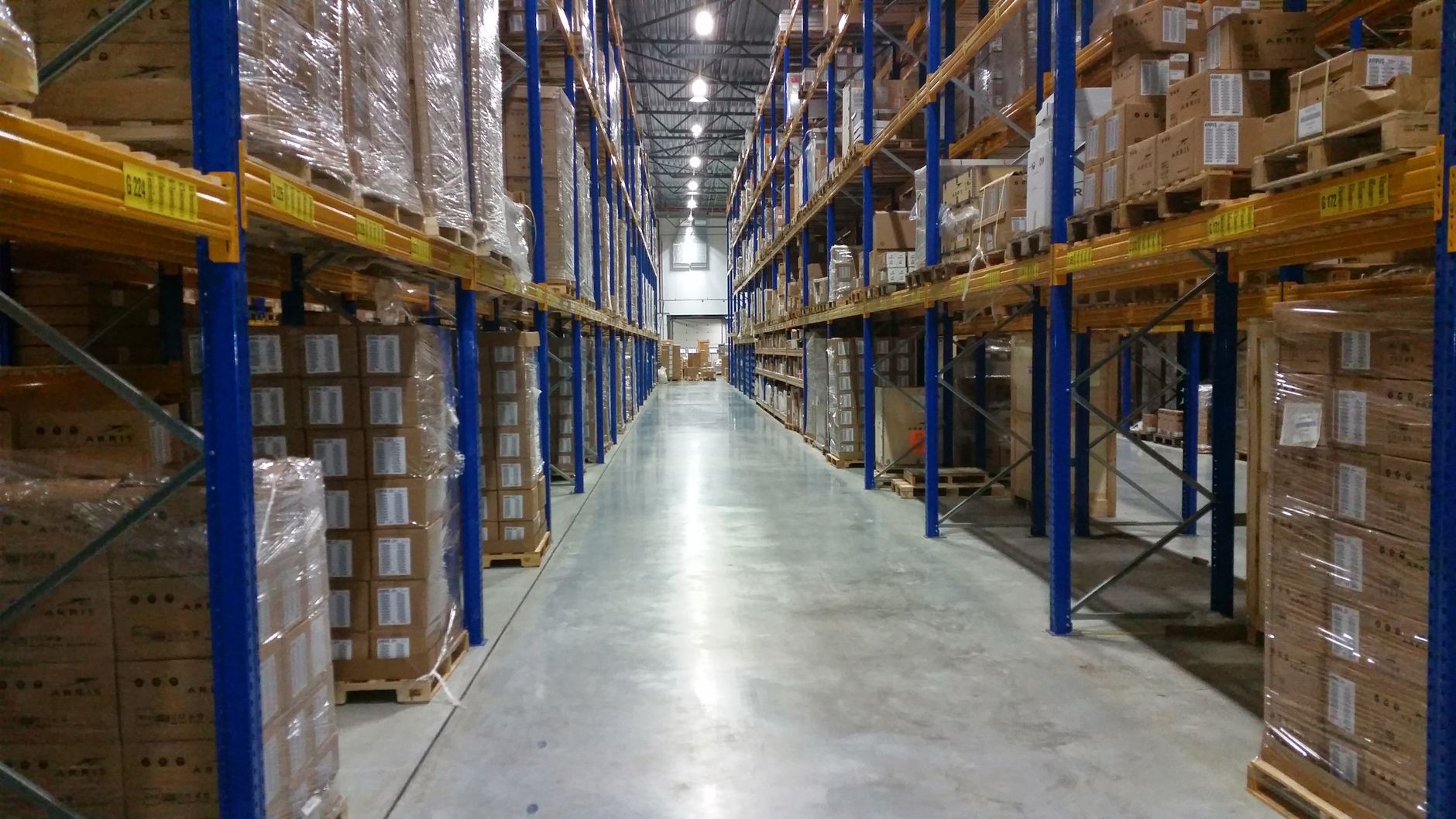
Floor area matters, but square footage alone tells you little. What counts is how far each pallet travels, how many aisles the truck must cover, and how many separate routes it runs. A large building with long, repetitive lanes can be a better fit than a smaller building with many short, irregular moves.
Surfaces and layout come next. Floor flatness, aisle widths, door thresholds, ramp grades and racking heights decide whether the truck can run a route without help. Smooth, clearly marked concrete is easier to map than a worn floor with seams and frequently moved staging areas, and mixed storage adds mapping and maintenance work.
Traffic is the third factor. Where people, carts and manual forklifts share the same aisles at the same time, the site needs more safety zones, more exception handling and more planning. An aisle used only by the robot is simpler. Unheated dock areas and cold storage zones also change battery planning, so we ask about them during the assessment.
How do shifts, unit count and phased rollout change the quote?
A single day shift and a multi-shift schedule are different jobs. More hours of use spread the fixed setup work across more moved pallets, but batteries, charging windows and service visits must then fit around the schedule. We build the quote from the shift pattern you give us, not from an average day.
Unit count changes the arithmetic in both directions. One unit gives you a clean pilot, a clear baseline and a short list of things to watch. Additional units cover more aisles, but each one adds equipment, service and training. Many sites start with one unit on the busiest route and expand after the first period of real data.
Phased deployment protects daily operations. Starting in one zone lets staff learn the exception process before the robot works the whole building, and it shows where the unit sits idle or gets blocked. Those findings are usually more useful than any projection made before go live.
How does leasing through financing work, and what does the quote include?
Most businesses that look at an autonomous forklift want to avoid a large upfront outlay and keep the equipment on a schedule their budget can carry. Leasing through financing is built for that. The robot stays in your operation under a lease, and the lease sets a fixed lease payment for the term stated in your quote.
The quote comes after the site assessment, so it reflects your floor, your shifts and your deployment plan. It should show the unit or units, deployment and integration, mapping, staff training and service across the lease term. Lease options and term length are set in the quote, so you can compare them against your labor plan.
Ask for each item to appear separately, and ask what is not included. A quote that lists only the lease and leaves out mapping, integration or insurance has not priced the whole job.
How many labor hours does the robot take over?
We did not verify shift-level hour figures for forklift work in this research pass, so the table below describes which tasks shift to the robot rather than timing them. The site assessment measures each task on your floor, because the time changes with distance, traffic and load mix.
Turnover is the other side of the labor question. According to a warehouse workforce vendor blog, quits in transportation, warehousing and utilities averaged 2.2 percent a month in 2025. A National Employment Law Project data brief reported about 124 percent turnover at large warehouses in five New Jersey counties in 2020, against 72 percent at other New Jersey warehouses.
When turnover runs high, the robot does not end training. It changes what gets trained. Staff spend less time on repetitive travel and more on exception handling, checks and supervision, so each new hire needs a clear role with the robot from the first week.
What can an autonomous forklift not do?
An autonomous forklift runs defined routes in mapped space. It does not replace judgment on the floor. Unmapped areas, unusual loads, damaged pallets, blocked aisles and temporary obstacles still need a person to step in, and the unit should pause rather than improvise.
Its value depends on repetition. Work that changes every shift, such as one-off loads, odd shapes or ad hoc moves across the building, is a poor fit for an automated route. Those jobs stay with your staff, and the quote should say so plainly.
Safety is why this category gets close attention. An OSHA enforcement directive on powered industrial trucks, with the year not shown in the excerpt we reviewed, reports that about 1.5 million workers operate more than 855,900 powered industrial trucks. The same directive cites about 34,900 serious injuries and about 85 forklift fatalities. A robot does not remove the need for a site safety program, trained staff and clear zones.
Is it worth it, and how do I get a quote in Bridgeport?
Adoption is broad enough that the question is about fit, not novelty. According to the International Federation of Robotics, transportation and logistics was the largest professional service robot class in 2024, with 102,900 units sold, up 14 percent, and the IFR describes these as mainly mobile robots for moving and handling goods. The Association for Advancing Automation (A3) reported that companies ordered 36,766 robots in North America in 2025, though those are general industrial robots rather than mobile units like these.
Whether it is worth it depends on the hours it covers, the labor it frees for other work, the shifts it fills when staff are hard to find, and the peak it smooths. Compare those against the lease in your quote, not against a headline. A pilot on your busiest route gives you measured hours to decide with.
To test the case, count the pallet moves on each shift, the overtime you pay on busy days, and the shifts that are hard to staff. Then ask how many of those the robot could take over. We build those figures with you during the assessment.
To get a quote, request a free site assessment. Bring your floor plan, shift schedule, load types, dock layout and any problem routes. We return a lease quote after the assessment, with included items and the term stated, and we service the unit nationwide once it is running.
Frequently asked questions
Put a robot to work in Bridgeport.
We walk your site, learn the job, and recommend the unit that fits. Then we quote the lease, deploy it, and keep it serviced.
Sources
- Bureau of Labor Statistics, May 2018 industrial truck and tractor operators, Bridgeport-Stamford-Norwalk metro
- Federal Reserve Bank of St. Louis, Connecticut warehousing and storage employment series (BLS data)
- OSHA enforcement directive on powered industrial trucks
- International Federation of Robotics, world robot statistics