
The short answer
For cobot vs palletizing worker in Memphis, TN, a collaborative robot makes sense when one or two pallet patterns run for long stretches and the line can keep a trained person on the cell for loading, fault clearing and exceptions. A palletizing worker still fits better when the product mix changes often, loads are irregular or heavier than the arm is set up to handle, or the same person rotates between palletizing, wrapping and forklift work. We measure your pattern count and shift hours on site before any lease quote.
Key takeaways
- A cobot fits repeat pallet patterns with steady volume and a trained person kept on the cell.
- A palletizing worker still wins on mixed loads, irregular or heavy cases, and rotating duties.
- The local wage for this job appears in the government wage data on this page, but the hours split on your line drives the decision.
- According to the Bureau of Labor Statistics, 109,430 people in Memphis were employed in the transportation and material moving group in May 2024.
- No robot removes the need for staff; the realistic target is fewer strained shifts, not zero people.
Cobot vs palletizing worker in Memphis, TN: which fits your line?
A cobot vs palletizing worker decision in Memphis, TN turns on the pallet pattern and the line's volume, not on the city itself. A collaborative robot arm builds the same stack at a steady pace, which suits lines that run one or two SKUs on the same pattern for long stretches. It still needs a trained person on the cell to load empty pallets, clear faults and handle the odd case the program was never written for.
A palletizing worker stays the better choice when the product mix changes from day to day, when cases are irregular, oversized or heavier than the arm is set up to handle, or when the same person rotates between palletizing, wrapping, labeling and forklift work. The useful questions are how many pallet patterns run in a week and how many hours a shift the stacking really takes. Those two answers decide more than any national statistic.
What does a palletizing worker actually do in a Memphis shift?

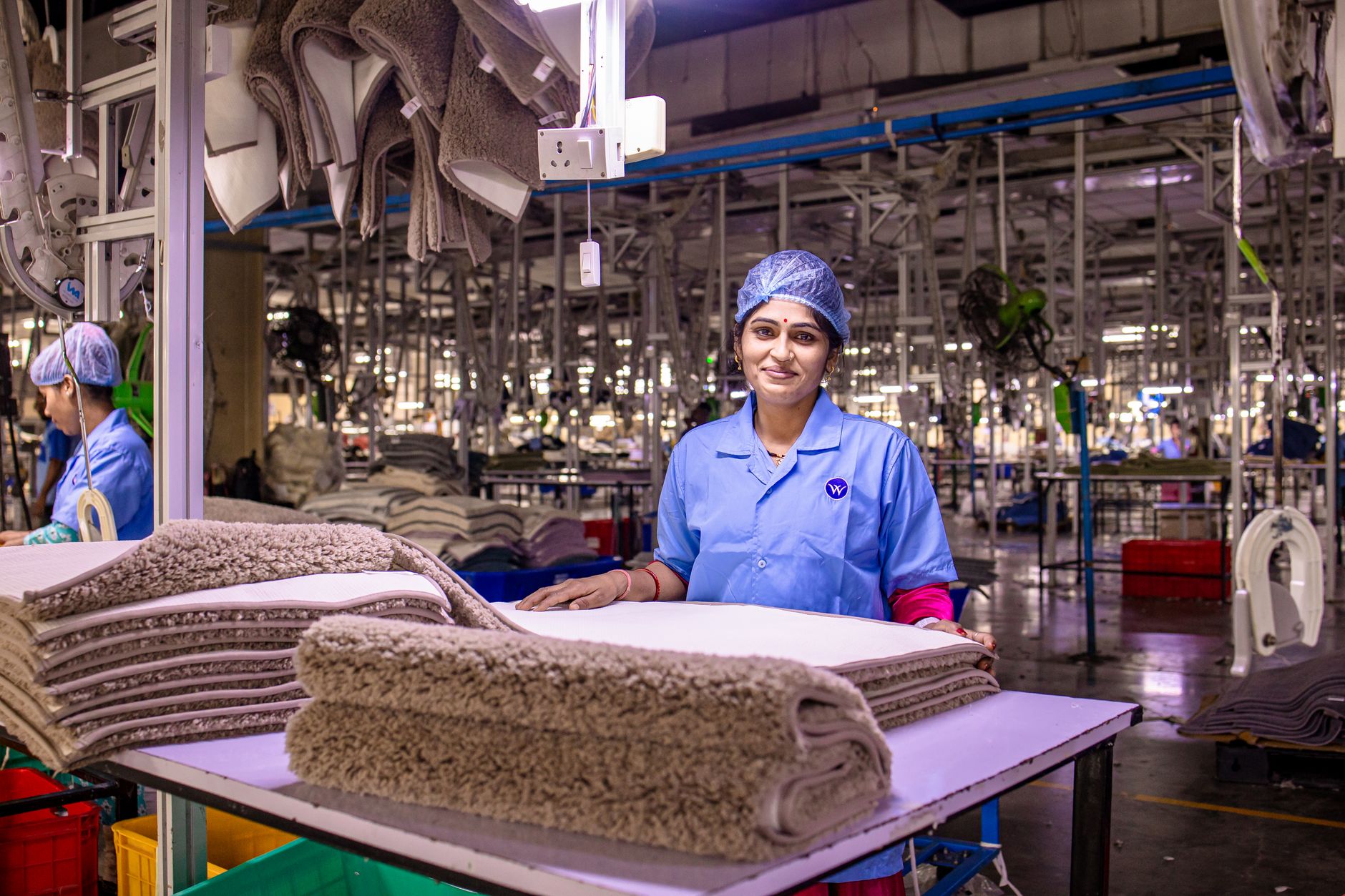
On a typical palletizing station, the worker feeds empty pallets to the stack position, places slip sheets or interlayer pads, checks that cases land square, and watches each layer for crushed or leaning cases. When a pallet is complete, the worker or a forklift driver moves it to staging and the next pallet starts. Most sites also expect the person to clear jams, reset the case queue and keep the area clear enough to run safely.
Government data does not break palletizing out as its own job. The closest published group is hand laborers and freight, stock, and material movers, which sits inside the transportation and material moving family. Our research did not find a published count of palletizing hours per shift in Memphis or pallets built per worker, so those numbers have to come from your own line records.
Shift tasks also vary by product. A station running heavy bagged goods has different lifting and checking work than one running light cartons, which is why the same job title can mean different work on two lines in the same city.
Median hourly wage, Laborers and Freight, Stock, and Material Movers, Hand
$4,263
Monthly cost of one full-time worker in Memphis, TN, at the median wage plus payroll costs (an estimate, not a quote).
Which parts of palletizing can a cobot take?
A cobot handles the repetitive middle of the job well. It can pick cases from a fixed infeed, place them into a programmed layer pattern and insert slip sheets at set heights, all at the same speed from the first pallet of the shift to the last. Lines that run the same few SKUs get the most value, because the pattern is taught once and reused.
The gain shows most where stacking is the bottleneck for a person, not where a person's time is split across many small jobs. If the stack position sits idle for long periods because the line waits on upstream product, the arm waits too, and the saving shrinks to whatever stacking time was real.
- Picking cases from a single infeed lane and placing them into a set layer pattern.
- Inserting slip sheets or interlayer pads at programmed heights.
- Building repeat stacks for one SKU or a short list of SKUs with stable case sizes.
- Holding a steady cycle through long single runs without losing pace late in the shift.
- Repetitive stacking
Cobot
Same pattern at a steady pace from the first pallet to the last
Palletizing Worker
Good work, but pace and attention drift across a long shift
- Mixed builds
Cobot
Needs reprogramming or a separate cell for each new pattern
Palletizing Worker
Adapts within the shift without a programming change
- Damaged or off-size cases
Cobot
Needs a separate inspection step to catch damage
Palletizing Worker
Spots crushed corners and a leaning layer as the build goes up
- Fault clearing
Cobot
Stops and waits for a trained person
Palletizing Worker
Clears most jams directly and resets the case queue
- Heavy or irregular loads
Cobot
Limited to what the arm is set up to handle
Palletizing Worker
Lifts and turns loads within safe limits
- Coverage across tasks
Cobot
Runs the stack while a person stays on the cell
Palletizing Worker
Can move between palletizing, wrapping and staging, so coverage shifts
Which parts of palletizing can a cobot not take?
The arm cannot judge damage the way a person can. A crushed corner, a torn bag or a case that is slightly off size may pass through the cell unless a separate inspection step catches it. Damage rates on incoming cases should be known before scope is set, because they change the staffing plan.
Empty pallet handling is usually outside the arm's job. Loading empty pallets, moving full pallets to staging and feeding the wrapper tend to stay with people or forklifts. Mixed builds that change pattern several times a shift need reprogramming or a separate cell, so they fall back to a person. Heavy or irregular loads can exceed what the arm is set up to handle, and that is a question for the site assessment, not a guess made from a brochure.
What does the Memphis labor data show for palletizing staff?
According to the Bureau of Labor Statistics regional release for Memphis, the transportation and material moving group had 109,430 people employed in May 2024, which was 17.6 percent of local employment. The same series reported 104,600 jobs in May 2025, or 17.1 percent of local employment. That group is far broader than palletizing, so read it as the local labor pool rather than a count of palletizing workers.
Federal Reserve Economic Data, which draws on BLS figures, puts transportation, warehousing and utilities employment in the Memphis metro at 92.1 thousand for 2024 and 92.5 thousand in December 2025. Nationally, the Occupational Outlook Handbook estimates about 6,950,000 hand laborers and material movers in 2024, with projected growth of 4 percent from 2024 to 2034 and about 904,200 average annual openings.
Openings count both new roles and replacements for people who leave, so turnover matters more than headcount when you plan a line. We did not find a published turnover rate for this occupation. The closest measure is the hires rate for the whole transportation, warehousing and utilities sector. According to YCharts, citing BLS, that rate was 2.50 percent in February 2026, against a long-term average of 3.60 percent. The BLS JOLTS release for January 2026 reported that hires in the same sector fell by 67,000 and layoffs and discharges fell by 55,000 in that month.
On injuries, Business Insurance, citing BLS, reported a figure of 2.3 for private industry in 2024, down from 2.4 in 2023. Warehousing figures from other secondary sources conflict with that, so pull the official injury tables before using any injury rate in a staffing proposal.
Overtime, night shift premiums and sick day use for palletizing work in Memphis are not in the published sources we found. Pull them from your own timekeeping for the last year and compare them against the coverage the station needs.
| Task | Today | With a robot |
|---|---|---|
| Stacking the same pattern | Measure per shift from your line log | Taken over by the arm while the pattern runs |
| Loading empty pallets and slip sheets | Measure per shift from your line log | Still a person, planned as a set task |
| Clearing faults and checking the build | Measure per shift from your line log | Still a person, the main job on the cell |
| Wrapping and forklift moves to staging | Measure per shift from your line log | Outside the cell and unchanged unless the site changes |
Our research did not find published palletizing hours per shift for Memphis, so the hour figures must come from your own line records, not from a government source.
How does a team work with a robot on the palletizing line?
The realistic model is a robot plus a smaller crew on that cell, never zero staff. The arm takes the repetitive stacking, while a trained person loads empty pallets, handles faults, moves full pallets to staging and checks the build. On many lines that person stops being the stacker and becomes the cell lead, so the job shifts toward inspection and flow.
We choose the cell layout and the robot for the site, lease it through financing, deploy and integrate it, train the staff who will run it and service it nationwide. Training covers safe entry to the cell, fault clearing, pattern changes and daily checks, so the person on the cell can keep the line moving when the arm stops.
What can a palletizing robot not do?
A palletizing cell stops for faults, and each stop needs a trained person to clear it, so an unattended cell is not a plan we recommend. Pattern changes take programming and testing time, and frequent changeovers can eat up the hours the arm saves on long runs. Reach limits how high and how wide a pallet can be built, and the arm cannot replace the wrapper, the forklift or the label printer.
Adoption is growing, but that does not settle your line. According to A3, the trade association, collaborative robots were 19.6 percent of North American robot orders in 2025 by units, and 28.6 percent of robots ordered in the fourth quarter of 2025. Those figures show the category is maturing, not that every palletizing station should have one.
What should you measure before choosing a cobot for palletizing?
Start with the pattern count. Count how many distinct pallet patterns your line runs in a typical week, how often each one changes, and which cases are oversized or heavy. A line with two stable patterns and long runs looks very different from a line that changes build every few hours.
Then measure the hours. Time the palletizing task for a week, separating stacking from empty pallet loading, faults, wrapping and staging. Only the repetitive stacking hours can be taken over, and that split decides whether the cell earns its place. The local wage for this job appears in the government wage data on this page, so a rough comparison is possible, but the hours split is what drives the result.
Finally, look at coverage. Note which shifts run short, how often overtime covers palletizing, and where sick days fall on the station. Those gaps are where a cell can add value, because it reduces how many people must be pulled onto the same repetitive task.
How do you get started with a cobot for palletizing in Memphis?
Start with a free site assessment. We map the palletizing station, the infeed, the staging area and the forklift path, then test the pattern and case data. Only after that do we give a fixed lease payment quote through financing, so the number reflects the real cell and not a guess.
A common first step is one cell on one line, not a whole plant. That keeps the change small, gives the crew time to learn the cell and shows the hour split on real data. Plan for go-live support and spare coverage from day one, so a stopped cell has a route back to running. Service runs nationwide, with remote triage and on-site dispatch when a visit is needed.
Frequently asked questions
Put a robot to work in Memphis.
We walk your site, learn the job, and recommend the unit that fits. Then we quote the lease, deploy it, and keep it serviced.
Sources
- US Bureau of Labor Statistics, Occupational Employment and Wage Statistics (OEWS May 2024)
- U.S. Bureau of Labor Statistics, Memphis occupational employment and wages, May 2024
- U.S. Bureau of Labor Statistics, Memphis occupational employment and wages, May 2025
- U.S. Bureau of Labor Statistics, Occupational Outlook Handbook, hand laborers and material movers
- Federal Reserve Economic Data, Memphis transportation, warehousing and utilities employment
- U.S. Bureau of Labor Statistics, Job Openings and Labor Turnover Survey, January 2026 release
- YCharts, US hires rate, transportation, warehousing and utilities (citing BLS)
- Business Insurance, work injuries down in 2024 (citing BLS data)
- A3, robot orders grow 6.6 percent in 2025