

The short answer
In a delivery robot vs food runner comparison for casino restaurants, the robot makes sense on the repeat trip: kitchen pass to a fixed set of tables along the same clear aisles. It does not make sense where the work needs judgment, such as changed orders, hot plates through a crowded floor, or clearing tables, so the practical setup is one or more robots taking the fixed trips with fewer runners on the floor, never zero staff.
Key takeaways
- A delivery robot fits the repeat trip on a fixed, clear route; changed orders and guest contact stay with people.
- Count your own trips per shift before deciding, because the research found no verified hour figures for casino food running.
- BLS JOLTS data shows quits in accommodation and food services moved by 208,000 in November 2025, so staffing is volatile.
- Plan for fewer runners on the floor, never zero staff.
- Start with one leased unit, a site assessment, and written service terms.
Delivery robot vs food runner at casino restaurants: which fits?
A delivery robot vs food runner decision in a casino restaurant mostly comes down to one trip: kitchen pass to a set of tables and back, along the same route, many times in a shift. A robot can take that trip cleanly. The rest of the runner's work, the judgment and the guest contact, stays with people.
The American Gaming Association's State of the States 2026 reports 493 commercial casino locations across 27 states, so this is a setting with many properties, each usually running several food outlets. The research did not verify how many restaurants sit on a typical casino floor, so this page does not estimate that number.
This page covers the kind of place, not any one property. Figures come from government data and trade sources, and where a number was not verified, the page says so rather than estimate it.
When does a delivery robot make sense in a casino restaurant?
The robot fits when the route repeats and stays the same. The clearest case is a main dining room where the kitchen pass feeds tables along a set path, with aisles that stay open through service. A satellite bar or lounge reached by a long, straight path from the pass is a similar case.
Fit depends on volume as much as layout. A robot saves time only on trips you can count, so pull several shifts of ticket and pass data before deciding. If runners already make short trips and mostly carry drinks, the savings will be small, and a robot may add handling steps that it does not remove.
It makes less sense when orders change on the way out, when the same aisle is packed at every peak, or when no clear path exists between the pass and the tables. It also needs a person at the pass to load it, and a tray waiting at the pass is idle time, so a kitchen with no spare hands at peak will feel the change first.
Median hourly wage, Waiters and Waitresses
$3,798
Monthly cost of one full-time worker, at the median wage plus payroll costs (an estimate, not a quote).
What does a food runner actually do in a casino restaurant shift?
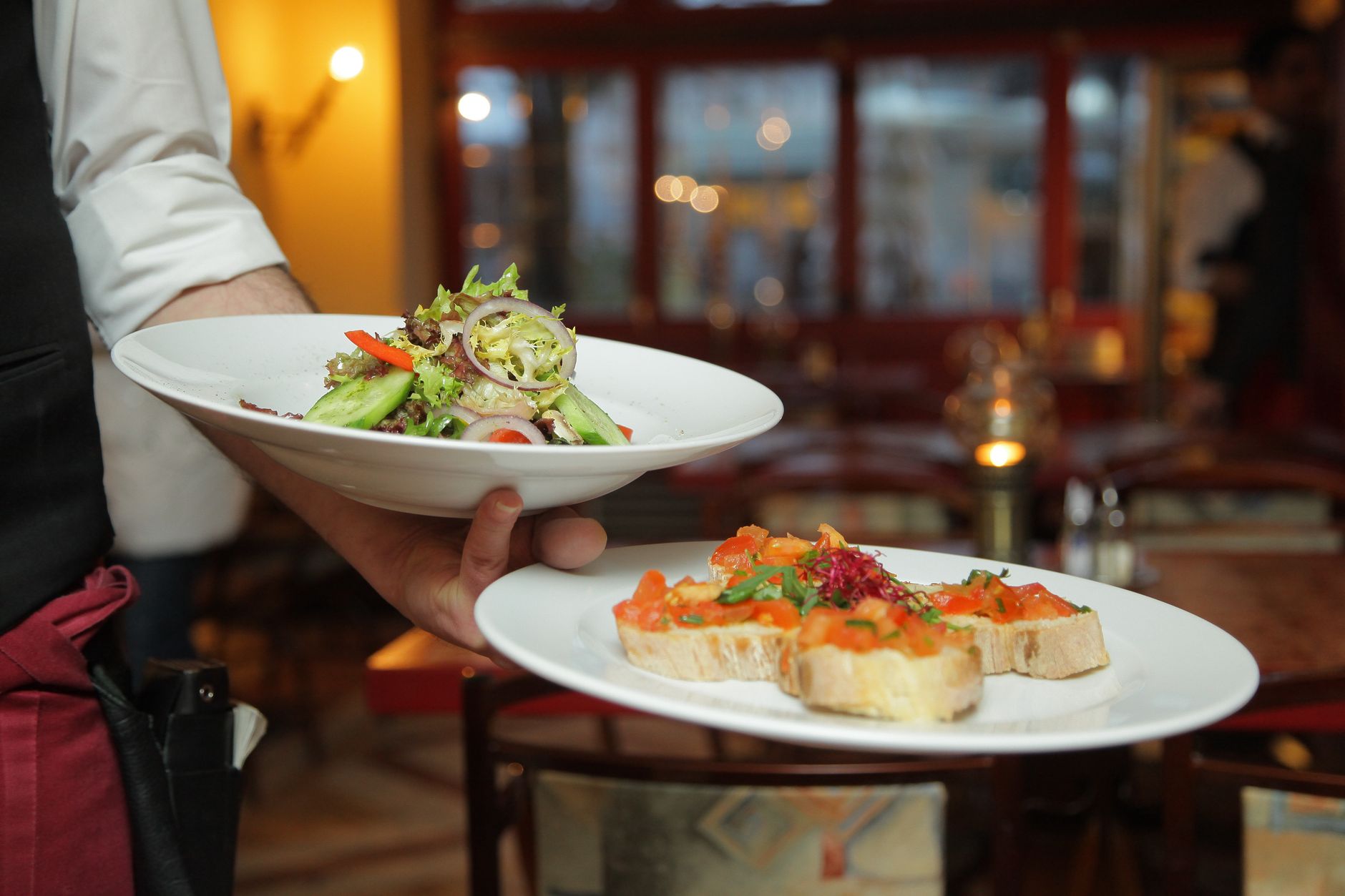
The runner's job is wider than carrying plates. In a shift they take plates from the pass, carry drinks and sides, return dirty dishes, check on tables, fetch missing items, and answer requests a server cannot handle from the section. Most of that work is walking and carrying, but the judgment in it is what keeps guests served.
The closest government category is waiters and waitresses. The BLS Occupational Outlook Handbook counts about 2,329,700 of those jobs in 2024, and about 85% of them are in food services and drinking places, the same setting as this page. The handbook projects about 456,700 openings a year over 2024 to 2034, mostly from workers leaving, so replacing people is a bigger labor problem than adding headcount.
The government wage data on this page for this job shows pay, not how the shift is built. Pay is one input. The shift itself, with its peak, its quiet stretches and its walking, is what decides whether a robot changes the picture.
Which parts of the run can a delivery robot take, and which can it not?
A robot takes the repeat leg: pass to table and table back to the pass on a fixed route, carrying trays and returning dishes. That is the closest match to a runner's walking work, and it is the part that repeats the same way every trip. The research did not verify how many hours this leg takes per shift in a casino, so the trip count from your own logs is the number to trust.
It does not take changed orders, reading a table, cleaning a spill, lifting a loaded tray through a crowd, or any stop that needs a decision. It cannot ask a guest whether they want another drink, and it cannot judge when a path has become unsafe. Those tasks take a runner's attention, and they stay with people.
- Fixed repeat trips
Delivery Robot
Runs the same loop every trip without tiring
Food Runner
Does it well, but the walking adds up and tires at peak
- Changed orders and guest requests
Delivery Robot
Cannot judge or ask the guest
Food Runner
Handles it on the spot
- Hot plates through a crowded aisle
Delivery Robot
Slows or stops when the path is blocked
Food Runner
Reads the crowd and reroutes
- Late tables and off-peak coverage
Delivery Robot
Can keep the loop going if the route is mapped
Food Runner
Needed for every guest touchpoint
- Coverage on a sick day or call-out
Delivery Robot
Does not cover for a missing person
Food Runner
Can be reassigned if another person is on shift
- Stalled unit on the main aisle
Delivery Robot
Needs a service response and a fallback
Food Runner
Walks around it and keeps working
What do the labor numbers say about turnover, overtime and sick days?
The best government turnover figure for this setting comes from the BLS Job Openings and Labor Survey. According to the November 2025 release, the overall quits rate was 2.0 percent, with about 3.2 million quits. In the same release, quits in accommodation and food services rose by 208,000 in November 2025, after falling by 136,000 in October 2025. Staffing in this sector can shift sharply from one month to the next.
A vendor blog, Restaurant turnover statistics 2025, reports that restaurant employee turnover topped 75% in 2025. That figure is vendor-reported, cites no primary source, and the blog itself notes its figures are not directly comparable to BLS separation counts. Use it as a rough signal, not a planning number.
Injury exposure is the other labor concern. A 2019 BLS Economics Daily article reports, using 2017 data, a special food services rate of 107.6 per 10,000 full-time employees, against 77.9 for all food services and drinking places. The research did not find a verified 2024 national rate for this sector, so that 2017 comparison is the best published figure available here.
Overtime, night shifts and sick days for casino restaurant runners were not verified in the research, and this page does not estimate them. Your own timekeeping and call-out records will give the number that counts for your floor.
How does a team work with a delivery robot?
The team does not go to zero. The model is a robot plus fewer staff on the floor. The robot takes the repeat loop, and the runner who walked it moves to guest contact, plates that need care, and changes. Some runner slots shrink, and some move to coverage at peak.
The shift changes at a few fixed points: charging at open, a loop check before service, a person at the pass to load, and a person ready to respond if a unit stops in an aisle. Training matters most in the first weeks, because that is when staff find which spots pull them into the path. Train the people who will work beside the robot before go live, not after.
A 2023 Fortune report described a restaurant chain's service robot moving too slowly and getting in the way of human servers, with managers giving mixed accounts of reliability and cost. The lesson is about planning: a robot that competes with staff for the same aisle slows the floor, so the route and the staff role have to be set together.
What can a delivery robot not do in a casino?
The honest answer is a short list, and it matters on a casino floor. Crowds, gaming equipment, cables and guests who stop without warning all cause a robot to slow or stop. It cannot read a room the way a person can, and that gap is largest at peak.
It cannot take the guest-facing role, and it cannot cover a shift alone. If an outlet depends on one runner who handles everything, a robot will not fix that setup. It can take a share of the repeat work and give that runner time back for the tasks only a person can do.
Expect a stalled unit at some point. Plan for a service response time and a manual fallback, so the section is not left without service on a busy night. A stuck unit on the main aisle is a floor problem at peak, not only an equipment problem.
- Change an order at the table or handle a guest complaint
- Carry a hot plate through a crowd with judgment about the path
- Clean up a spill or a broken glass
- Cover a whole shift or stand in for a missing person
How do you start: a site assessment and a one-unit pilot?
Start with a site assessment. Our team maps the floor, counts the repeat trips in your logs, and checks aisles, lifts and the path between the pass and each section. We then pick the robot that fits the site, deploy and integrate it, train staff, and service it nationwide. The robot is leased through financing, and the lease payment is quoted after the site assessment.
Begin with one leased unit on one route, not the whole floor. Measure trips per shift, staff time and runner walking against a baseline for several weeks before adding units. That gives you a number from your own floor instead of a vendor claim.
Ask for the written lease terms, the service plan, the response time for a stalled unit, and who covers the fallback at peak. Those answers shape the outcome more than the robot's top speed. The checklist below lists what to verify before you decide.
Frequently asked questions
Want a delivery robot at your casino restaurant?
Tell us about your site. We will recommend the robot, quote the lease, and keep it serviced.
Sources
- US Bureau of Labor Statistics, Occupational Employment and Wage Statistics (OEWS May 2024)
- American Gaming Association, State of the States 2026
- BLS Occupational Outlook Handbook, Waiters and Waitresses
- BLS Job Openings and Labor Survey, November 2025 release
- BLS The Economics Daily, injury and illness rates in special food services, 2019
- Restaurant turnover statistics 2025 (vendor blog)
- Fortune, 2023 report on restaurant labor shortage and service robots