
The short answer
A delivery robot vs food runner comparison favors the robot when the meal rush is mostly moving trays, orders and carts along fixed paths between counters, the kitchen pass and seating. It does not make sense where runners do plate-side service, the room is cramped or crowded with unpredictable traffic, or the hall has nobody to load, unload and watch the robot. For most halls the answer is a robot plus fewer runners, never zero staff.
Key takeaways
- A robot fits the trays, orders and carts that move along the same fixed routes a runner walks at rush.
- Plate-side service, crowded rooms and unpredictable traffic stay with people.
- Campus dining operators name lack of staff as their top challenge, so the case is about covering gaps.
- Start with one robot on your busiest route and time the rush before you expand.
- Plan a robot plus fewer runners, never zero staff, because someone must load, clear and check the robot every shift.
Is a delivery robot vs food runner the right call for a university dining hall?
A delivery robot vs food runner choice is really a question about the route. A robot works well when most of the rush is moving trays, orders and carts between the kitchen pass, the counters and the seating, along paths that are fixed, mapped and mostly clear. That is the same ground a runner covers in a shift, so the robot takes the repeat legs and the person keeps the parts that need judgment.
The robot makes less sense where runners do plate-side service, where the room is tight enough that a robot stalls in aisles, or where students cut across the route all day. It also needs a person at each end to load it, unload it, clear a jam and handle a guest who wants a fix. A hall with no staff on the floor at all is not ready for one.
For most halls the honest answer is a robot plus fewer runners, not a robot in place of the team.
What does a food runner actually do during a dining hall shift?
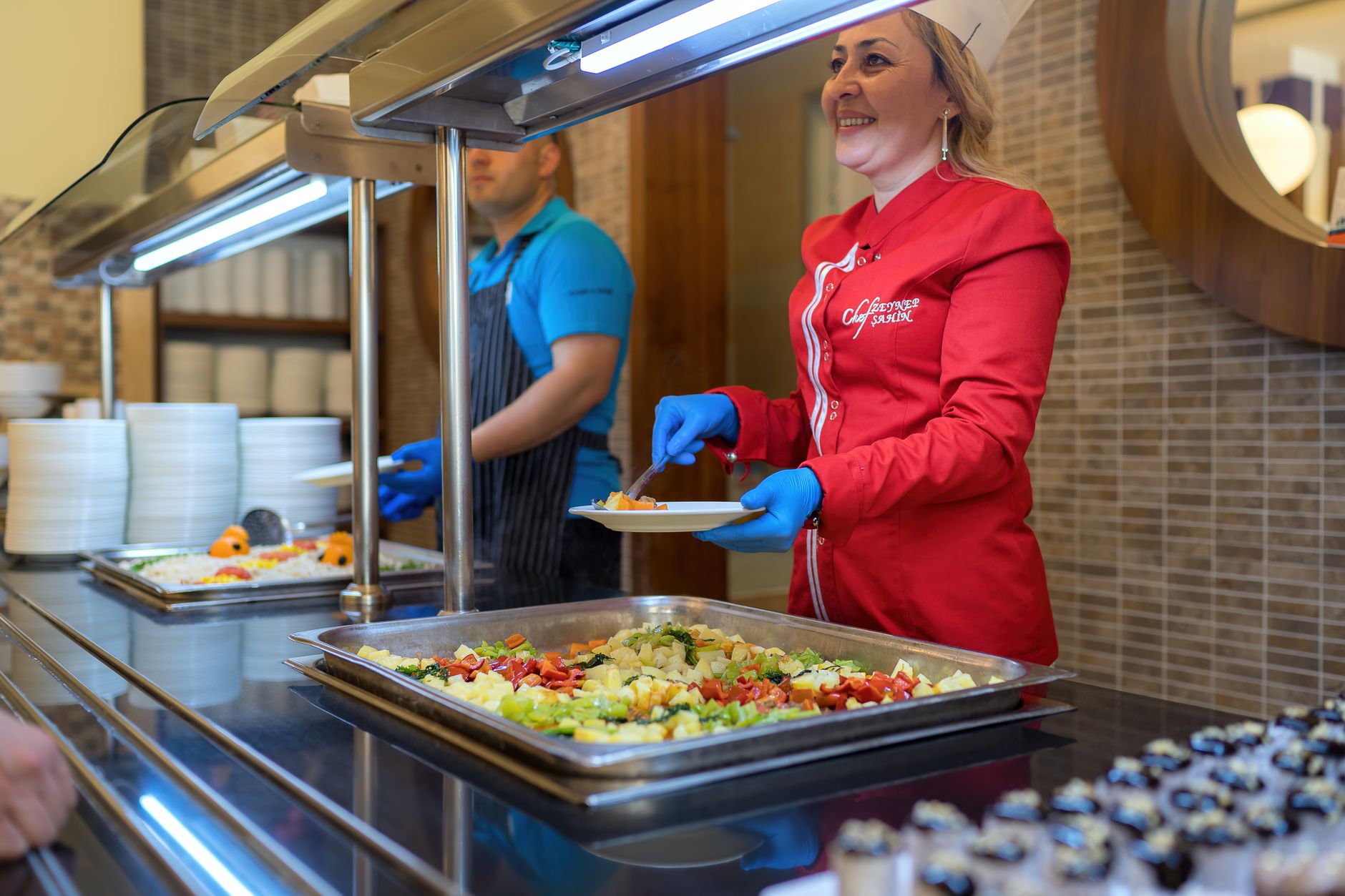
A food runner spends most of the rush moving between the kitchen pass, the counters and the tables. They pick up finished plates and orders, carry them to seats or a pickup shelf, bring back empty trays and dishes, and restock the line when a pan runs low. The work is short trips, many times over, with a lot of stopping and starting.
Much of the runner's time goes to waiting, checking the board and watching for the next call, which is why the job can look lighter than it is. Runners also answer the questions a robot cannot: where is my order, this is not what I asked for, can you check the label. Those exchanges take longer than the walk itself, and they happen at the worst moment of the rush.
Median hourly wage, Waiters and Waitresses
$3,798
Monthly cost of one full-time worker, at the median wage plus payroll costs (an estimate, not a quote).
Which parts of the runner's job can a robot take, and which can it not?
A delivery robot can take the repeat legs: kitchen pass to a shelf, a shelf to a table cluster, trays back to the dish return and carts between the line and the back of house. It runs the same route on each trip, so the work is predictable and easy to schedule. Its load and stop count are limited by its tray space and route, so plan the trips around those limits.
It cannot serve a plate with care, check an order against an allergy card, deal with a spill, lift a heavy stock pot, or notice that a tray is in the wrong place and fix it. Those are the moments that need a person, and they make up much of the job's hard edge. The comparison below sets the two side by side.
- Repeat trips on a fixed route
Delivery Robot
Runs the same mapped route each time without breaks
Food Runner
Walks it, but slows and tires over a long rush
- Plate-side service
Delivery Robot
Cannot hand a plate to a guest or check it
Food Runner
Does this well and reads the guest
- Allergy and order checks
Delivery Robot
Cannot verify a label or a special request
Food Runner
Checks the card and the ticket before the plate leaves
- Unplanned obstacles
Delivery Robot
Stops or reroutes, and a person must clear the blockage
Food Runner
Steps around a spill or a bag on the floor
- Loading and unloading
Delivery Robot
Needs a person at each end of the route
Food Runner
Does the loading and unloading as part of the trip
- Shift coverage
Delivery Robot
Can run a scheduled leg when a person is nearby to load it
Food Runner
Covers a shift, breaks and a schedule that fits the class timetable
How large is the staffing gap in campus dining?
Campus dining is short on people. A Food Service Director survey of college and university foodservice found that 96% of respondents named lack of staff as their top challenge. The survey is cited here without a year, so check its date before you quote it to a board.
Turnover runs high across the sector. According to a summary of BLS JOLTS data, accommodation and food services had the highest quits rate of any US industry in 2025, at about 4.2% of employment in a typical month. A secondary summary of BLS data puts total separations at about 5.5% of employment in 2025, down from about 7.1% in 2021. The FRED series shows total separations of 6.1% in January 2026 and 5.4% in February 2026, seasonally adjusted.
These are rates for one month at a time, not a count of people, so they show how fast seats turn over rather than how many shifts you will miss. The government wage data on this page helps you size the cost of covering shifts, but it says nothing about how hard those shifts are to fill. Campus dining also leans on students whose hours follow the class timetable and exam weeks. We did not verify published overtime or sick day figures for this setting, so pull those from your own timekeeping before you size a robot plan.
When is the meal rush, and how much of it is trip work?
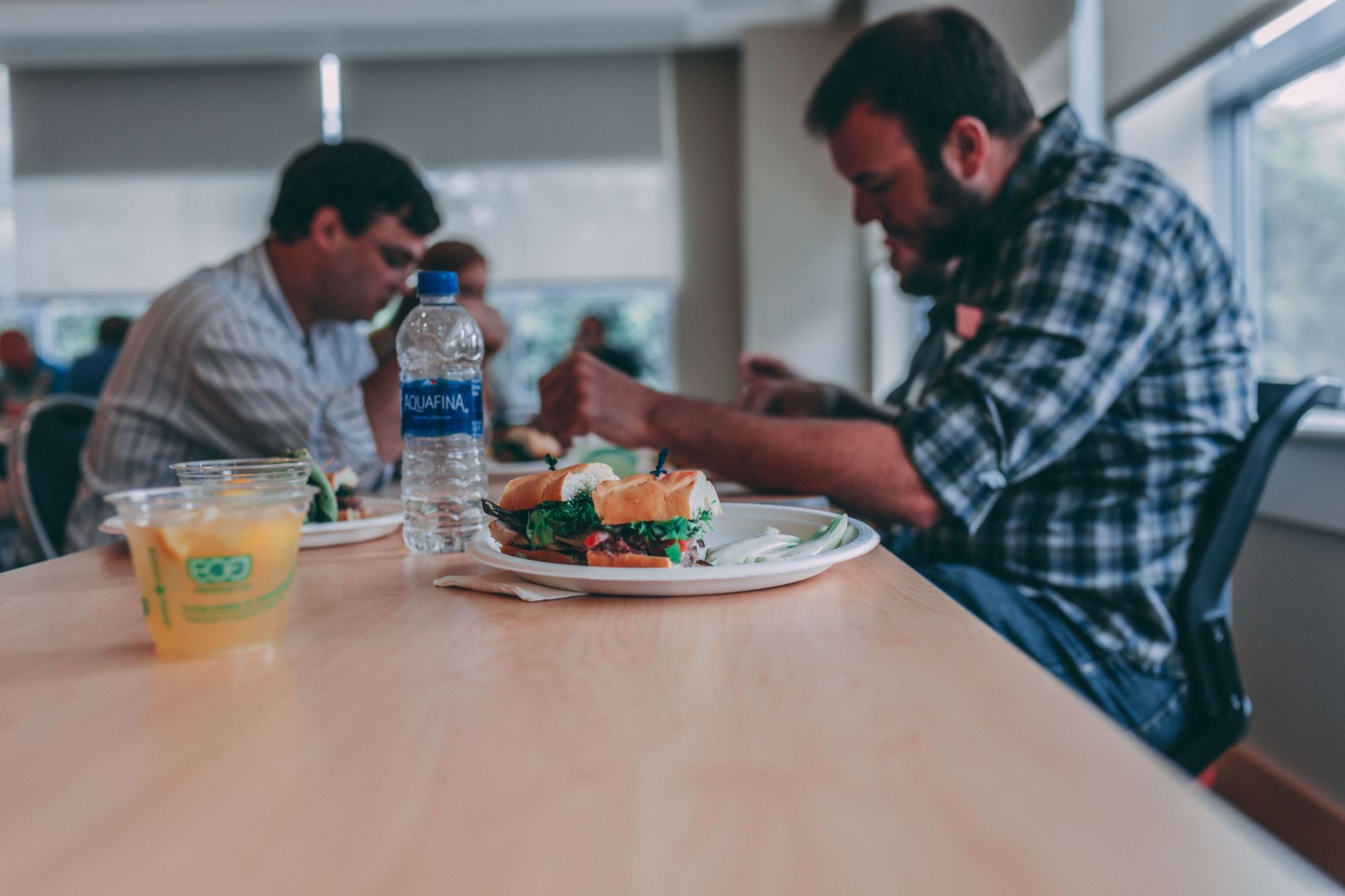
The rush is short and sharp. The line fills all at once, and the same few people carry everything. Campus schedules make this worse, because a class change can send a crowd into one hall in a few minutes. Plan the robot around that peak, not around the average hour of the day.
Before you decide, time the trips. Walk the route at the peak with a stopwatch and count how many plates, trays and orders cross each leg. Those counts, not the hour of the day, tell you whether the robot's trips are worth the setup. A hall with long idle gaps between peaks may need fewer trips than the rush suggests.
What does a robot plus fewer runners look like on a lunch shift?
A robot plus fewer runners changes who does what, not whether there is a crew. The robot takes the repeat legs on a schedule, a person loads and clears it, and the remaining runners work the counters, the tables and the guest. The timeline below shows one lunch shift.
Go-live takes planning. The first weeks should run with a person close to the route, so the team learns the stops, the loads and the handoffs before the robot runs a leg without anyone nearby.
Do injury rates in food service change the decision?
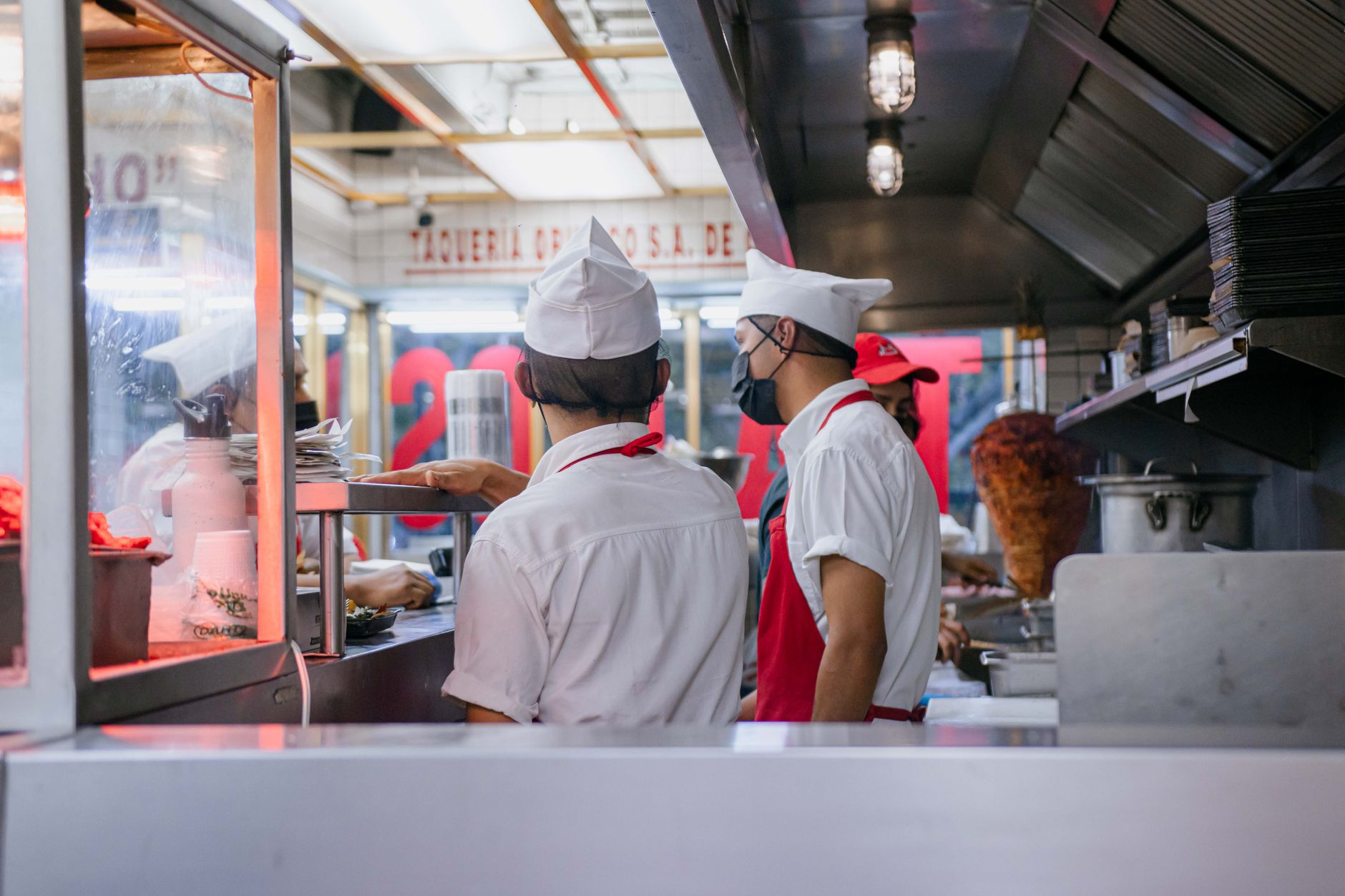
Food service carries real injury risk, and lifting and carrying are part of it. The Bureau of Labor Statistics reported that full-service restaurants recorded 2.7 cases per 100 full-time-equivalent workers in 2018, against 2.8 for all private industry that year. Cases with days away from work ran 73.1 per 10,000 full-time-equivalent workers. Those figures are from 2018, so use them for direction, not as a baseline for today.
A robot can take some of the heavy repeat carrying, but it does not remove injury risk. Spills, hot plates, stairs and busy aisles still need people, and a robot that stops in the wrong place can create its own trip hazard. Ask your insurer and safety lead to review the route plan before go-live.
What can a delivery robot not do in a dining hall?
A robot does not carry a plate with care, check an allergy label, read a guest's face or deal with a spill. It cannot cross a busy room the way a person does, and it may not handle a stairwell or an elevator stop unless the route is built for it. Expect stops, detours and occasional jams, and plan a person to handle each one.
It also breaks down. A robot out of service at lunch needs a backup plan, which is why the staffing plan should keep the runners you have rather than cut them to the minimum.
How many campuses already run delivery robots?
Adoption is growing. According to a CBS Baltimore report, a Maryland university said food delivery robots are at about 55 colleges and universities nationwide. Indiana Public Media reported that one Indiana university launched a fleet of 24 robots in June 2026. Earlier, a university launched a 25-robot fleet in 2019, which shows the model is not new.
The base is large. According to National Center for Education Statistics figures reported on an Academic Jobs page, there were about 3,542 degree-granting institutions in the 2021 to 22 year, with 2,267 four-year schools and 1,275 two-year schools. The same page reports 5,760 Title IV postsecondary institutions in 2024 to 25, from IPEDS. Most of those will never run a robot, so use the count to size your options, not to predict adoption.
How do you start a robot lease for a dining hall?
Start small. A pilot with one leased unit on the busiest route shows how the rush really runs, where the stops are and how many loads the team can handle. We are a commercial robot integrator. We pick the right robot for the site, lease it through financing, deploy and integrate it, train the staff and service it nationwide.
The first step is a free site assessment. We map the route, time the peak, check stairs, doors and charging, and then write a lease quote, not before. Robots are only leased, and the payment comes in that quote, so you can weigh it against the staffing gap you measured using the checklist above.
Once the robot is live, go-live support covers the first weeks, training covers the handoffs, and our service team handles on-site dispatch and remote triage for faults. Keep the runners you need for the counters and the guest, and set a review date after the first month to decide whether a second unit makes sense.
Frequently asked questions
Want a delivery robot at your university dining hall?
Tell us about your site. We will recommend the robot, quote the lease, and keep it serviced.
Sources
- US Bureau of Labor Statistics, Occupational Employment and Wage Statistics (OEWS May 2024)
- FRED, quits rate for accommodation and food services (BLS JOLTS summary)
- FRED, total separations for accommodation and food services (BLS JOLTS)
- Food Service Director, state of college and university foodservice
- Academic Jobs, US college and university statistics (NCES and IPEDS figures)
- CBS Baltimore, food delivery robots at a Maryland university
- Indiana Public Media, university launches food delivery robots
- Bureau of Labor Statistics, full-service restaurants injury factsheet (2018)
- Campus ID News, first university robotic delivery program (2019)