
The short answer
A delivery robot vs food runner choice favors the robot for the fixed, repeated trips between vendor counters and seating during a lunch rush, when the routes are predictable and the hall has clear lanes. It does not replace a person who fixes mixed orders, handles guest questions, clears spills or resets tables, so the realistic goal is the same hall run with fewer staff, never zero staff. A fixed robot lease payment is quoted only after a site assessment of your layout and peak hours.
Key takeaways
- A robot fits the fixed counter-to-table route, not the mixed orders and table problems that fill the rest of a runner's shift.
- The 458 operating food halls counted in January 2026 mean more halls face the same peak staffing problem.
- Keep at least one person at the pickup point and one in the seating area at every peak.
- No published hour count fits your hall, so time the runner's routes on your own floor before deciding.
- A lease quote comes after a free site assessment of the layout, the counters and the peak hours.
Delivery robot vs food runner at food halls: which makes sense?
For most food halls, a delivery robot makes sense for one part of the lunch rush: carrying finished plates from vendor counters to seating along the same routes, again and again. It makes less sense when the job turns into a judgment call, such as a wrong order, a guest with a question or a spill across an aisle. A food runner's shift is a stack of similar trips with a few exceptions, which is why the comparison is worth making before anyone signs off.
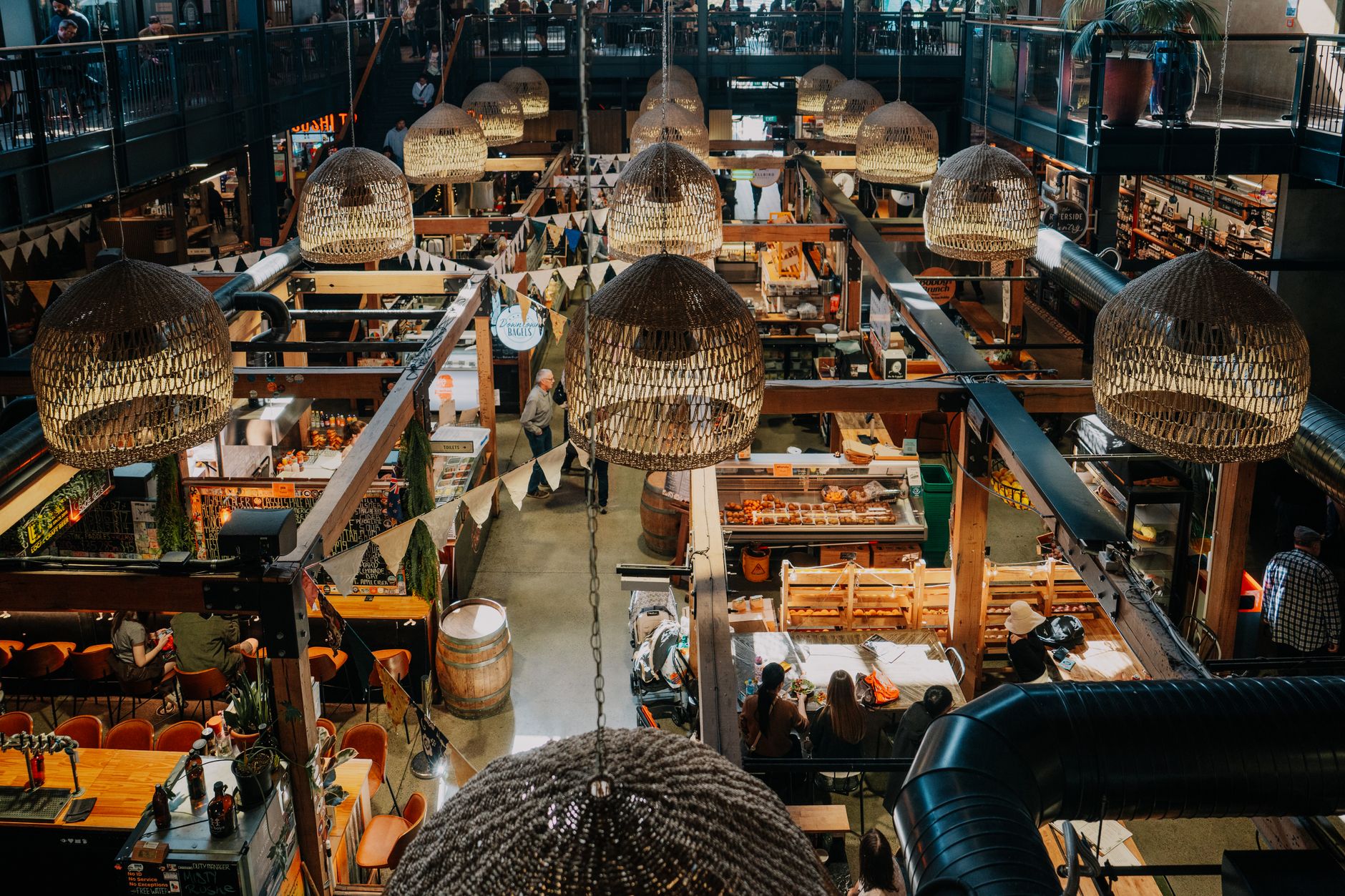
Food halls are a growing category, not a niche. The Colicchio Consulting 2026 food hall report, released in January 2026, counted 458 operating food halls and 114 in development, and reported growth of nearly 25 percent over two years. More halls means more operators facing the same problem: many small counters, one shared dining room, and a peak that arrives at about the same time for every vendor.
Be careful with other counts. IBISWorld lists 418 businesses in its food courts and halls classification for 2025, up 11.5 percent from 2024, but that is an industry classification count, not a census of food halls, so it should not be read as the number of halls.
What does a food runner actually do during a food hall shift?
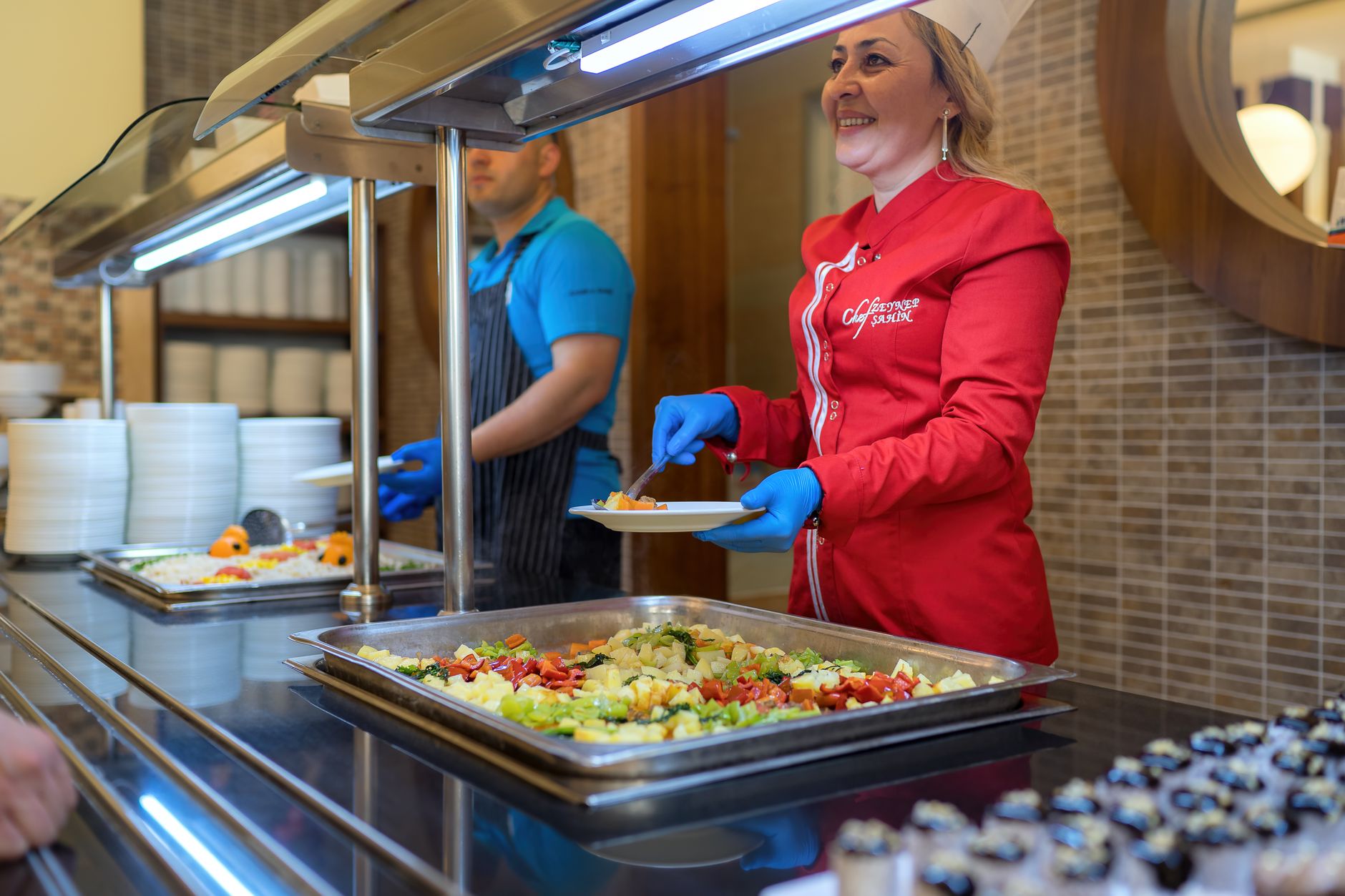
A food runner in a food hall works the space between the counters and the seats. During the lunch rush the job is carrying plates, cups and cutlery from several vendor counters to tables, clearing used trays to a return point, answering where an order is and resetting tables as guests leave. Most of it is walking, and most of the walking follows the same few paths between the same counters and the same seating blocks.
The job also puts people close to hot food and sharp objects. The Bureau of Labor Statistics reports that cuts and lacerations in full-service restaurants ran at a rate of 23.6 per 10,000 workers in 2019, against 7.1 for all private industry. The days-away-from-work rate for full-service restaurants was 88.3 per 10,000 full-time workers in 2019, against 86.9 for all private industry, according to the BLS report on nonfatal injuries in full-service restaurants. These are restaurant-wide figures, not runner-only figures, and the latest national year found for this breakdown is 2019.
Median hourly wage, Waiters and Waitresses
$3,798
Monthly cost of one full-time worker, at the median wage plus payroll costs (an estimate, not a quote).
Which trips can a delivery robot take over in a food hall?
A delivery robot is built for the trip that repeats on a known route. In a hall with fixed lanes, it can run between a few counters and a set of seating zones, and the same run can happen again without someone walking it. The fit is strongest when the counters line up along one or two aisles and the seating is reachable without doors, stairs or a lift.
The tasks that fit are the carry from the pickup point to a table, and the return of an empty tray or a dish to a bussing point. Those trips take up much of a runner's peak time, and they follow routes that can be set once and repeated. Anything that changes the route each time, such as a table moved across an aisle, needs a person to reset the path.
What do the labor and turnover figures say about the lunch rush?
The National Restaurant Association's 2025 State of the Restaurant Industry pocket guide reports about 15.9 million employees across the industry and more than 1 million locations. It also reports that more than 7 in 10 restaurants are single-unit operations. That matters in a food hall, where most vendors are small operators who cannot spread one runner across several sites.
Turnover is a constant. The Bureau of Labor Statistics JOLTS series for accommodation and food services showed quits falling by about 140,000 in the August 2025 data and rising by about 208,000 in the November 2025 data. Those swings are sector-wide, but they explain why a hall's peak staffing can change from week to week. The government wage data on this page gives the local wage for the job; the other cost is replacing a runner after each quit.
The occupation outlook points the same way. The Bureau of Labor Statistics Occupational Outlook Handbook projects waiter and waitress employment to decline 1 percent from 2024 to 2034, with about 456,700 openings a year, mostly from replacement needs. These are table service roles, the closest published category, and BLS does not publish a turnover rate or median weekly hours for this occupation. Replacement hiring, not growth, is the main staffing task.
What can a delivery robot not do in a food hall?
A delivery robot cannot handle the parts of the job that need judgment. It cannot fix a wrong order, check an allergy note with a guest, notice a spill and clean it, or decide that a family needs another table. It also cannot lift a heavy tray onto a high shelf, and it cannot improvise a new route when a table is moved across an aisle without warning.
Guests are another limit. The PYMNTS survey found that 65 percent of consumers not interested in robot delivery cited concerns about reliability and order accuracy. A guest who sees a robot go to the wrong table will remember it, so keep a person at the pickup counter and at the table to confirm each order.
- Repeated carry on a fixed route
Delivery Robot
Runs the same lane without tiring between peaks
Food Runner
Can cover it, but repeated walking is tiring and sets a pace
- Mixed or unexpected requests
Delivery Robot
Stops or waits until a person resets the route
Food Runner
Decides, improvises and talks to the guest
- Order accuracy at the table
Delivery Robot
Depends on the loading and confirming step done by a person
Food Runner
Can check the plate and correct a mistake on the spot
- Spills, breakage and cleaning
Delivery Robot
Cannot clear a spill or reset a table
Food Runner
Handles spills and resets tables
- Coverage across a long shift
Delivery Robot
Keeps its route when charged and when staff load it
Food Runner
Needs breaks, sick days and shift cover
- Guest feeling
Delivery Robot
Some guests do not want robot service
Food Runner
Reads the room and makes the visit feel personal
How does the team work when a robot is on the floor?
A robot on the floor means fewer staff on the carry, not zero staff. The usual setup keeps one person at the pickup point to load the robot, check the order and confirm the table, and one person in the seating area to clear, reset and answer questions. The robot covers the carry between them, and staff time moves from walking to checking, which is where orders are most often lost.
Training matters more than the hardware. Staff need to know how to load a tray, how to reset a route when a table moves, what to do when the robot stops in an aisle and who to call. Start with one counter and one seating block for a short run-in period before the robot covers the whole hall.
When does a delivery robot make sense, and when does it not?
A delivery robot makes sense when the hall has many counters, a single dining room, a predictable route between them and a lunch peak that is hard to staff. It also helps when one vendor's runner is absent or inconsistent and the hall cannot cover every counter. It is a poor fit when the hall is small, the counters sit across levels with no lift, the seating moves often or the menu depends on table-side service.
The honest test is whether the runner's trips are the bottleneck. If the peak is limited by the kitchen or by the register, the robot will carry plates faster than the line can make them, and the hall gains little. Compare the local wage for the job, shown with the government wage data on this page, against the trips the robot would take over, then measure before deciding.
How do you start a delivery robot lease for a food hall?
Start with a free site assessment. We map the hall, the counters, the seating and the routes, and identify which trips a robot would take over. Robots are leased through financing, so the fixed robot lease payment is quoted after that assessment, once the route and peak hours are known.
Service Robot Co. picks the right robot for the site, leases it through financing, deploys and integrates it, trains the staff and services it nationwide. Begin with one leased unit on one counter-to-seating route, run it through a full lunch peak, and compare the trips it took with the staff hours it freed. Expand only after that peak runs cleanly.
Frequently asked questions
Want a delivery robot at your food hall?
Tell us about your site. We will recommend the robot, quote the lease, and keep it serviced.
Sources
- US Bureau of Labor Statistics, Occupational Employment and Wage Statistics (OEWS May 2024)
- Colicchio Consulting 2026 food hall report, via Hotel Online
- IBISWorld, Food Courts and Halls market size (NAICS 6308)
- National Restaurant Association, 2025 State of the Restaurant Industry pocket guide
- BLS JOLTS release, September 30, 2025
- BLS JOLTS release, January 7, 2026
- BLS Occupational Outlook Handbook, Waiters and Waitresses
- BLS TED, Nonfatal injuries and illnesses in full-service restaurants in 2019
- PYMNTS consumer survey on robot delivery