
The short answer
For a delivery robot vs food runner decision at a mall food court, a robot makes sense when trays move along set routes between counters and tables and the trips repeat all shift. It does not fit when the work is mostly table-side service, the route changes often, or the lanes stay jammed at peak. Most food courts are best served by a robot on the repeat legs with staff kept at the counters and tables, so the team gets smaller but never reaches zero.
Key takeaways
- A delivery robot fits repeat tray runs on set routes, not one-off table service.
- Staff stay on the floor: a robot means fewer runner trips, never zero staff.
- Openings in accommodation and food services ran from 4.8% to 6.9% between April and August 2025, so hiring for runner shifts stays a steady task.
- Peak lanes and route changes decide the fit more than anything else on the floor.
- Injury data for this sector is dated, so track your own runner strain before deciding.
When does a delivery robot make sense at a mall food court?
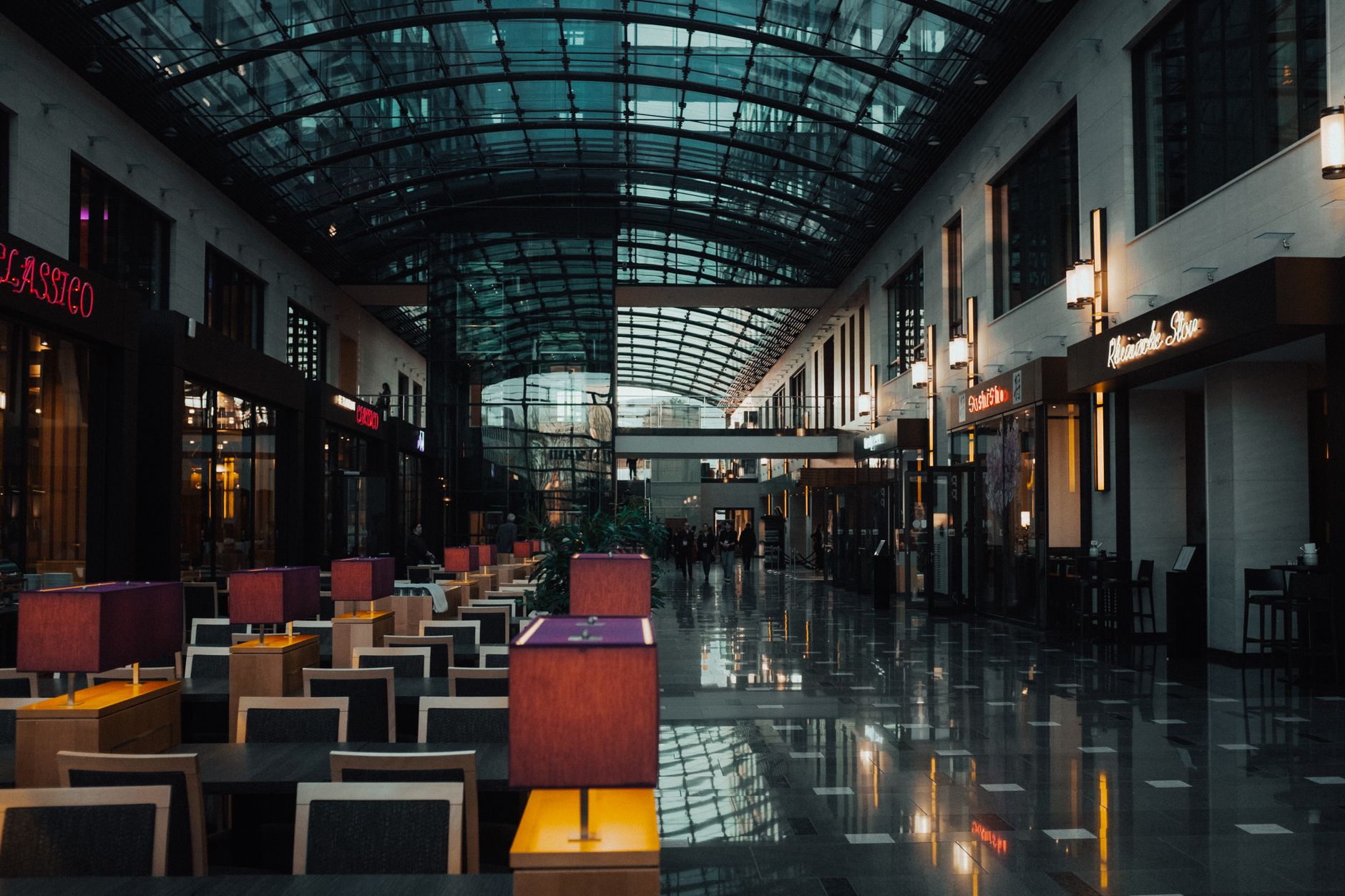
A delivery robot makes sense at a mall food court when the job is the repeat run. A tray goes from a counter to a table, the empty tray comes back, and the cycle starts again along a route that barely changes from hour to hour. That repeat leg takes the most steps in a runner shift and the least customer contact, so it is the part worth automating first. The fit weakens when the work is mostly table-side service, when the route changes week to week, or when the walkways jam at peak.
Read the decision as one task, not the whole job. The robot covers trips. A person still loads the tray, checks the order, clears the table, watches the counter, answers questions and deals with spills. If the plan asks the robot to replace the whole runner role, the honest answer is no, and a good site review will say so.
Test the fit on your own floor before planning around it. Count runner trips during one peak hour, note how many run between the same two points, and check whether the path stays clear while people walk across it. Those three numbers answer most of the question.
What does the mall setting change for food court runners?
Mall food courts sit inside a building with its own traffic pattern. According to Coresight, citing the International Council of Shopping Centers, there are 1,221 malls in the US. The Coresight page gives no publication date, so treat that figure as a snapshot and confirm it before using it in a plan. For a food court, the building around it sets the foot traffic.
Foot traffic follows the store schedule, the weather and the season, so the food court peak can arrive as a sharp surge rather than a steady wave. A robot route has to hold through that surge, with shoppers, strollers and seated guests crossing the lanes. Plan for the busiest hour, not the average hour, because a stalled route costs the most at the busiest time.
Mall hours shape the labor window too. Runner shifts may be split, short or late because the building sets when the food court is busy. That changes how many runner trips a robot must cover and when staff are on the floor. Ask the mall operator for its hours and event calendar before modeling the work.

Median hourly wage, Waiters and Waitresses
$3,798
Monthly cost of one full-time worker, at the median wage plus payroll costs (an estimate, not a quote).
What does a food runner actually do in a shift?
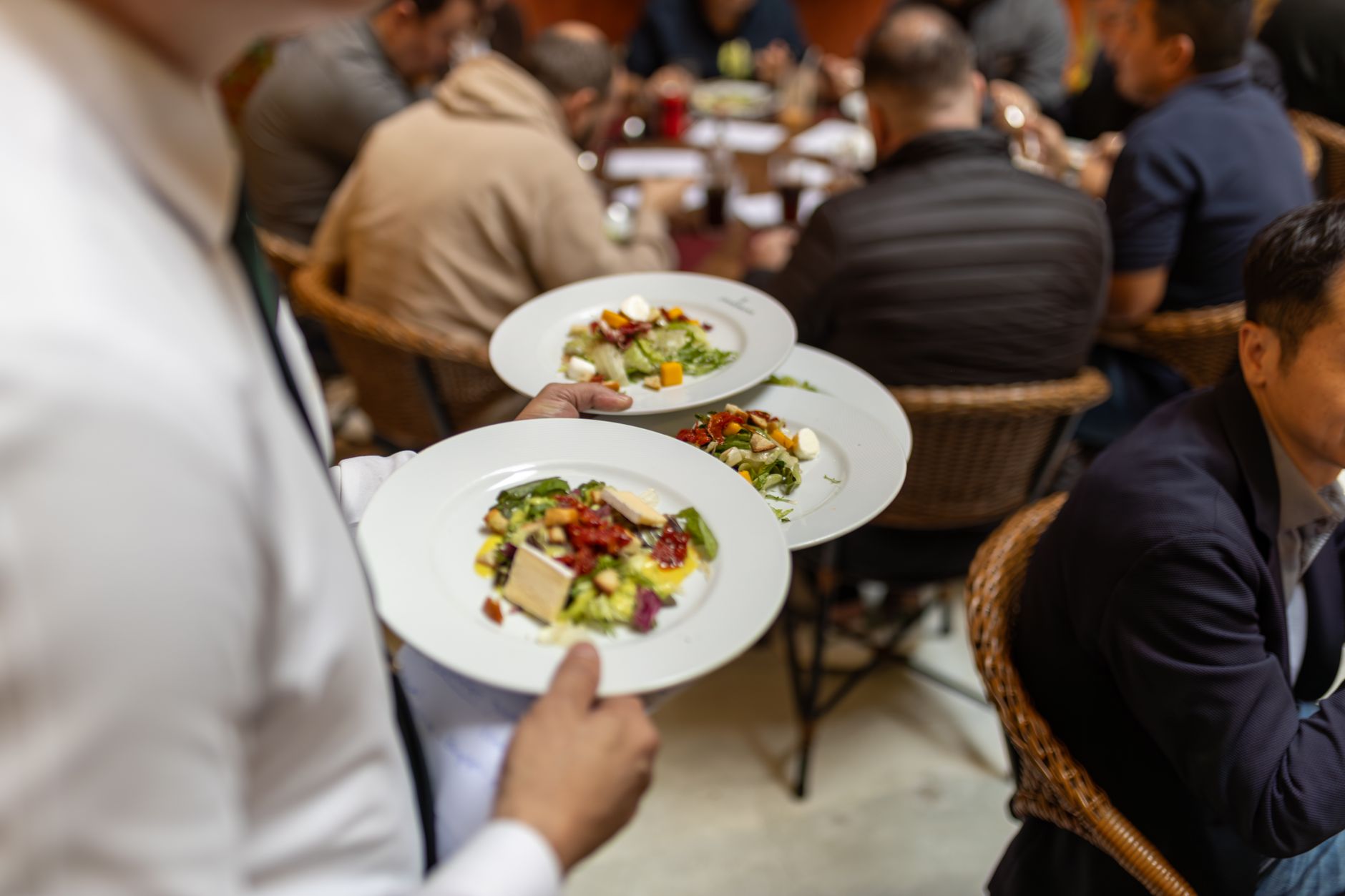
A food runner works the seam between the counters and the seating. In a food court that usually means collecting finished orders from several counters, carrying them to the right table, bringing back empty trays, wiping and resetting tables, and keeping the walkway clear. Most of the job is walking with a load.
The shift runs in waves. Runners are busiest in the stretch before and during the lunch and dinner peaks and quieter between them. The work is repetitive but never fully routine, because a spill, a child in the lane or a second tray for one table each break the pattern. A person absorbs those interruptions without thinking. A robot needs a clear path, a stop and a staff member to clear the problem.
Runners also carry more of the physical load on the front-of-house team, since they lift, carry and reach through the shift. That is why the job matters for injury and strain, which a later section covers. The useful question is not whether the work is tiring but which parts of it a robot can absorb.
Which parts of the runner job can a delivery robot take?
A delivery robot is strongest on fixed, repeated legs: counter to table, table back to the return point, and the return path itself. When the counters sit along one corridor and the tables sit in a block, the robot can run the same leg many times without tiring, and it can carry the empty tray back on the way. Those legs are where the walking adds up.
The robot cannot take the parts that need judgment or hands. It cannot check that an order matches the ticket, hand a plate to a guest, clear and wipe a messy table, answer a menu question, or pick a detour around a spill. Those tasks stay with the people at the counters and tables.
The usual split is simple. The robot covers the long repeat legs, and staff cover the touch points at each end. That arrangement makes the robot a help rather than a replacement, and it is the setup to test first. The timeline below shows how a shift runs through a peak.
What does the labor picture look like for runners and servers?
The most useful labor figures for this work are national, not food court specific, so read them as context. According to the BLS Occupational Outlook Handbook, waiters and waitresses held about 2.3 million jobs in 2024. Employment is projected to decline 1 percent from 2024 to 2034, and average annual openings are about 456,700, counting growth plus replacement of workers who leave. With employment shrinking, those openings come from replacement, not new positions.
Turnover data points the same way. According to FRED, the job openings rate in accommodation and food services was 4.8% in April 2025 and 6.4% in August 2025. According to the BLS JOLTS release for June 2025, openings in that sector fell by 308,000 that month. Per BLS Economics Daily, the quits rate was 3.5% in August 2026, down from 3.9% in August 2025. Quits eased, but openings still show employers looking for people.
Headcount is large, which keeps the labor pool in view. According to FRED, food services and drinking places had 12,394.0 thousand employees on average in 2025, up from 12,261.4 thousand in 2024. Check the government wage data on this page for waiters and waitresses to set your local labor baseline. The sources found here do not give overtime, night shift or sick day counts for this job, so measure those on site before deciding.
National operator surveys point the same way. According to Fortune, citing the National Restaurant Association, 62 percent of operators said they did not have enough workers to meet demand, in a 2023 report. That is older than the BLS series above, so read it as a direction, not a current count.
How does a team work with a delivery robot?
The arrangement is always a robot plus fewer staff, never zero staff. The robot takes the repeat legs, so the team can cover the same counters and tables with fewer people walking the floor. Staff keep the counters, table resets, spills and guest contact. Build the roster around those tasks first.
Fewer people on the floor changes the job for those who remain. They spend more time at counters and tables and less time walking, so the roster should keep someone reachable at each end of the robot route. Assign one person to check the route before each peak and to clear blockages quickly.
Expect friction. In 2023, Fortune reported that one chain found a robot server moved too slowly and got in the way of human servers. For food courts, the lesson is to set route width and speed for crowds, not for an empty corridor, and to brief staff on exactly where the robot will pass.
- Repeat counter to table legs
Delivery Robot
Runs the same fixed leg all shift on a clear path and carries the empty tray back
Food Runner
Walks the same leg but adjusts at once when a lane is blocked, and tires over a long shift
- Crowds at peak
Delivery Robot
Stops and waits for a clear path, which can stall the route
Food Runner
Steps around people, reroutes and keeps the tray level in a crowd
- Order check
Delivery Robot
Cannot read or check the order, so it relies on staff at pickup
Food Runner
Checks the ticket against the tray before it leaves the counter
- Table clearing and resets
Delivery Robot
Outside its scope
Food Runner
Clears, wipes and resets the table
- Spills and guest questions
Delivery Robot
Can stop and alert staff, but cannot clean up or answer
Food Runner
Cleans the spill and answers the question
- Coverage when a unit is down
Delivery Robot
Needs a backup unit or a staff fallback
Food Runner
Takes the walk at once, if someone is on shift
- Long or split shifts
Delivery Robot
Runs in cycles with charging breaks and no fatigue
Food Runner
Needs scheduled breaks, and each extra shift adds staffing time
What can a delivery robot not do at a food court?
A delivery robot cannot work outside its mapped route. Food courts change: a kiosk moves, a cart sits in the lane, a seasonal stand opens near the path. Each change needs a route update or a staff check. Decide in advance who owns the route map and who approves changes.
It cannot take jobs that depend on hands, judgment or speech. It does not serve a table, read an allergy note on a ticket, set a hot plate down for a child or deal with a spill beyond stopping for it. Those tasks stay with staff.
It also cannot fix itself in the middle of a lunch peak. Some faults need dispatch and parts, and a site without backup coverage will feel the gap at once. Plan the staff fallback before the robot goes live, so the lane stays covered when a unit goes down.
How hard is the runner job on the body?
The most recent injury rate found for this kind of work is from 2018. According to the BLS fact sheet for full-service restaurants, the rate was 2.7 nonfatal injury and illness cases per 100 full-time equivalent workers, against 2.8 for all private industry that year. The same fact sheet estimates 91,800 cases in full-service restaurants. It covers full-service restaurants, not food courts, so use it as a rough baseline only.
The 2018 full-service restaurant rate sat slightly below the all-industry rate, which does not make runner work low risk. The strain in this job comes from loading, carrying, reaching and walking on floors that get wet and crowded. The sources found here include no 2024 or 2025 BLS injury rate for food services, so ask for your own incident log from the last two years before deciding.
A robot removes part of the walking load, not the lifting. Tray loading and table clearing still happen by hand, so the body risk moves rather than disappears. The fair question is which strain a robot takes off the runner and which strain stays.
How do you get started with a delivery robot at a food court?
Start with the route, not the robot. Map the counters, tables and return point, then time the repeat legs during the busiest hour. Pick the one route that carries the most repeat trips, because that route sets the scope of a first unit.
We are a US commercial robot integrator. We pick the right robot for the site, lease it through financing, deploy and integrate it, train the staff and service it nationwide. The lease quote comes after a free site assessment, so the terms reflect your floor, your route and your peak hours rather than a generic package.
Pilot one route for a set period. Measure completed legs, peak delay and staff time shifted, then decide whether a second route makes sense. Keep a backup unit or a staff fallback in place from the first day, so a single fault never leaves the lane uncovered.

Frequently asked questions
Want a delivery robot at your mall food court?
Tell us about your site. We will recommend the robot, quote the lease, and keep it serviced.
Sources
- US Bureau of Labor Statistics, Occupational Employment and Wage Statistics (OEWS May 2024)
- FRED series JTS7200JOR, job openings rate, accommodation and food services
- BLS JOLTS news release, June 2025 data
- BLS Economics Daily, quits rate in accommodation and food services, August 2026
- FRED series CEU7072200001, food services and drinking places employment
- BLS Occupational Outlook Handbook, Waiters and Waitresses
- BLS fact sheet, Full-Service Restaurants 2018
- Coresight, Deep Dive: The Mall Is Not Dead, Part 1
- Fortune, restaurant labor shortage, servers and robots, April 2023