

The short answer
A delivery robot makes sense at a marina restaurant when the kitchen pass feeds the same tables along one fixed, mostly clear route, and the dining area is large enough to keep the robot busy through a peak. It does not make sense when the room is small, the route crosses wet or uneven decking, or the team still needs a person to bus, reset and read the room. For most marina restaurants the answer is a robot plus fewer staff, not a robot in place of the team.
See what a delivery robot costsRun the numbers in the ROI calculator
Key takeaways
- A delivery robot fits the repeat kitchen-to-table route, while a food runner still covers the work around it.
- Plan for a robot plus fewer staff, never zero staff, with one named owner on every shift.
- According to BLS, the quits rate in accommodation and food services was 3.5 percent in August 2026, against 2.1 percent for private industry.
- Marina decking, weather and seating changes decide the route, so measure them before you commit.
- The lease is quoted after a site assessment, so start with the route, not the robot.
Delivery robot vs food runner for a marina restaurant: when does a robot make sense?
A delivery robot makes the most sense when a marina restaurant sends plates along the same route many times in a shift. The route usually runs from the kitchen pass to a fixed set of tables, then back to the pass with empty trays. That repeat trip is the core of the food runner job, and it is also the part of the shift that eats the most walking time.
It makes less sense when the dining area is small enough that a server can carry food without wasting steps, when the route crosses wet or uneven decking, or when seating moves so often that the route is never the same two days running. Marina patios also change with weather, tide and wind, so a route planned in spring may need changes by midsummer. The first check is the route, not the brand of equipment.
The direct answer for the person who signs off is this: a robot can carry plates and trays on a set path, but it cannot read a table or replace the person who handles a problem. Plan for a robot plus fewer staff. A plan that drops to zero staff will fail on the first full dinner service.
What does a food runner actually do in a marina restaurant shift?
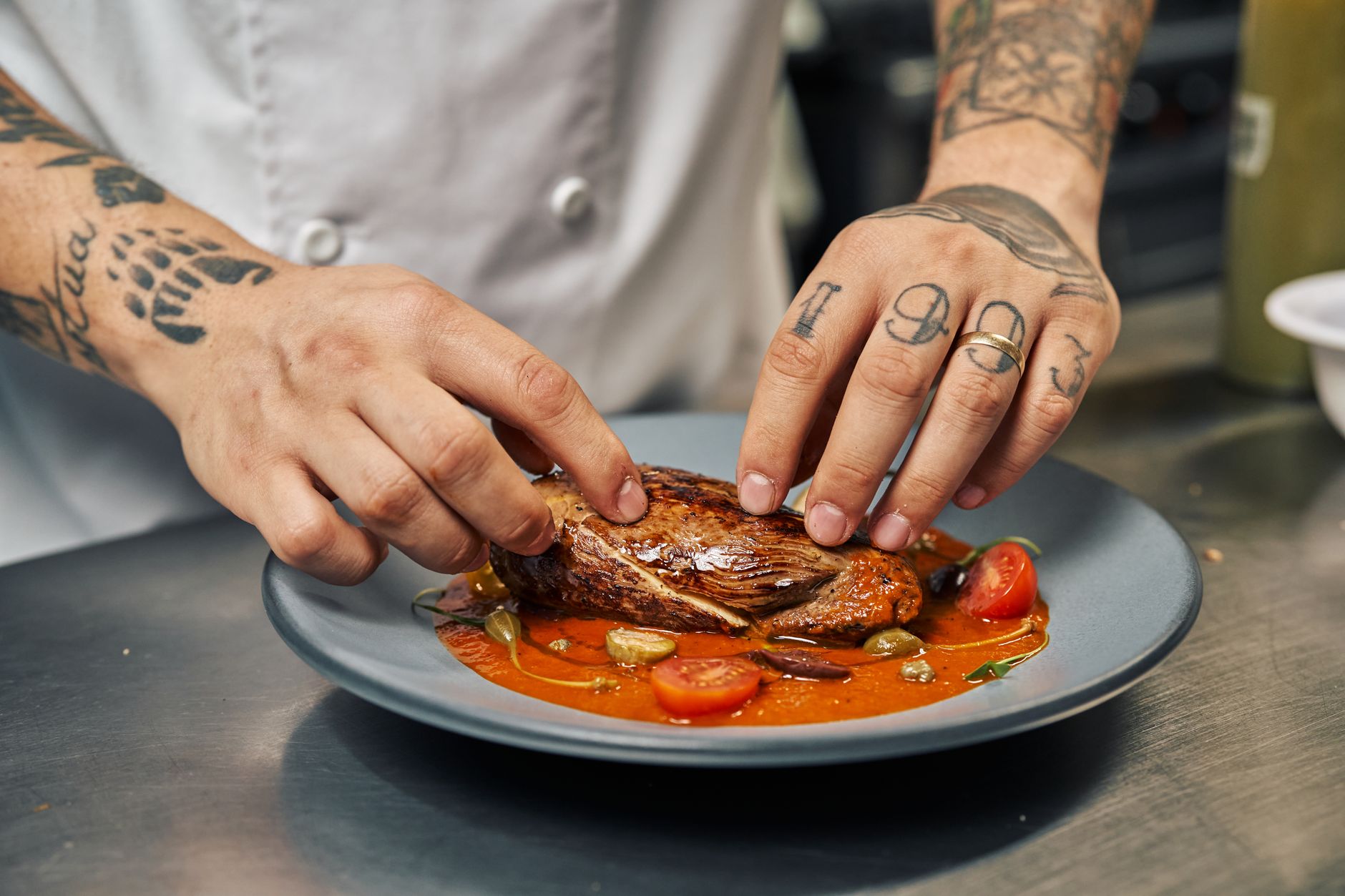
A food runner takes finished plates from the kitchen pass, checks them against the ticket, and carries them to the right table. On a patio section, the runner comes back with empty plates, drink orders and cleared trays, then loops back for the next ticket. Most of the shift is that loop, repeated through the lunch and dinner peaks.
The loop is not the whole job. A runner restocks the service station, carries bread, sauces and clean glassware, resets tables between seatings, and tells the server when a plate is cold or a table is waiting. Marina restaurants add their own tasks, such as moving food down a dock walkway or up a ramp and covering a deck that is open to wind and weather.
Because the work is physical and repetitive, it is often the first role a short-staffed kitchen cuts or leaves empty. The government wage data on this page gives the local wage for the waiter and waitress role that usually covers the same floor, which is the labor a missing runner pushes onto the rest of the team.
Median hourly wage, Waiters and Waitresses
$3,798
Monthly cost of one full-time worker, at the median wage plus payroll costs (an estimate, not a quote).
Which parts of the runner's work can a delivery robot take?
A delivery robot can take the repeat move between the kitchen pass and a fixed set of tables. It carries a loaded tray along the same mapped path, stops at each assigned table or station, and returns to the pass. If the route is planned well, the robot matches the runner's core loop closely, which is exactly the work a single runner repeats most often.
The strongest candidates share a few traits: the route is the same every shift, the path is clear of chairs and doors, and the stops are fixed. Stock runs between two stations can also be automated if the route is mapped, but each added stop adds planning and checks.
- Repeat kitchen to table loop
Delivery Robot
Steady on a mapped route for the whole shift
Food Runner
Tires through a peak and needs breaks
- Reading the room
Delivery Robot
Cannot read a guest or a table
Food Runner
Reads the table and adjusts
- Uneven or wet decking
Delivery Robot
Needs route checks, and gaps can stop it
Food Runner
Steps around a slick board
- Handling a problem
Delivery Robot
Pauses until a person clears the path
Food Runner
Solves it on the spot
- Coverage across breaks and sick days
Delivery Robot
Runs the planned route whenever it is charged and staffed
Food Runner
Needs cover, and turnover is high in this sector
- Hiring and training
Delivery Robot
Staff must learn loading and the stop sequence
Food Runner
Needs training too, and must be hired at the local wage for this job
Which parts of the runner's work stay with people?
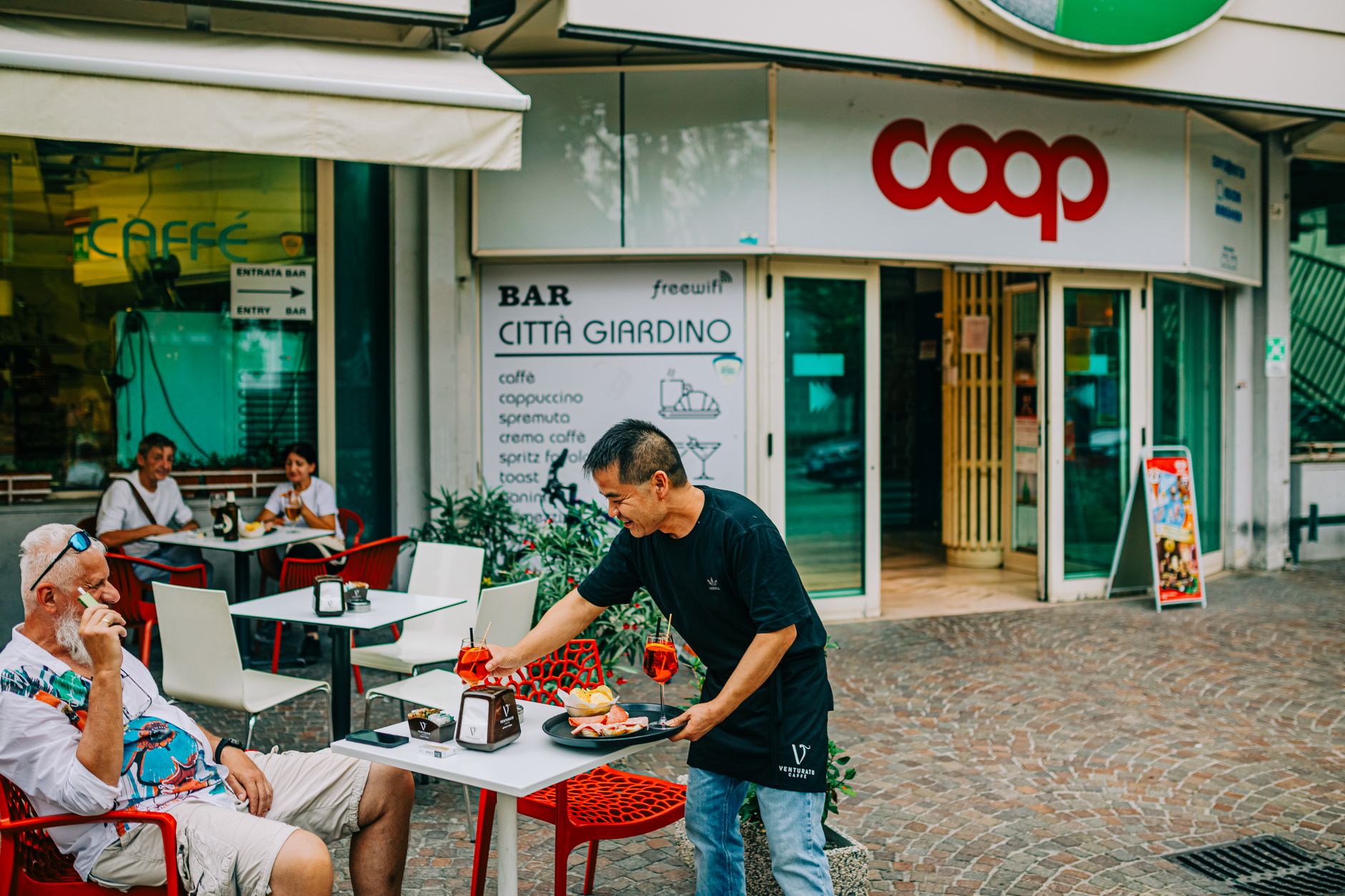
A robot does not read a table. It cannot tell that a guest wants a plate moved, that a child needs a booster seat, or that a drink order is wrong. Those calls stay with the server or runner, and they often decide the tip and the complaint.
The robot also cannot handle the parts of the job that change with the day. A spill on a wet deck, a chair pulled into the path, a tray that must be handed over rather than set down, or a guest who moves seats mid meal all need a person. On a marina patio, weather and tide make these events more frequent, so the people on the floor carry more of the load than the layout suggests.
What do the labor numbers say about turnover, shifts and injuries?
According to the BLS Economics Daily piece on August 2026 JOLTS data, the quits rate in accommodation and food services was 3.5 percent, down from 3.9 percent a year earlier. Private industry overall was 2.1 percent. A sector that quits at that rate refills its runner jobs often, and each new hire needs time on the route before the shift runs smoothly.
The BLS Occupational Outlook Handbook projects employment of waiters and waitresses to decline 1 percent from 2024 to 2034, from about 2.3 million jobs in 2024. It also projects about 456,700 openings a year on average over the decade, so the role stays open even as the total shrinks. The same page notes that part-time work is common and that schedules may include early mornings, late evenings, weekends and holidays.
According to the BLS chart on nonfatal work injuries and illnesses, accommodation and food services recorded 234.8 thousand cases in 2024, a rate of 2.6 per 100 full-time equivalent workers in private industry. A robot does not remove hot plates or wet floors, but it can take the longest and most repetitive trips out of a runner's day.
We did not verify marina-restaurant shift hours, floor areas, sick-day or overtime figures for this page. The hour picture for any one site comes from the site assessment, and we do not quote an hours figure that this research did not confirm.
How does a marina team work with a delivery robot?
The working model is a robot plus fewer staff, not a robot in place of the team. The robot takes the repeat loop, and people move to what the loop used to crowd out: greeting, reading tables, handling problems and resetting the room. Most sites find the runner role turns into a floor lead role, and the server keeps more time for guests.
Staff training covers loading, the stop sequence, what to do when the robot pauses, and how to clear a blocked route. One simple rule helps: a named person on each shift owns the robot, even when they are not moving plates. Restaurants that skip this step often find the robot waiting at the pass with a full tray and nobody assigned to it.
Our integrator team maps the site, deploys and integrates the robot, trains the staff, and services the unit nationwide. Robots are leased through financing, and the lease is quoted after a site assessment, so the team does not commit to a layout before it has been measured.
Where does a delivery robot fall short at a marina?
Marina restaurants are hard places for any floor robot. Decking can be uneven, gaps and threshold strips appear where the dock meets the dining area, and wet or glossy surfaces can affect a route. A path that works in dry months may need changes after a wet spell or a windy week, so the site plan must include seasonal checks.
A research study of dining-room service robots reported problems with robot reliability, management training and support. Those problems grow when staff are new, so a sound pilot starts on one route, records each failed trip, and adds routes only after the team is comfortable with the first one.
The robot also will not handle guests who want a personal touch, and it cannot fix a problem that starts at the kitchen pass, such as a plate that is wrong or cold. Keep a person at the pass and in the room during every service.
How many marina restaurants are there, and what does that mean for a pilot?
Counts depend on the definition. According to an NMMA estimate summarized in a law-journal entry, there are about 12,000 marinas, boatyards, yacht clubs and related facilities, a figure roughly unchanged since 2000. A trade report summary puts commercial marinas in the US at about 4,300, excluding private yacht clubs, though the year is not stated in the summary we reviewed.
For restaurants in general, an aggregator estimate puts NAICS 722, food services and drinking places, at about 720,000 to 730,000 establishments. That is a secondary count, not a federal table, so treat it as a sizing guide. We did not verify a count of marina restaurants specifically.
For a pilot, market size matters less than the route. A single site with one clear, repeated route is a better starting point than a large marina group with many layouts. Start with one unit on one route, then expand only after the team has run it through full services.
How do you get started with a delivery robot lease at a marina restaurant?
Start with a site assessment. We map the route from the kitchen pass to each table, measure gaps and thresholds, note weather exposure and peak hours, and write up which routes fit. The assessment shows whether one unit, more than one unit or none makes sense for the season.
After the assessment, the lease is quoted through financing. The quote is written to cover the robot, deployment, staff training and nationwide service in one document, so the decision-maker can compare it against the labor the team actually needs to cover. Do not commit beyond the first route until it has run clean through a full dinner service.
Frequently asked questions
Upcoming hotels & hospitality events
- MeetupMPI Virginia Morning Brew Meet-Up, November 2026Nov 10, 2026Hampton, VA
- SummitVA1 Governor's Tourism Summit 2026Nov 18 to 20, 2026Kalahari Resorts & Conventions, Spotsylvania, VA
- ConferenceVirginia Association of Fairs ConventionJan 14 to 17, 2027Williamsburg Lodge, Autograph Collection, Williamsburg, VA
- ConferenceIHLA Convention and Exposition, 2027Feb 8 to 10, 2027Indianapolis, IN
Want a delivery robot at your marina restaurant?
Tell us about your site. We will recommend the robot, quote the lease, and keep it serviced.
Sources
- US Bureau of Labor Statistics, Occupational Employment and Wage Statistics (OEWS May 2024)
- BLS Economics Daily, August 2026 JOLTS quits rate
- BLS Occupational Outlook Handbook, Waiters and Waitresses
- BLS chart, nonfatal work injuries and illnesses by industry
- NMMA marina estimate, summarized in a law-journal entry
- Trade report summary on commercial marinas
- Aggregator estimate of US restaurant establishments
- Study of dining-room service robots