
The short answer
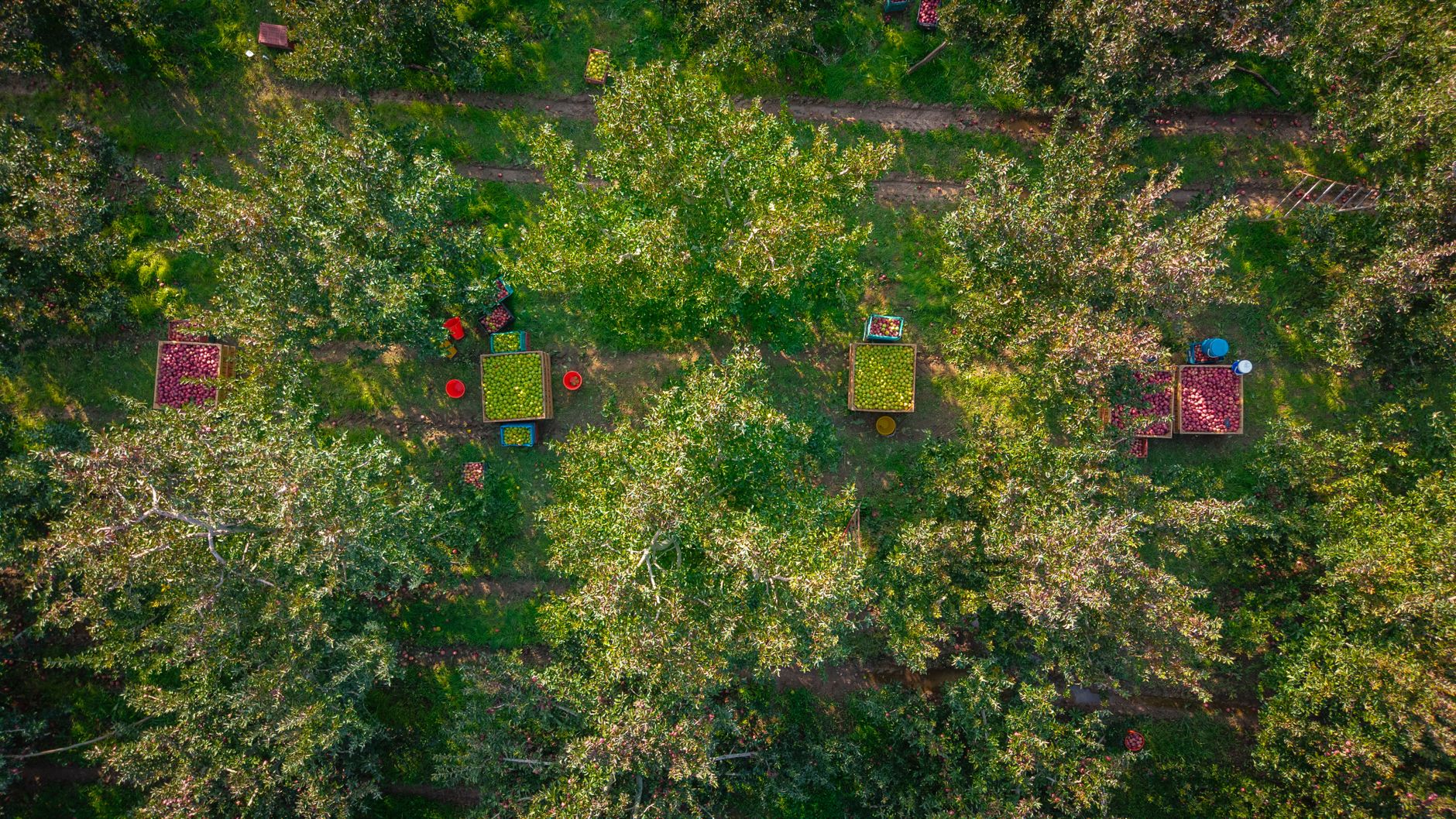
A drone is a useful first pass in a drone vs crop scout decision at orchards when blocks are large, the canopy is mature enough to show stress as color and gaps, and the flight window repeats most weeks. It does not replace the crop scout, who still walks the rows to name the cause of a symptom, check under the canopy and count pests on the tree. Plan on the drone to decide which blocks get walked first, not to end the walk.
Key takeaways
- A drone flies the rows to rank blocks for a walk, but it cannot name the cause of what it sees.
- Canopy closure, wind, cloud and visibility decide how many flying days an orchard really gets.
- Under-canopy pests and cause checks stay with a person on foot.
- Pilot one set of blocks for a full season, then compare days to finding a problem against your walk-only record.
- Our team starts with a free site assessment, and a lease is quoted after the blocks are mapped.
Is a drone or a crop scout the better choice for an orchard?
For most orchards the practical answer is both, because the drone and the scout do different jobs. A drone makes sense when a grower has large, fairly uniform blocks, a canopy dense enough to show stress as color and gaps, and a flight window that repeats most weeks. It makes less sense for a small planting that one scout walks in a short loop, for young trees whose canopy has not closed, or for blocks where wind and rain arrive most afternoons.
Drone vs crop scout is not a contest of speed alone. Penn State Extension notes that satellite imagery at about 1 meter per pixel is suboptimal for orchards because canopies vary between trees, so a closer aerial view has a real purpose. The most common orchard use is ranking, meaning the drone shows where the canopy looks uneven and the scout spends walking time there first.
The timing gain is real but conditional. A drone can surface a change in a block before a walk-only schedule would reach it, but only on days the flight is allowed and the canopy is readable. Count the flying days you expect across a season before you count the days saved.
What does a crop scout actually do in an orchard shift?
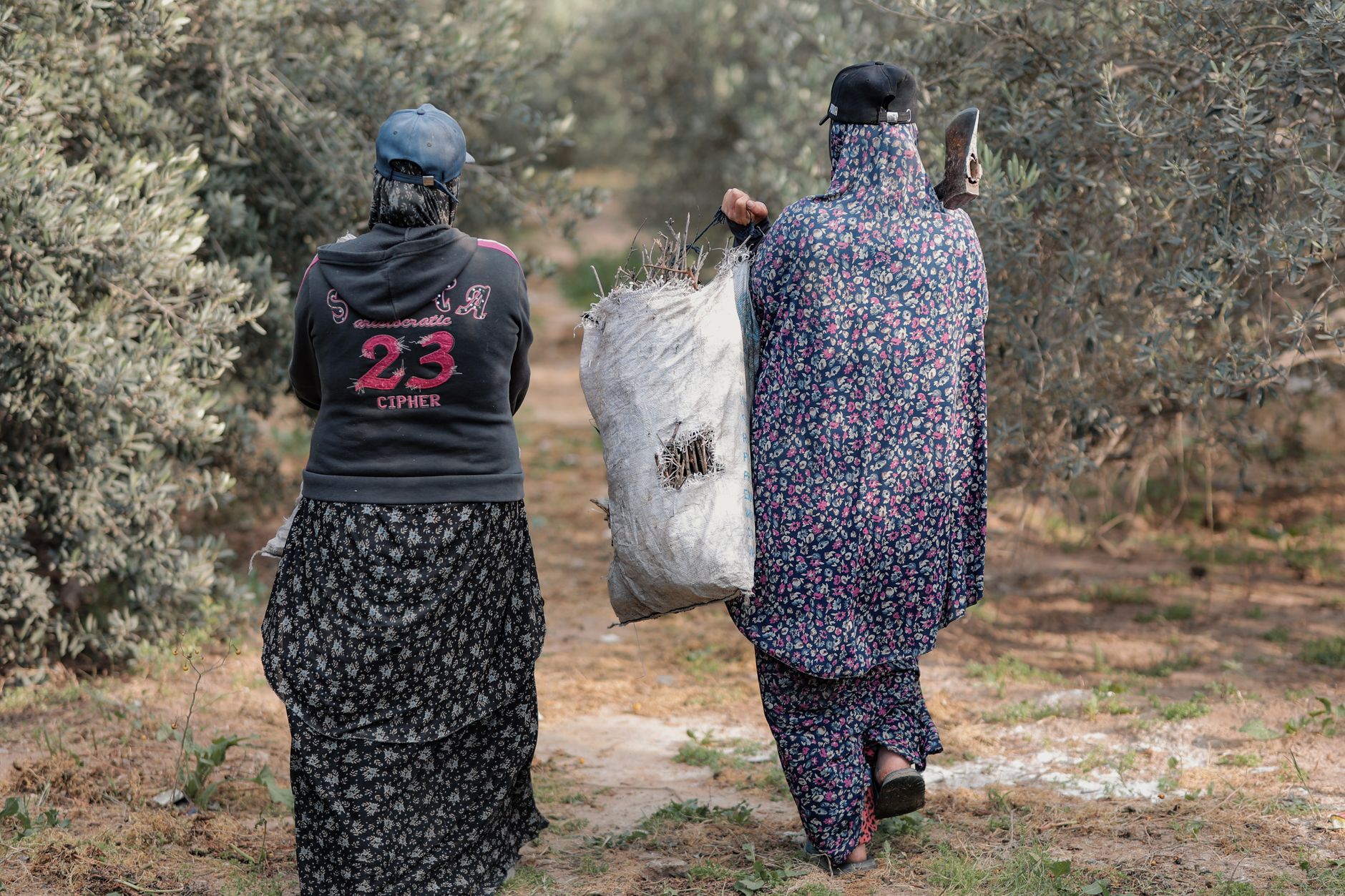
A scout works one block at a time on a fixed route, and the route stays the same through the season so that changes can be compared. The University of Vermont's apple integrated pest management material recommends scouting once a week or more, with each block scouted separately on a consistent route. That cadence, multiplied by the number of blocks, sets the workload more than any single walk does.
On the walk, the scout looks at leaves, fruit, shoots and traps, checks for insect and disease signs, and records what is found at each stop. Orchard sampling is built as a repeatable pattern rather than a random stroll. The University of Georgia's pecan guide, for example, samples every fourth tree in every fourth row, about 10% of trees, with at least 10 terminals per tree for each major cultivar. Pecan is not apple, but the logic carries over: the sample is a fixed pattern someone else can repeat.
The scout then turns notes into a decision, such as whether a threshold has been crossed, which block needs treatment or a follow-up visit, and what to tell the grower. That judgment step is the part a flight does not do.
Which parts of scouting can a drone take, and which can it not?
A drone is good at the canopy view. From above it can show uneven vigor, thin or missing patches, and changes in color or texture along a row. Extension and agronomy sources most often frame drone imagery as a way to prioritize which blocks to walk first, and Penn State's crop scouting guidance for fruit trees fits that use.
A drone sees far less under the canopy. Insects on leaf undersides, trunk damage and early stress hidden in the foliage often stay out of frame. An agronomy blog that works with growers makes the same point from the field: drones show stress patterns but cannot identify the cause, because the same symptom can come from insects, disease, water stress or nutrient deficiency. Those causes call for different responses, and a wrong guess costs a treatment or a missed problem.
The scout still does the work a flight cannot do. That means naming the cause, counting pests, checking fruit and wood, and confirming that an aerial pattern is real before anyone acts on it.
- Whole-block canopy pattern
Drone
One flight plan covers every row in the same pass
Crop Scout
Walks a route, can rush rows or skip canopy areas
- Under-canopy pests
Drone
Weak view of leaf undersides, trunks and fruit
Crop Scout
Looks at leaves, bark and fruit up close and at hand height
- Naming the cause
Drone
Shows a pattern but cannot tell insects from water stress or nutrient problems
Crop Scout
Compares symptoms with weather, history and neighboring blocks
- Working weather
Drone
Stopped by rain, heavy wind and low cloud
Crop Scout
Works in most field conditions, though heat and rain slow the walk
- Records and decisions
Drone
Produces images that still need interpretation
Crop Scout
Writes notes, applies thresholds and recommends action
- Repeatability week to week
Drone
Same plan gives comparable images when light is consistent
Crop Scout
Same route works, but two scouts may read the same tree differently
How much labor and time does orchard scouting take, and what do the data show?
Published labor data for orchard scouting is thin, so plan with care. The most recent Bureau of Labor Statistics injury snapshot for agriculture, forestry, fishing and hunting that this review found covers 2019, and it reports 5.2 total recordable cases per 100 full-time-equivalent workers in private industry. The same snapshot counts about 1,263,160 private-sector employees in 106,998 establishments. Walking rows near machinery and spray equipment is physical work, so route planning and crew safety belong in the scouting plan from the start.
Turnover matters for scouting because a trained scout who leaves takes block knowledge with them. This review did not find a verified turnover rate for farm or orchard labor. The Bureau of Labor Statistics Job Openings and Labor Turnover Survey, as republished by a financial data site, reported a total nonfarm separations rate of 3.10% in February 2026, down from 3.20% the prior month and 3.30% a year earlier, against a long-term average of 3.62%. That series covers all nonfarm industries, so it describes the wider labor market, not orchards.
Overtime, night shifts and sick days are the other labor points, and this review did not verify figures for them in agricultural work. Time the scouting on your own blocks instead. Record how long a full pass takes, how many blocks it covers and how many passes fall in a peak week. That local record is more useful than any national average for this decision.
How common are drones and precision tools on farms?
Drone use among growers is rising but still a minority practice. A 2025 Farm and Rural Life Poll reported that 22% of surveyed Iowa farmers used a drone or drone service in 2024, and 62% of those drone users said monitoring and scouting crops was their most common use. The poll was reported in April 2026. It describes Iowa farmers, not orchard growers, so read it as a direction rather than an orchard rate.
A USDA precision technology report puts the U.S. average at 27% in 2023, which is 2 percentage points above 2021, across about 14,000 operations. That category covers many tools beyond drones, so it is not a drone rate. USDA's older Agricultural Resource Management Survey data put aerial imagery on 7.0% of U.S. corn acres in 2016 and 9.8% of soybean acres in 2018. Aerial imagery is broader than drones, so those figures are not drone counts either.
The supply side is moving too. A 2023 Purdue University survey of agricultural dealers found that 57% offer UAV or drone technology, and 75% expected to offer it by 2026. That survey measures dealers, not growers. A dealer channel for drones tells you the service is forming around farms, but it does not tell you that a given orchard block needs one.
How do canopy, weather and flight rules limit an orchard drone?
Canopy and weather set the flying days, and the flying days set the real speed gain. A drone needs a canopy it can read, which means trees mature enough to show a surface, and light stable enough that this week's images compare with last week's. Wind moves the aircraft and blurs the image, while rain and low cloud can stop flights altogether.
Sources on wind limits for orchard flights conflict. Study guides and quizzes offer different general wind figures, and none of the sources reviewed for this page gives a regulatory wind limit. Set your own go or no-go limits with the operator, write them into the flight plan, and review them each season instead of relying on a rule of thumb.
For U.S. operations, commercial drone flights are governed by 14 CFR Part 107. Study aids describe visibility, cloud clearance and night lighting requirements, but those figures were not checked against the official text for this page, so they are not stated here. Read the current Part 107 text and confirm that the operator, the aircraft and the site are covered before flights start over a working orchard.
How does a drone work alongside a crop scout on the same block?
The working pattern is a drone plus the same team, not a drone in place of people. The drone flies the block first, the team marks rows where the canopy looks uneven or patchy, and the scout walks those rows plus a few control rows on the usual route. The scout confirms or clears each flag, so no decision rests on the image alone.
The realistic labor change is fewer walking hours on blocks the drone clears and more time on blocks that need a closer look. A grower may not need fewer people, because the scout's time shifts toward judgment and recording, and someone trained has to fly or manage the flight. Never run a drone program with zero trained staff on the ground.
We lease commercial robots through financing, select the right robot for the site, deploy and integrate it, train the staff who fly and read it, and service it nationwide. For an orchard, we map the blocks and the flight window first, then train the scout and the pilot on one shared route. Remote triage and on-site dispatch cover the aircraft after go-live.
What can a drone not do in an orchard?
A drone cannot see beneath the canopy the way a person can, cannot name a pest or disease from an aerial view alone, and cannot make a treatment decision. It cannot fly through heavy rain or strong wind, and it cannot operate at night in any routine way without a plan for lighting and rules. Those limits are not a flaw in the aircraft. They mark the difference between a survey from above and a walk through the rows.
The bigger risk is over-trust. A pattern on an image can look like a problem when it is uneven irrigation, a pruning difference or an image artifact. The cost falls on the grower when a block is treated on an image alone, or when a real problem under the leaves goes unseen because the aircraft flew and nobody walked.
The fix is process, not hardware. Set a rule that every flagged block gets a ground check before any action, and record each result so the team learns which patterns are real on your fruit.
How do we get started with a drone pilot in an orchard?
Start small. Pick two or three blocks that differ in canopy and age, fly them through one full season, and compare days to finding a problem against the walk-only record. A pilot shows the flying days you actually have, which matters more than any general guide.
Our first step is a free site assessment. We map the blocks, check canopy and access, review the flight window with your team and set go or no-go limits together. A lease is quoted after that assessment, through lease financing programs, so the fixed robot lease payment reflects your blocks and flight plan, and a pilot can start with one leased unit.
After the assessment we handle deployment, integration with your scouting route, staff training and go-live support. Service is nationwide, with remote triage, on-site dispatch and a maintenance service plan for the aircraft, so a grounded aircraft during a busy treatment window has a response plan agreed before the season starts.
Frequently asked questions
Want a drone at your orchard?
Tell us about your site. We will recommend the robot, quote the lease, and keep it serviced.
Sources
- BLS Injury and Illness Snapshot, Agriculture, Forestry, Fishing and Hunting, 2015 to 2019
- BLS Job Openings and Labor Turnover Survey, total nonfarm separations rate (republished)
- 2025 Farm and Rural Life Poll, Iowa drone use (trade press report)
- Penn State Extension, unmanned aerial vehicle based crop scouting in fruit trees
- University of Vermont, apple IPM 101 presentation
- University of Georgia, pecan scouting guide B-841
- Agronomy blog post on drone scouting limits