
The short answer
For most truck yards, drone vs overnight security guard is not an either or choice. A drone fits well for scheduled aerial sweeps of open yard ground, trailer rows and fence lines, covering much of the perimeter walk a guard does on foot, but it does not fit a zero staff plan, because a person still has to respond to alarms, control gate access and verify what the drone reports.
Key takeaways
- A drone takes over the scheduled sweep of open yard ground, not the response.
- Keep at least one person on every shift for alarms, gate decisions and verification.
- According to UC Berkeley Labor Center research, US security guard turnover was 89 percent in 2024.
- The main truck yard drone study found is a preprint that has not been peer reviewed.
- Routine beyond visual line of sight flights still need a waiver or certificate until the new FAA rule takes effect.
Drone vs overnight security guard at truck yards: which makes sense?
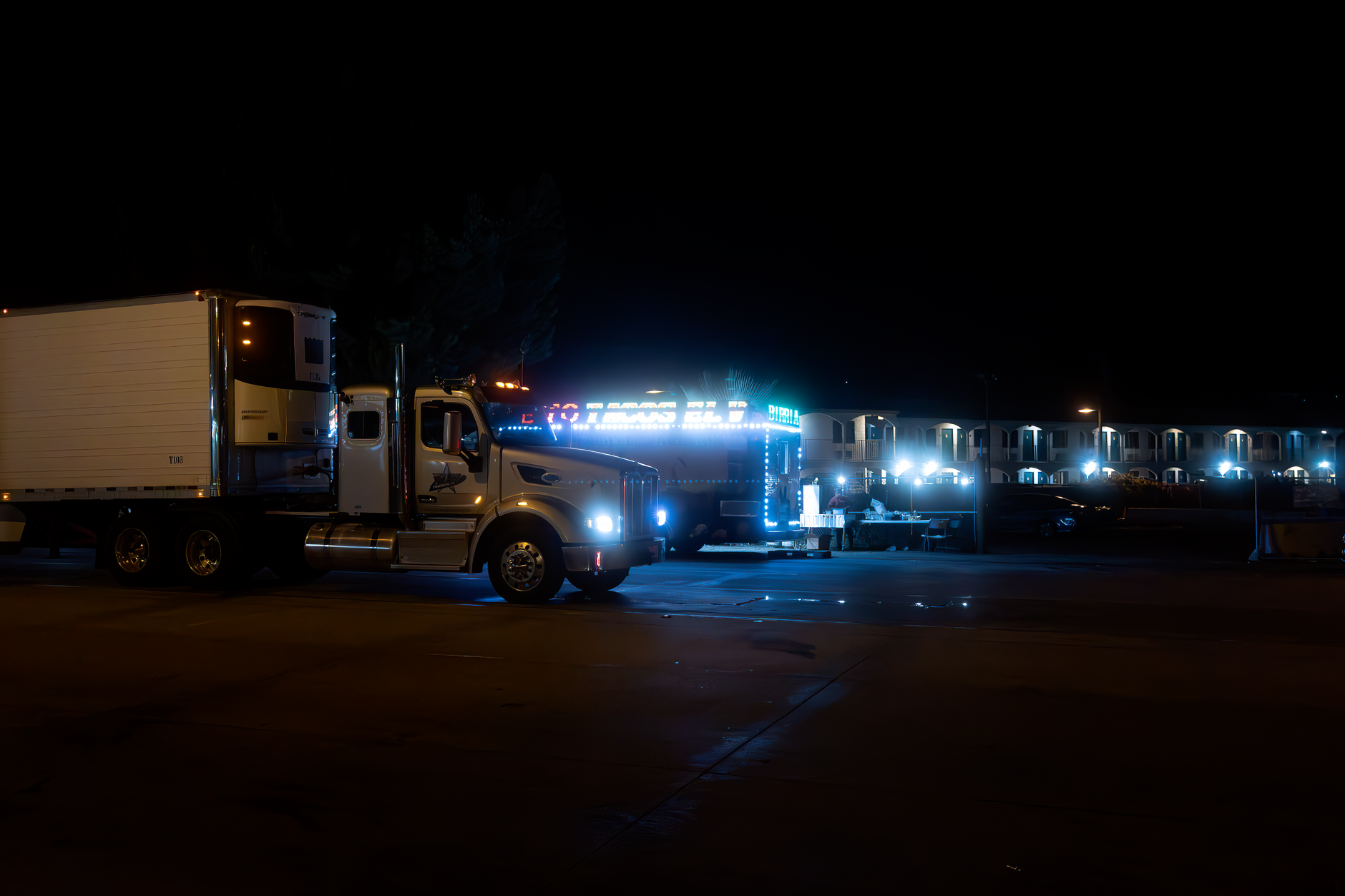
Drones make sense at a truck yard when the job is mostly covering a large open area on a fixed schedule and reporting what is seen. Yards are wide, lit unevenly, and full of trailers, dock doors and fence lines that a guard walks on foot through the night. An aerial patrol covers open ground faster than a walk and repeats the same lanes at the same times every night, without the drift a person adds over a long shift.
They make less sense when the yard is small, when the gate depends on manned check-in, when local airspace or rules limit flights, or when the main risk is a person who must be stopped, questioned or removed. In those cases the drone is a sensor, and a sensor with no person behind it only creates a record of what happened.
The honest answer for most sites is a drone plus fewer staff, with the guard post reshaped rather than deleted. The rest of this page covers what a guard does on a shift, what the drone can take over, what the labor data says, and what has to be true before the decision holds.
What does an overnight security guard actually do in a truck yard shift?
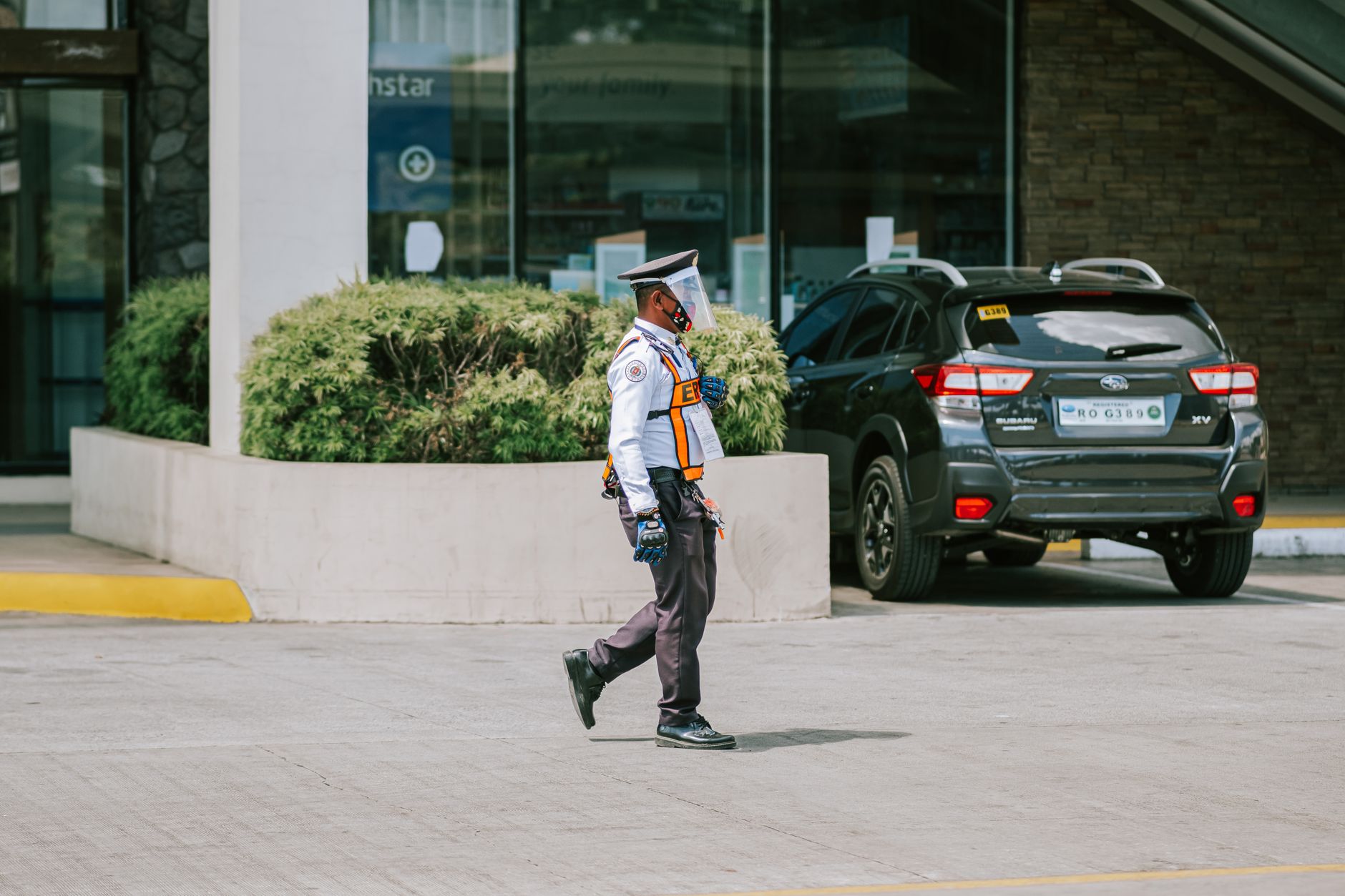
A truck yard guard usually works a fixed post at the gate or gatehouse and walks a set perimeter route at intervals. The route covers trailer rows, dock doors, the fence line, dark corners and the far end of the lot. Most of the shift is routine checking, but the value of the post is in what happens when something is off: an open door, a trailer that has moved, a cut fence, or a vehicle that should not be there.
Logging matters as much as walking. A guard records rounds, notes seal and door checks, logs drivers and visitors at the gate, and files incident reports. After an alarm the guard typically calls a supervisor or the customer and stays in place until someone arrives. That chain of contact is part of the job, and it is where a drone alone does not reach.
- Gate check-in and driver log
- Perimeter walk on a fixed route at set intervals
- Trailer, dock door and seal checks
- Alarm and sensor response on foot
- Incident report and supervisor or customer call
Median hourly wage, Security Guards
$4,317
Monthly cost of one full-time worker, at the median wage plus payroll costs (an estimate, not a quote).
Which parts of the patrol can a drone take over, and which can it not?
A drone is strongest at the parts of the patrol that are about coverage and repetition. It can fly a scheduled path over open ground, reach the far corners of a lot quickly, follow the fence line from above, and capture imagery of trailer rows so a reviewer can compare one night to the next. On a large yard, the time saved on the perimeter sweep is the main gain.
The speed evidence is promising but thin. According to a 2025 vendor case study, a full perimeter check of a large retail parking area took 6 minutes. That is one vendor-reported site, not an independent result. It shows the sweep can be fast on flat, open ground, but it does not show how a yard with dense trailers, poor lighting and obstructions will perform.
What the drone cannot take over is anything that needs a hand or a decision. Opening or closing a gate, checking a seal by hand, approaching a person, judging whether a driver is authorized, and calling police all remain people's work.
What does the labor picture look like for guard shifts?
Guard work is hard to keep staffed. According to the UC Berkeley Labor Center report on the security guard workforce, as reported in tech news coverage, annual turnover in the US security guard industry was 89 percent in 2024, compared with 66 percent for the private sector. The same coverage says the gap has lasted about a decade, with a peak near 99 percent in 2022. A separate UC Berkeley study published in April 2026 found turnover among California guards was nearly 92 percent in 2024.
Turnover matters at night because each replacement starts with less knowledge of the yard, its doors and its regular drivers. A 2025 Physical Security Operations Benchmark, a vendor-run survey, found 42 percent of providers name turnover as their top operational challenge. That is a perception figure from providers, not a measured turnover rate, but it points the same way.
The job base is large. A secondary compilation attributed to the Bureau of Labor Statistics, not checked against the BLS site, puts about 1,272,400 security guard and gambling surveillance officer jobs in 2024. It projects growth of about 0.4 percent for 2024 to 2034, with about 161,000 openings a year, mostly from replacement. In plain terms, the work is roughly flat in size, and most openings come from people leaving.
The research pass did not find verified, current figures for truck yard overtime, night shift premiums or sick days. Pull those numbers from your own staffing records before you size any change. The government wage data on this page gives the local wage for this job, which sets the cost of the shifts you already staff.
How do injury and incident rates bear on the choice?
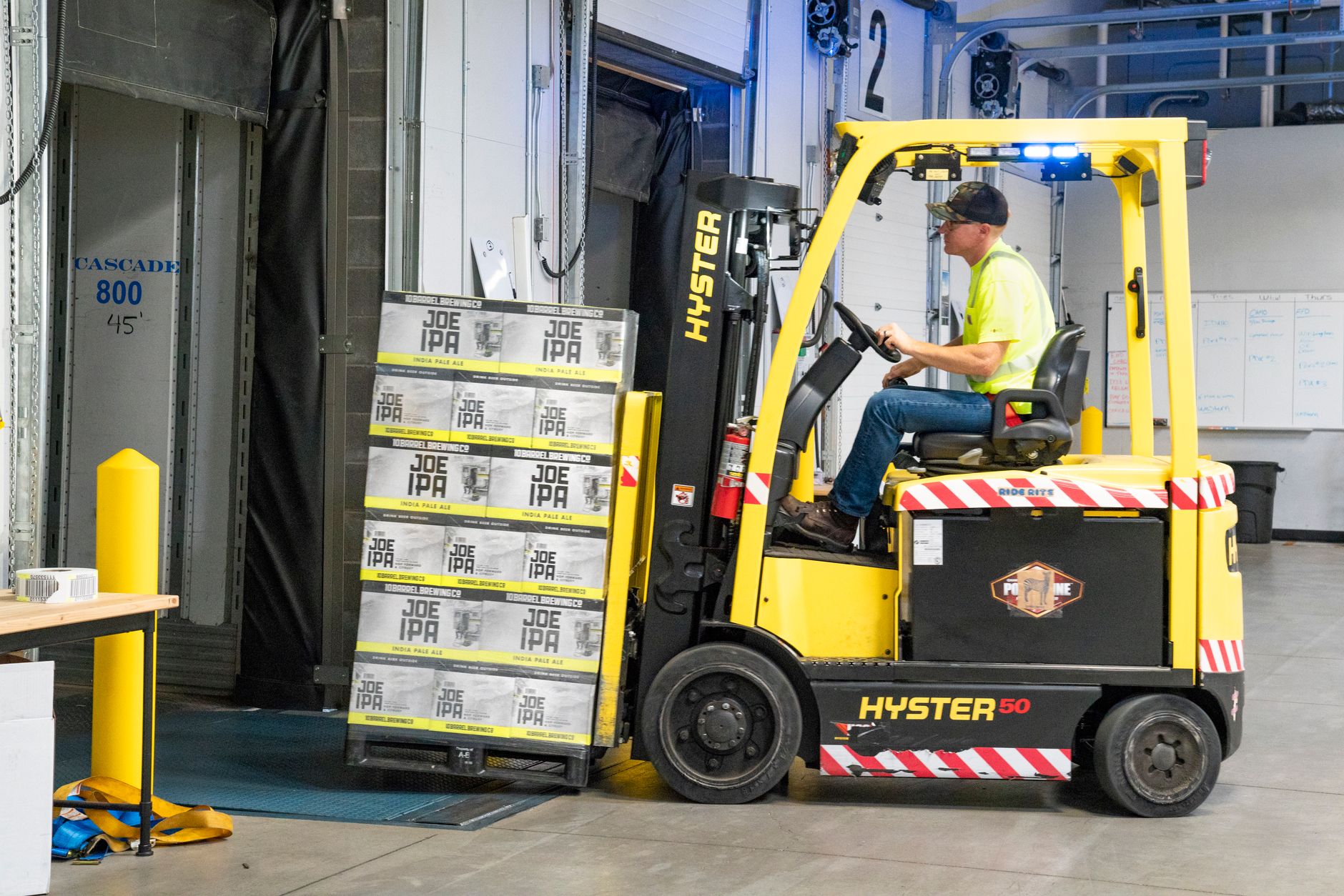
Injury data is older than the labor data, and the sources do not line up cleanly. The Bureau of Labor Statistics noted in a 2012 Economics Daily piece that protective service occupations had the highest nonfatal incidence rate among broad occupational groups, at 329 cases per 10,000 full-time workers. That is a 2012 figure covering all protective service work, not truck yard guards specifically.
A safety statistics compilation citing 2017 data put the nonfatal injury rate for security officers at 14 per 1,000 full-time employees, but that figure was not confirmed against BLS. The research pass did not find a current 2024 nonfatal rate for security guards. Treat both numbers as context, not as inputs to a budget.
What the figures do support is that the guard job carries real physical risk, mostly when a person approaches an unknown situation. A drone reduces how often a guard must walk dark corners, but it does not remove the moment a guard decides to approach. That is why the person stays in the plan.
How does a team work with a drone on a truck yard?
The right model is a drone plus fewer staff, never zero staff. The drone takes the scheduled aerial sweep and the repeated coverage of open ground. The person keeps the gate, alarm response, verification, driver and visitor contact, and the call to police or the customer. The yard keeps a human on the post at all times.
Our role is to assess the site, decide whether a drone fits, and lease the system through financing so the yard does not commit its capital up front. We deploy and integrate the drone with the yard's alarm and reporting routines, train the staff who review the flights, and service the system nationwide. The lease quote comes after a free site assessment, so the number reflects your yard rather than a generic estimate.
Staffing changes need the most care. In many yards the realistic first step is fewer perimeter walks per shift, not a cut to the post. If turnover is the constraint, the flight record also gives the remaining guard a clear map of what changed since the last sweep, which may shorten the orientation a new hire needs.
How many truck yards are there, and what does the drone evidence show?
Counting truck yards directly is hard. The most recent national count found is from the Census County Business Patterns series, as published by the Federal Highway Administration in Freight Facts. It listed 112,849 truck transportation establishments in 2013, down from 120,390 in 2007. Those counts exclude private fleets and do not separate yards or terminals, so they describe trucking businesses rather than the yards themselves.
Drone evidence at truck yards is early. A September 2025 preprint, not peer reviewed, studied geofenced drone surveillance at an industrial facility, a truck yard and parking facility in Denton, Texas. Its patrols were scheduled around the site's hours to cover peak activity and off-hours. The detector reported a mAP@0.5 of 0.912, as reported by the authors. That is a useful design pattern, but it comes from one site and one set of author results.
Speed claims from vendors should be read the same way. Treat them as the start of a site test, not as a result you can carry into a budget.
- Night coverage
Drone
Scheduled sweeps on the same lanes each night, with no fatigue at the end of a shift
Overnight Security Guard
Can change route on the spot and notice what does not look right
- Speed on open ground
Drone
Fast aerial sweep; one vendor case reported 6 minutes for a full check of a large retail parking area
Overnight Security Guard
Slower on foot, but can reach and inspect what a camera cannot resolve
- Response to alarms
Drone
Can image the alarm area but cannot respond
Overnight Security Guard
Can go, check, and call for help
- Gate and access
Drone
Cannot check credentials or open a gate
Overnight Security Guard
Controls access and records visitors and drivers
- Continuity when turnover hits
Drone
The sweep does not wait for a replacement hire
Overnight Security Guard
Each new hire needs time to learn the yard
- Setup and staffing cost
Drone
Lease quoted after a free site assessment
Overnight Security Guard
Wages, overtime and turnover cost; use the government wage data on this page
What rules limit drone patrols at truck yards?
Rules set how far a drone can fly without a person watching it, and that matters on a large yard at night. According to aviation industry coverage, the FAA Part 108 rule for beyond visual line of sight operations went to White House review on July 10, 2026, with no publication date announced at the time of the research pass. The statutory deadline of January 16, 2026 had already passed.
Until the rule takes effect, routine beyond visual line of sight flights still need a Part 107 waiver or a Part 135 certificate. Confirm the current status with the FAA and your integrator before you plan any schedule that depends on flights beyond the operator's view. Status can change between the research date and the day you sign.
Any yard planning a schedule should write the rule status into the site assessment, so the pilot starts from facts rather than assumptions.
What can a truck yard drone not do?
The drone cannot stop a person, detain anyone, or decide whether a driver has authority to be on the lot. It cannot open a gate or check a seal by hand, and it cannot replace the call a guard makes to police or a supervisor. It is also not a substitute for an alarm system that controls doors and access points.
Its camera results depend on conditions. Weak lighting, glare, rain, wind, low visibility and dense obstructions can all reduce what the imagery shows. The detection result in the Denton preprint came from one site with its own setup. A flagged item is a lead for a person to check, not a finding.
Two more limits matter. Flight availability depends on rule status and local airspace, and weather can interrupt a schedule. A yard that depends on the drone for every night has no fallback unless a spare unit or a person covers the gap.
How do I get started with a truck yard drone pilot?
Start with a site assessment. Measure the yard, map the fence line and lanes, note the lighting gaps and the gate process, and identify where alarms and reports go. The site assessment is free, and the lease quote follows it, so the number reflects the actual yard.
Run a phased pilot before any staffing change. A common approach is one drone covering the largest open section of the yard for a set number of weeks, with the guard schedule unchanged. Compare flagged items, time spent on the perimeter walk, and nights the sweep was missed because of weather or rule limits. Use that record, not a brochure, to decide the next step.
Discuss staffing only after the pilot, and then as a plan that keeps a person on shift. We handle integration, staff training and nationwide service, so the yard has one partner for installation, reports and repairs, with a free site assessment and a lease quote before any commitment.
Frequently asked questions
Want a drone at your truck yard?
Tell us about your site. We will recommend the robot, quote the lease, and keep it serviced.
Sources
- US Bureau of Labor Statistics, Occupational Employment and Wage Statistics (OEWS May 2024)
- UC Berkeley Labor Center report, via tech news coverage
- UC Berkeley news release on the 2026 guard workforce study
- 2025 Physical Security Operations Benchmark, vendor survey
- Bureau of Labor Statistics, 2012 Economics Daily
- September 2025 preprint on UAV surveillance at an industrial facility
- Census County Business Patterns via FHWA Freight Facts
- Vendor case study on drone perimeter checks
- Aviation industry coverage of the FAA Part 108 review