

The short answer
A drone makes sense at a data center for scheduled fence-line and perimeter checks across a large campus, because it covers ground from above on a fixed schedule that a patrol guard can only walk. It does not replace the guard: alarm response, gate decisions and anything inside the fence still need a person on site, so the realistic choice is a drone plus fewer staff, not a drone or a guard. The drone case weakens on small campuses, where air rules block routine flight, or where the site needs an in-person response to people, which a drone cannot give.
Key takeaways
- A drone suits scheduled fence-line and perimeter checks on a large campus, not alarm response, gate decisions or entry to buildings.
- Turnover in security services runs well above the private sector average, so a fixed aerial pass depends less on who is on shift.
- Routine drone flight beyond visual line of sight still depends on FAA rules that the latest source reviewed said were not yet final.
- The sound setup is a drone plus fewer staff, with a person always able to respond on site.
When does a drone beat a perimeter patrol guard at a data center?
For most data center operators, the drone vs perimeter patrol guard question is not whether a drone can see a fence line. It can. The useful question is whether a scheduled aerial check takes over the walking that a guard does on foot, and whether that saving holds once response work is counted.
A drone tends to make sense when the campus is large, the perimeter is long, and the checks repeat on a set route. Some campuses sit on large parcels with the fence far from the building, so walking the line takes a real share of the night. It makes less sense on a small site with a short fence, where one guard can cover the line and the building in one pass.
A drone does not make sense as a replacement for a person. It cannot detain anyone, open a gate, or decide whether an alarm needs a dispatched response. The fair test is whether the aerial check reduces fence-walking time while a person still responds.
What does a perimeter patrol guard actually do in a shift at a data center?
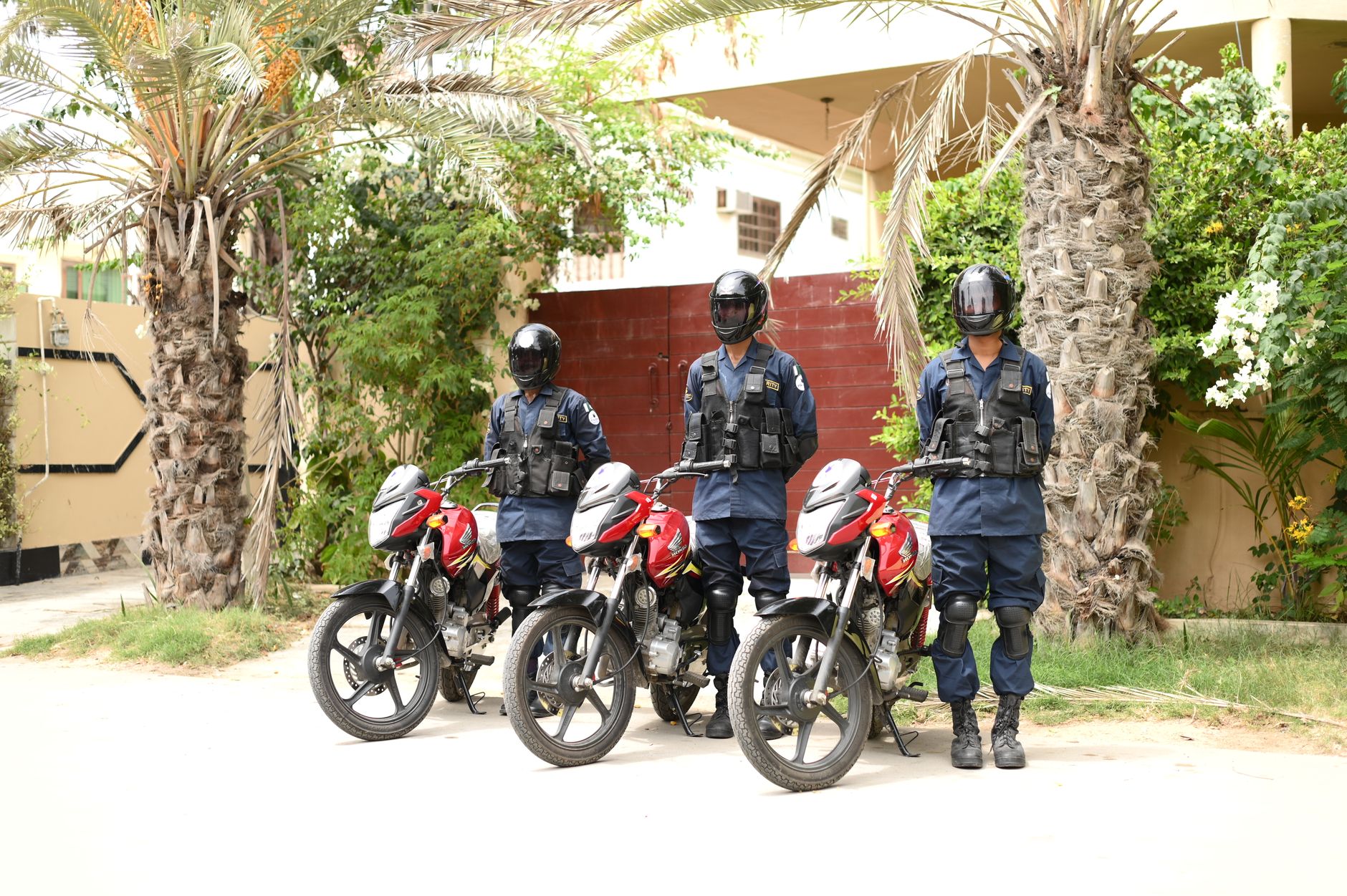
A perimeter patrol guard at a data center usually works a fixed route around the fence line, the gates, the loading area, the generator yard and the parking areas. The guard checks locks, gates, cameras and lighting, looks for damage or someone who should not be there, and logs what is found. The route is walked on foot or driven, and the guard stops at alarm points, badge readers and any gap in the fence.
Much of the shift is repetition. The same route repeats through the night, and attention drops on quiet hours, which is one reason sites add cameras and sensors. The guard also takes calls from the operations center, responds to alarms, meets deliveries and outside vendors at gates, and writes incident reports for each event.
Public figures for how many hours a guard spends on the perimeter at a data center were not found for this page. Each operator's patrol logs, route times and alarm records are the right source for that number, and they should be pulled before any decision.
Median hourly wage, Security Guards
$4,317
Monthly cost of one full-time worker, at the median wage plus payroll costs (an estimate, not a quote).
Which parts of the perimeter can a drone take, and which can it not?
A drone can take the scheduled overflight of the fence line, the gates, the yards and the roofs of outbuildings. A camera or thermal sensor looks for people, heat sources and damage, and each flight is recorded and sent to the operations center. A guard does not have to walk that route for the pass to happen, which removes the repetitive part of the job.
A drone cannot enter a data hall, take custody of a person, or physically secure a gate. Inside the building, access control and in-building staff are still needed. A drone also cannot replace the walk to an alarm point, because the aerial view does not let anyone check a door, a cabinet or a fence gap up close.
Flight rules set the limits too. The FAA has not yet finalized the Part 108 rule for beyond visual line of sight operations. Until it takes effect, routine flight of that kind requires a Part 107 waiver or a Part 135 certificate, according to an industry analysis of the Part 108 timing.
- Scheduled fence-line checks
Drone
Flies a fixed route at set times and records each pass
Perimeter Patrol Guard
Walks the same route and can vary it, noticing small changes by eye
- Large campus coverage
Drone
Covers long fence lines from above without walking them
Perimeter Patrol Guard
Covers the route on foot, which takes longer on large parcels
- Alarm response
Drone
Can give an aerial look at an alarm location before anyone is sent
Perimeter Patrol Guard
Goes to the spot, verifies what is there and acts on it
- Gates and vendors
Drone
Cannot open a gate, check identity or question anyone
Perimeter Patrol Guard
Checks credentials, meets deliveries and decides on access
- Inside the building
Drone
Cannot enter data halls or inspect cabinets
Perimeter Patrol Guard
Works inside with access rights and can check closely
- Weather and light
Drone
Stops in high wind, low light or when flight rules do not allow it
Perimeter Patrol Guard
Keeps patrolling through most conditions on the same route
How much turnover and staffing churn is there in security guard work?
Turnover is the labor problem operators feel first. According to UC Berkeley Labor Center figures, as reported in a technology news piece, annual turnover in investigation and security services was 89 percent in 2024, against 66 percent for the private sector. The same report says turnover peaked near 99 percent in 2022.
The problem is industry wide. An October 2025 ASIS survey found more than 40 percent of security service providers named turnover as their top challenge. A Physical Security Operations Benchmark Report (2025) found 42 percent of providers name turnover as the top operational challenge.
For a data center, churn matters because a patrol run by people still learning the site makes the perimeter check uneven from one shift to the next. A fixed aerial pass is consistent regardless of who is on shift, though a guard is still needed for response. Overtime, night shift and sick day figures for this job were not found for this page, so the site's own timekeeping is where to measure them.
What are the injury and fatality risks for guards on night patrols?

The job carries real physical risk. In the BLS chart on civilian occupations with high fatal work injury rates, security guards and gaming surveillance officers had 9.2 fatalities per 100,000 FTE workers, against 3.5 for all workers. The chart does not show the reporting year in the version reviewed, so read the figure as a rate comparison rather than a current annual count.
Night patrols add exposure: walking alone in poorly lit yards, handling confrontations at gates, and driving the route. A drone pass can reduce the time a person spends on the most exposed parts of the fence line, but response and gate work still need staff, so the drone lowers exposure only in part.
Injury rate data specific to data center guard work was not found, so this page does not give a site-level injury figure. Ask for the site's own incident and injury log when comparing options.
How many data centers are there in the US, and does that change the math?
A 2025 count by a market research firm put 2,396 operational data centers in the US, with 17.2 GW of active IT load. Other counts vary because each source counts other facilities, and no single authoritative government count was found for this page.
Scale matters less than the site itself. A drone program pays off most where the campus is large, the perimeter is long and the route repeats, so the national count does not decide the question. Campus acreage and fence length for a given site do. Acreage ranges for data center campuses were not verified for this page.
Operators with several sites should pilot one campus first. A single pilot shows whether scheduled checks cut walking time and whether the alert volume stays manageable before a wider rollout.

How does a drone and guard team work together without cutting staff to zero?
The sound model is a drone plus fewer staff, not a drone in place of all staff. The drone takes scheduled overflights, the guard keeps response, gates and the building, and the operations center watches the alerts. Cutting to zero staff leaves no one to respond to an alarm, meet a vendor, or act on a drone finding that needs a person on the ground.
Set the number of people on shift from the response load, the gate count and the alarm points, not from the drone's flight schedule alone. Response work is the part a drone cannot do, so it should drive the staffing decision.
What can a drone not do well at a data center perimeter?
Honest limits matter more than the pitch. No independent audit of drone patrol effectiveness or false-alarm rates was found for this page, and operator reports of cost savings and faster response are self-reported. Those claims should be tested on your own site, not taken on trust.
Weather, wind, light and battery life decide when a drone can fly. Flight endurance and per-flight coverage figures were not found, so test flights on your own campus must set the route length and schedule.
A drone sees the perimeter from above but cannot confirm that a door, a cabinet or a fence section is secure up close.
- Cannot enter data halls or inspect cabinets
- Cannot detain, stop or question a person
- Stops in high wind, low light or when battery and flight rules do not allow flight
- Routine beyond visual line of sight flight waits on a final FAA rule, which the latest source reviewed said had not yet been published
How do you get started with a drone pilot at a data center?
Start with a site assessment. Service Robot Co. is a US commercial robot integrator. We pick the right robot for the site, lease it through financing, deploy and integrate it, train the staff, and service it nationwide. The lease is quoted after a free site assessment, so the terms reflect your campus, fence length and flight rules rather than a generic offer.
A practical first step is a pilot on one campus with a scheduled route, a logged baseline of guard walking time, and a written response procedure. Measure walking time saved, alert volume and any delayed response before extending to other sites. Ask for training, service coverage and a plan for downtime, including spare units, before signing.
Check the regulatory position first. Confirm the Part 107 waiver or Part 135 certificate status for your route, and track the Part 108 rule, which the latest source reviewed said had not yet been published. The FAA has said it hopes to publish by end of 2026, so write the pilot plan to work under the rules in force now.
Frequently asked questions
Want a drone at your data center?
Tell us about your site. We will recommend the robot, quote the lease, and keep it serviced.
Sources
- US Bureau of Labor Statistics, Occupational Employment and Wage Statistics (OEWS May 2024)
- Data center count by a market research firm, 2025
- Technology news report of UC Berkeley Labor Center turnover figures
- ASIS guard force turnover survey, October 2025
- Physical Security Operations Benchmark Report, 2025
- BLS chart on civilian occupations with high fatal work injury rates
- Low Altitude Economy summary of FAA Part 108 OIRA review
- Industry analysis of BVLOS Part 108 timing for 2026