
The short answer
Autonomous mobile robot cost for textile mills depends on how much floor the robot covers, how many separate routes it runs between spinning, weaving and finishing, how many shifts it works, and how much mapping and integration the site needs. The lease payment is set in a quote after a free site assessment, so no flat figure applies to every mill. The labor side is easier to measure: the work it takes over is the repeated hauling of heavy bolts, rolls and bobbins that keeps operators away from machines.
Key takeaways
- Cost follows the number of routes, floor condition, shift pattern and integration scope, not one flat figure.
- Mapping, software, maintenance, insurance and training are the costs early estimates most often leave out.
- BLS data show textile mill establishments fell from Q4 2024 to Q2 2025, so each remaining mill needs its own site plan.
- Log one sample shift of hauling before comparing quotes, because that log is your labor baseline.
- The lease quote follows a free site assessment and itemizes what the lease covers.
What does autonomous mobile robot cost for textile mills depend on?
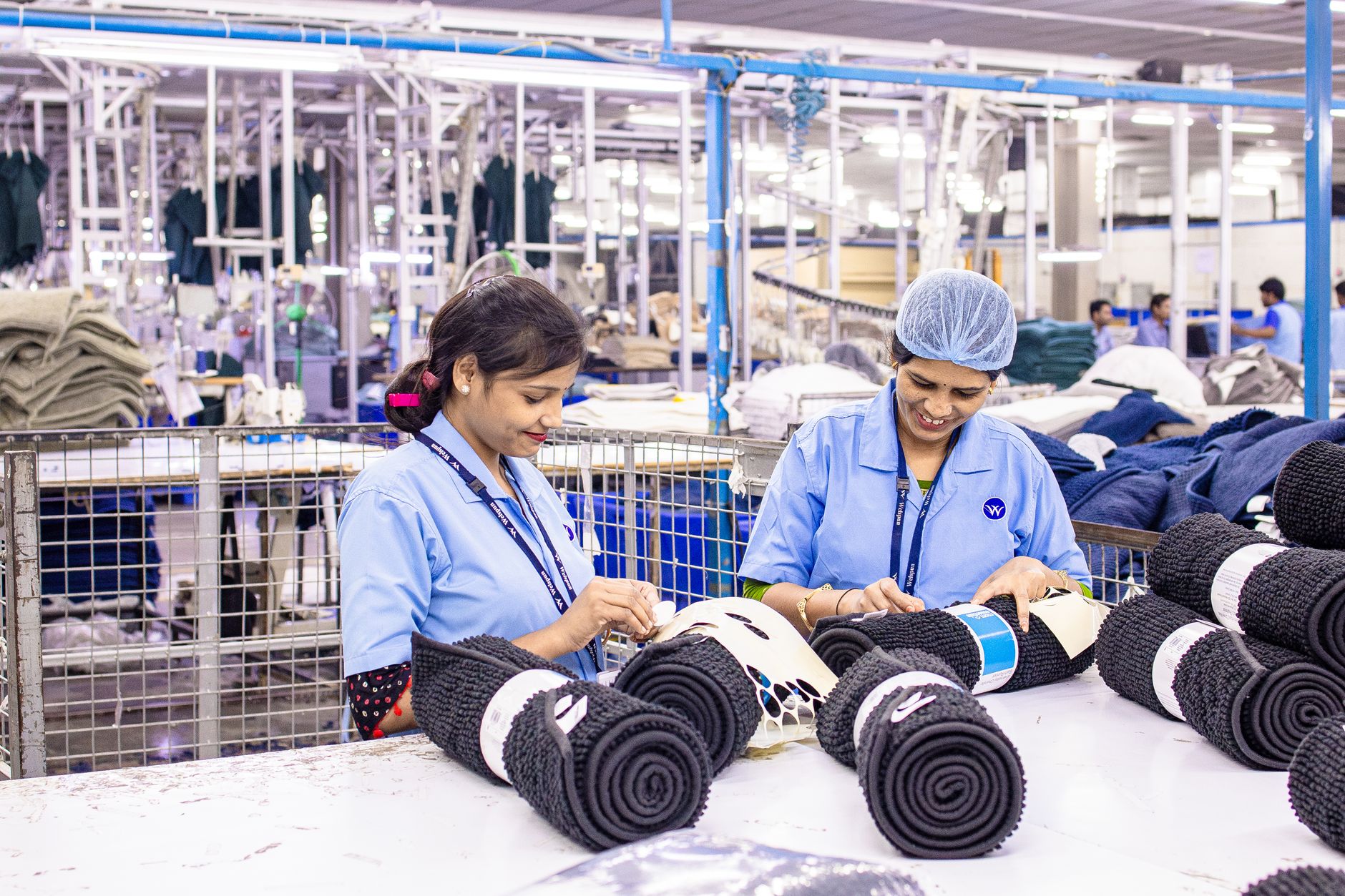
The cost of an autonomous mobile robot at a textile mill is set by the site and its routes, not by the vehicle alone. A mill moves heavy bolts, rolls and bobbins between fixed production areas, often down long aisles that run from spinning to weaving to finishing. Each route you automate adds mapping, testing and integration work, and each extra unit adds coverage and service needs.
We set the lease quote after a free site assessment, because the questions that move cost only get answered on the floor. Those questions are how many routes repeat, how much area they cover, which surfaces and doorways the robot must cross, how many shifts run, and how the robot should exchange jobs with your existing systems.
Textile mill establishments fell across the three quarters the Bureau of Labor Statistics reports. According to the BLS textile mills profile, private establishments numbered 2,717 in Q4 2024, 2,672 in Q1 2025 and 2,667 in Q2 2025, the last figure preliminary. Seasonally adjusted employment was 84.5 thousand in December 2025 (preliminary), down from 85.4 thousand in September 2025, according to the same profile. The Federal Reserve Bank of St. Louis FRED series for the same industry, not seasonally adjusted, shows 81.0 thousand in December 2025 and 79.1 thousand in February 2026. Because each remaining mill has its own floor plan, a standard layout rarely fits and the assessment decides the quote.
Where does the robot work inside a textile mill?
The robot's work is concentrated in a few zones that a mill already runs as separate areas. Each zone brings its own floor, traffic and load type, and those differences shape the route plan. The six zones below are the ones that usually determine where routes start, stop and cross.
Route design usually starts at the handoff that moves the most loads. In many mills that is the link between spinning and weaving, or between weaving and finishing, where bobbins and rolls wait in queues. A route that serves one such handoff is simpler to map than a loop that visits every department.
Automation of this kind of material movement is growing across manufacturing. According to the International Federation of Robotics, US industrial robot installations rose about 11 percent in 2025 to roughly 38,000 units, after two years of declines, and US robot density is 307 units per 10,000 manufacturing workers. Some coverage treats the 2025 figures as preliminary, so use them as direction rather than exact counts. The same federation reports that the global operational stock reached a record 5 million units in 2025, with installations forecast to rise 9 percent in 2026 to 655,000 units.
What factors move the cost up or down at a textile mill?
Floor area and route length come first, since they set how far each robot travels per run and how many units keep up with the work. Longer routes need more battery planning and more time to map and test. A mill with several short routes may need more units than one long loop, even on the same floor area.
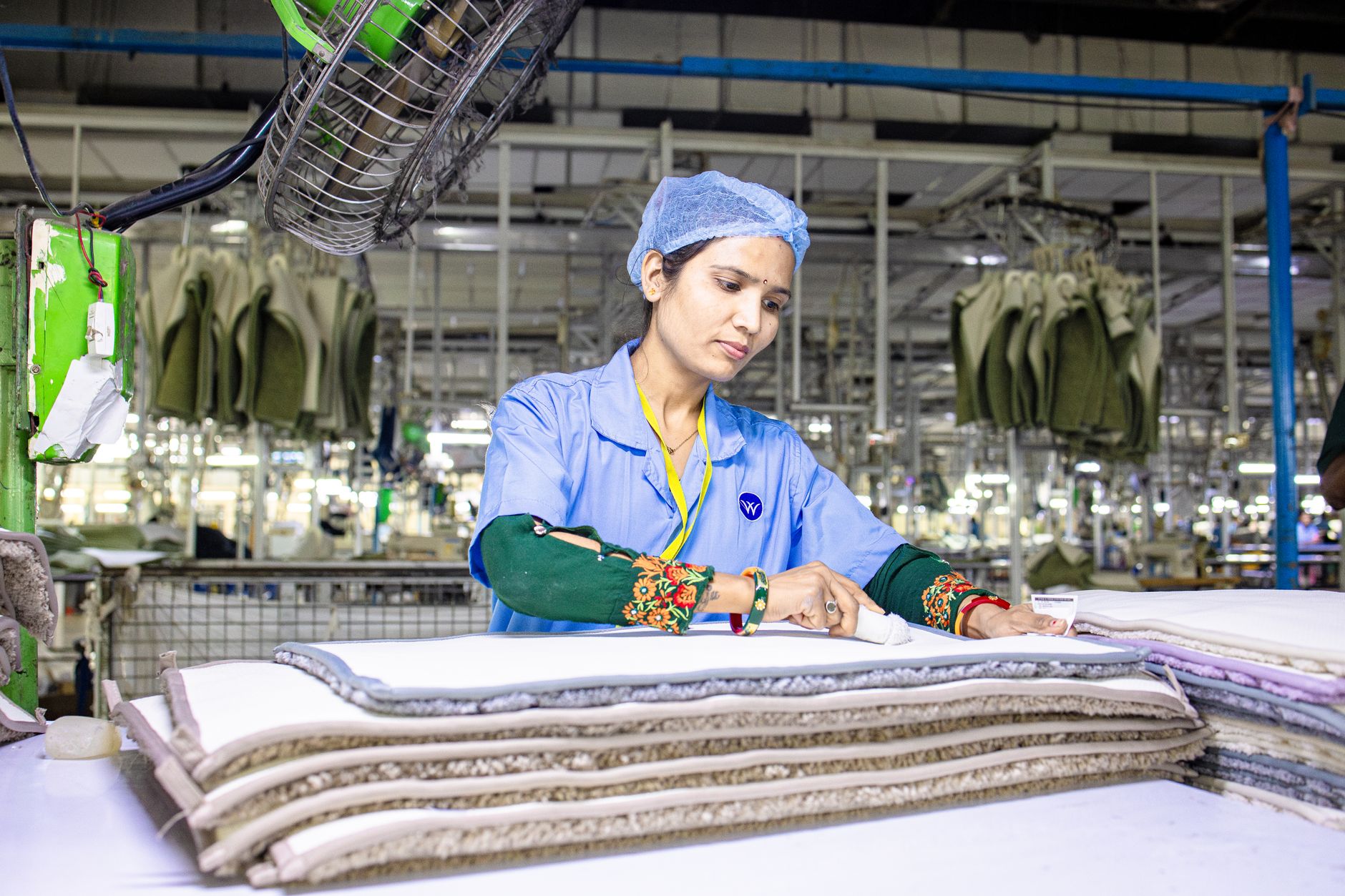
Surfaces and obstacles come next. Textile mills carry fiber and lint in the air, have uneven floor joints and thresholds, and move heavy roll cradles and bobbin racks around the aisles. Each of these changes sensor tuning, route design and cleaning or service intervals, so the assessment checks them directly.
Shifts and traffic are the third group. A mill running more than one shift needs a robot schedule that covers every shift, and busy aisles with forklifts and people require slower speeds and wider path rules. Number of units and service distance complete the picture, because a fleet needs spares, dispatch planning and training for more staff, and distance to your site sets how quickly a unit can be serviced.
How does leasing through financing work for a textile mill?
We lease robots through financing, so the mill avoids a large upfront outlay and carries the robot on a fixed payment schedule. The lease payment comes in a quote after a free site assessment. We cannot state it in advance, because routes, floor and shifts vary from mill to mill.
The assessment measures routes, checks surfaces and doorways, counts the units you need and notes how the shifts run. That information decides which robot fits the floor and how much integration and training the site needs. A quote written without that visit is an estimate, and it should be treated as one.
The quote lists the lease through financing, deployment and integration work, operator training and service coverage as separate lines. It states what sits outside the lease, including software terms and insurance terms. Ask for each item to be written out so two quotes can be compared on the same basis.
How many labor hours does the robot take over?
Labor hours are the part you can measure on your own floor. Start by logging a sample shift and recording each cart and roll run, who made it, how long it took and whether the operator was pulled away from a machine. That log turns a general claim into a route count you can use in the quote.
Our research did not verify an hour figure for textile mill hauling, so the table below describes the work in terms you can check on your floor. Material movement between fixed areas is repetitive, which is why it suits automation. The hours add up because each run interrupts an operator, not only because the run is long.
Labor supply makes hauling hours harder to cover. According to a secondary summary of BLS OEWS May 2024 data, 805,770 people were employed as industrial truck and tractor operators nationally. BLS projections cited in the same summary show about 76,400 average annual openings, with openings far exceeding net job change because of turnover. Staff turnover means part of any crew is new at a given time, which adds training hours to shifts.
What can an autonomous mobile robot not do in a textile mill?
It cannot repair a broken machine or fix a stalled loom, and it does not decide which bobbin lot goes to which finishing line. It moves loads along mapped routes. Judgment about material, machine condition or order priority stays with your staff.
It works poorly where routes change daily, where floors are damaged or wet, or where pallets and carts are left in the aisle and block the path. Those conditions raise downtime and need people to clear them. A site with frequent layout changes needs a mapping plan before any route is committed.
It also suits only routes that repeat. A one time move across a yard or a job with no fixed start and end is better handled by hand. Mixed flows often split well: the robot takes the repeating lanes and staff cover the rest, which keeps the lease tied to hours you can prove in your own logs.
What do injury rates say, and how does safety fit the plan?
The BLS textile mills profile lists a total recordable case rate of 2.5 per 100 full-time workers and 3 fatalities, though the page does not state the year. An earlier BLS spotlight from 2012 gives 2010 total recordable case rates of 3.3 for textile mills and 2.6 for fiber, yarn and thread mills. Those figures come from separate years and should not be read as a trend.
The BLS textile product mills profile lists a total recordable rate of 3.3 for 2020, for a related subsector. That profile states its method: cases divided by hours worked, times 200,000. Use the same method when you compare sites, because it puts injuries on a common hours base.
A robot reduces manual hauling exposure, but it adds hazards of its own, including moving vehicles in aisles, charging areas and service work on lifts. The safety plan covers pedestrian zones, marked routes and lockout steps for service, and it is set during site assessment rather than after go live.
How do you get a quote after a free site assessment?
Start with the free site assessment. We walk the floor, map the routes you describe and check the ones we see, review surfaces and doorways, and confirm shifts and traffic. The output is a route list, a unit count and an integration scope.
From that, we write a quote with the lease through financing, deployment and integration, operator training and nationwide service listed as separate lines. Ask for mapping updates, software terms and insurance to be itemized so the quote can be compared line by line. If the routes are too few or too irregular to justify a robot, the assessment will say so.
A practical start is one route on one shift, run for a few weeks, before committing to a full fleet. That gives you real hour and fault data to set the rest of the plan. Bring your shift logs, an up to date floor plan and your list of routes to the assessment.
Frequently asked questions
Want a warehouse robot at your textile mill?
Tell us about your site. We will recommend the robot, quote the lease, and keep it serviced.
Sources
- BLS textile mills profile (NAICS 313)
- FRED series CEU3231300001 (textile mills employment)
- BLS 2012 Fashion spotlight, injury and illness data
- BLS textile product mills profile (NAICS 314)
- International Federation of Robotics, US robot industry returns to double-digit growth
- International Federation of Robotics, five million robots now operate in factories globally
- Secondary summary of BLS OEWS May 2024 data, SOC 53-7051