

The short answer
A cleaning robot cost for indoor trampoline parks is set by the work the robot covers, not by a catalog number. The main drivers are the hard-surface floor area in scope, the hours the robot can run, how the floor is mapped, how many units the site needs, and what service sits behind them. A lease quote is written after a free site assessment, so the number reflects your building rather than a generic estimate.
See what a cleaning robot costsRun the numbers in the ROI calculator
Key takeaways
- Hard-surface floor area in scope sets most of the work the robot takes on.
- The run window and unit count move the quote more than any other single input.
- Mapping, integration, training and service are the costs people most often miss.
- Manual floor care carries high turnover and injury rates, so staffing belongs in the math.
- A lease quote follows a free site assessment and lists its scope in writing.
What does a cleaning robot cost for indoor trampoline parks depend on?
A cleaning robot cost for indoor trampoline parks is set by the work the robot covers, not by a catalog number. Four inputs decide most of the scope: how much hard-surface floor the robot must cover, how many hours a night it can run, how the floor is mapped, and how many units the site needs. Service coverage and staff training then decide what happens when a unit is down.
At this kind of park, the hard-surface zones are the robot's job. These are the lobby, the entrance and check-in, the corridors that lead to the courts, the snack and seating areas, and the floor between courts where foot traffic and dropped items collect between sessions. The jumping surfaces and the court frames stay with the operator's own care routine, which keeps the scope smaller and easier to quote.
Two parks of the same size can therefore get very different quotes. A park with one long open floor and a single overnight window is a different job from a park with many small rooms and short gaps between sessions. That is why the lease quote follows a free site assessment rather than a generic table.
What moves the cost up or down at a trampoline park?
Floor area in scope is the base. More hard-surface floor means longer routes, more charging cycles, and often a larger unit count to finish between sessions. The number that counts is the area the robot must actually cover, not the total building footprint, so the assessment separates the two.
Layout is the next lever. Open runs are easier to map and cover than floors broken up by counters, lockers, benches and foam pit surrounds, because each obstacle adds route work and another place where a run can stop. A floor with many corners and changes in surface material takes more setup than an open hall of the same size.
The shift window sets how many hours the robot has. A park that closes and can run overnight with no operator on the floor has a different window from one that stays open late and resets courts in short gaps. A short window may need more units or a split schedule, and the site assessment tests that window against real operating hours.
Traffic and spill frequency change the number of passes. Entrances, the snack counter and the court edges collect more debris and drink spills than a quiet corridor. More passes mean more runtime, so ask the assessment to set frequency by zone, not one rate for the whole building.
Integration and service close the list. If the site already runs a scheduling or work order system, connecting the robot to it adds setup that a standalone unit does not need. Service coverage, meaning how quickly a unit returns to the floor after a fault, belongs in the written scope, not in a verbal promise.
How many trampoline parks are there in the US?
The count depends on the source and on what it counts. According to IBISWorld, there were 378 businesses in the US trampoline parks industry, growing at a 3.1% CAGR from 2019 to 2024, and no company holds more than 5% share. Market.us estimated about 800 US trampoline parks were operating in 2023, which is a location estimate rather than a business count.
The difference matters for planning. A business can run several locations, so 378 businesses and about 800 parks describe different units. Check which unit a figure refers to before it goes into a budget. No 2025 industry report with a reliable US park count turned up in this research, so treat any single 2025 figure with caution.
A market spread across many operators also explains why quotes start from one building. With no company holding more than 5% share, according to IBISWorld, most sites are planned on their own floor plan, hours and traffic rather than copied from a shared template.
Safety data is part of the context. A 2016 Pediatrics study by Kasmire, Rogers and Sturm estimated US emergency department visits for trampoline park injuries rose from 581 in 2010 to 6,932 in 2014, while home trampoline injuries did not rise significantly over the same years. According to a news report of that study, park-related ER visits rose as parks grew from 25 to 350 nationwide, and almost 9 percent of park injuries led to hospital admission, against 5.2 percent for home trampolines.
That study measures injuries, not floor cleaning, so it does not size a cleaning budget. It does show why operators keep close watch over their courts and equipment, which stay with staff in any cleaning plan.
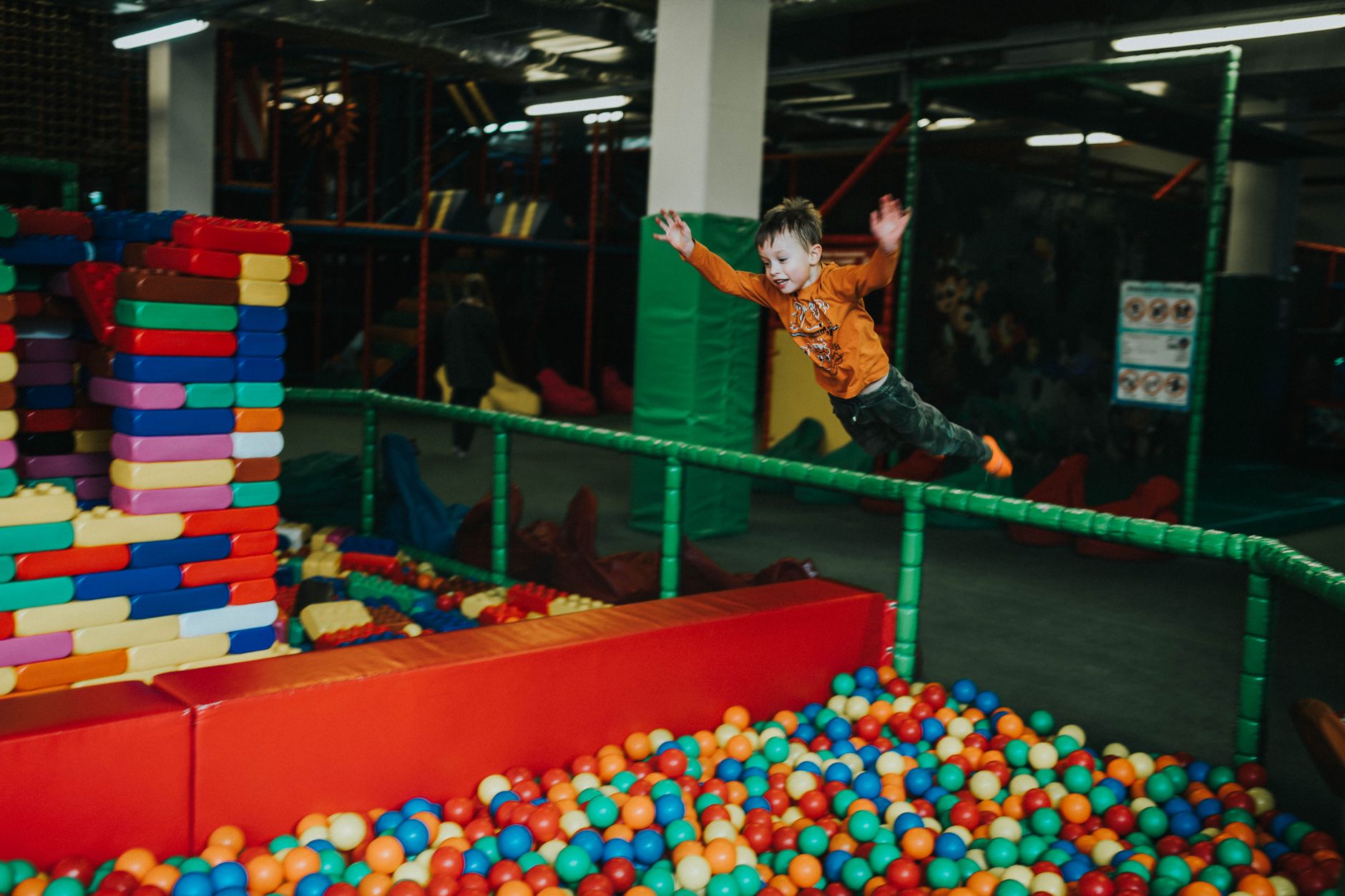
Which floor zones does a cleaning robot cover at a trampoline park?
The robot's scope is the hard floor, meaning zones with tile, sealed concrete, vinyl or similar surfaces that can be scrubbed or swept on a mapped route. At this kind of park, those zones take the most walk-on traffic and the most dropped items between sessions.
Not every zone deserves the same route. The lobby and entrance take the most foot traffic, so they need the most frequent passes. The corridors and court perimeters need fewer passes but must stay clear, because one blocked spot can stop the whole run. Party rooms and seating areas are often lower traffic and can run on a longer cycle.
The zone map is the first deliverable of the assessment. Each zone is marked with its traffic level, its obstacles and the pass frequency it needs, and that map sets the route and the unit count before any quote is written.
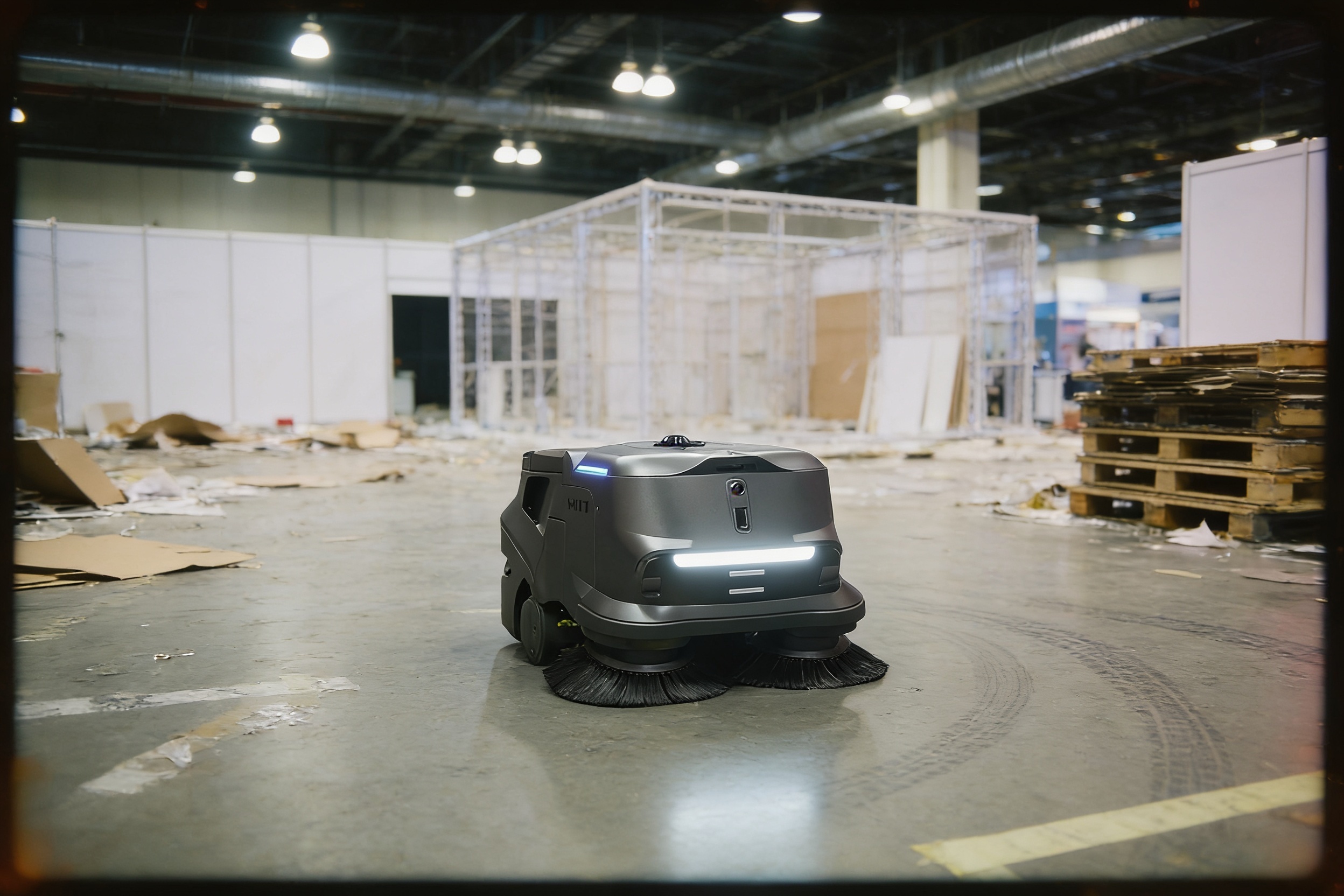
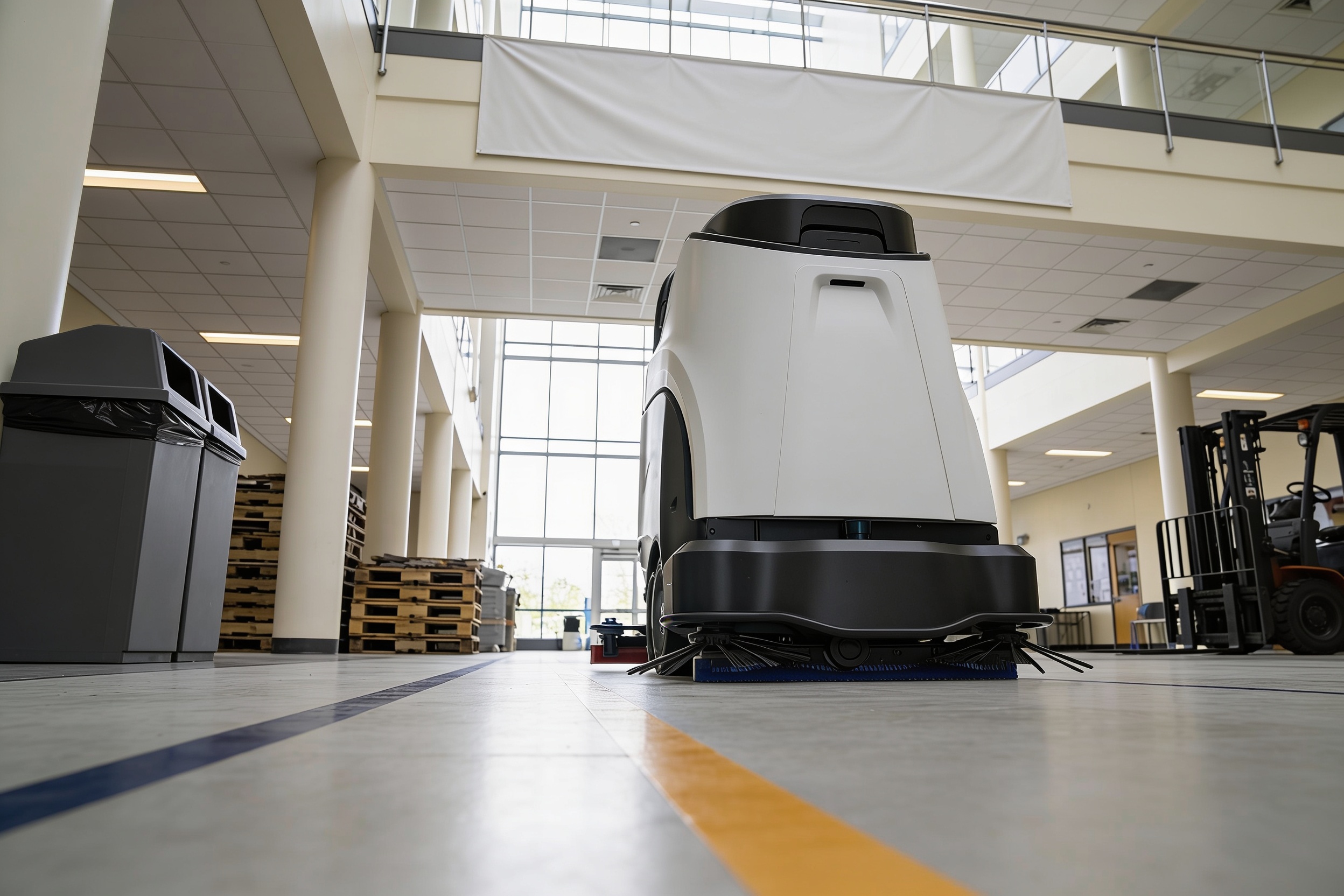
How many hours of floor work does the robot take over?

Floor care at a trampoline park is repetitive work spread across the day and the close. The robot takes over the scheduled hard-floor passes, and staff keep the tasks that need hands, judgment or a restroom.
For reference, a vendor-reported case from a US hospital network in 2023 cut floor-care labor from about 16 hours a night to about 5, after two robotic scrubbers ran overnight, and the floor-care team went from 3 people to 2. That is a hospital, not a trampoline park, so treat it as a reference point and not a forecast for your floor.
No per-park hour figure for trampoline parks was verified in this research. The hours on your site come from your shift logs, the zone map from the assessment, and the number of passes each zone needs. Those are the numbers to bring into the lease discussion.
How hard is floor work on the people who do it now?
Manual floor care is a large occupation with real injury exposure and high turnover. According to the Bureau of Labor Statistics, about 2,447,700 janitors and building cleaners were employed in 2024, and BLS projects 2 percent growth from 2024 to 2034, about 47,800 new jobs.
The injury record is a reason to look at the work, not only the hours. BLS reported 157.4 cases per 10,000 full-time equivalent workers for janitors and cleaners, except maids and housekeeping cleaners, for 2015 to 2019, and 191.6 per 10,000 for 2016 to 2020.
Turnover adds a staffing cost that is easy to miss. Netchex, in a blog post rather than a primary survey, says annual separation rates in janitorial and cleaning services commonly exceed 50%. If the floor route depends on one person showing up every night, a turnover problem becomes a coverage problem.
How does leasing through financing work, and what does the quote include?
We lease commercial robots through financing. The site pays a fixed payment over the lease term, and the lease sets out the term and the terms at the end of the agreement. Nothing is quoted from a catalog, because the number depends on your floor, your hours and your traffic.
Each lease is quoted after a free site assessment. The quote follows the assessment, so it reflects the hard-floor area, the zone map, the shift window and the route. A generic table cannot set a fixed payment for a building it has not seen.
A complete quote should list the unit or units, the mapping and deployment scope, integration, staff training, service terms, the financing term and any software line. If a line is missing from the written quote, treat it as not included until it is added.
Ask how faults are handled. Service coverage, remote triage, on-site dispatch and whether a spare unit is available decide how long the floor sits without a robot. Get those answers in writing before you compare the quote with your hours today.
What can a cleaning robot not do at a trampoline park?
A cleaning robot has clear limits. It works on the hard-floor zones it is mapped for, and it cannot handle what it has not been set up to see. Set expectations on those limits before the lease goes live.
It does not clean court surfaces, frames or equipment. It also does not handle restrooms, detailed stains, broken glass or messes that need hands. Staff keep those tasks, and the zone map should show where they are.
It depends on a clear route. Loose toys, bags, cords, furniture pushed into the path, or a spill it cannot cross can stop a run. Someone still has to clear the route each morning and respond when the robot raises an alert.
How do I get a quote after a free site assessment?
Start with the free site assessment, because it turns a general question into a quote. Have the floor plan, the zones you want covered, the hours the site is open and closed, and any scheduling tool in use ready for the visit.
The assessment tests the hard-floor area, the route, the overnight or gap window, and how many units the floor needs. It also checks mapping work and any integration. Those answers set the unit count, the lease term and the fixed payment in the quote.
After the quote arrives, read the scope line by line. Check the service terms, the software line, the training plan and the insurance note. A quote that answers those questions is one you can compare directly with the hours your team logs today.
Frequently asked questions
Want a cleaning robot at your indoor trampoline park?
Tell us about your site. We will recommend the robot, quote the lease, and keep it serviced.
Sources
- Bureau of Labor Statistics Occupational Outlook Handbook, janitors and building cleaners
- Bureau of Labor Statistics injury and illness snapshot, janitors and cleaners, 2015 to 2019
- Bureau of Labor Statistics injury and illness snapshot, janitors and cleaners, 2016 to 2020
- IBISWorld, US trampoline parks number of businesses
- Market.us, trampoline park market report
- Scientific American, trampoline parks and emergency room visits
- CT By The Numbers, trampoline park injury study news report
- Netchex blog, janitorial and cleaning services turnover