
The short answer
Cobot cost for welding fabrication shops depends mainly on how many repeat seams on fixtured parts the arm will run, how much integration the cell needs (fixture design, layout, safety assessment and programming), and how many units go in. Guarding, end-of-arm tooling, part variety, operator training and service move the total as well. We build a lease quote only after a free site assessment, because those inputs are measured on your floor, not guessed from a catalog.
Key takeaways
- Fixtures and repeat seam volume set most of the cost, not the arm alone.
- Integration is often the most underestimated line, at about 10 to 20 percent of total cost according to one vendor guide.
- The Bureau of Labor Statistics projects 2 percent growth for welder jobs from 2024 to 2034, with about 45,600 openings a year.
- One vendor guide says operators need 2 to 4 weeks of training before programming efficiency is production-ready.
- Lease terms are quoted after a free site assessment, with every line named in writing.
What does cobot cost for welding fabrication shops depend on?
A cobot welding cell is not one line item. The lease total is the sum of the arm and its tooling, the fixtures that hold each part, the integration that connects them, the guarding that keeps people out of the arc zone, and the service that keeps the cell running after go live. Each piece moves with the shop, so two shops with the same arm can receive very different quotes.
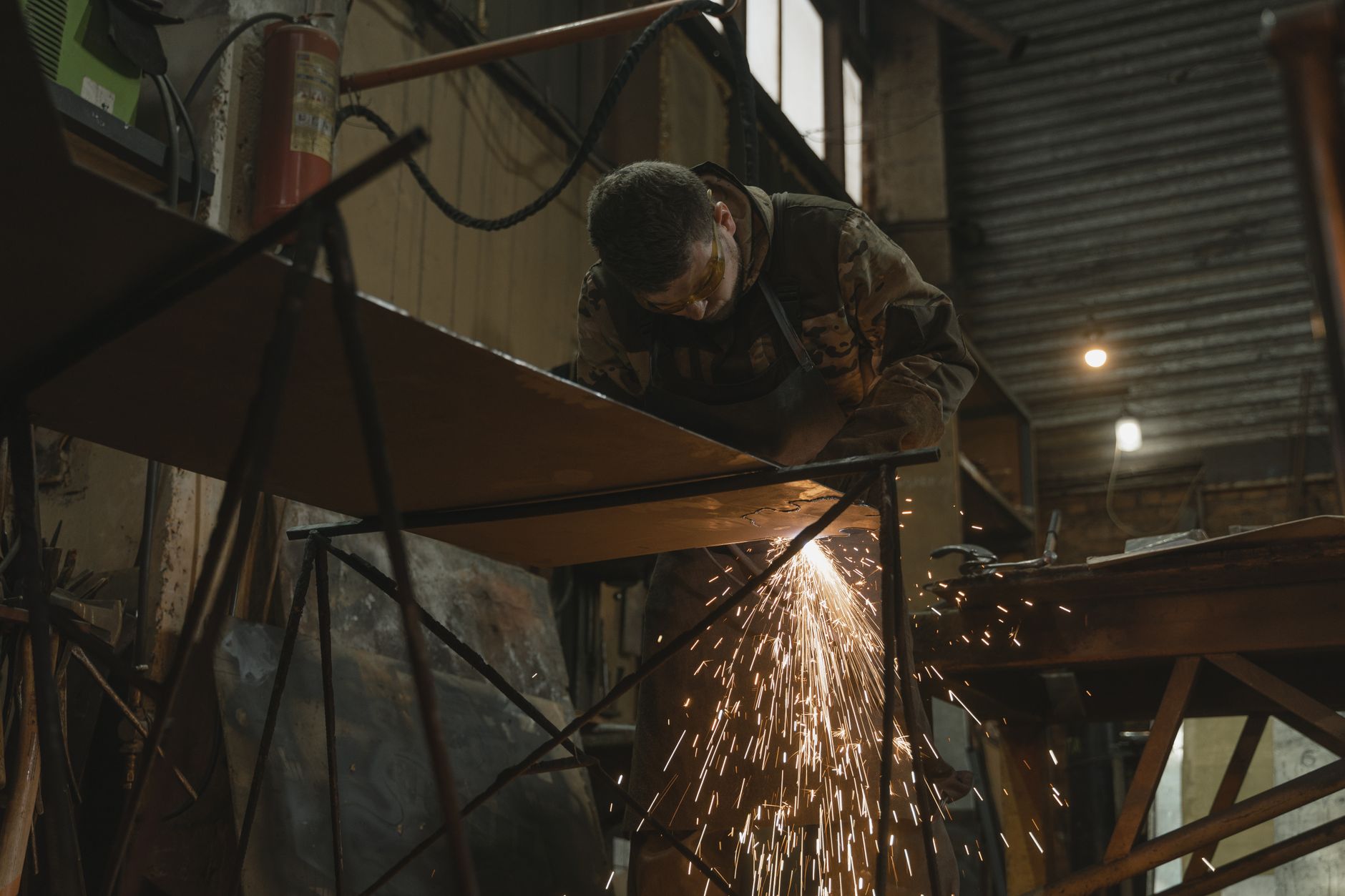
For a fabrication shop, the number that matters most is seam volume on repeatable parts. An arm earns its place on a fixtured part that comes through in batches, where the same seam repeats many times. A one-off bracket or a job that changes several times a day adds programming work without adding much run time, and that moves the total more than the arm's own specification does.
Expect the quote to hinge on the part family count, the number of stations, and whether the shop already has usable fixtures. We do not give a number before the site assessment, because those inputs are only known once someone has measured the floor and worked through the parts list with the shop.
Why are welding shops looking at cobots now?
The labor case is the one most shop owners already feel. According to a KY3 news report dated August 11, 2026, the American Welding Society projects a shortage of more than 300,000 welding professionals in the U.S. by 2029. Other secondary estimates in the research run higher and do not agree with each other, so treat any single shortage figure as a planning assumption rather than a fact about your county.
The Bureau of Labor Statistics gives a steadier view of the trade itself. Its Occupational Outlook Handbook counts about 457,300 welder, cutter, solderer and brazer jobs in 2024, with 61 percent in manufacturing. It projects 2 percent growth from 2024 to 2034, which is slower than average, and about 45,600 openings a year, mostly from replacement needs.
Read those numbers together. Openings come mainly from replacement needs, not from new positions, so the skilled people you keep are the scarce resource. A cell that takes repeat seams off their plate lets those people stay on work that needs judgment.
Adoption is growing too, though the figures are general. The Association for Advancing Automation reports that North American companies ordered 7,212 collaborative robots in 2025, and that cobots were 19.6 percent of total robots ordered that year. The association's results do not give a welding-specific cobot share. The most recent count of establishments the research located is from the 2002 Economic Census, which reported 62,384 establishments with payroll in NAICS 332, fabricated metal product manufacturing. That count is old, so use it only to show the scale of the sector.
What moves the cost of a cobot cell in a fabrication shop?
Six factors do most of the moving, and the drivers below set them in rough order of weight. The weights reflect typical site work rather than a published index, and the direction of each effect holds even though its size depends on the shop.
Integration deserves close attention. One vendor integration guide calls it often the most underestimated cost, at about 10 to 20 percent of the total, and lists system design, cell layout, fixture design, wiring, safety risk assessment and programming as the work inside it.
Vendor guides agree on the categories even where they disagree on size. Fixturing is called the most common cause of failed cobot welding projects, which is why it leads the list.
Scale changes the picture. A second cell on the same part family reuses fixtures and programs, so the added cost of a second unit is usually lower than the first. A cell on a new part family starts from scratch on fixtures and programming, which is why the number of part families matters as much as the number of arms.
Why do fixtures and seam volume set the budget?
A cobot welds what it is shown to weld, in the same place, every cycle. That makes the fixture part of the robot's accuracy, not an accessory. A part that shifts in its clamp moves the torch off the seam, so the fixture design and the arm's program have to be worked out together.
Seam volume is the other half of the math. Count the repeat seams per part and the parts per batch, then compare that run time with the time needed to set up a new program. A cell that welds the same bracket all week carries a very different economic profile than one that changes parts several times a day.
Shops with mixed work usually run the cobot on the highest-volume part families first and leave one-offs to skilled welders. That split keeps the people who are hardest to replace on complex and custom work, which is where their judgment counts most.
Fixture changeover is where many shops lose the savings. A fixture that needs a long swap between batches eats the hours the arm was supposed to free up. Ask the assessment team to time the swap as part of the cell design, not as an afterthought.
How does a cobot lease through financing work, and what does the quote include?
The robot is leased through a financing program, and the payment is set in the written quote for the lease term. Financing is meant to spread the cost over the term rather than require a large upfront outlay. The quote is built after a free site assessment, because fixtures, guarding and cell layout cannot be sized from a photo or a spec sheet.
A complete quote lists what is included: the leased unit, integration and safety assessment, deployment, operator training and service after go live. Check each line against the shop's own list of parts, seams and fixtures, because a quote that skips the fixtures is incomplete.
Ask how the lease handles a unit that fails during a production run, whether a backup unit is available, and what triggers a site visit. Those answers matter more to a fabrication schedule than the payment schedule itself.
- Leased robot unit for the lease term
- Integration and safety risk assessment
- Deployment and go live support
- Operator training before go live
- Service after go live, with dispatch and remote triage
How many labor hours does a cobot take over in a welding shop?
The research for this page did not turn up a verified figure for weld hours per shift at fabrication shops, so this section does not put a number on hours saved. Your own cycle times, part counts and shift pattern set that number, and the table below shows which tasks move to the arm and which stay with the welder.
The useful measure is the share of a shift spent on repeat seams on fixtured parts. A welder who spends most of a shift on identical seams is the work the arm takes over. Custom fit-up, inspection and one-off jobs keep their welder, because those tasks need judgment and changing setups.
Before you ask for a quote, time one week of work per part family. That gives the site assessment real numbers to work from and gives you a baseline to judge the cell against after go live.
Consider the staff side too. Operators who load parts and watch the cell need a clear sign-off process for the first runs and for every revision. Without one, the arm runs and nobody owns the quality of what it produces.
What can a welding cobot not do?
A cobot does not replace the skilled welder on complex or one-off work. It repeats a programmed seam on a part that a fixture holds in the right place, and people still build the fixtures, load the parts and check the results.
It is also not a general-purpose fabrication tool. A part outside the fixture's reach, a change in material thickness or joint fit-up, or a revised part drawing can stop the cell or send it back to programming. Those are the moments when the welder takes the job back.
Large or heavy parts need a handling plan that the cobot does not supply. The arm works within its reach, so cell layout and the handling method decide how big a part can be. Expect the cell to sit idle during quiet stretches of mixed batches, and plan the schedule around fixtured work rather than a constant run.
Exposure is a separate concern. The BLS Industry Profile for fabricated metal product manufacturing reports 3.2 total recordable cases per 100 full-time workers in 2024, with 0.9 days-away cases per 100. An older OSHA directive, citing BLS data, notes that fabricated metal workers have more illness than private industry overall, especially hearing loss. A cobot does not remove the need for hearing protection and ventilation in the shop.
How do I get a quote for a welding cobot cell?
Start with a free site assessment. We walk the shop, measure the floor and the fixture area, list the part families with their seam counts, and note existing fixtures and guarding.
From that visit we propose a cell layout, a fixture plan, an integration and safety scope, and a lease term. The quote follows the assessment, and every line, including the payment for the term, is written out so it can be checked against the shop's own parts list.
Deployment and integration follow the signed lease. Operator training is part of go live, and service runs after that with on-site dispatch and remote triage. Many shops start with one cell on the highest-volume part family, then add cells once the first one shows its real cycle time.
Frequently asked questions
Want a cobot at your welding fabrication shop?
Tell us about your site. We will recommend the robot, quote the lease, and keep it serviced.
Sources
- KY3 news report on welding workforce shortage, August 11, 2026
- BLS Occupational Outlook Handbook: Welders, Cutters, Solderers and Brazers
- A3 (Association for Advancing Automation) North American robot orders 2025, via BusinessWire
- Automate (A3) North American robot orders Q1 2025 and first collaborative robot tracking
- BLS Industry Profile, NAICS 332 Fabricated Metal Product Manufacturing
- OSHA Directive CPL 2-02-00-022B
- 2002 Economic Census, NAICS 332 establishments (archived)
- Knox Labs cobot welding cell guide