

The short answer
Cobot cost for commercial print shops depends on the stacking cell around the arm: how many press lines feed it, the floor space and reach it needs, the cartons or wrapped bundles it handles, shift coverage, integration with the press, and the service terms. No single figure fits every shop, so the lease quote is set after a free site assessment that fixes the scope and lists deployment, training and service.
Key takeaways
- Cobot cost for commercial print shops follows the stacking cell, not the arm alone.
- Press lines, stack variety and shift pattern move the lease quote more than any model choice.
- Mapping, integration, training and service are the costs people miss, and they belong in the written quote.
- Employment in print binding and finishing edged down from 2022 to 2023, which is why stacking deserves a site-level review.
- Get the quote after a free site assessment, with every included item written down.
What does a cobot cost for commercial print shops depend on?
Cobot cost for commercial print shops depends on the stacking cell around the arm more than on the arm itself. A collaborative robot that stacks cartons or wrapped bundles as jobs come off the press needs reach over the delivery station, room to stage empty and full pallets, a steady feed of finished product, and a safe boundary near staff working on adjacent equipment. Each of those choices moves the lease quote, and none of them can be read from a brochure.
The honest answer is that the number is set after a site assessment. We measure the press exit, the stack size and footprint your jobs need, how often the press changes product, and what staff do in that space today. The lease then follows from that scope, including deployment, integration, training and service.
Which factors move the cost at a print shop?
Floor area and layout come first. A stacking station needs room for the arm's reach, pallet or skid staging, a path for a pallet jack or forklift, and a clear view for the safety system. A short press line in a tight room scopes out another way than a long line with open space on both sides.
Floor condition matters too. Worn concrete, seams, expansion joints and floor drains affect how the base is mounted and how steady the stack stays. Cartons and wrapped bundles also differ in weight and in how they slide, which changes gripper choice and cycle speed.
Shifts and traffic set how much the robot runs and how it shares space with people. A press that runs one shift and stops at night needs less coverage than a plant running two or three shifts. Foot traffic through the cell adds safety work and can require more guarded zones.
Mapping, integration and unit count carry real engineering time. Connecting the station to the press counter, the job record or a label printer has to be tested against a live run. One unit on one line is a smaller scope than several units across multiple lines, where a shared plan and spare coverage matter.
Service terms finish the picture. Response time for a stopped cell, the level of preventive care, and whether backup coverage is included all shape what the lease covers, so compare them line by line.
Why does finished-job stacking fit a cobot, and what do the numbers show?
Stacking is a repetitive lift that repeats at the end of every run. Operators lift cartons or bundles from the delivery station, turn, and place them on a pallet through a long shift. Moving that cycle to a cobot frees skilled staff for make ready, press checks, quality sampling and finishing work, where judgment matters more than repetition.
The printing base has been contracting. According to County Business Patterns as summarized by WhatTheyThink, NAICS 323 printing and related support had 22,651 establishments in 2022, down from 25,256 in 2017. Commercial printing under NAICS 323111 had 15,592 establishments in 2021, down 26 percent since 2010, and NAICS 32311 printing had 21,615 establishments in 2022, down 20 percent since 2010.
The occupation doing this work is print binding and finishing workers. According to the BLS Occupational Employment and Wage Statistics, employment for that occupation was 38,880 in May 2023, after 39,030 in May 2022. Turnover for the occupation was not found in published sources, so staffing risk at your shop has to come from your own schedule and records.
Injury data show printing already runs low on incidents. According to BLS, the 2024 total recordable case rate for printing was 1.6 per 100 full-time workers. PRINTING United Alliance reports that the rate fell from 1.7 in 2023 to 1.6 in 2024, and that cases fell 8.5 percent, or 500 cases, in 2024. Injury counts alone rarely justify automation, so the case for a stacking cobot rests on repetitive handling, staffing and throughput.
Adoption is growing across the category. According to IFR, collaborative robot installations showed double-digit growth, with a 12 percent figure on its World Robotics 2025 presentation. The same IFR presentation puts the global operational stock of industrial robots at 5 million units, up 9 percent, with installations up 11 percent in 2025. A Meticulous Research market report says palletizing demand is driven by labor shortages and by reducing ergonomic injuries from manual lifting, and it names collaborative robots as the fastest-growing segment through 2036. That is a forecast from a market firm, not installed-base data, so treat it as direction rather than proof.

How does leasing through financing work, and what does the quote include?
We lease the robot through financing, so the shop does not carry the full equipment cost up front. The lease is set after a free site assessment, and the fixed robot lease payment is written into the quote with its term, scope and service level. The arrangement stays a lease from start to finish.
A quote should list the lease, the site assessment, mapping, integration, deployment, staff training, go live support and the service plan for the term. Ask in writing whether backup coverage, remote triage and on-site dispatch are included, because those terms decide how a fault on a busy night gets handled.
Terms vary with the site. A pilot can start with one leased unit on one press line, then expand once the hours hold up. A multi-line plan can be phased so that no press goes offline for the whole project.
How many labor hours does a stacking cobot take over?
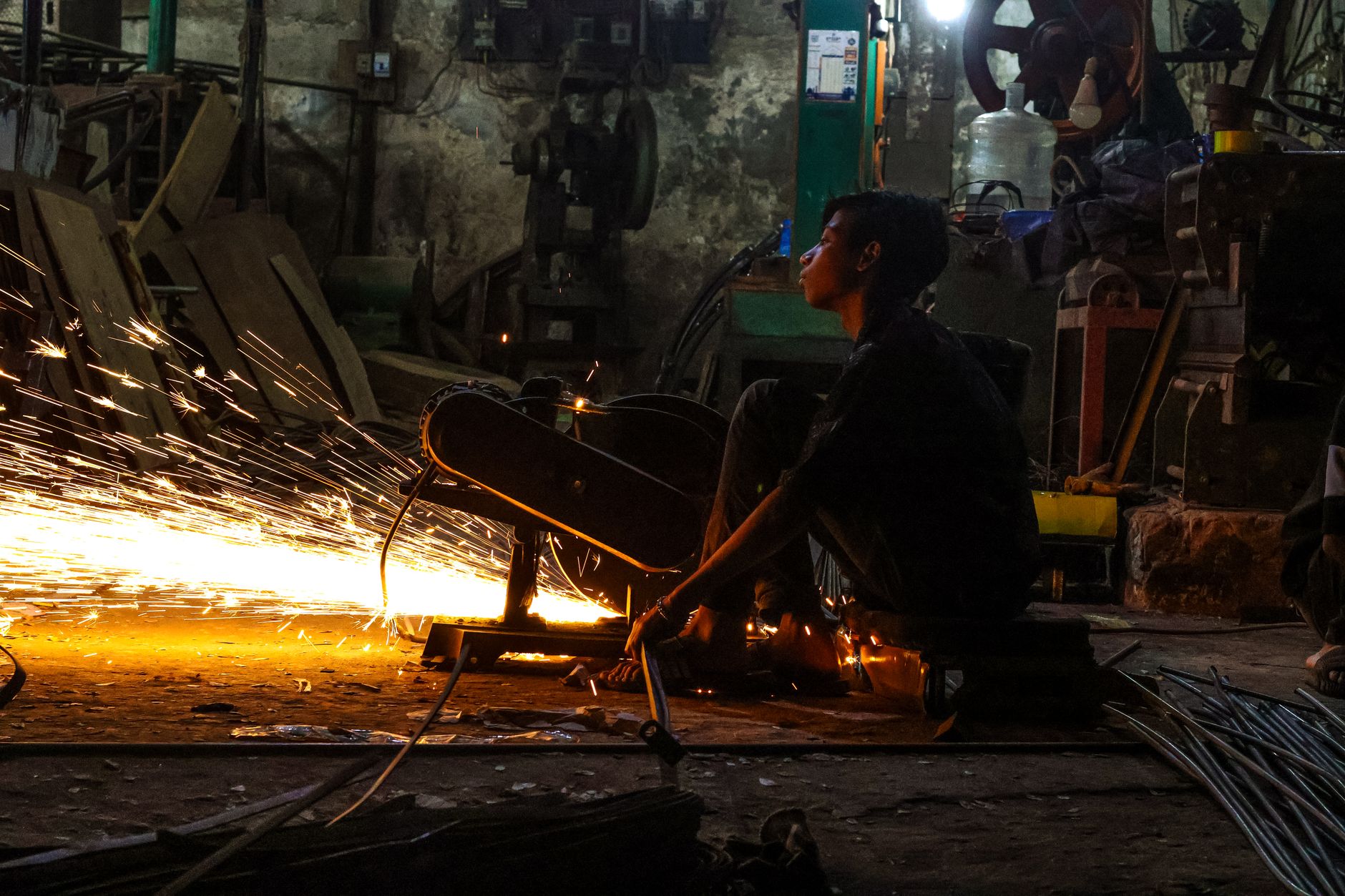
Published sources do not give hours per shift for finished-job stacking at print shops, so the hours your shop needs have to come from your own run data. The useful measure is how many minutes of stacking and carrying happen at the end of each run, and how many runs finish in a shift. Those minutes add up across a week, and that total is what the lease should be checked against.
The work repeats on the same operators run after run. Taking the cycle off their hands does not remove the need for people. It returns time to make ready, press checks, quality sampling and finishing, where the judgment sits.
National occupational data show employment in this work, but turnover for the occupation is not broken out in the sources reviewed. Coverage planning should therefore use your own schedule and the stacking time measured on a typical run.
What can a stacking cobot not do?
A cobot stacks what it is shown in a stable, known way. It does not decide what a finished job should look like, catch a print defect that a trained eye would catch, or repair a press. Those tasks stay with staff, and the plan should say so in writing.
Limits show up in mixed work. Wide variation in carton size, damaged or wet stock, and bundles whose wrap shifts all slow the cycle. A job mix with long runs of the same product suits the arm better than a shop that changes product every hour.
Reach and payload have limits too. The arm can only place what its gripper and reach allow, so heavy pallets, stacks taller than its reach, or loads that need forklift handling stay with other equipment. Check those limits against your real product list during the site assessment.
How do I get a cobot quote after a free site assessment?
Start with the press and the stack. Note how many press lines finish jobs at the same time, the stack size and weight, the shift pattern, and how often the press changes product. Those five facts shape the scope more than any model choice.
We run the free site assessment on site, measuring the stacking zone, floor condition, traffic paths, power and network points, and where faults would be cleared. The output is a written scope: the cell layout, integration points, training plan, service terms and the lease quote with its term.
A quote is only comparable when it states what is included. Ask for mapping, integration, deployment, training, go live support, maintenance, insurance terms and backup coverage to be listed, not implied.
Frequently asked questions
Want a cobot at your commercial print shop?
Tell us about your site. We will recommend the robot, quote the lease, and keep it serviced.
Sources
- WhatTheyThink summary of County Business Patterns, NAICS 323
- WhatTheyThink, NAICS 323111 commercial printing establishments 2010 to 2021
- WhatTheyThink, NAICS 32311 printing establishments 2010 to 2022
- BLS Occupational Employment and Wage Statistics, SOC 51-5113
- BLS Injury and Illness Rates, printing NAICS 3231
- PRINTING United Alliance, printing injury and illness rates fall in 2024
- IFR World Robotics 2025 press conference presentation
- Meticulous Research, palletizing robots market report