
The short answer
Cobot cost for metal stamping shops depends mainly on how many presses the robot tends, how each press is guarded under OSHA rules, how much layout and control integration the cell needs, and what service plan keeps it running on second and third shifts. The lease quote follows a free site assessment, because one press with simple parts looks nothing like a cell serving several presses with frequent die changes. For most shops the real comparison is the hours the cell can cover on evening and night shifts against the hours that go unfilled today.
Key takeaways
- Presses, guarding and integration set the cost more than the arm does.
- Each press needs its own guarding review under OSHA rules.
- Count your presses, part changes and shifts before asking for a quote.
- Changeover time and service coverage are the costs people most often miss.
- A lease quote follows a free site assessment, not a list figure.
Cobot cost for metal stamping shops: what the number depends on
The cost of a cobot for a stamping shop is set by the cell, not by the arm alone. A cobot is a collaborative robot arm, and the arm is usually the smaller part of the decision. What moves the lease quote is how many presses need tending, the size and speed of the parts, how the cell is guarded, and how deep the integration into the existing press controls has to go.
For this kind of plant the job is repetitive. An operator picks a blank or part from a stack or conveyor, loads the press, removes the formed part, and stacks it. The same cycle repeats for hours, which is why it fits a robot. It is also the work that often goes unfilled on evening and night shifts, so the cost question is partly about whether the cell can cover hours the shop cannot staff today.
Expect a lease quote only after a free site assessment. We measure the presses, the part families, the aisles and the shift pattern before we set a fixed payment over the lease term. A figure given before anyone has walked the floor is a guess.
Why is press tending so hard to staff on evening and night shifts?
The occupation that covers much of this work is shrinking and turning over. The BLS Occupational Outlook Handbook for metal and plastic machine workers projects employment to decline 7 percent from 2024 to 2034, with about 87,900 openings a year on average, mostly from replacement needs. Those openings are mostly people leaving, which means the shop is refilling the same seats again and again. Press-only counts were not verified in this pass, so read the figure as occupation-level.
The wider labor market shows a related pull. According to the BLS Job Openings and Labor Turnover Survey (JOLTS) 2025 annual release, as copied in a PDF, average job openings were 7.1 million, with an openings rate of 4.3 percent. Those totals cover all industries, so they show the general pressure on workers rather than press work specifically.
The practical effect is simple. A shop can keep a day crew full and still find the second and third shifts thin, because the gaps sit in the hours people are unwilling to work, not only in the total count. A cell that covers those hours does not need to replace a whole crew to matter.
How many metal stamping shops are there, and how common are cobots?
The Census Bureau defines NAICS 332116 as establishments making unfinished metal stampings, and the definition excludes crowns, cans, closures, automotive stampings and coins. Automotive stamping shops therefore fall outside this code and need to be counted separately, which matters if your plant serves that market.
The most recent count in the research is old. According to the archived 1997 Economic Census, there were 2,166 metal stamping establishments under this code. That number predates much of today's press automation, so treat it as a historical baseline. We did not find a current County Business Patterns count in this pass, and a current figure should be pulled from the Census Bureau's data tools for NAICS 332116.
Adoption is growing across industrial robotics, though the figures are global and not stamping-specific. According to the IFR World Robotics 2026 presidents report, cobot installations appear to have reached about 66,000 in 2025, roughly 11 percent of industrial robot installations. The same report lists 603,000 industrial robot installations in 2025, up 11 percent, and a global operational stock of 5.079 million.
For a plant manager, the more useful number is not the national count but how many presses your site runs and how many of them run after dark.
What factors push the cobot cost up or down at a stamping plant?
Start with tending points. A cell that loads one press costs less to design, guard and commission than a cell that feeds two or more presses from one arm, because a shared cell needs more reach, more sensing and more careful sequencing. Press size and stroke speed also count, since faster strokes leave the cell less time to react and push the guarding design harder.
Part variety is the next lever. A shop that runs one part family for weeks needs less programming and fewer changeover steps than a shop that changes dies several times a shift. Each changeover adds teaching, fixtures and first-part checks, and those show up in the quote as integration and training time.
Floor layout and shifts round out the picture. Aisle width, floor condition, where the blank cart sits and whether a manual operator still works the same press all change the design. Mapping the floor is part of the site assessment. Coverage matters too: a cell that must run every evening needs a service plan with a fast response, while a pilot on one shift can start with lighter coverage.
What safety rules shape the cell and its cost?
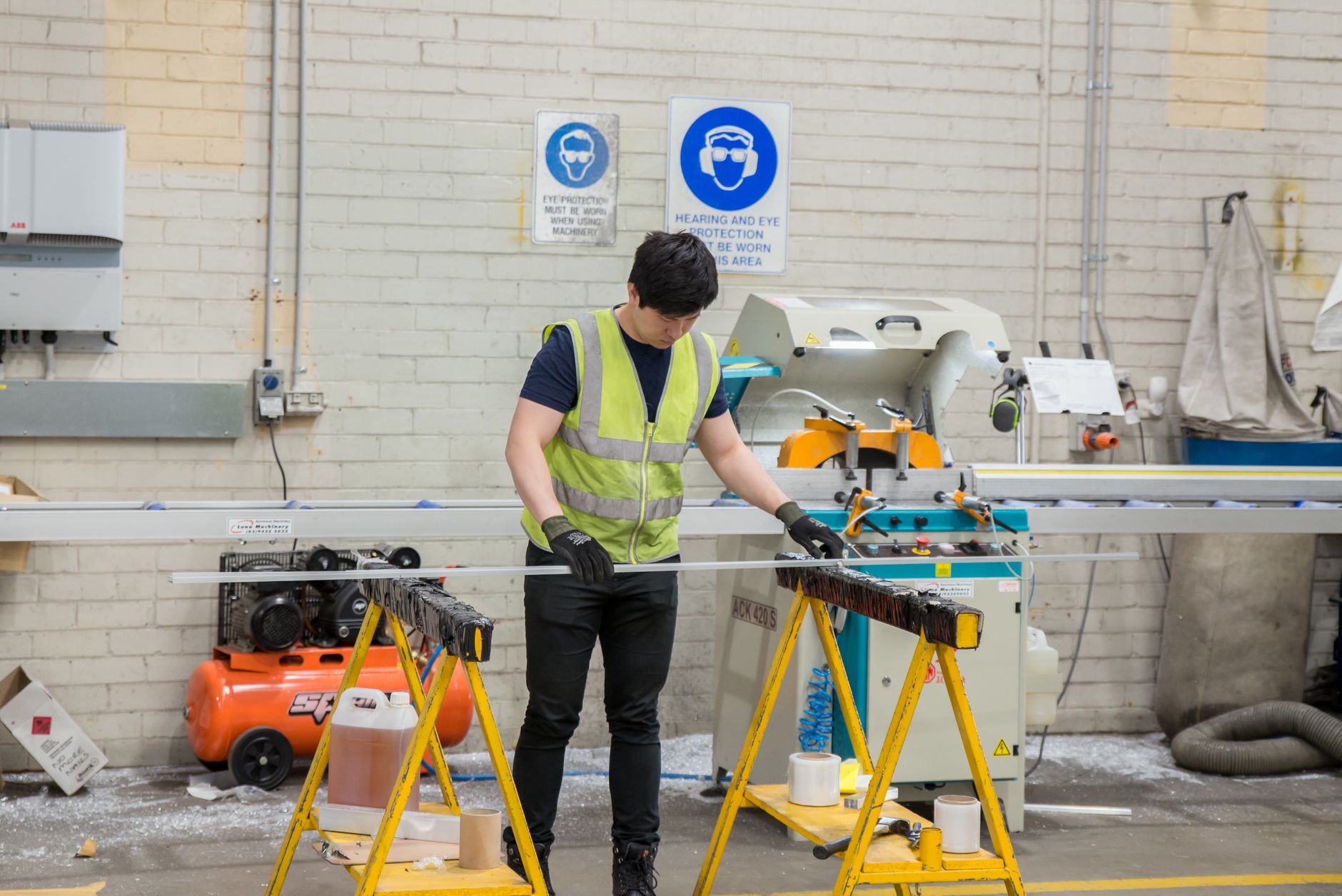
Press guarding is the item most shops underestimate. OSHA 29 CFR 1910.217 covers mechanical power presses and requires point-of-operation guarding and guarding of power transmission components, with appendices on presence-sensing device initiation. The standard was promulgated in 1971. The robot cell has to fit inside that guarding rather than replace it. Press brakes and hydraulic presses fall under the general requirements in 1910.212, so a mixed floor needs more than one set of rules.
A compliance summary notes that the employer must select guarding methods for each individual press. One cell design therefore cannot be copied across presses that look alike on the same line. Each press gets its own review, and that review is part of the cost.
The stakes explain the attention. According to a third-party summary citing BLS 2024 data, all manufacturing recorded 2.7 cases per 100 full-time workers, against 2.3 for private industry. The same summary reports 59 fabricated metal product manufacturing deaths in 2023, the highest count among manufacturing sectors in that BLS fatality table. We did not retrieve the BLS industry rate for fabricated metal products, so do not read these figures as a rate for stamping alone.
How does leasing through financing work, and what does the quote include?
We offer leases through financing only. A lease gives the shop a fixed payment over the lease term, and the quote shows that payment next to what the lease covers. The financing is one part of the deal. The choice of robot, the deployment, the integration and the service all run on our side and appear in the same quote, so the shop is not coordinating separate vendors for each piece.
A quote normally lists the lease through financing, deployment and integration, training for the staff who will run the cell, and service coverage for the lease term. Maintenance appears as its own line, with the planned upkeep and the response commitment written out. Lease approval depends on the shop's finances, and the terms are set in the quote.
No quote exists before a site assessment. The number depends on the presses, the part families, the shifts and the integration scope, and a fixed payment cannot be accurate until those are measured. If a quote arrives before anyone has walked your floor, ask what it assumes.
How many labor hours does a cobot take over on press work?
We did not find measured hour counts for press tending in this research pass, so this section describes the work and the cycle rather than a verified hour total. The cycle is the number to watch. A vendor blog reports about 6.5 to 8 seconds per part for a tandem layout with separate load and unload robots, and 7.5 to 9 seconds for one robot handling both. Those are vendor-reported figures for specific layouts, not measured results from a shop floor.
Labor shifts from continuous attention to supervision. Today an operator loads and unloads each press through the shift, with breaks, slowdowns and the physical strain of repetitive reaching. With a cell, the operator checks the stack, clears a jam, leads die changes and inspects part quality. The robot takes the repetitive motion, and the staff keep the judgment.
The same vendor blog says high throughput and repetitive motion make this work hard to staff. That is a vendor position rather than measured data, but it fits the openings figures above. Measure your own cycle on one shift before committing to a full plan, since your cycle time and error rate are the numbers the lease should rest on.
What can a cobot not do in a stamping shop?
A cobot does not take over setup or die work. Die changes, tool adjustments and first-piece approval stay with trained staff, and the cell has to be taught each new part. In many shops the changeover, not the steady cycle, decides whether the cell earns its place, so plan the changeover schedule before the pilot starts.
Cobots also do not run as fast as high-speed industrial robots. A general guide notes that cobots favor safe collaboration over speed and may run slower. If your press line is limited by stroke speed rather than by labor, a cobot may be the wrong tool, and a different class of robot may fit better.
The cell does not judge every defect. It can catch a missed part or a misfed blank when its sensors are set for that check, but a subtle surface flaw still needs an inspector. Decide before the pilot who owns part quality on the night shift, and write that into the staffing plan.
How do I get a cobot lease quote for my stamping shop?
Start with a free site assessment. We walk the press line, measure the floor, count the presses and tending points, review part families and changeover rates, and learn which shifts need coverage. The assessment sets the cell design, the guarding scope and the integration work the quote is based on.
The quote follows the assessment. It shows the lease through financing, the deployment and integration work, training, and service for the lease term. Ask which items are included and which are conditions, and ask what would change the number, such as an added press or a shorter changeover.
Many shops begin with one cell on one shift, then add units once the cycle data holds up. A single pilot gives you cycle time and error rates for your own parts, which is more useful than any national average. It also shows whether the cell covers the hours you cannot fill today.
Frequently asked questions
Want a cobot at your metal stamping shop?
Tell us about your site. We will recommend the robot, quote the lease, and keep it serviced.
Sources
- BLS Occupational Outlook Handbook, metal and plastic machine workers
- BLS Job Openings and Labor Turnover Survey 2025 annual release (PDF copy)
- Census Bureau 1997 Economic Census, metal stamping (archived)
- IFR World Robotics 2026 presidents report
- OSHA 29 CFR 1910.217, mechanical power presses
- Third-party manufacturing safety statistics summary citing BLS data
- Motoman vendor blog on robotic press transfer automation
- Standard Bots guide to cobot machine tending