
The short answer
Cobot cost for contract packaging facilities depends mostly on how often the cell changes over, how much reach and floor the palletizing station needs, and how much integration and training the site requires before it runs. Each product run change repeats programming, gripper work and checks, and those hours often matter more to the lease than the arm itself. We set the fixed lease payment after a free site assessment, because the right figure comes from your line, not from a general estimate.
Key takeaways
- Changeover frequency, more than arm size, usually sets the programming and labor load.
- Floor layout, reach and guarding decide the cell footprint and the integration scope.
- Hidden costs sit in mapping, integration, training and service response time.
- Our lease quote follows a free site assessment and lists what is in and what is out.
- Staffing pressure is the reason to compare the lease against overtime and turnover, not against the arm alone.
What does cobot cost for contract packaging facilities depend on?
Cobot cost for contract packaging facilities depends on the work the arm has to cover, not only on the arm itself. A contract packager runs many short product runs for several clients, so a palletizing cell may change its stacking pattern, case size and pallet type several times in a single week. Each change adds programming, gripper work and a check before the line returns to full speed, and that repeated effort shapes the lease more than the machine does.
The number of facilities is a useful starting point. Packaging World, citing a Contract Packaging Association-linked post, counts about 1,600 U.S. contract packaging companies. That post is undated and its growth projections run only to 2015, so treat the count as a rough base. IBISWorld counts 1,471 Packaging and Labeling Services businesses in 2026, a broader category that includes contract packagers, so it gives a wider base than the one above.
Our answer is a lease quote built after a free site assessment. The fixed lease payment reflects your floor, your shift pattern and your changeover count. Any figure given before someone has walked the line is a guess, and that includes the general ranges you may find elsewhere.
What moves the cost up or down at a contract packaging site?
Eight factors come up on almost every site visit: floor area, floor surfaces, number of shifts, foot traffic, mapping, integration, number of units and service coverage. For a stationary palletizing arm, some of them matter little. Others, such as integration and changeover frequency, carry most of the weight.
Floor area and reach set the cell footprint and the guarding. A station that needs a longer reach or a second pallet position costs more to build and to lease. A tight room with fixed conveyors can push the design toward a smaller, slower cell, and that trade-off is worth settling before the quote, not after.
Shifts and traffic work together. A cell that runs two or three shifts needs more trained operators and a tighter service plan than one that runs a single day shift. Forklift and pedestrian traffic near the cell changes the guarding and the safety plan, and it can limit where the pallet staging area can sit.
Integration is often the largest single line. Connecting to the case packer, conveyor controls and the warehouse system takes engineering hours, and those hours depend on how well the existing equipment is documented. Mapping applies most to mobile units, since a moved cell needs its zones and positions recorded again. More units lower the cost per station when they share a service plan and spare coverage, and service distance decides how long a stopped line waits for a person.
How hard is it to staff palletizing shifts at contract packagers?
In a Packaging World workforce survey covering 2025 to 2026, 58% of respondents reported annual turnover between 10% and 29%, and 26% reported higher turnover. A palletizing station can change hands often, and each new person needs the same pattern briefing, stop procedure and safety walk.
PMMI, in its 2025 report Inside the Workforce Gap as summarized by Packaging World, found that 95% of end users struggle to find skilled operators and technicians, and nearly 60% expect hiring to get harder. Those figures describe packaging operators broadly rather than contract packagers alone, but the pressure lands hardest where many short runs need trained hands on short notice.
Training is a cost in its own right. In a Packaging World reader survey, respondents who said it is very difficult to train staff on computerized automated equipment rose from 14% in 2025 to 29% in the later survey. Operators need to understand the programming, the stop states and the recovery steps, so we count training as part of deployment, not as a separate add-on.
Why do collaborative arms fit repetitive palletizing beside people?
A collaborative arm handles repetitive case palletizing next to people, and it can be moved between product runs with modest reprogramming. That combination suits a contract packager, where the stacking pattern changes often but the motion inside each pattern repeats for long stretches of a shift.
The injury case rests on repetitive lifting. The Bureau of Labor Statistics reported in its 2020 snapshot for laborers and material movers 64,930 nonfatal injury and illness cases involving days away from work, and an incidence rate of 289.8 per 10,000 full-time equivalent workers. That group is wider than palletizing, so it shows the scale of the problem rather than the effect of any one tool.
A Carrier Management summary of BLS data reports 1.8 million national cases involving days away from work for 2023 to 2024, which the summary puts at 61.5% of DART cases, the count of cases with days away, restricted or transferred. Adoption is rising too. International Federation of Robotics data, as reported in a trade news piece, put cobots at nearly 12% of new industrial robot installations in 2024, with more than 64,500 units sold and 13% growth. We found no independent controlled study comparing injury rates before and after cobot palletizing, so measure the safety effect on your own line.
How does leasing through financing work and what does the quote include?
We lease the robot through financing, so the equipment cost is spread over the lease term as a fixed lease payment. You do not carry the full equipment value up front, and the quote states in writing what the payment covers and what it does not.
The quote is written after a free site assessment. It covers the lease term, the fixed lease payment, deployment and integration scope, operator training and the service plan with on-site dispatch and remote triage. A quote written before anyone has seen the line is a placeholder, and we do not send one as a final figure.
Terms vary with the number of units, the length of the lease and how much spare coverage the line needs. Ask us to list what is in the quote and what is excluded, including any spare or loaner unit coverage for a line that cannot stop. Those lines matter more to your decision than the headline payment.
How many labor hours does a cobot take over at a palletizing station?
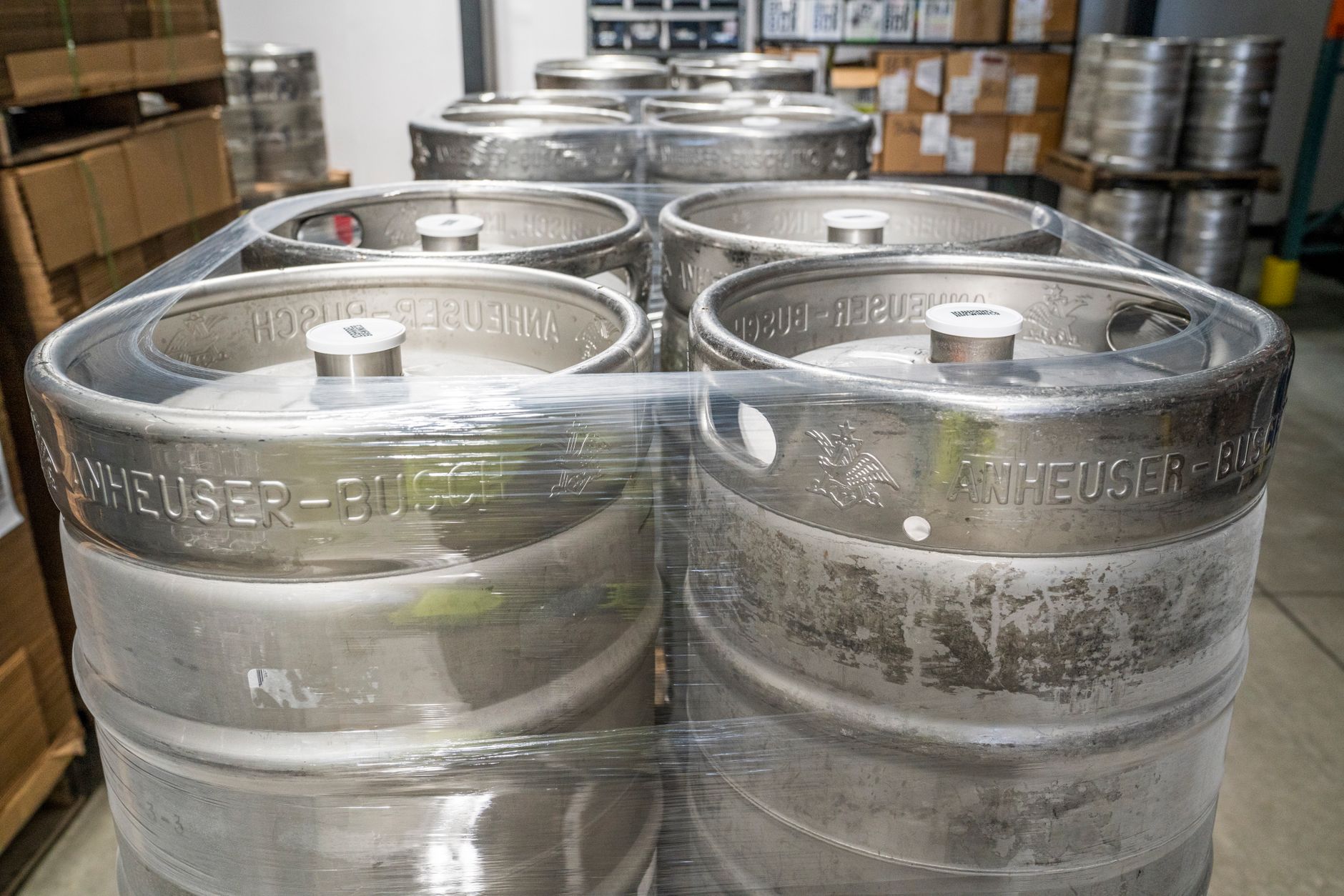
The hours that matter are the repetitive stacking, the changeover resets and the start-of-shift checks, because those are where a line loses time and where people wear down. Pallet wrap and exit handling usually stay with staff, and that is intended, since the arm does not replace the pallet mover or the wrapper.
We do not quote hour figures on this page. Your site walk-through times each task on your line from shift logs and a timed run, and the lease quote uses those hours. The Bureau of Labor Statistics and the trade surveys cited earlier show the scale of the injury and staffing problem across the sector, but they do not measure your station.
Expect the labor gain to come from fewer people tied up on the stacking task and shorter resets, not from removing the shift. The person who runs the cell still checks patterns, clears exceptions and keeps the line supplied, and their hours move toward that work.
What can a cobot not do at a contract packaging site?
A cobot does not run a line unattended. People still load cases and empty pallets, clear exceptions, check that stacked loads are stable and approve a new pattern before it runs. Plan the staffing with those tasks in mind.
Its reach, speed and load capacity are set by the arm and the cell design. A pallet pattern or case size outside that envelope needs another design or a second cell, and we say so in the site assessment rather than after installation.
It cannot fix upstream problems. Cases that arrive damaged, mislabeled or off size still cause stops. The arm will show those problems sooner, which helps, but solving them is a packaging line task, not a robot task.
Is a cobot worth it for a contract packager, and how do you compare?
Compare the lease against what the work costs you now: overtime or agency coverage for unfilled shifts, hours lost to changeovers, and the cost of injuries and turnover on the station. Those comparisons depend on your own records, so this page gives no payback figure.
Start with one cell in a phased deployment rather than the whole plant. A pilot on one palletizing station shows changeover time and staffing change on your data, and it lets you decide on more units with records instead of estimates. The case for a second station is easier to judge after the first has run through a full set of product changes.
To start a quote, send your product runs per week, pallet patterns, shifts, floor plan and staffing today for the station. We then schedule a free site assessment, and the written quote follows it.
Frequently asked questions
Want a cobot at your contract packaging facility?
Tell us about your site. We will recommend the robot, quote the lease, and keep it serviced.
Sources
- Packaging World, Contract Packaging Association-linked post
- IBISWorld, Packaging and Labeling Services businesses
- Packaging World, packaging workforce hiring, retention and training
- PMMI, Inside the Workforce Gap (2025), via Packaging World
- Packaging World, workforce survey on training computerized equipment
- Bureau of Labor Statistics, laborers and material movers injury snapshot
- Carrier Management, summary of BLS injury data
- International Federation of Robotics data, via a trade news report