

The short answer
Cobot cost for medical device manufacturing plants depends on how often the line changes over, how much validation and documentation each change requires, and how the cell fits the machines and fixtures already on the floor. The arm itself is usually the smaller variable. Lease terms are set in a written quote issued after a free site assessment, so the figure reflects your actual cell, shifts and integration work.
Key takeaways
- Changeover frequency and documentation load move the quote more than the arm does.
- Cell reach, fixtures and existing controls set the integration scope.
- Validation and records for each changed setup belong in the plan from the start.
- The lease quote comes after a free site assessment, not before.
- Ask in writing which maintenance, training and insurance items the quote includes.
What is the cobot cost for medical device manufacturing plants?
Cobot cost for medical device manufacturing plants is not one number. It is the sum of the arm, the cell around it, the engineering needed to bring it into a validated process, and the service that keeps it running. The arm is often the smallest part of that sum, because setup, documentation and integration grow with the number of different parts a line runs.
In practice, three things matter most. The first is how often the line changes over between small batches. The second is how much validation and records each change needs. The third is how much existing equipment the arm must connect to. We lease the robot through financing, so the figure the decision maker sees is a fixed robot lease payment, and that payment is set in a quote issued only after we have assessed the site.
This page covers what moves that quote in a plant of this kind, the costs people tend to miss, the labor picture, what a cobot cannot do, and how to get a quote. It does not give a number for a cell nobody has measured, because any figure before measurement would be a guess.
What raises or lowers the cobot lease quote at a medical device plant?
Changeover frequency comes first. A line that runs one part family for weeks needs a fairly simple cell. A line that switches between many short batches repeats fixture changes, program changes and inspection steps several times a week, and each repeat adds engineering time. Plants with many short runs should expect the quote to reflect that work, not just the hardware.
Layout is next. Reach, clearance, floor condition and the paths of carts and people around the cell decide how the arm is mounted and guarded, and whether the cell must be rebuilt before it can run. Shift pattern matters as well. A cell that runs one day shift has different service and staffing needs than one that runs two or three shifts or an overnight window.
Integration scope and the number of units complete the picture. One arm feeding one machine is a bounded job. Several arms across several machines, sharing a controller or records system, multiply the testing. Adding units does spread shared engineering and training across more cells, but each arm still needs its own guarding and checks. The panel below ranks the main levers.
How many medical device manufacturers and workers are there in the US?
The industry is large and spread out. A commercial industry research estimate counts 879 U.S. medical device manufacturing businesses in 2026, up 0.9% from 2025, but that is a commercial estimate and not an official Census count. A third-party analysis of FDA establishment registration counts 9,992 U.S. establishments, which is 40.3% of 24,795 registered worldwide. Because the two counts use different definitions, they should not be added together or compared directly.
The workforce is much larger than the firm count suggests. A data portal reports 797,843 people in medical equipment and supplies manufacturing in 2024, with 132,657 of them in California. That source uses different definitions from the Bureau of Labor Statistics, so treat it as a scale check rather than a headcount for any single plant.
The wider picture points the same way. The International Federation of Robotics president's report, in preliminary form, puts 2025 global cobot installations at about 66,000 units, or 11% of about 603,000 industrial robot installations, down from a 2024 share of about 12%. Cobots are still a minority of installed factory robots, so plants should not assume a mature local service market for every model without asking.
How many labor hours does a cobot take over on a medical device line?
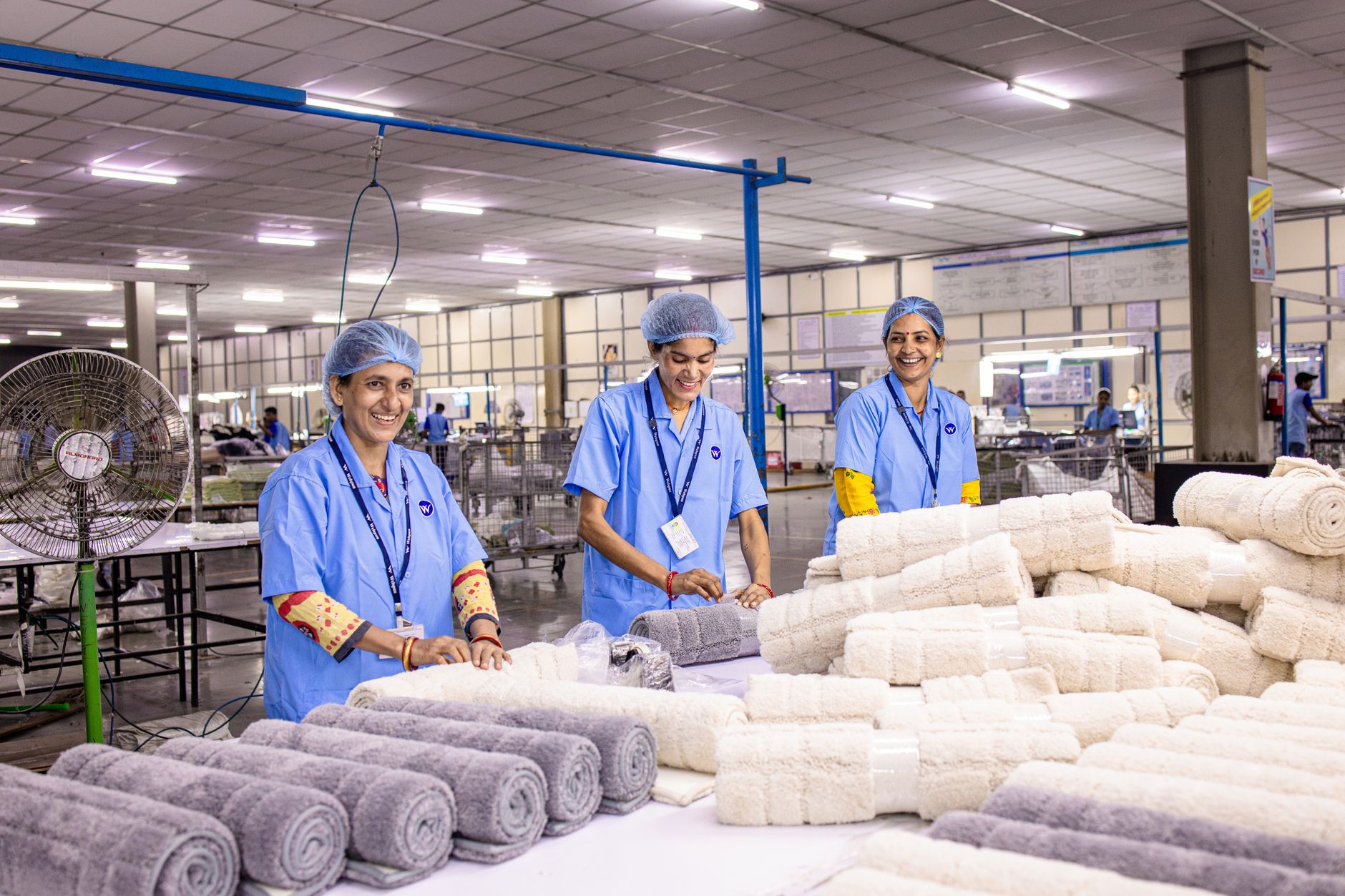
Labor hours are the part most often guessed and least often measured. The hours a cell can take over depend on how many changeovers a shift runs, how many people touch each part, and how much of the work is repetitive handling that does not need a person's attention. We take those hours from time studies on the plant itself, and the table below names the tasks, not the hours.
Context helps. According to the BLS JOLTS release, the 2025 all-industry annual average quits rate was 2.0% and the layoffs rate was 1.1%. According to the FRED series of BLS data, the productivity index for NAICS 3391, which covers medical equipment and supplies manufacturing, was 103.941 in 2025, down from 105.044 in 2024 and from a 2022 peak of 107.945 (2017=100).
Those figures do not explain why a given plant struggles to staff a line. They do show that output per worker in this industry has moved down since 2022, which is a fair reason to look first at repetitive handling. Hours saved are real only if the people freed up are given other work, and a cell that tends a machine still needs a trained person to verify the first part and answer alarms.
How does leasing a cobot through financing work?
We lease commercial robots through financing. The plant leases the arm under a stated term and does not take on the equipment as an owner would. You receive a fixed robot lease payment in a written quote, and the scope is written into the agreement. Changes after signing are handled as written changes, not as surprises later.
Financing is what lets a plant start small. One leased unit on one line, with a phased deployment that avoids a full shutdown, is a bounded way to test fit before expanding. The quote follows a free site assessment, where we measure the line, confirm mapping and identify the integration work. The steps are in the panel below.
What can a cobot not do on a medical device line?
A cobot is a bounded tool. It handles repetitive motion within its rated reach and payload, and it works near people under the safety setup the plant has assessed and validated. It does not decide whether a changed setup is acceptable, and it does not keep the records that prove it.
Safety comes from the standards and the assessment, not from the arm alone. A third-party standards guide lists ANSI/RIA 15.06-2012, which adopts ISO 10218-2, and ANSI/RIA TR R15.606-2016, which covers ISO/TS 15066, as references for U.S. collaborative work. Power and force limiting is one approach that ISO/TS 15066 describes for limiting contact forces. The standards are revised, so confirm current editions with ISO and ANSI directly before writing the safety plan.
Cobots are also a poor fit for heavy payloads, for high-speed runs that need a dedicated industrial arm, and for tasks that need human judgment at every cycle. Match the arm to payload and cycle time during the site assessment, not after signing.
How do I get a cobot lease quote after a site assessment?
Start with the site assessment. It is free, and it is the step that produces a quote, because the quote depends on the cell, the changeover pattern and the integration points. Bring the changeover schedule, the list of parts and fixtures, the controllers the arm would connect to, and the names of the quality contacts who will sign off on validation.
The quote should name the robot we recommend for the site, the fixed lease payment and term, the scope of mapping and integration, training, and service. If the plant wants to pilot first, one leased unit on one line can be scoped separately, so the decision rests on evidence from that line.
Read the quote against the checklist below before you sign. A good quote is one you can explain to your quality team and your finance team in the same meeting.
Is a cobot worth it? How to judge savings and payback
Whether a cobot pays back depends on the hours it takes over, the value of those hours to the plant, the stoppages it prevents, and the lease term. Start with a measured baseline from your own line, since the industry figures on this page describe the sector and not your cell.
Labor is not the only benefit. A cell that holds a steady cycle reduces variation in repetitive handling, and it can keep running a changeover while staff verify the previous batch. Whether those gains show up depends on whether the plant records them before and after deployment.
The fair test is a before-and-after comparison on the same line, over enough changeovers to be meaningful. The same test shows whether a second arm is worth adding, which is a better basis for that decision than assuming it from the first.

Frequently asked questions
Want a cobot at your medical device manufacturing plant?
Tell us about your site. We will recommend the robot, quote the lease, and keep it serviced.
Sources
- Commercial industry research estimate, medical device manufacturing businesses
- Third-party analysis of FDA establishment registration
- Data portal profile, medical equipment and supplies manufacturing
- BLS productivity index NAICS 3391, via FRED
- BLS JOLTS news release
- A3 robot orders release, full year 2025
- IFR president's report, preliminary, 2026
- Third-party collaborative robot safety standards guide