

The short answer
Delivery robot cost for veterinary hospitals depends on how far the robot travels, the floor surfaces and layout, shift hours, traffic from staff and animals, mapping and integration, the number of units, and the service plan. These factors set the lease quote, which is written after a free site assessment of your building. On the other side of the math is the staff time those repeat supply runs take up each shift.
Key takeaways
- Route length, floor surfaces, shift hours and traffic set most of the lease quote.
- Veterinary team turnover averages 23% a year, according to AAHA data reported by dvm360.
- Published hour counts for US supply runs are scarce, so the hours should come from a site walk.
- Mapping, integration, maintenance, insurance and training are the costs people most often miss.
- The quote follows a free site assessment, so the number reflects your building and not an average.
What does a delivery robot cost for veterinary hospitals depend on?
Delivery robot cost for veterinary hospitals is set by the route, the building, and the service plan, not by a single list number. A typical hospital has team members who leave a patient to carry supplies from a back room to an exam room, the lab, or a treatment area, then walk back. Those trips are short, indoors, and repeated, which is the kind of route a delivery robot is built to run.
Labor pressure is the reason most managers look at this. According to the U.S. Bureau of Labor Statistics, employment of veterinary technologists and technicians is projected to grow 9% from 2025 to 2035, much faster than the average for all occupations. When skilled roles stay this hard to fill, every hour a technician spends walking supplies is an hour not spent on animals.
The cost question therefore has two halves. One half is what the robot takes off the team's list. The other is what it takes to put a unit on your floors and keep it working. The sections that follow cover both halves and the drivers that move the lease quote up or down.
Which factors move the cost of a delivery robot at a veterinary hospital?
Route length and the number of floors come first. A robot that runs from a back supply room to several exam rooms and a lab needs more mapping and more battery time than one that stays on a single corridor. Each added door, elevator or separate wing adds planning work before the first run.
Floor surfaces and thresholds are next. Sealed tile and concrete suit most delivery models. Carpet, rubber matting, raised thresholds and ramps change the fit, and may call for a route change or a threshold kit. Those details show up in the site assessment, not on a spec sheet.
Shift hours, traffic and the number of units complete the picture. Overnight restocking or two shifts can call for more than one unit or a faster service response. Busy hallways with carriers and leashes slow the route and need stricter stop rules. One unit on one route is the lowest starting point, and a spare unit adds to the quote but cuts downtime when a robot is out for service.
How many veterinary hospitals could use a delivery robot?
The count is harder to pin down than it looks. According to IBISWorld, there were 56,756 US Veterinary Services businesses in 2025, up 2.0% from 2024. That figure covers a broad category of veterinary businesses, so it is not a count of hospitals alone.
No single authoritative 2025 count of US veterinary hospitals was found in the sources reviewed. For a group planning a rollout, the number of sites and the floor layout of each matter more than any national total. Two hospitals with similar staff sizes can need very different routes.
Floor size varies widely too. A 2016 hospital design award entry in dvm360 described a leasehold conversion of about 1,850 square feet. That is one project, not an average, but it shows how compact a hospital can be, and why route planning matters even in a small building.
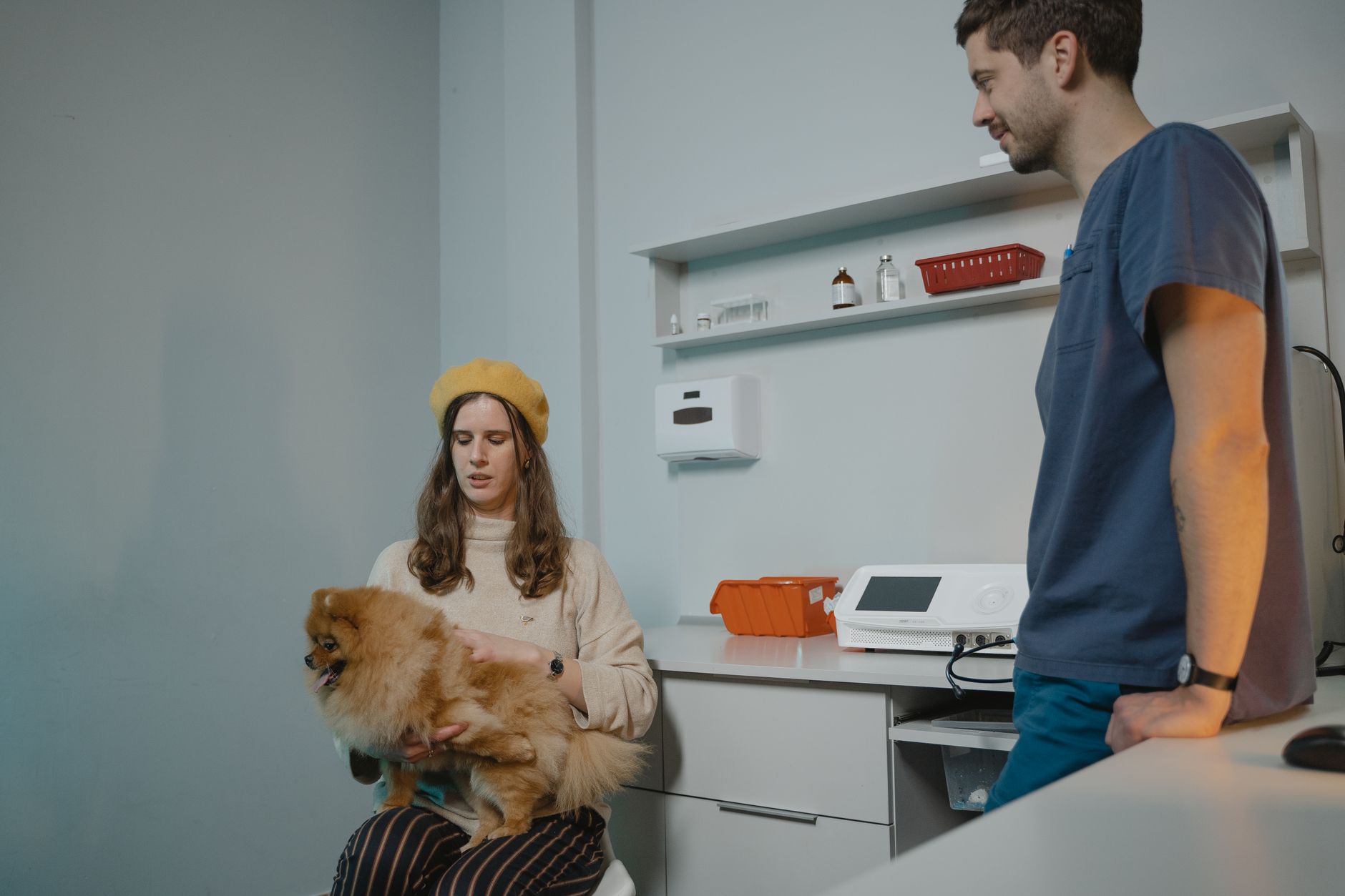
Why do staffing and injury risk belong in the cost math?
Staffing is hard to hold steady. According to dvm360 coverage of AAHA data, average annual turnover among veterinary team members is 23%, and AAHA's CEO said the rate is rising. That survey covered more than 14,000 people in small animal practice. Each departure means training time, and a short-handed team pulls people off patients to cover supply runs.
Injuries follow the same pressure. The BLS reports that veterinary services had 10.6 nonfatal injuries and illnesses per 100 full-time workers in 2023, compared with 2.4 for all workers. Its yearly veterinary series ran 10.7 in 2019, 8.8 in 2020, 13.8 in 2021, 11.3 in 2022, and 10.6 in 2023.
BLS also reports that 29% of veterinary services recordable cases in 2023 led to days away, job transfer, or restriction, which it reads as typically less severe. Repeated lifting and carrying of supply bins is part of that exposure. A robot can take some of those loads off staff, but lifting rules for the work that stays with people still apply.
How much staff time does a delivery robot take over?
Published hour counts for US supply runs in veterinary hospitals were not found. The closest data point is an FVE survey of European veterinarians, which found that 41% of respondents spend 4 to 6 hours per week on one administrative category, and 32% spend 4 to 6 hours per week on other administrative tasks. That covers European veterinarians and admin work, not US technicians carrying supplies, so it does not transfer directly to your floor.
That is why the hours should come from your building. The site assessment counts supply trips by area and shift, separates repeat runs from one-off trips, and rates which tasks a robot can take over. The table below shows the pattern to expect, with the actual hours measured on site.
Expect the robot to take the repeat, route-based runs. It does not take work that needs a clinical decision, animal handling, or a controlled item, and those minutes stay with staff.
How does leasing through financing work, and what does the quote include?
We lease the robot through financing, so the hospital does not carry a large upfront capital cost. The quote is written after the free site assessment, because the route, floors, surfaces, shifts and traffic set the scope. The quote shows a fixed robot lease payment over the lease term, along with deployment, training and the service plan.
The quote lists what is in and what is not. Typical line items are the fixed lease payment, mapping and go-live support, integration with doors or elevators where it applies, staff training, the service plan with remote triage and on-site dispatch, and a spare unit if you choose one. Anything outside that list appears as a separate line, so nothing is hidden in the fine print.
Lease options and terms vary by site and financing program. Use the written quote to compare against your present staffing plan, and check the response times it states for on-site dispatch before you agree to anything.
What can a delivery robot not do in a veterinary hospital?
A delivery robot moves things. It does not lift or restrain animals, it does not perform clinical work, and it does not replace the staff member who decides what a patient needs. It also does not read a room the way a person does, so it depends on set routes, stop rules, and staff who keep doorways clear.
The robot also depends on the building. A closed door, a blocked hallway, a dropped leash or a route change can stop it until staff clear the path. Plan for those pauses, and do not count them as robot time when you compare the hours.
Biohazard and sharps work stays with staff under existing protocols. The robot carries sealed, labeled bins that your team loads and unloads at each end of the route.
- Lift, carry or restrain animals or patients
- Handle controlled substances outside your sign-off rules
- Replace clinical judgment or the cleaning protocols your team follows
- Climb stairs or steep ramps unless the model and route allow it
- Pass through doors that are not integrated or staffed
How should a hospital decide before asking for a quote?
Start with the routes you already know. Write down which trips are repeat runs, which areas they serve, and what time of day they happen. A hospital that can name its busiest routes gets a more accurate assessment than one that asks for a general answer.
Then check the building. Floor type, thresholds, elevators, door controls and the network connection each change the scope. Name the person who owns the decision and the person who will sign off on the staff training schedule, so the quote reaches the right desk.
When the hospital is ready, request a free site assessment. The quote comes after that visit, so the number reflects your floor and not an average. Compare quotes on what is included, not only on the headline payment.
Frequently asked questions
Want a delivery robot at your veterinary hospital?
Tell us about your site. We will recommend the robot, quote the lease, and keep it serviced.
Sources
- U.S. Bureau of Labor Statistics, Nonfatal injuries and illnesses in the veterinary services industry
- U.S. Bureau of Labor Statistics, Occupational Outlook Handbook: Veterinary Technologists and Technicians
- U.S. Bureau of Labor Statistics, Occupational Outlook Handbook: Veterinary Assistants and Laboratory Animal Caretakers
- IBISWorld, Number of Businesses: Veterinary Services in the US
- dvm360, Quick ways to improve employee retention
- FVE, Administrative burden report
- dvm360, 2016 hospital design award coverage