

The short answer
Drone cost in Baton Rouge depends on how much ground the drone must cover, how often it flies, and how much of the work comes with the unit, including mapping, software, insurance, training and service. Humid subtropical weather and heavy rainfall cut flight days, so the number of workable flight days belongs in the estimate before any quote. A lease quote is built after a free site assessment, which measures these factors on the actual property.
Key takeaways
- Area, flight frequency and rain days move a Baton Rouge drone budget more than any single feature.
- Heavy rain means the workable flight calendar is smaller than the calendar on paper.
- Mapping, software, insurance, maintenance and training are the costs people miss most often.
- A lease quote comes after a free site assessment, so put the scope and exclusions in writing.
- Check each pilot's Part 107 status and the service terms before comparing any two offers.
What does drone cost in Baton Rouge depend on?
The drone cost in Baton Rouge is not one number. It is the sum of the unit, the work it has to do, and the services that keep it flying. For a business, the lease payment is the visible line, but the larger swings come from how much ground the drone covers, how often it flies, and what the business needs back from each flight: a survey map, a set of progress photos, a roof inspection report or stored imagery for an insurance claim.
Location matters too. Baton Rouge sits in a humid subtropical climate, and rain decides how many days a crew can actually fly. Local labor, building stock and airspace near the metro's airports also shape the plan. Each of these changes crew time, equipment load or paperwork, so none of them is a detail to skip.
This page explains the factors, not a price. A lease quote comes only after a free site assessment, because two properties that look alike from the road can need very different flight plans.
Which factors raise or lower the drone cost here?
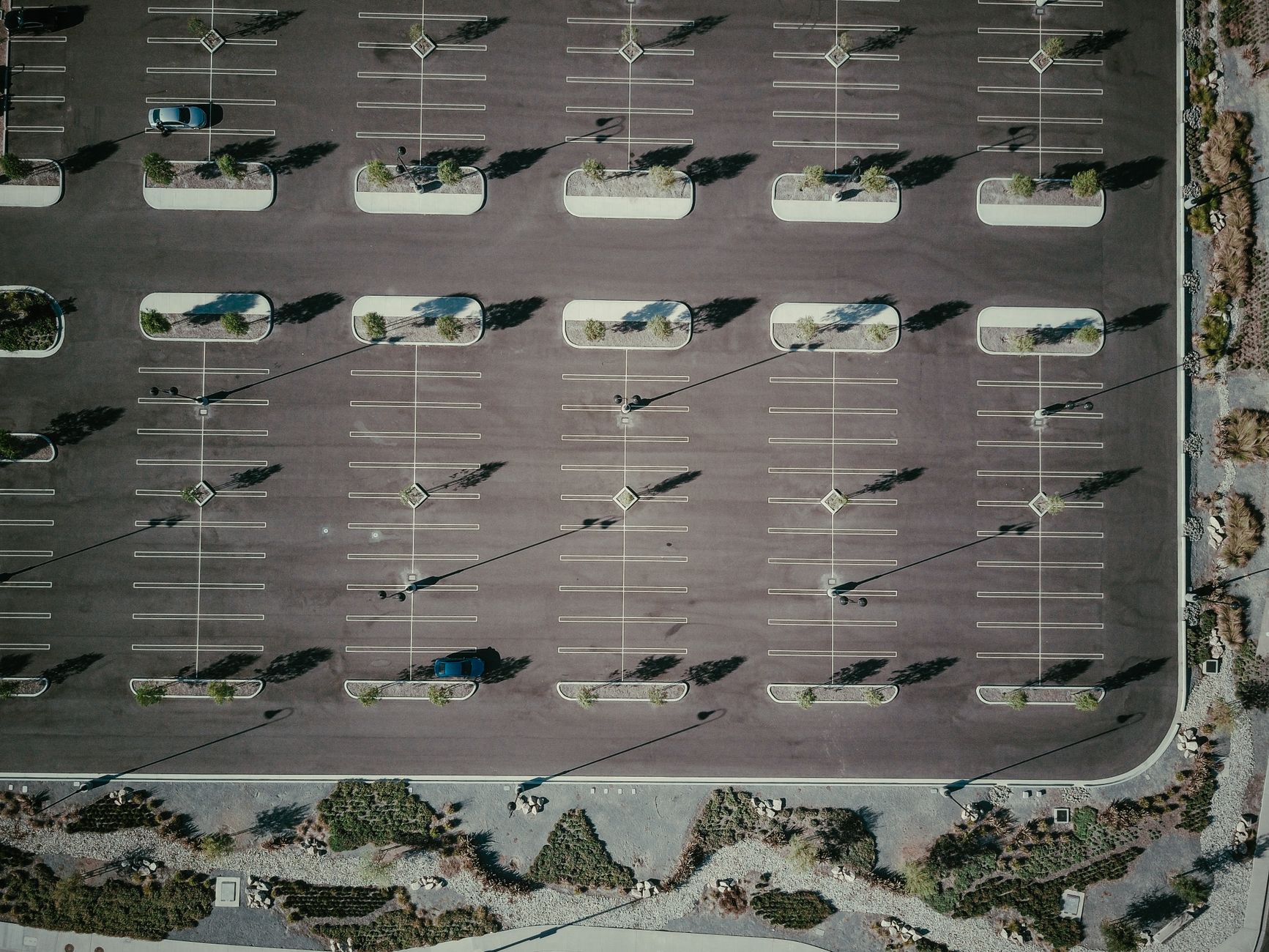
Area comes first. A drone that maps a few acres of a parking field in one flight is a different job from one that must cover a large distribution yard across many battery swaps. Each extra flight adds setup, charging, data handling and a supervised window, so the cost follows the number of flights as much as the size of the map.
Frequency comes second. A one-time roof inspection after a storm is a single mission. A weekly progress flight on an active construction site is a recurring service load, with its own calendar, data upkeep and repeat airspace checks. The quote should reflect how often the drone flies, since that sets how hard the unit works over the term.
Obstacles and airspace add planning time. Tall structures, tree lines, cell towers and proximity to controlled airspace all need checks before a flight, and some sites may need extra authorization. That work takes staff time whether or not the drone leaves the ground that day, so it belongs in the scope.
Who flies drones for business in Baton Rouge?
The Bureau of Labor Statistics reported that construction and extraction occupations had 33,600 jobs in the Baton Rouge metro in May 2025, about 8.2% of local employment. That is a large pool of people who walk, measure and inspect job sites, and it is where drone demand usually starts. On most contractor crews, aerial work is a site task rather than a separate department.
The same BLS occupational releases show construction laborers falling from 7,680 in May 2024 to 6,300 in May 2025. Fewer ground workers means fewer people walking a site for progress checks, and a drone can cover part of that gap. This is our reading of the numbers, not a measured effect.
Other large groups in the metro were office and administrative support at 11.2% and food preparation and serving at 8.5% of employment, both reported for May 2024. That estimate came from 3,119 establishments with a 61% response rate, so read the shares as survey estimates. Those groups are context, not drone buyers, and the BLS data does not tell you who will fly.
How much crew time does a drone save?
Drone work saves time where people would otherwise walk, climb or wait. The ABC Drone Usage Report, the first year of the survey, found that 36.1% of responding contractor members fly drones. The top uses it reported were site progress monitoring at 80.8%, marketing and media at 77.5%, and inspections and mapping at 50%. Those are the tasks where a flight most often replaces a walk.
The report does not give hour figures for crews, and the research behind this page did not find measured hours for Baton Rouge work. The table below describes the work by effort, not by a timed number. A site assessment can time the existing walk, climb or survey on your property, and that timing should replace any guess.
The flight itself is usually the short part. Setup, airspace checks, battery changes, data download and review take longer, and they repeat on every flight. That is why frequency belongs in the quote alongside acreage.

How does Baton Rouge weather change the cost?
Rain is the biggest local variable. According to The Advocate, the 30-year gauge at Baton Rouge Metropolitan Airport averages 61.94 inches of rain a year, and the city had passed that annual total by August of 2021. A crew that plans around fair weather will lose days, and each lost day turns into a rescheduled flight and extra mobilization.
Rain is also uneven through the year. A weather history reference puts January at about 5.3 inches, its wettest figure, and October at about 3.9 inches, its driest. Winter and spring schedules should not assume the same flight windows as autumn, and the site assessment should check the calendar against those patterns.
Humidity is high most of the year. A third-party climate table reports an annual average relative humidity of 76.5%, running from about 62% in January to 78% in August. Heat and moisture are hard on batteries, sensors and cases, so storage conditions and the service plan belong in the quote.
How does leasing through financing work, and what does the quote include?
We lease drones through financing and offer leases only. The payment is a fixed lease payment for the term. It comes in a written quote after a free site assessment, so the number reflects the property, the flight plan and the service load rather than a catalog figure.
A complete quote lists what the lease covers, and it should also name the exclusions. Ask for these lines in writing.
Term length matters. A longer term can lower the fixed payment but commits you to the aircraft as the work changes. Ask what happens at the end of the term and whether an upgrade path exists.
- The unit or units, with the number of aircraft and whether a backup is included.
- Deployment and integration, including flight plans and data flow.
- Pilot and staff training, and any refresher sessions.
- The service plan, with on-site dispatch or remote triage, and what happens while a unit is down.
- Exclusions such as processing, software, insurance or extra flights outside the scope.
What can a drone not do on a Baton Rouge site?
A drone sees from above. It does not replace a hands-on structural inspection, a soil test, a utility locate, or a safety check that needs a person at the surface. It cannot fly in heavy rain or high wind, and it cannot enter airspace where it is not authorized. According to the ABC Drone Usage Report, regulatory hurdles and training challenges still limit wider adoption, which is one reason the scope should be written tightly.
Image quality has limits. Shade, reflective roofing and dense tree cover can hide defects, and no flight can make a map more accurate than the ground control and planning allow. Plan a second pass or a ground check where the stakes are high.
Battery life is short. Large areas take several battery cycles, so flight time, battery changes and charging are part of the work, not an afterthought. Treat the drone as a tool that shortens and repeats a task, not one that ends it.
How do I get a drone quote in Baton Rouge?
Start with a free site assessment. Tell us the properties, the work you need, how often it repeats, and who will read the output. We measure the flight areas, check obstacles and airspace, and estimate how many flights the work takes.
After the assessment, you receive a written quote with a fixed lease payment for the term, the scope, the service plan and the exclusions. Compare offers on those lines, not on the payment alone. Two quotes with the same payment can cover very different work.
We are a commercial robot integrator. We pick the right unit for the site, arrange the lease through financing, deploy and integrate it, train your staff, and service it nationwide. Bring the site list, the hours your crew spends on the task today, and the names of the people who will read the reports.
Frequently asked questions
Put a robot to work in Baton Rouge.
We walk your site, learn the job, and recommend the unit that fits. Then we quote the lease, deploy it, and keep it serviced.
Sources
- Bureau of Labor Statistics, Baton Rouge occupational employment and wages, May 2025
- Bureau of Labor Statistics, Baton Rouge occupational employment and wages, May 2024
- The Advocate, Baton Rouge rainfall reporting
- Weather history reference, Baton Rouge Metropolitan Airport
- Climate table, Baton Rouge, Louisiana (third-party)
- ABC, 36% of contractor members utilize drones on jobsites (news release)
- ABC Drone Usage Report 2026 (PDF)