
The short answer
Robotic lawn mower cost for airports depends on how much grass safety area must stay within height limits, how often it must be cut, when mowing can happen around flight operations, and what the ground and obstacles look like. Those factors set how many units, how much mapping and how much service a site needs, so the lease quote is set after a free site assessment rather than from a fixed figure. Airports with wide safety areas and tight mowing windows feel these drivers most.
Key takeaways
- Safety area size and height limits set most of the mowing hours.
- Mowing windows around flight operations decide how many units a site needs.
- Hidden costs sit in mapping, integration, software, service and training.
- Mowing can take most of a small airport's maintenance crew, so labor shifts matter as much as the machine.
- The lease quote follows a free site assessment that measures the site.
What does a robotic lawn mower cost for airports depend on?
Robotic lawn mower cost for airports depends on the work the machine has to do, not on the mower alone. A site quote is built from how much grass must stay within height limits, how often it must be cut, when mowing can happen around flight operations, and what the ground and obstacles look like. Those inputs decide how many units, how much mapping and how much service the site needs.
An airfield is a different job from a typical lawn. Most of the grass sits beside paved surfaces that aircraft and vehicles use, and mowing has to fit around movement areas, closures and inspections. A mower that suits an office park can be the wrong fit on an airfield, where a patch of tall grass beside a navigation aid is a compliance problem and not a cosmetic one.
This page covers the factors that move the number, the hidden costs people tend to miss, how leasing through financing works, the labor hours involved, what a robot cannot do, and how to get a quote after a free site assessment.
What grass areas must a robotic mower keep trimmed at an airport?
The FAA sets standards for airport grass through its advisory circulars, and 14 CFR 139.309 says those circulars set the standards for safety area configuration and maintenance. A Nebraska Department of Transportation summary of this guidance says runway safety areas should be mowed weekly to every 2 weeks, with a target maximum height of 6 to 8 inches, and rates that work as high priority.
The same summary puts runway shoulders and navigation aid clear zones on a looser band of 6 to 10 inches, mowed monthly or as needed. It cites circulars AC 150/5370-10 and 150/5370-10H. Because the summary is a state reference rather than the FAA text, the site's own maintenance plan and its FAA inspection expectations should be checked before any interval is set.
Local rules can be stricter. One municipal airport mowing contract requires no vegetation above 10 inches and mowing at intervals of no more than 2 weeks or at 8 inches. The tightest rule that applies to a site sets the mowing frequency, and frequency is what drives hours.
How many airports and how much grass is involved across the US?
According to the FAA's 2025 to 2029 National Plan of Integrated Airport Systems narrative, there are 3,287 existing public-use airports, plus 5 proposed nonprimary airports. These are airports eligible for federal Airport Improvement Program grants, so the count is a starting point for sites with formal airfield turf rules, not a full count of every grass-covered airfield.
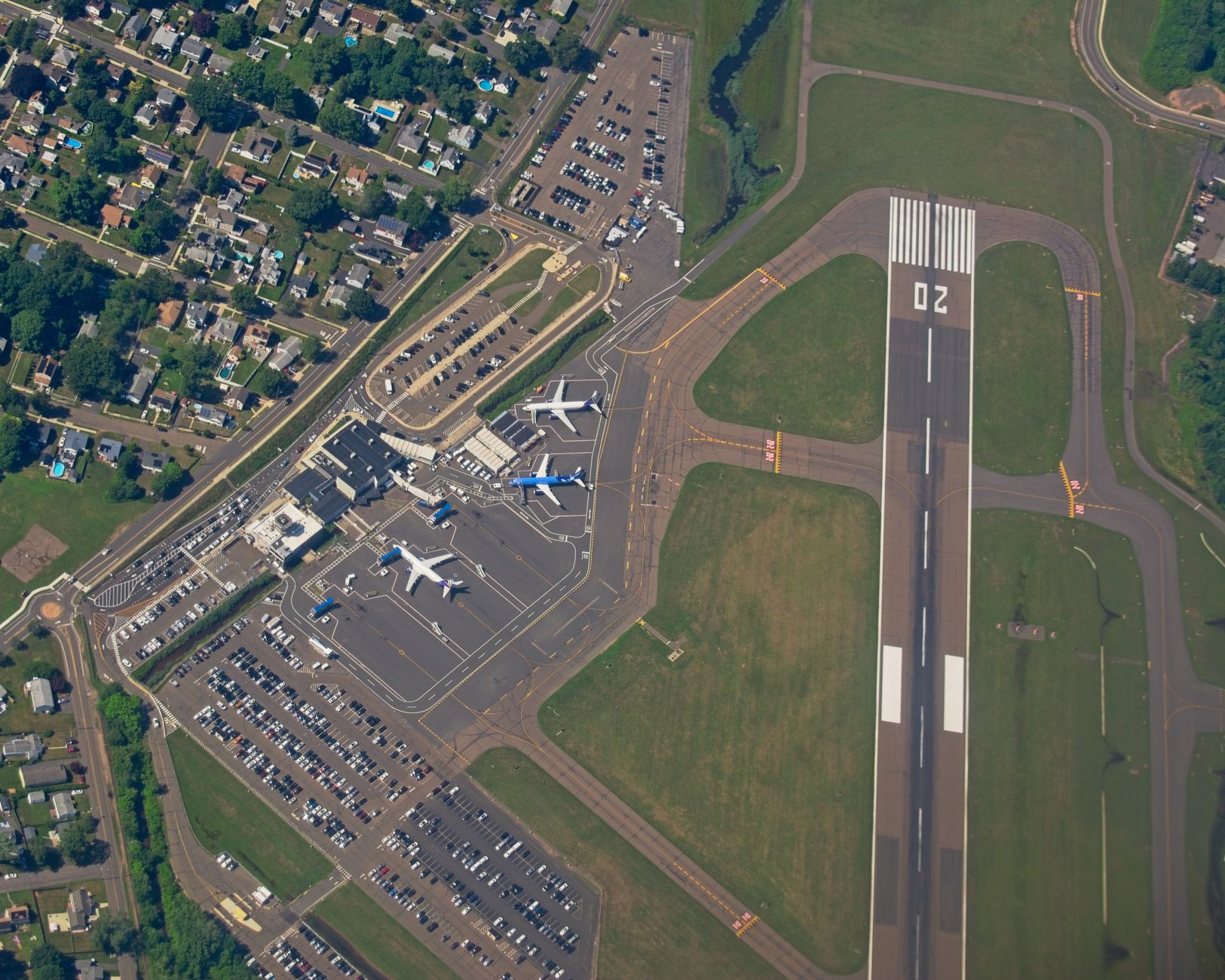
Many of these sites are small general aviation fields where one or two people also handle snow removal, lighting checks and fueling. For them, the real question is whether a fixed mowing window can be held without pulling staff off other airfield work. A large regional airport faces the same rules over far more grass, so its hours scale with the mapped area.
Acreage varies widely from field to field. The site assessment starts with a measured map of each safety area, because the mapped area is the first input to the unit count and the run time.
How many staff hours does airfield mowing take?
Hours are the clearest way to see the labor side. According to a 2021 local TV report on a Virginia regional airport, grass cutting generally took about 4 hours a week, and three robotic mowers were in use there. The same report said the mowers can cut 24 hours a day and stop only to recharge. These are reported figures from one site, not an industry average.
Crew time matters more at airports with a small maintenance team. According to Airport Improvement magazine, mowing at a Texas regional airport typically took 5 to 6 of the airport's 9 maintenance staff, and turf work kept a handful of staff busy about 44 weeks a year. The same article reports the airport's own estimate of 8 to 20% less labor, with freed time moved to pavement inspections and runway marking.
Labor supply is a constraint too. According to the Bureau of Labor Statistics, grounds maintenance workers typically learn on the job with no formal credential, though licensing may apply to workers who apply pesticides and fertilizers. The BLS projects employment growth of 4% from 2024 to 2034. The research did not find turnover figures for airfield maintenance, so check your own crew records before planning around a turnover rate.
How does leasing through financing work, and what does the quote include?
Robots are leased through financing. The airport makes a fixed lease payment over an agreed term instead of committing a large upfront sum. The payment appears in a quote after a free site assessment, so no figure applies to every airfield in advance. A quote shows the term, the units, what the payment covers and what sits outside it.
A complete quote should list the lease term, each unit included, deployment and integration, training, maintenance and service visits, and whether spare unit coverage is included. Backup matters on an airfield, because one stopped unit can leave a safety area untended until a visit is made. Ask whether emergency replacement is part of the lease, and get the answer in writing.
Programs can start small. A single unit on one defined safety area can run through a full season of mowing windows, then expand to a fleet once the schedule and the map are proven. Ask for the term length and the conditions for changing the unit count in writing before you sign.
What can a robotic mower not do at an airport?
A robotic mower handles repeated, planned passes on defined grass. It does not replace the surface inspection that airfield staff perform, the removal of debris from the safety area, or the judgment needed when grass is wet, bare or hides a hole that could catch an aircraft wheel. Those tasks stay with people.
Trial results are useful but they are not guarantees. According to a 2026 trial report from Future Travel Experience, an Australian international airport expects about a 70% cut in vegetation management costs and about 250 hours a year of sweeper truck operations removed. The report presents these as expectations, not measured results.
A 2021 case study in the journal Sustainability describes a university airport where safety alerts fell from 23 over 562 hours of mowing in the first test to 2 over 1,115 hours after changes to grounds and software. The study cites staff reductions as a main benefit. The gain came from changing the site and the software as well as the machine.
Which parts of an airport does the robot work on?
A robotic mower works on defined grass zones that are mapped and checked on site. The zones below are the usual areas on an airfield, and each carries its own height rule and mowing frequency. The list is a guide, and the site assessment confirms which zones fall in scope.
Zones beside runways and navigation aids usually need the tightest limits and the most careful boundaries. Perimeter and apron margins are often easier to map, but they share space with vehicle traffic, so the mowing plan has to show when those areas are clear for a run.
How do you get a lease quote for an airport mower?
The quote starts with a free site assessment. We measure the mowable area, map safety areas and no-go zones, review the mowing windows agreed with operations, and check the ground for slope, drainage, obstacles and access to charging.
After the assessment we recommend the robot and the unit count that fit the site. The quote then sets out the lease term, the fixed lease payment, deployment and integration, training and service terms, and states what is not included.
A practical first step is one unit on one defined safety area, tested through a full season of mowing windows before expanding. Bring your existing mowing schedule, your site plan, and the state or FAA turf rules your airport follows, so the assessment can be specific.
Frequently asked questions
Want a robotic mower at your airport?
Tell us about your site. We will recommend the robot, quote the lease, and keep it serviced.
Sources
- Nebraska Department of Transportation airport turf management flyer (April 2025)
- FAA 2025 to 2029 NPIAS narrative
- Airport Improvement magazine, regional airport autonomous mowing article
- 13 News Now, 2021 regional airport robotic mower report
- Bureau of Labor Statistics, Occupational Outlook Handbook, grounds maintenance workers
- Sustainability journal (MDPI), 2021 airport mowing case study
- Future Travel Experience, 2026 airport robotic mower trial report
- Municipal airport mowing contract