
The short answer
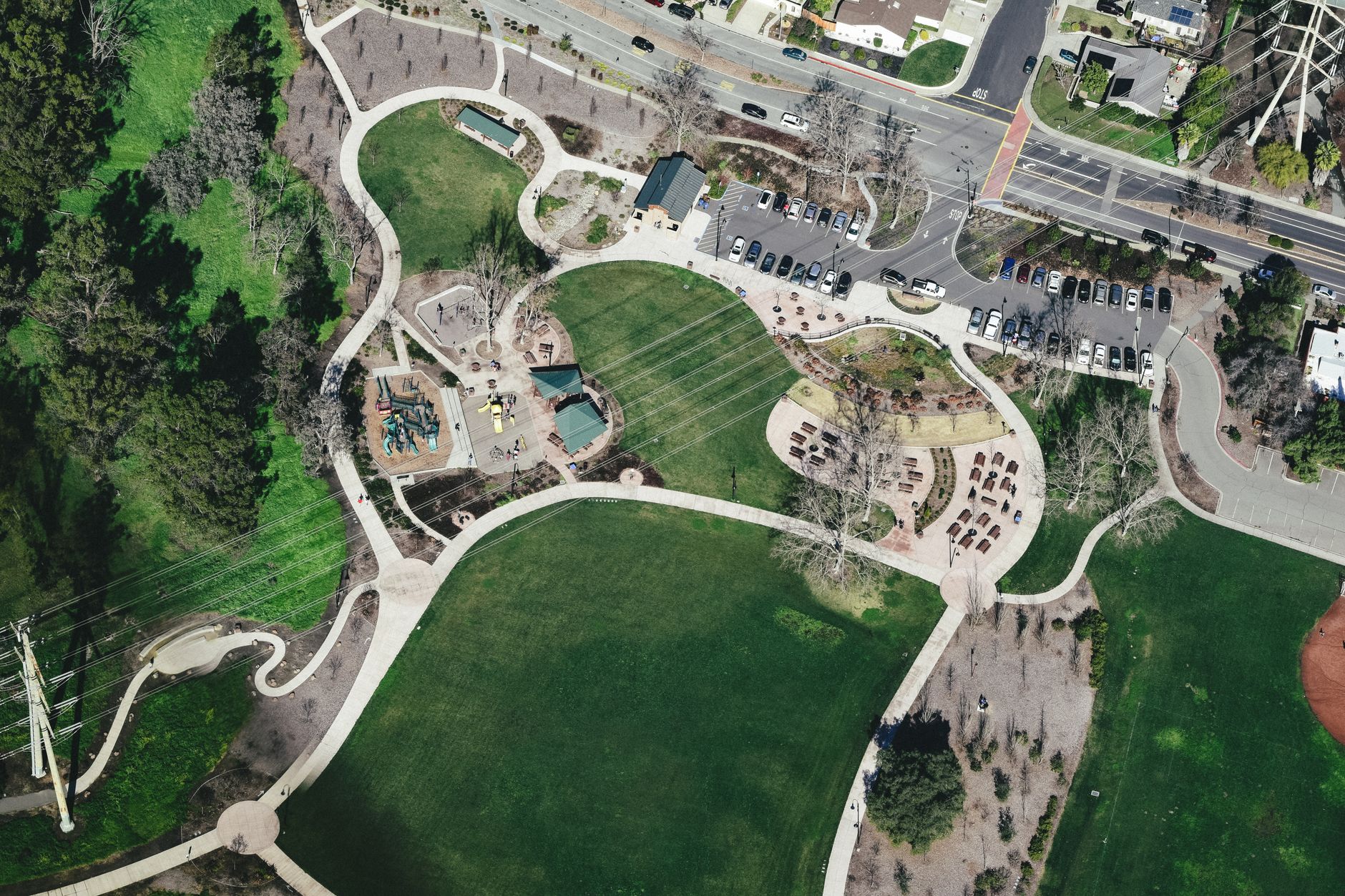
The robotic lawn mower cost for public parks depends mostly on how many acres need scheduled cutting, how steep and obstacle-filled the turf is, and how many crew hours the mowing takes today. Open, repeatable zones such as sports fields, amphitheater lawns and large picnic areas return the most crew time, while mapping effort, fleet size, backup coverage and service distance set the rest. A lease quote is built after a free site assessment, so the fixed lease payment reflects the actual grounds.
Key takeaways
- Acreage, slope and obstacles set most of the work the robot has to cover.
- Crew hours saved depend on how many acres are mapped and cut on a schedule.
- Mapping, software, maintenance, insurance and training are the items most often missing from a first estimate.
- A lease quote comes after a free site assessment, not from a catalog figure.
- Service coverage and a backup unit decide whether a park keeps mowing on a bad day.
What does a robotic lawn mower cost for public parks depend on?
A robotic lawn mower cost for public parks is not one number. It is the sum of the mapped area the units must cover, the site conditions that make mapping and cutting harder, and the service that keeps the fleet running. Each of those moves with the park itself, so two parks of the same size can produce very separate quotes.
Our quotes are built the same way. We walk the site, map the boundaries, note where the grass is steep, shaded or crossed by paths, and then size the fleet to the hours that need to come back. The lease payment comes out of that assessment and is shown in writing before anyone signs.
The rest of this page explains each driver, the hidden items that show up later, and how the lease works, so the person signing off can check any quote against the grounds it describes.
How many parks and acres does a typical agency manage?
According to the NRPA 2026 Agency Performance Review, the typical U.S. park and recreation agency has about one park per 2,437 residents and about 10 acres of parkland per 1,000 residents. The same review reports about 300 programs a year, so mowing schedules often have to fit around events, camps and athletic bookings on the same turf.
According to a 2022 NRPA magazine article on the agency performance review, more than 10,000 local park and recreation agencies operate across the country. The reviews draw on self-reported samples, so the figures describe a typical agency rather than a count of every park. Our research found no national count of parks maintenance staff or staff per acre, so the labor side has to be measured site by site.
That is why acreage is the first number we ask for. A city with 10 acres per 1,000 residents may run a few large fields or dozens of small parks, and those layouts need very different mapping and fleet sizes.
What moves the robotic lawn mower cost for public parks up or down?
Mapped acreage is the largest driver because the fleet has to cover every zone on the schedule. More acres means more mapping, more run time and often more units, and each of those adds to the lease. Open lawn with clear edges is the simplest case to quote.
Slope and surface matter next. A unit cannot work safely over ground beyond its rated slope, so steep banks and drainage swales either need a different machine or stay with crews. Wet ground and long grass also change how often a zone can be cut within a window.
Obstacles set the mapping effort. Trees, planting beds, benches, sprinkler heads, paths and fencing all need to be defined during the survey, and every boundary missed at that stage becomes a stop on the first mowing night. A park with many small islands costs more to map than one large lawn of the same acreage.
The schedule window and public traffic decide how many mowing hours a day the fleet must deliver. According to a Canadian city's trial reported by a turf industry trade magazine, mowing can begin as soon as a field is cleared of play and continue until 6 a.m., so the closing time and the first game of the day set the window. Frequent events or camps need zones that can be cut on a rotating timetable.
Fleet size and backup coverage round out the number. One unit on one lawn is a much smaller decision than several units on a sports complex, and a spare unit keeps mowing going while a fault is cleared. Distance to service coverage also affects how quickly a fault is cleared, which matters more on a large site than on a small one.
How many crew hours does park mowing take, and what does the robot take over?
According to the U.S. Bureau of Labor Statistics Occupational Outlook Handbook, grounds maintenance workers held about 1.3 million jobs in 2024, about 1.19 million of them in landscaping and groundskeeping. The same handbook projects employment to grow 4 percent from 2024 to 2034, about as fast as the average for all occupations. The handbook does not break out parks crews, so the hours on your own grounds still have to come from your own records.
Injury exposure is part of the labor picture. According to the BLS occupation snapshot for landscaping and groundskeeping workers, private industry recorded 12,380 cases involving days away from work in 2019, an incidence rate of 185 per 10,000 full-time equivalent workers. Moving long, repetitive mowing passes onto a robot reduces the hours a worker spends on exposed equipment, though it does not remove the need for crews.
The hours that matter most are the repeat cuts on defined zones. Those are the hours a robot can return to the crew, and the table below shows which tasks move and which stay with people.

How does leasing a robotic lawn mower through financing work?
A lease through financing spreads the cost of the equipment across a set term instead of asking the park to fund the full equipment amount at once. The term, the fixed payment and the end-of-term options are written into the quote, and no term should change after signature without written notice.
A quote should state the fixed lease payment, the term, what the payment includes, which service items are covered, how faults are handled, and any deployment or training fees. If one of those is missing, ask for it before comparing the quote with another. Some public agencies also need board approval for a multi-year agreement, so confirm that step early.
Because the payment depends on the site, we build it only after a free site assessment. The walk-through covers acreage, slope, boundaries, power, schedule window and access, and the quote reflects what the grounds actually need.
What have cities and counties reported about hours saved?
Local trials give the clearest real figures so far, though each comes from a single site and its own measurement method. According to the county's public works director, as reported by a local television news report, an autonomous mower in Nassau County, Florida has mowed more than 100 acres of fields and an amphitheater lawn at a regional park and saves about 600 staff hours a year. A parks official said it saves roughly five to six hours a day, reducing a full-day job to about three hours. The 600-hour figure is the county's own estimate, and our research found no independent audit of it.
According to a turf industry trade magazine, the autonomous mowers in Waterloo, Ontario cut three to four acres in a day and a half. The units run in cycles of about two hours of cutting and one hour of charging, and mowing can start right after a field is cleared of play and continue until 6 a.m.
According to a local newspaper, two robotic mowers at the sports complex in Homewood, Alabama freed more than 80 hours a week during peak season. According to a New York City fleet newsletter from December 2025, a three-month pilot with NYC Parks logged 53 mowing hours over about 80 acres. Those figures measure what the machines did, not what a full crew would have done on the same ground, so treat them as a starting point for timing your own grounds.
What can a robotic lawn mower not do in a park?
A robotic mower works only inside its mapped boundary and within its rated slope and surface limits. It does not trim by hand around trunks, edge along walls the way a trimmer does, clear debris before it cuts, or handle tree work, irrigation repair or leaf removal. Crews stay on those tasks, and the lease does not change that.
It also cannot manage people or events. A unit can stop when it meets an obstacle, but a park with unsupervised foot traffic still needs signs, a schedule that keeps the fleet away from occupied areas, and a staff member who knows where the units run.
Weather and ground conditions limit the schedule too. Saturated turf, standing water and heavy rain can stop cutting for a night, so the fleet should be sized with spare hours, and a backup unit helps when a fault takes one machine out of service.
A robot also does not write the mowing plan. Zones, cutting frequencies and cut heights still need someone who knows the park, and those choices are worth documenting before installation.
How do I get a quote for a robotic lawn mower at my park?
Start with the acreage map, the boundaries, the mowing schedule as it stands now, and the hours your crew spends on the zones you want to automate. That gives the assessment a baseline to measure against.
We then run a free site assessment. Our team walks the grounds, maps the boundaries, checks slope and surfaces, locates power for charging and confirms the schedule window. We select the unit and fleet size for the site and build the quote from that work.
The quote shows the fixed lease payment, the term, what is included, and the service terms, including nationwide service and how faults are handled. Compare it with your crew hours and your hidden cost list, and consider starting with one leased unit on a single zone before committing the whole fleet.
Frequently asked questions
Want a robotic mower at your public park?
Tell us about your site. We will recommend the robot, quote the lease, and keep it serviced.
Sources
- NRPA 2026 Agency Performance Review
- NRPA Parks and Recreation magazine, 2022 article on the Agency Performance Review
- BLS Occupational Outlook Handbook, Grounds Maintenance Workers
- BLS Occupational Injuries and Illnesses snapshot, Landscaping and Groundskeeping Workers
- ActionNewsJax, Nassau County autonomous mower report
- Turf & Rec, Municipalities praise robotics
- Homewood Star, robotic mowers at Homewood parks
- NYC DCAS Fleet Newsletter, December 2025