
The short answer
Robotic lawn mower cost for utility-scale solar farms depends on the acres between panel rows, the terrain and clearance under the arrays, how many cuts the vegetation needs each season, how many units run at once, and how much mapping, integration and service the site requires. We set the lease quote after a free site assessment, because those inputs decide what a specific site needs.
Key takeaways
- Acreage and cuts per season set most of the work, and the mower model matters less than the site.
- Ground clearance under the arrays decides whether a unit can cut there at all.
- Mapping, integration, training and service are the costs people most often leave out of a first estimate.
- Crews still handle edges, faults and oversight, so count those hours before comparing options.
- The lease quote comes after a free site assessment that measures your ground, not a catalog sheet.
What does robotic lawn mower cost for utility-scale solar farms depend on?
The cost of a robotic lawn mower for a utility-scale solar farm depends on the ground the mower must cover, the cuts that ground needs each season, and the work around the robot, such as mapping, integration and service. The mower model is the smallest part of that picture. Two sites with the same unit can land far apart on the lease quote, because one has level open rows and the other has steep banks, low arrays and crowded equipment pads.
The market around these sites is large and still moving. According to SEIA's year-end 2025 solar data, US utility-scale solar installed 34.7 GWdc in 2025, down 16% from 2024, while total US solar reached 43.2 GWdc, down 14%. Utility-scale installs fell nearly 40% from the third quarter to the fourth quarter of 2025, so build schedules are uneven. The same data set expects 381 GW of utility-scale installs over the next 10 years, which means many new sites will need vegetation control from their first season.
Each of those sites has ground that regrows on a schedule. That regular pattern is why robotic mowers fit the job: the terrain between rows is predictable, and the cutting repeats on a timetable.
How much ground does a utility-scale solar farm need mowed?
Start with capacity and convert it to acres. A 2025 study in Frontiers in Sustainable Food Systems used a basis of 6 acres per MW of capacity when it modeled vegetation control at solar sites. That figure is a planning assumption, not a survey of your site, so use it for a first estimate and then replace it with measured acreage.
Capacity keeps climbing. The Energy Information Administration reported 128.6 GW of utility-scale solar capacity in March 2025, and its forecast put about 11.6 GW of 2025 additions in Texas, the largest of any state. A state total says little about one fence line, but it shows how many new sites will need ground care. For a count of plants by state, the EIA monthly generator inventory, Form EIA-860M, is the place to pull it.
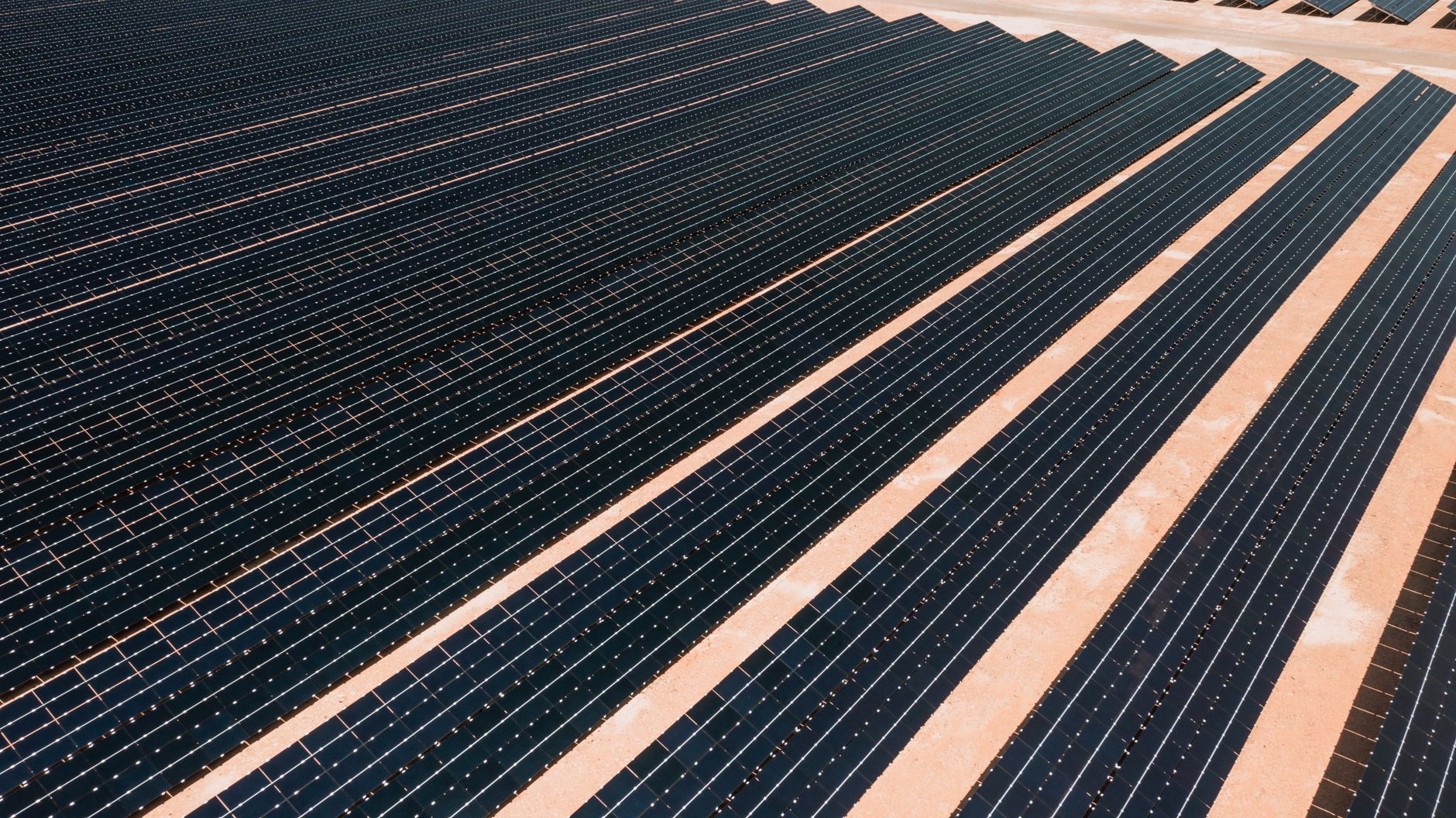
Mowing area is not panel area. The robot covers the ground between tracker rows, the strips along fences, the shoulders of access roads and the grass around equipment pads. Measure each zone separately, because each has different clearance, obstacles and cut frequency.
What moves the cost up or down at a solar farm?
Acreage sets the baseline, but other factors change the lease quote more than most people expect. Terrain and slope come first. A flat site with even grass takes a steady route, while steep banks, washouts and drainage swales slow the mower, limit safe paths and may need extra passes.
Clearance comes next. A mower must fit under the lowest edge of the arrays, and many arrays sit too low for some units. Piles, cable trays, posts, inverters and combiner boxes add obstacles that the survey must map and the mower must route around. Each one adds planning time at deployment.
Cuts per season multiply everything. Each extra cut repeats the whole route, so a site cut a few times a season and a site cut monthly do not carry the same run time, service visits or labor. Crews that mobilize for every cut add travel and setup time that a scheduled robot does not need.
Number of units and shifts come next. More units shorten a cycle but add mapping, charging and service points. Running overnight, when the site is quiet, changes how labor is planned, but it does not remove the need to check the fleet.
Integration and service close the list. Connecting the fleet to your site systems, setting boundaries, training staff and arranging on-site dispatch when a unit faults all show up in the quote. A site far from a service base will weigh response time more heavily than one close to it.
How often do solar farms need mowing, and why does frequency move the cost?
Frequency is where many estimates go wrong. A vendor guide on solar ground maintenance says most sites need vegetation management about three times in the growing season. A wet spring or a fast-growing groundcover may push that higher, and a slow-growing stand may pull it lower, so use the count only as a starting point for your own records.
The way cuts are scheduled matters as much as the count. The chief technology officer of one robot maker has said that operators often deploy landscaping crews on a weekly or monthly schedule, which drives up cost. A mower on a fixed schedule removes the trip for each cut, but it still needs a route, a charging plan and a staff check.
Regrowth is the core reason this fits. Grass between rows grows back on a recurring cycle, which lets the robot repeat a mapped route instead of finding new ground each time. Irregular growth, such as weeds after a storm, may still need a manual pass between scheduled runs.
How many labor hours does mowing take, and what does the robot change?
The labor pool behind this work is large. The BLS Occupational Outlook Handbook reports 1,296,400 grounds maintenance workers in 2024, of whom 1,192,500 worked in landscaping and groundskeeping, and it projects 4% growth from 2024 to 2034, adding 45,900 jobs. Not all of those workers are on solar sites, but the trade is wide enough that crew staffing remains a real line in the budget.
Hours depend on acreage, crew size, route length and how many cuts run each season. This research pass did not verify an hours-per-acre figure for solar sites, so the table below describes tasks rather than timing them. The site assessment turns your acreage and cut schedule into an hour estimate for your ground.
The work is also physically hard on people. According to the BLS injury snapshot for landscaping and groundskeeping workers, 2015 to 2019, there were 12,380 nonfatal cases with days away from work in 2019, and the incidence rate that year was 185 per 10,000 full-time equivalent workers. The yearly rate ranged from 149.0 in 2018 to 218.8 in 2016. Keeping people off the cut lowers their exposure on the mower, though staff still handle faults and edge trimming.
How does leasing a robot through financing work, and what does the quote include?
We lease robots through financing, so the unit stays on a lease with a set term and a fixed robot lease payment for that term. Lease terms vary with the site and the financing program, and the quote states them in writing before anything is deployed.
Robot lease options differ in term length, the financing program and what the service agreement covers. The part that matters most for the decision is the fixed robot lease payment and what sits beside it. We give a lease quoted after a site assessment rather than a catalog figure, because the right unit, count and service level depend on your ground.
A quote from us covers the following items:
- The robot lease, with the financing term and fixed payment stated
- Site assessment mapping and boundary setup
- Deployment and integration with your site systems, with go live support
- Staff training on alerts, recovery and safe approach
- Service nationwide, with on-site dispatch and remote triage
What can a solar farm mowing robot not do?
It cannot cut where it does not fit. The mower needs clearance under the array and a route free of obstacles it can map. One vendor's published specification says its unit cuts under the array only if the array is raised at least 18 inches, so check your rows against any unit's clearance before you assume it will work.
It cannot handle every surface. Deep standing water, very steep banks, soft washouts and heavy debris are poor fits, and weather can stop runs. Growth far above the normal cut height may need a manual pass before the mower can work it down.
It cannot replace judgment on site. Crews still trim around posts and tight corners the mower skips, clear fallen limbs and respond when a unit faults. Plan for those tasks in the labor estimate rather than treating the robot as a full replacement for the crew.
How do I get a lease quote for a solar farm mowing robot?
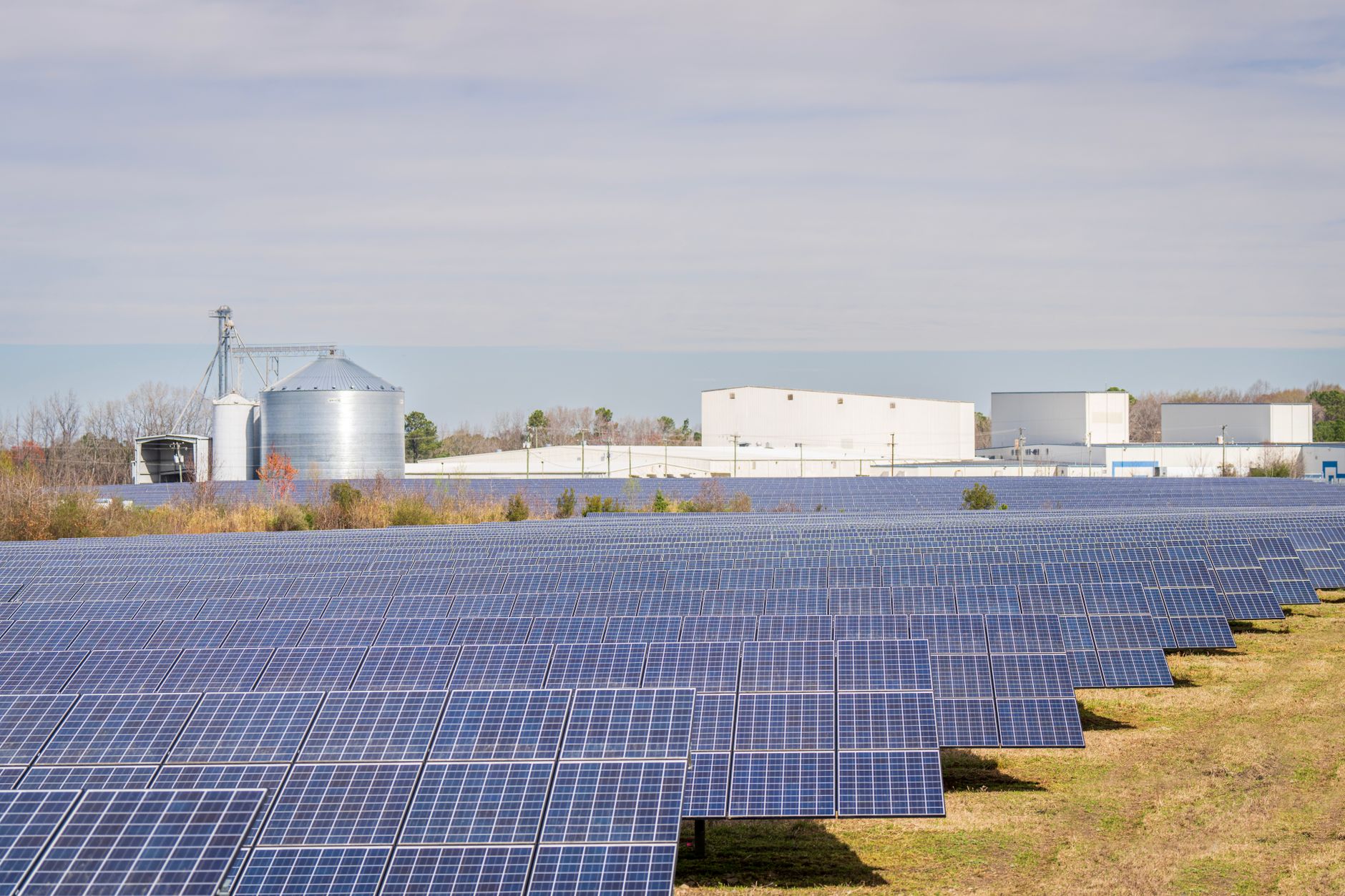
Start with a free site assessment. We measure acreage by zone, check clearance under the arrays, map obstacles, note slope and drainage, and record how often the site is cut today. We also review network access and where a service call would come from.
The assessment turns those findings into a unit count, a route plan and a cut schedule. From that, we build a lease quote with the financing term, the fixed payment and the service terms. Some sites start with one leased unit as a pilot, which shows how the mower handles the ground before a larger fleet is set.
Our work covers the robot choice, the lease through financing, deployment and integration, staff training and service nationwide. We choose the unit for your ground, and the quote explains why that unit fits. Ask for the quote to show the hours your crew will still carry, so you can compare the first season against your own records.
Frequently asked questions
Want a robotic mower at your utility-scale solar farm?
Tell us about your site. We will recommend the robot, quote the lease, and keep it serviced.
Sources
- BLS Occupational Outlook Handbook, grounds maintenance workers
- BLS injury and illness snapshot, landscaping and groundskeeping workers, 2015 to 2019
- SEIA 2025 US solar installation data as reported in trade press
- EIA utility-scale solar capacity and 2025 additions as reported in trade press
- Frontiers in Sustainable Food Systems study on vegetation management at solar sites