
The short answer
Robotic lawn mower cost in Baltimore depends mostly on the site: the working turf area, slopes and drainage, the number of obstacles and zones that must be mapped, and the crew hours the robot takes over. A lease is quoted only after a free site assessment, so the fixed lease payment reflects measured grounds rather than an estimate. Baltimore's long mowing season and the service plan then decide how much of the year the lease covers and how quickly a visit happens when a unit needs help.
Key takeaways
- Working area and slope move the quote more than any other factor on a Baltimore site.
- Baltimore's frost-free period runs about 230 days, so the lease should match a long mowing season.
- Mapping, boundary setup and service belong in the written quote, not in a later invoice.
- The robot takes over repeat mowing, but crews still trim edges, repair damage and oversee the work.
- A free site assessment measures your grounds before any lease payment is set.
What does a robotic lawn mower cost in Baltimore depend on?
The cost of a robotic lawn mower in Baltimore is set by the ground it must cover and the work it replaces, not by a catalog number. Two lots of the same size can need very different machines and service plans if one is flat and open and the other has slopes, islands and tight edges along walkways. Start by asking what share of the grounds is mowable turf and how many separate areas the robot has to reach.
Our team sees the same pattern across commercial sites. The first question is the working area, the second is the terrain, and the third is how the robot fits into the crew's week. We quote only after measuring these on your property, which is why a free site assessment comes before any figure.
Local conditions matter too. Baltimore's growing season is long, so the robot may run for much of the year, and the quote should reflect the months your grass actually grows rather than a single summer estimate.
How big is the local market for robotic mowing in Baltimore?

Landscaping is a large industry. According to a state business statistics compilation citing County Business Patterns, there were about 118,000 employer establishments in landscaping in 2023, employing about 802,900 people. Those totals are national, so they show the size of the industry but not how many firms work in Baltimore.
The local labor pool is harder to measure. The Maryland Department of Labor counted 630 landscaping and groundskeeping workers in Baltimore City in its 2016 data, and the Bureau of Labor Statistics counted about 1,390 supervisors of landscaping, lawn service and groundskeeping workers in the Baltimore-Columbia-Towson metro in May 2017. Both are dated, and occupation codes miss many crew members, so treat them as floors rather than headcounts.
A newer count is much smaller. According to BLS May 2025 data republished by a salary website, only about 40 jobs in the metro fell under the grounds maintenance workers, all other code, and that sample is small. The gap shows how specialized grounds work is coded, not how many people mow lawns in the area.
Typical sites for robotic mowing in the metro include property management portfolios and multifamily communities, office and industrial parks, school and university grounds, medical and institutional campuses, and cemeteries or municipal open space. Each has distinct hours, access rules and tolerance for noise and clippings, and those differences move the quote more than the machine does. Older rowhouse blocks tend to have small plots, which changes the math, while newer campuses and business parks often have open turf that suits a robot.
What makes the cost go up or down at a Baltimore site?
Working area is the largest driver. More turf means more hours of mowing covered, more boundary to map and, on a tight schedule, more units. A large open campus is simple to set up and can still need several machines to finish inside the mowing window.
Slope, drainage and obstacles come next. Steep banks, wet low spots, beds, poles, benches and trees add mapping time and create zones the robot must avoid or trim around. Wet ground after storms can stop a mower, so the assessment notes low spots and drainage before a schedule is set.
Season length matters. The Almanac, citing NOAA 1991 to 2020 normals, gives Baltimore a frost-free period of about 230 days, with the last spring frost around March 29 and the first fall frost around November 15. Other frost tables give shorter windows, so the quote should be built on the growth days your grounds actually see, not on a single calendar estimate.
Staff time offsets part of the cost. Hours that move from repeat mowing to trimming, cleanup and inspection are the saving, and its size depends on how much of your crew's week now goes to mowing, which is the number we measure during the assessment.
How does leasing a robotic lawn mower through financing work?
We lease robots through financing rather than selling them, so the cost appears as a fixed lease payment in a written quote. Ask whether any amount is due at signing, and ask what happens at the end of the lease term.
The quote is the document that matters. It states the fixed lease payment, the lease term, the services included, how deployment and training are billed, and what happens if a unit needs replacement. A quote missing any of these is incomplete, however short it looks.
Because the number depends on your site, we do not quote before a free site assessment. Our team measures the working area, terrain, obstacles and crew hours, then selects the machine that fits the ground. Leasing also lets a property begin with a pilot area and a single unit before adding more, which makes the first commitment easier to judge.
How many labor hours does a robotic lawn mower take over?
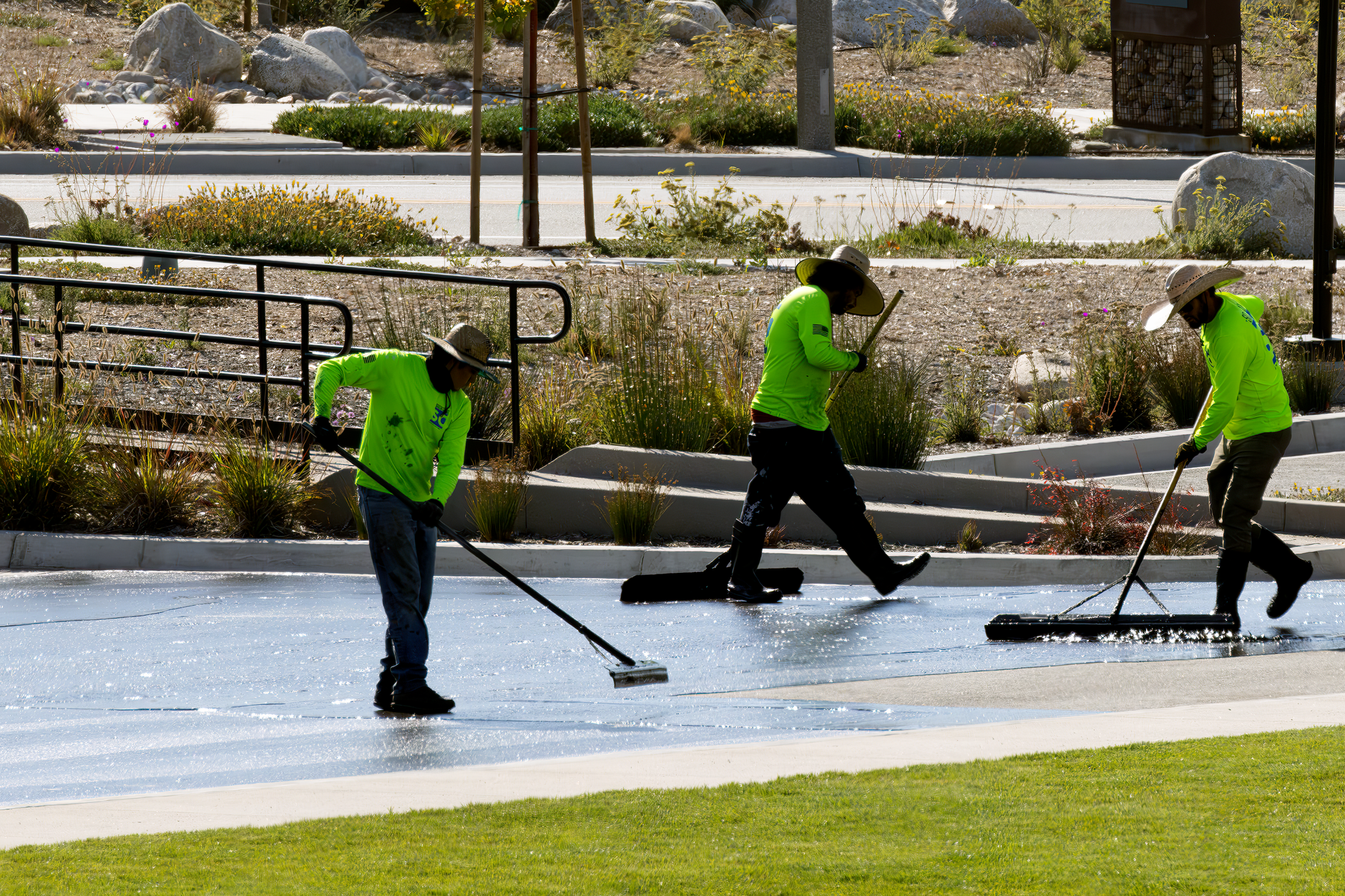
The hours a robot takes over depend on how often the grounds are mowed and how much of that work is repeat mowing on open turf. Open lawns mowed on a schedule are the easiest share to hand over. Edges, islands and detail work stay with the crew, so the saving is smaller than the robot's running time suggests.
Grounds work carries real injury risk, and that belongs in the labor case. According to BLS, landscaping and groundskeeping workers had 12,380 nonfatal injury and illness cases with days away from work in 2019, an incidence rate of 185 per 10,000 full time equivalent workers. Fatal work injuries in the group were 124 in 2019, down from 142 in 2018, yet a personal finance analysis of federal data, reported by a San Diego television station, found the fatality rate rose from 13 to 21 per 100,000 workers between 2014 and 2024. A robot can take repeat mowing off the crew, but the slope, edge and roadside work that stays with people still carries that exposure.
No published hour figure for this task in Baltimore was verified for this page, so the table below describes the work in general terms. The site assessment measures actual crew time on your grounds, and that measurement drives the labor side of the decision.
The most reliable comparison is a week of crew time before and after deployment. Log mowing visits, trimming, hauling and inspection, then compare the same log with the robot running. Staff time does not vanish, but it shifts toward supervision, edging and repairs.
What can a robotic lawn mower not do?
A robotic mower is a mowing machine, not a grounds crew. It does not trim tight edges to the standard a crew reaches by hand, it does not rake, lift debris or repair damaged turf, and it does not do tree work. Plan for those tasks separately, and budget crew time for them.
Steep and uneven ground limits where a robot can run. Very tall or flattened grass, standing water and heavy leaf cover can stop it, so the site must be cleared before a run. Weather also matters, since the robot waits out wet conditions and the schedule should count only the mowing days it can actually work.
A robot runs on its map. Changes to planting, fencing or paths require the map and boundary to be updated, and the robot cannot judge hazards outside the mapped zone. Staff must keep people, pets and equipment clear of its path during runs, and the site rules should say so in writing.
Where does a robotic mower work on a commercial property?
A typical commercial site splits into zones with their own rules. Open turf is the easiest area and is usually mapped first. Slopes and banks are harder and may need a separate boundary or manual mowing. Perimeters along roads, sidewalks and parking lots need keep out limits so the robot does not leave the site.
Around buildings the robot follows its mapped path but needs room for doors, utility boxes and foundation plantings. Islands in parking lots, and beds with mulch or rock, can be mapped as no go zones so the robot does not chase or damage them.
Each zone adds mapping time and changes the quote. A site that is mostly open turf with a few islands costs less to set up than one with many separate beds and narrow walkways. Our site assessment marks each zone, so the count shows up in the quote rather than as a later surprise.

How do I get a robotic lawn mower quote after a site assessment?
Start with a free site assessment. Our team walks the grounds with you, measures the working area, marks zones and obstacles, and records the crew hours the robot would take over. We then select the machine that fits the site and the season.
The quote follows the assessment. It sets out the fixed lease payment, the lease term, the services included such as maintenance and response times, and what deployment and training involve. It should also say who handles mapping changes, blade and battery replacement, and spare unit coverage if a machine goes down during peak weeks.
Compare the quote with the crew hours and the work that stays with people. When the numbers are clear and the scope matches your grounds, the decision becomes a question of schedule and service, not guesswork. Ask for the quote in writing and review it with the team that will service the robot.
Frequently asked questions
Put a robot to work in Baltimore.
We walk your site, learn the job, and recommend the unit that fits. Then we quote the lease, deploy it, and keep it serviced.
Sources
- State business statistics compilation citing County Business Patterns, landscaping establishments 2023
- BLS Occupational Employment and Wage Statistics, May 2017, Baltimore-Columbia-Towson metro
- Maryland Department of Labor, Baltimore City landscaping and groundskeeping workers, 2016 data
- BLS May 2025 data for grounds maintenance workers, all other, Baltimore-Columbia-Towson, republished by a salary website
- BLS injuries, illnesses and fatalities snapshot, landscaping and groundskeeping workers, 2015 to 2019
- Personal finance analysis of federal data, reported by a San Diego television station
- Property manager survey on a landscaping company blog, undated
- The Almanac frost dates for Maryland, citing NOAA 1991 to 2020 normals