
The short answer
Robotic lawn mower cost in Baton Rouge depends on how much turf the robot covers, what grass it mows, how often it must run, and how much mapping, service and supervision the site needs. For a business, the fixed robot lease payment is quoted after a free site assessment, because those factors set the number of units and the service plan. The labor the robot takes over changes most from site to site, and it is measured on your ground rather than estimated from a generic table.
Key takeaways
- Acreage, grass type and mowing frequency set most of the work and most of the quote.
- Louisiana warm-season turf grows fast in summer and goes dormant in winter, so the schedule changes through the year.
- Mapping, service, insurance and training are costs people miss when they compare quotes.
- Labor savings come from measured crew hours, which only a site assessment can confirm.
- Every lease quote is issued after a free site assessment, with its scope written out.
What does a robotic lawn mower cost in Baton Rouge, LA?
A robotic lawn mower cost in Baton Rouge is set more by the ground and the mowing schedule than by the machine itself. For a business, that means the acreage, the turf type, the mowing window, the boundary work and the service plan. We do not publish a number on this page, because a figure without a site measurement would be a guess.
Typical sites for this work include office and light industrial parks, school and church grounds, apartment and multi-tenant properties, and campus or healthcare grounds with a regular mowing window. Each has its own boundary and supervision needs, so the same mower can cost very little to run on one lawn and much more on another.
What follows explains each driver, so the person signing off can read a quote and ask the right questions. It covers Louisiana grass, the crew hours the robot takes over, the costs people tend to miss, how leasing through financing works, and how to get a quote after a free site assessment.
Which factors move the cost at a Baton Rouge business site?
Ground covered comes first. A robot is set up to a boundary, so a lawn with islands, beds, slopes and narrow side gaps needs more mapping and more boundary setup than a plain rectangle. Measure the grass area you want mowed, not the building footprint, because a parking island or a berm can add more work than the building edge.
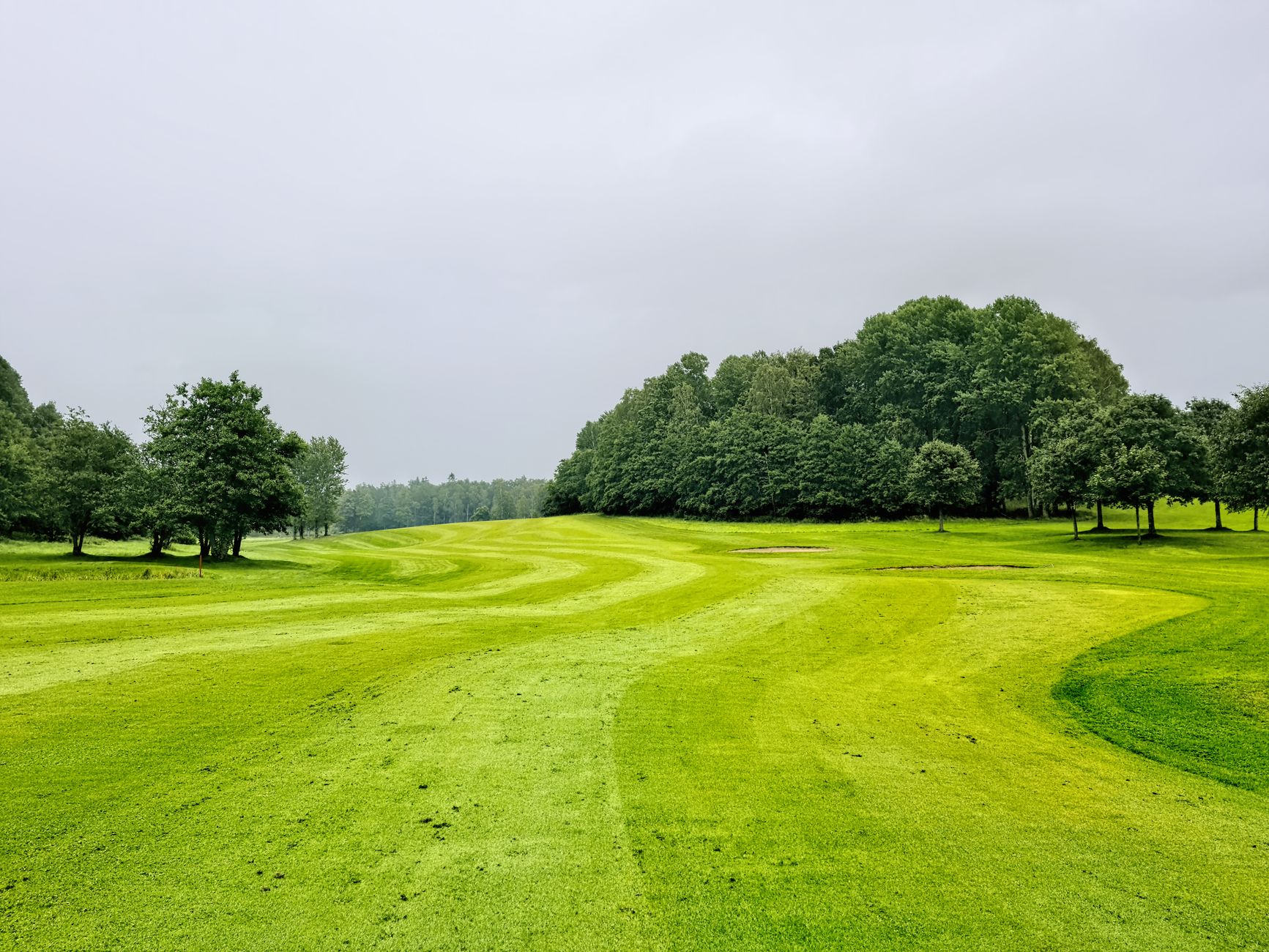
Grass type and growth rate come next. Warm-season turf grows fastest in summer, so the robot runs more often in the months when the site needs it most. Cutting height also matters, because the one-third rule limits how much grass can come off in one pass, which affects how often the lawn has to be mowed.
Shifts and access shape the cost of supervision. A robot that runs overnight needs lighting, a clear gate schedule and a charging spot away from foot traffic. A site that closes for the night can let the unit run unattended, while a busy campus or event lawn may need someone on duty during each cycle.
The number of units and the backup plan set the rest. One unit can cover a modest lawn, but a large site may need two, and a spare keeps the turf on schedule when a unit is out for service.
How does Louisiana grass change the mowing schedule?
Most Louisiana lawns are warm-season grasses, and the LSU AgCenter sets cutting heights by species. Its guidance lists 1 to 2 inches for Bermudagrass, 1 to 2.5 inches for centipedegrass and 2.5 to 3 inches for St. Augustinegrass.
The same LSU guidance says not to remove more than one-third of the grass top in one cutting. For a robot that runs on a timer, that rule means the schedule must follow growth, not the calendar. LSU says homeowners may mow once a week or three to four times a month during the active season, and a 2014 LSU item suggested mowing every five to seven days in summer. Those are homeowner figures, so a commercial site should set its own cycle from the site assessment.
Turf is generally dormant in winter, and mowing is usually unnecessary then. The robot's workload therefore swings across the year. The quote should match the mowing window and any off-season plan rather than assume the same level of use all year.

How many labor hours does the robot take over?
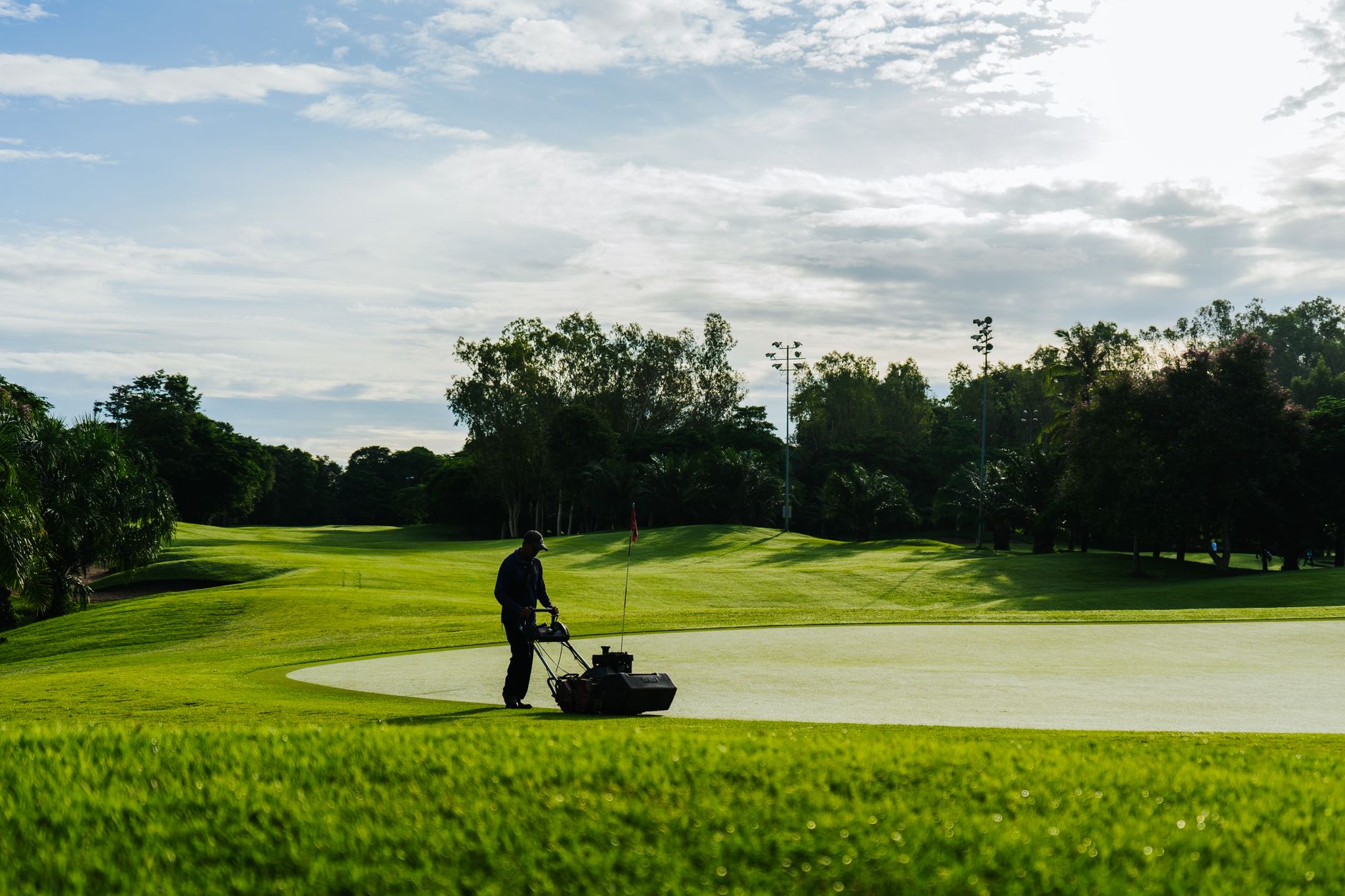
The labor case depends on how many crew hours go to mowing today, and that figure is not stated on this page. We did not find a verified time study for this setting in the research, so any hour count would be invented. The site assessment measures acreage, route, crew time and trimming, so the table below can be filled with your numbers.
What the robot changes is mainly the crew time tied to the fixed mowing cycle. Trimming along edges, beds, walls and obstacles generally still needs people, and so do the checks, cleanup and resets after a stop. The robot takes over the repeated mowing passes, not the whole job.
What local labor conditions shape the decision in Baton Rouge?
The latest BLS OEWS table for the Baton Rouge metro lists all-occupation employment of 387,710, against 385,020 in the May 2022 table. That is a large labor pool, but the total does not show how many landscaping workers the metro employs. The landscaping row for this metro did not come back in our research, so we do not quote that headcount.
The wider trade picture is turnover. According to the Landscape Professionals (PLANET) compensation report summary, the national quit rate fell from 37 percent in 2022 to 30 percent in 2023, and operations-role turnover at larger companies was 35 percent, compared with 23 percent for all respondents. The 2023 LMN trends report of 450 professionals found 32 percent had lost a significant number of staff over the past year. That measures staff losses, not a turnover rate, so it should be read as a separate signal.
According to SalaryScope, a third-party site that says it draws on BLS data but was not checked against BLS, the Baton Rouge median for landscaping and groundskeeping workers sits 6.1 percent below the national median. That gap is modest. Retention is therefore the staffing question to test on a site, more than the wage gap alone.
Injury counts add to the case for supervised automation. According to the BLS injury snapshot, landscaping and groundskeeping workers had 12,380 nonfatal injury and illness cases with days away from work in 2019, at a rate of 185 per 10,000 full-time equivalent workers, and 124 fatal work injuries that year, down from 142 in 2018. Those figures do not isolate mowing, but they are a reason to weigh how many crew hours go to work around powered equipment.

How does leasing through financing work, and what does a quote include?
Robots are offered only on lease through financing. The quote sets out a fixed robot lease payment together with the term, the number of units, the service plan and the deployment work. A business can start with one leased unit and add units after the first season, which suits a site where turf needs change through the year.
A complete quote lists the site assessment findings, the unit count, the lease term, mapping and deployment, staff training, the service plan and the response terms. Ask whether maintenance included covers blades, sensors and batteries, and whether emergency replacement or a loaner unit is part of the plan. Those terms decide how quotes compare.
What can a robotic lawn mower not do?
A robotic mower works inside its boundary and on the surfaces it was set up for. It does not trim hardscape edges, lift debris off the deck, or handle a corner that cannot be mapped without a person. Leaves, sticks and litter still need a cleanup crew at intervals, and a flooded or badly scalped area needs agronomic work before the robot can cut it cleanly.
It cannot replace supervision on a site where people walk through the mowing area at the same hours. It also cannot make winter mowing useful, since the turf is generally dormant then and the schedule should reflect that. Treat the robot as capacity for the repeated mowing passes, and keep people for the edges, the cleanup and the checks.
How do I get a quote for a robotic lawn mower in Baton Rouge?
Start with the site. Send the address, the rough turf area, a description of the boundary and beds, and the mowing window you want. We run a free site assessment before quoting, so the number reflects your ground and not a generic estimate.
Bring the basics to the first call: the grass species if you know it, the mowing days, whether the site closes overnight, and who on your team signs off on the scope. Those four answers let the assessment go straight to the boundary work.
Compare quotes on what they include, not on the headline figure. A quote should state the unit count, the lease term, the fixed robot lease payment, the service plan, the response times and any backup unit. If a term is missing, ask for it in writing before you compare.
We are a vendor neutral robot integrator. We choose the robot that fits the site, lease it through financing, deploy and integrate it, train the staff and service it nationwide. If a robot is not the right fit for your lawn, the assessment should say so.
Frequently asked questions
Put a robot to work in Baton Rouge.
We walk your site, learn the job, and recommend the unit that fits. Then we quote the lease, deploy it, and keep it serviced.
Sources
- U.S. Bureau of Labor Statistics, OEWS Baton Rouge metro (current table)
- U.S. Bureau of Labor Statistics, OEWS Baton Rouge metro (May 2022)
- U.S. Bureau of Labor Statistics, Landscaping and Groundskeeping Workers injury snapshot
- Landscape Professionals (PLANET), 2024 compensation and benefits report summary
- LMN 2023 trends report
- LSU AgCenter, mowing rule for turfgrass
- LSU AgCenter, Lawns need attention during summer (2014)
- SalaryScope, landscaping and groundskeeping workers in Baton Rouge (third-party, not checked against BLS)