Summary
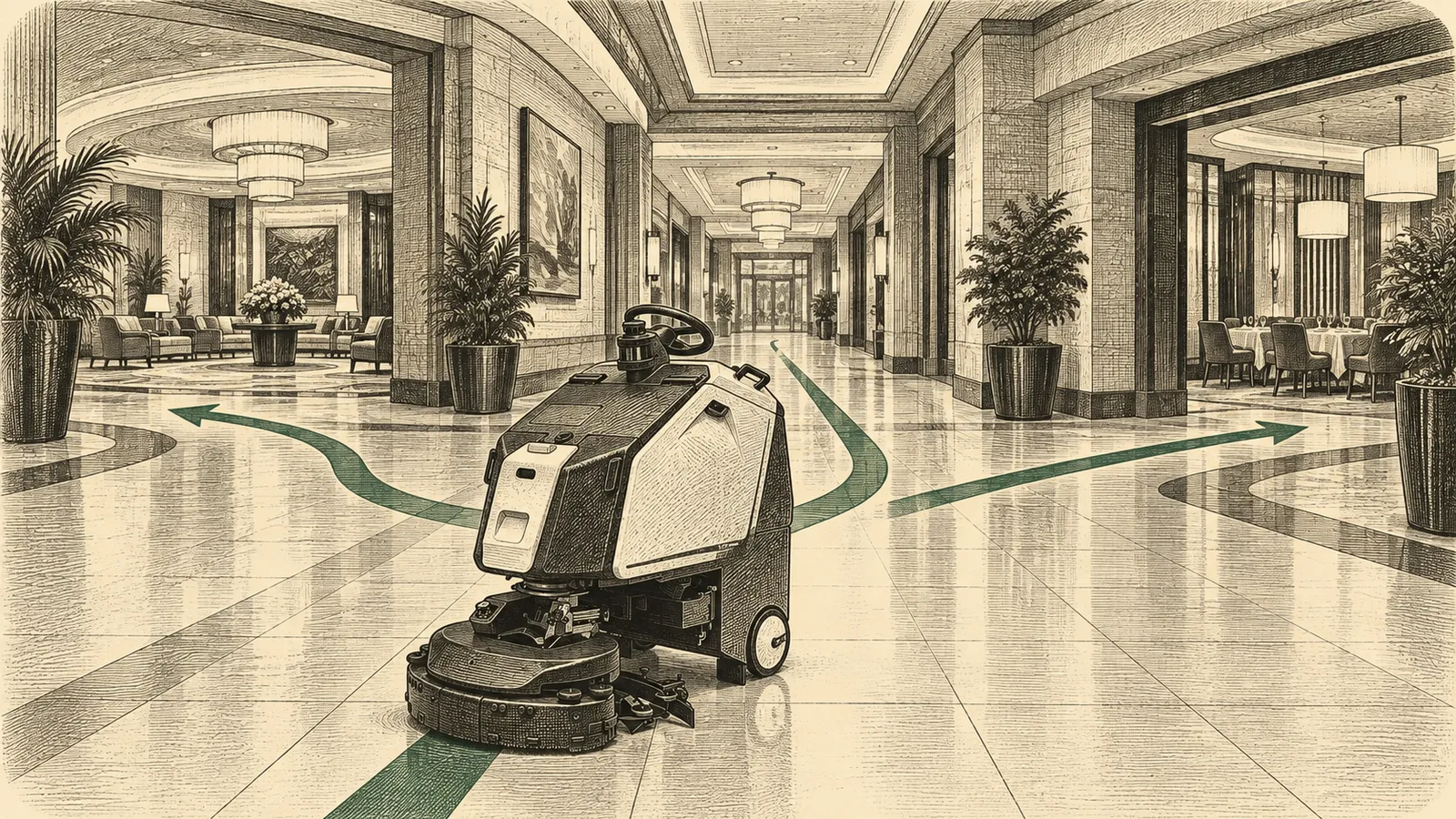
A casino resort has several operations inside one property: a public floor, restaurants, corridors, and often a hotel. A robot pilot can look successful in one empty hallway and tell you little about the places where the work is hardest.
Choose one job, one operating window, and one result that matters to the property. Expand only after the pilot survives normal traffic.
01 / Analysis
Pick the first job for clarity
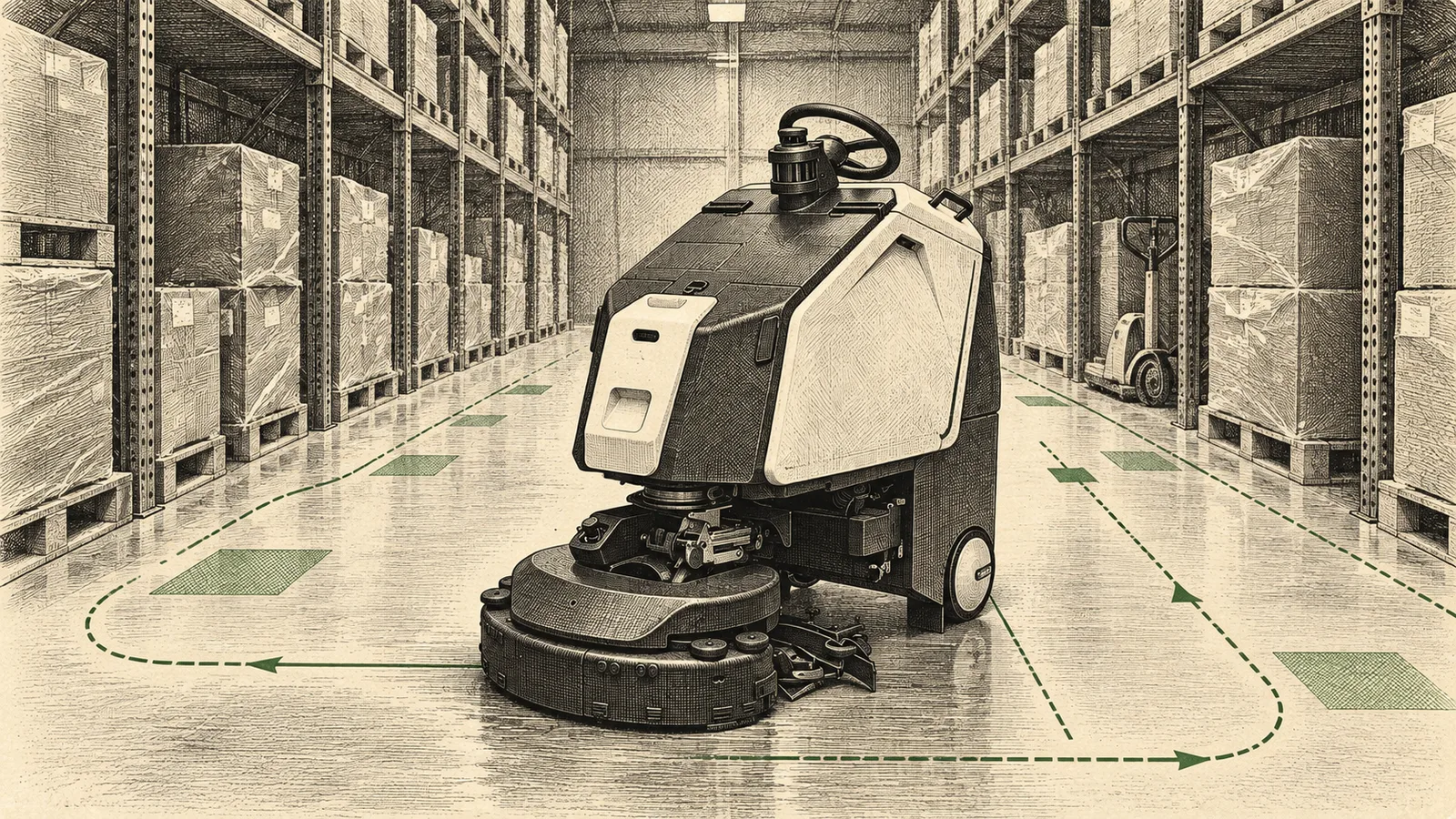
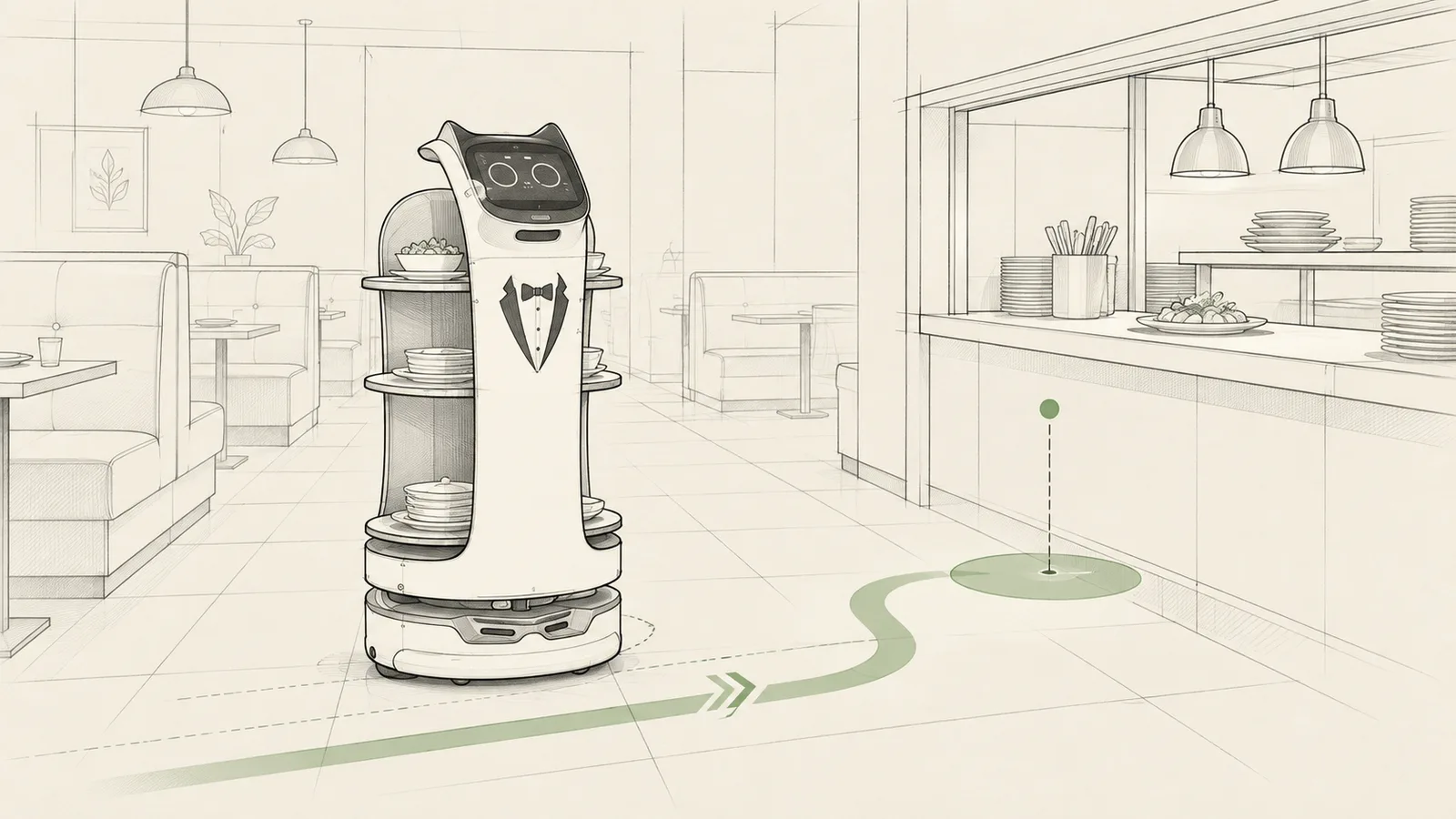
A large open floor may suit a scrubber, while a buffet may be a better setting for a service robot. Do not combine these into a single “robotics pilot.” Their routes, handoffs, and measures are different. Choose the job whose current process can be observed and compared clearly.
For cleaning, name the zones and inspection standard. For delivery, name the origin, recipient, and completed handoff. The goal is to learn whether the machine handles a repeatable task under normal property conditions, not to maximize the number of places it visits.
02 / Analysis
Test the shift the property actually runs
A 24-hour property has changing guest traffic, cleaning windows, events, and staff handovers. Include the busy periods that shape the job. A route that works before doors open may not work when guests queue near elevators or a restaurant changes its floor layout.
Record guest and staff interruptions without treating every pause as failure. Safe waiting can be the right behavior. The relevant question is whether the route still completes within its service window and whether recovery is manageable for the team.
What to record
- Task completion within the planned window
- Interventions by cause and shift
- Guest-facing disruptions or complaints
- Staff time reassigned to another necessary task
03 / Analysis
Give the pilot an exit condition
Decide in advance what would justify expansion, a route change, or a stop. A clear threshold protects the team from endlessly adjusting a poor fit and gives the vendor a fair target to meet.
If the first route works, the next step is another defined job, perhaps a different floor or a busier window. That staged approach reveals where the operation needs a different machine, more support, or no robot at all.
04 / Analysis
A fair field test
Begin with an observation period on the chosen shift. Count the task as it happens today, including setup, interruption, and completion. During the robot period, use the same service window and a named staff owner for exceptions. Keep the guest environment normal; clearing the route for a demonstration would remove the very conditions the pilot needs to test.
Review the findings with the people who work the shift, not only the procurement team. They can explain whether a pause was appropriate, where a route conflicted with service, and whether time was genuinely returned to another task. That discussion should shape the next route.
05 / Analysis
Limit of this note
This is a pilot design for resort operations, not a report of a particular casino deployment. Site access, guest safety, and local operating rules require property review.
Sources and method
This paper synthesizes the sources below and proposes a site-level evaluation method. It does not present original field measurements or a controlled trial.