Summary
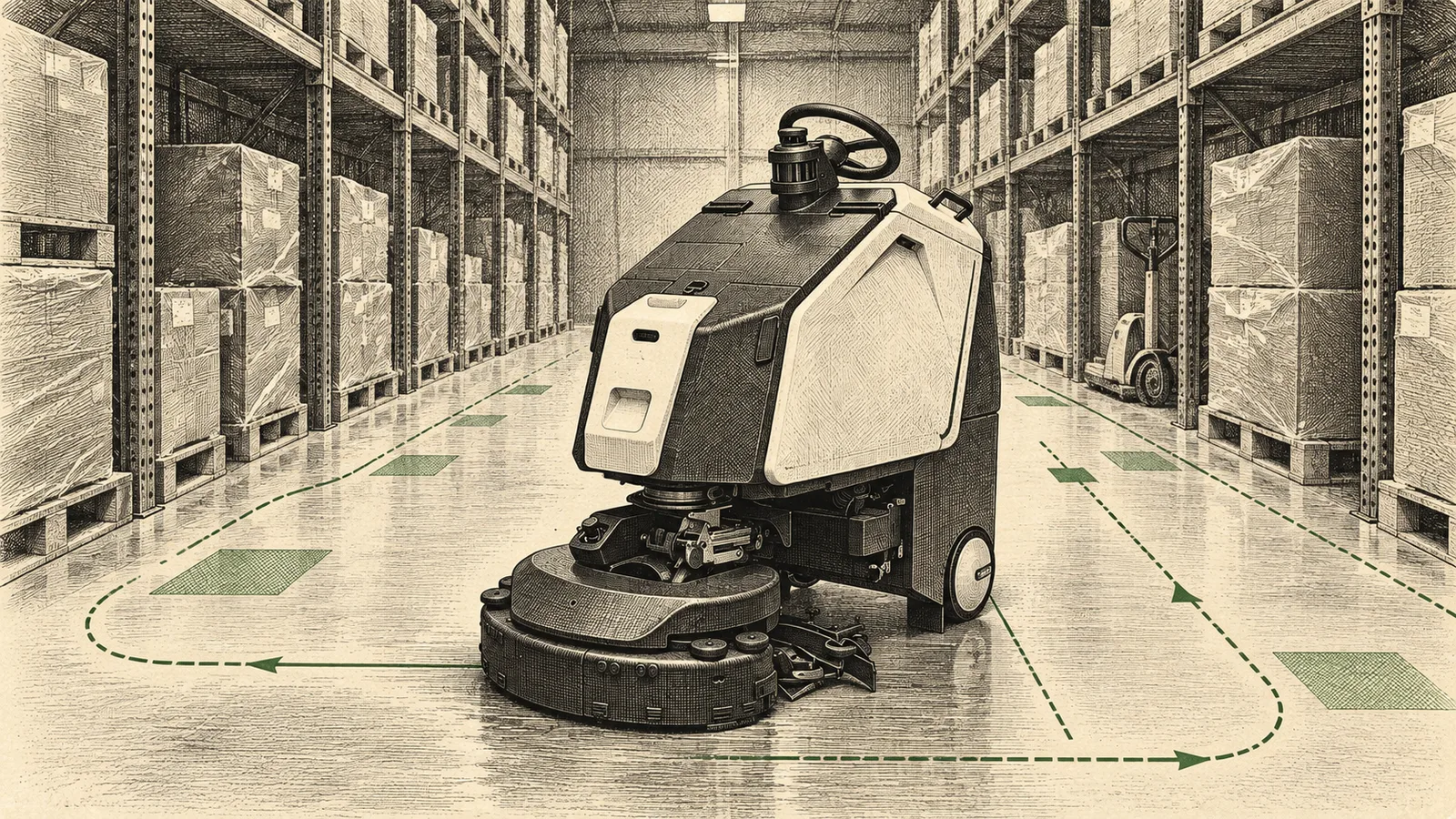
A scrubber can report a large area cleaned while the night crew still finishes late. The discrepancy usually lives outside the route: moving obstacles, filling tanks, checking edges, and handling the work the machine cannot reach.
Measure the whole shift, not the robot’s travel distance. The useful outcome is reliable floor condition with less staff time tied to repetitive passes.
01 / Analysis
The unit of work is a finished zone
A square footage figure says little about the quality of the result. Two routes can cover the same area while leaving very different amounts of edge work, missed corners, and rework. A useful test names each zone, states what “finished” means, and records whether it passed inspection before the next shift entered.
The baseline should use the current cleaning schedule. Record who cleans each zone, when they begin, when they finish, and which interruptions are routine. Then run the robot against the same zones and shift conditions. Comparing a quiet demo with a busy operating night makes the machine look better than the operation will feel.
02 / Analysis
Count the work around the route
An autonomous pass still has a start and an end. Someone may need to move pallets, fill solution, empty recovery water, clear a sensor, or take over a blocked corridor. These minutes belong in the evaluation. So do the minutes saved when a worker can clean restrooms or detail edges while the robot handles open floor.
A simple log is enough for a first pilot. Use one line per zone and shift, then have a supervisor mark the reason for any restart. Patterns emerge quickly: the same doorway may close each night, or a loading window may make an otherwise good route unusable.
What to record
- Scheduled area and area accepted after inspection
- Robot run time, setup time, and staff interventions
- Manual edge work and repeat cleaning
- Missed shifts and their causes
03 / Analysis
Read the result as an operating change
The strongest case is often a narrower one than the sales demonstration suggests. If the robot reliably handles the long open aisle but struggles behind staging racks, assign it the aisle. A smaller route that runs every night is worth more than an ambitious map that needs constant rescue.
Treat coverage reports as supporting evidence. Pair them with a floor inspection and a staff time log. If the team does not recover usable time or the floor does not meet its standard, adjust the route before expanding.
04 / Analysis
A fair field test
Start by marking a set of zones with different conditions: one long open run, one area with regular obstacles, and one edge-heavy area. Observe several normal shifts before introducing the robot. The baseline should include the actual setup and finishing work, not just the time a scrubber moves across the floor.
During the pilot, keep the schedule, inspection standard, and zone definitions stable. Log every exception with a plain reason. At the end, compare accepted zones and staff time by zone. This reveals where autonomy is useful and where a manual pass is still the better assignment.
05 / Analysis
Limit of this note
This is a measurement framework, not a claim that a specific scrubber saves a fixed number of hours. Floor type, soil load, traffic, water access, and cleaning standard all change the answer.
Sources and method
This paper synthesizes the sources below and proposes a site-level evaluation method. It does not present original field measurements or a controlled trial.