Summary
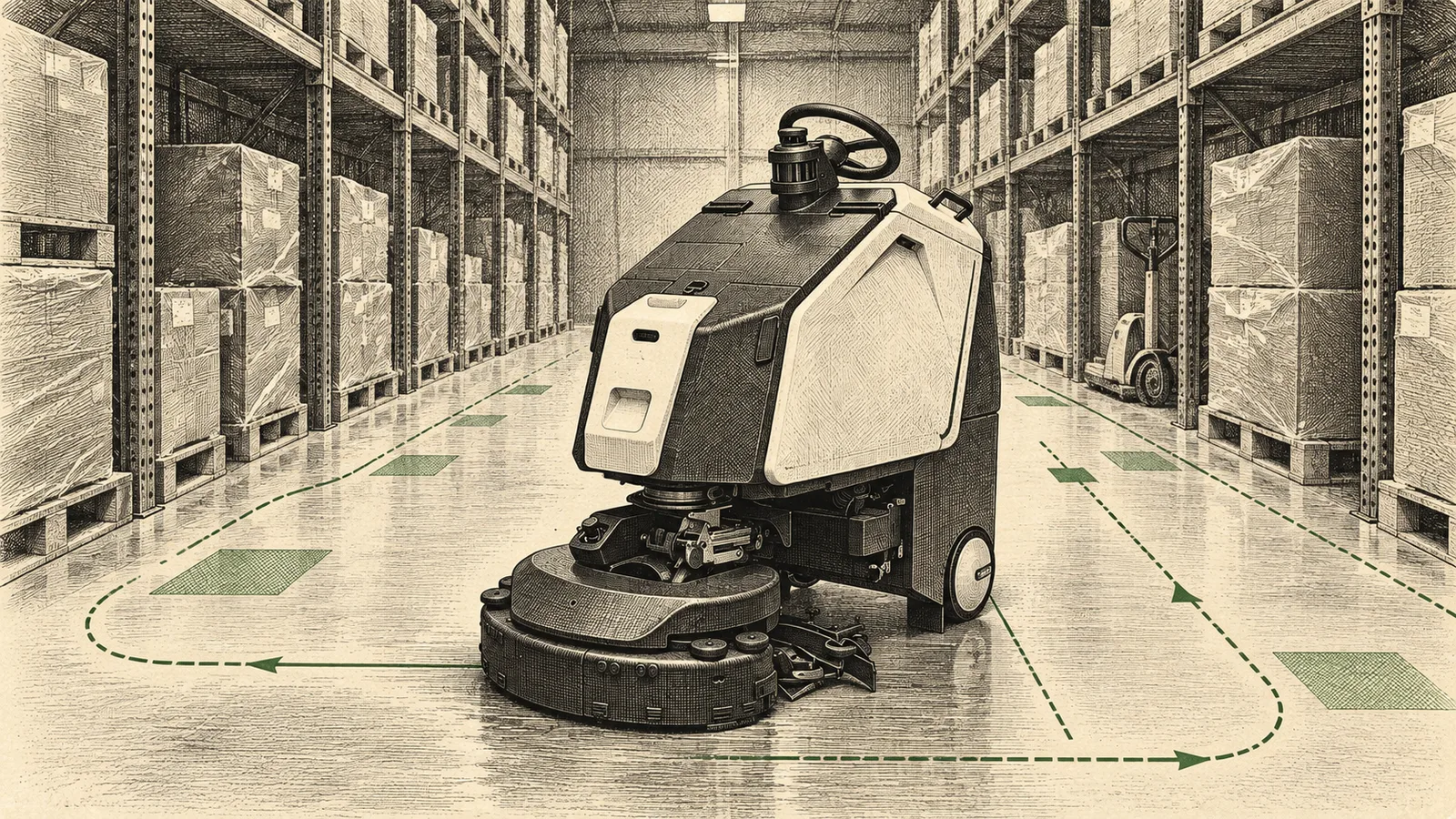
A warehouse map can be accurate at 8 a.m. and wrong by lunch. Pallets move, pick carts stop, and forklift traffic changes with the shift. A route that works only in a cleared aisle is not ready for normal operations.
Test the route under representative traffic, then measure safe, completed missions rather than map accuracy alone.
01 / Analysis
The operating zone is part of the system
A robot’s sensors and software cannot compensate for every site rule. Pedestrian crossings, temporary storage, dock traffic, and one-way aisles shape its usable route. ISO 3691-4 explicitly treats the condition of an operating zone as relevant to the safe operation of driverless industrial trucks. The standard covers particular industrial systems, so applicability needs to be checked for the machine and task at hand.
Walk the route with operators from more than one shift. Ask where a pallet sits when receiving gets busy, which doors close after hours, and where workers cut across the aisle. These details rarely appear on a clean floor plan.
02 / Analysis
Test interruptions on purpose
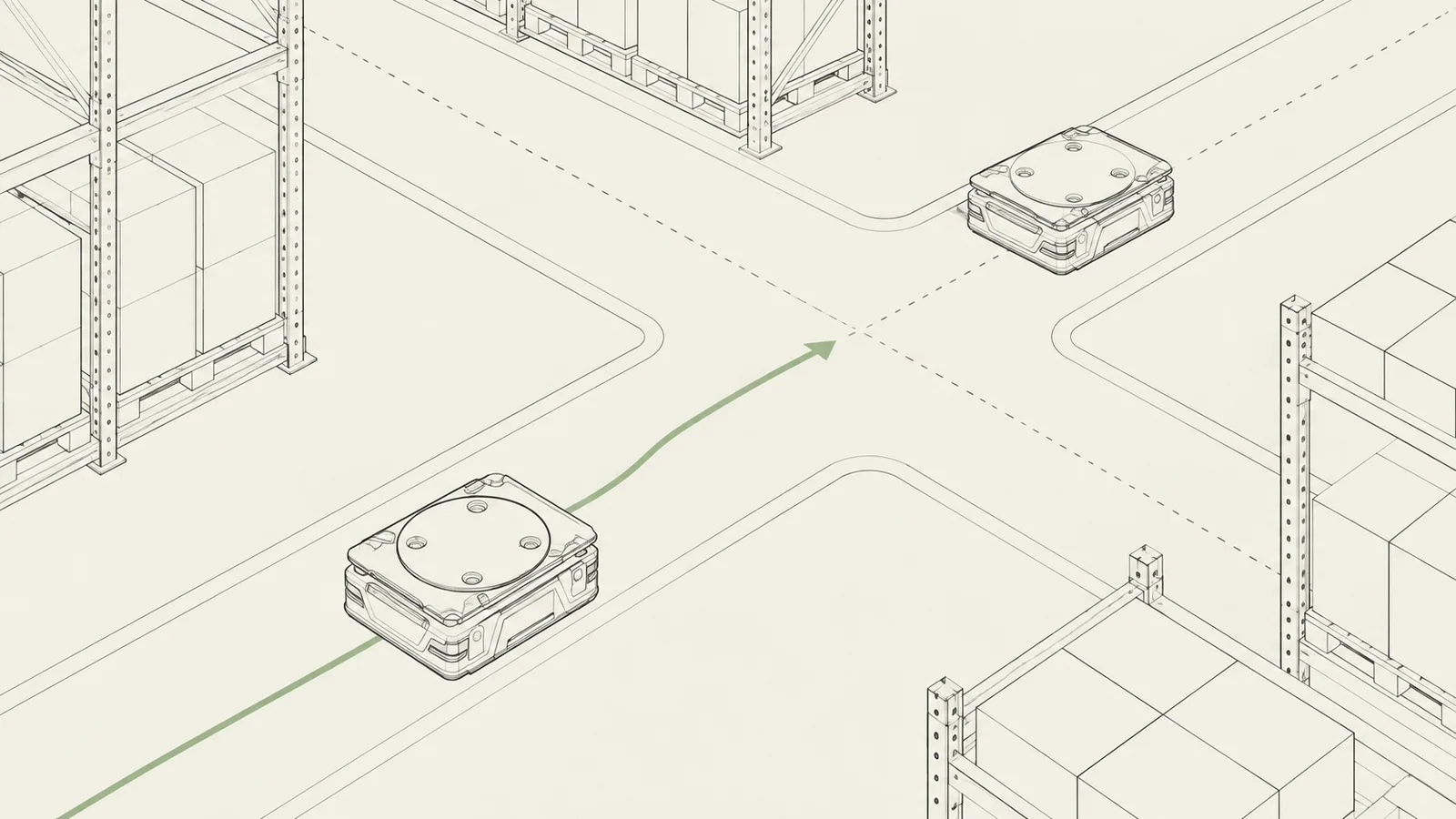
A useful pilot includes routine obstructions, not staged hazards. Observe how the robot slows, waits, reroutes, and resumes when a cart briefly blocks its path. Record when a person must intervene and whether that intervention is obvious and safe.
NIST’s work on mobile robot testing separates mobility, sensing, energy, human interaction, and safety into testable functions. That is a good reminder that a successful single trip says little about a complete working shift.
What to record
- Missions completed without intervention
- Delay at shared crossings and recurring choke points
- Stopped time by cause
- Worker reports of confusing or unsafe encounters
03 / Analysis
Decide where the route should stop
The best first route may avoid the busiest dock even if that makes it longer. A consistent loop between two stable work cells is easier to supervise and improve. Expand only when traffic rules, recovery steps, and ownership of exceptions are clear.
A failed mission is useful data if the team can explain it. If failures cluster at the same crossing, change the crossing, the schedule, or the route. Repeated unexplained stops are a reason to pause expansion.
04 / Analysis
A fair field test
Choose an origin and destination that matter to the operation. Run the route across the normal shift pattern, including replenishment and dock activity. Keep a simple event log that separates planned stops, safe waits, reroutes, and failures that need a person. Those events call for different fixes.
Review any near miss or confusing encounter with the site safety team before continuing. The test is not only whether a load arrives. It is whether workers understand how the machine behaves in a shared space and can recover it without improvisation.
05 / Analysis
Limit of this note
This is an evaluation approach, not a safety certification. Risk assessment and applicable standards depend on the robot class, payload, facility, and local operating rules.
Sources and method
This paper synthesizes the sources below and proposes a site-level evaluation method. It does not present original field measurements or a controlled trial.