
The short answer
The autonomous mobile robot ROI for hospital supply chains comes from staff hours returned on fixed storeroom to unit restocking runs, not from a cut in clinical staff. The return depends on how many repeat runs a shift holds, what share of them a robot can take, and the local wage for the laborers and freight, stock, and material movers, hand work involved, set against a lease quote made after a site assessment. The range is found on your floor, not promised in advance.
Key takeaways
- Repeat storeroom to unit runs are the part of hospital supply work a robot can run on the same route every shift.
- The return is staff hours returned, valued at the local wage for the laborer and material mover work, not a cut to nursing time.
- Published hospital figures are mostly vendor reported or projected, so time the runs on your own floor.
- Turnover and unfilled shifts raise the cost of keeping runs manual, which pushes the number up.
- A free site assessment turns the savings range into a lease quote you can test.
Run the numbers for your site
Pick your city or state for a real regional number - we use the real BLS wage there. (On the live site this auto-detects from your location.)
What do you want to automate?
The robot takes the repetitive cart and pallet moves off the heaviest motion.
What is the autonomous mobile robot ROI for hospital supply chains?
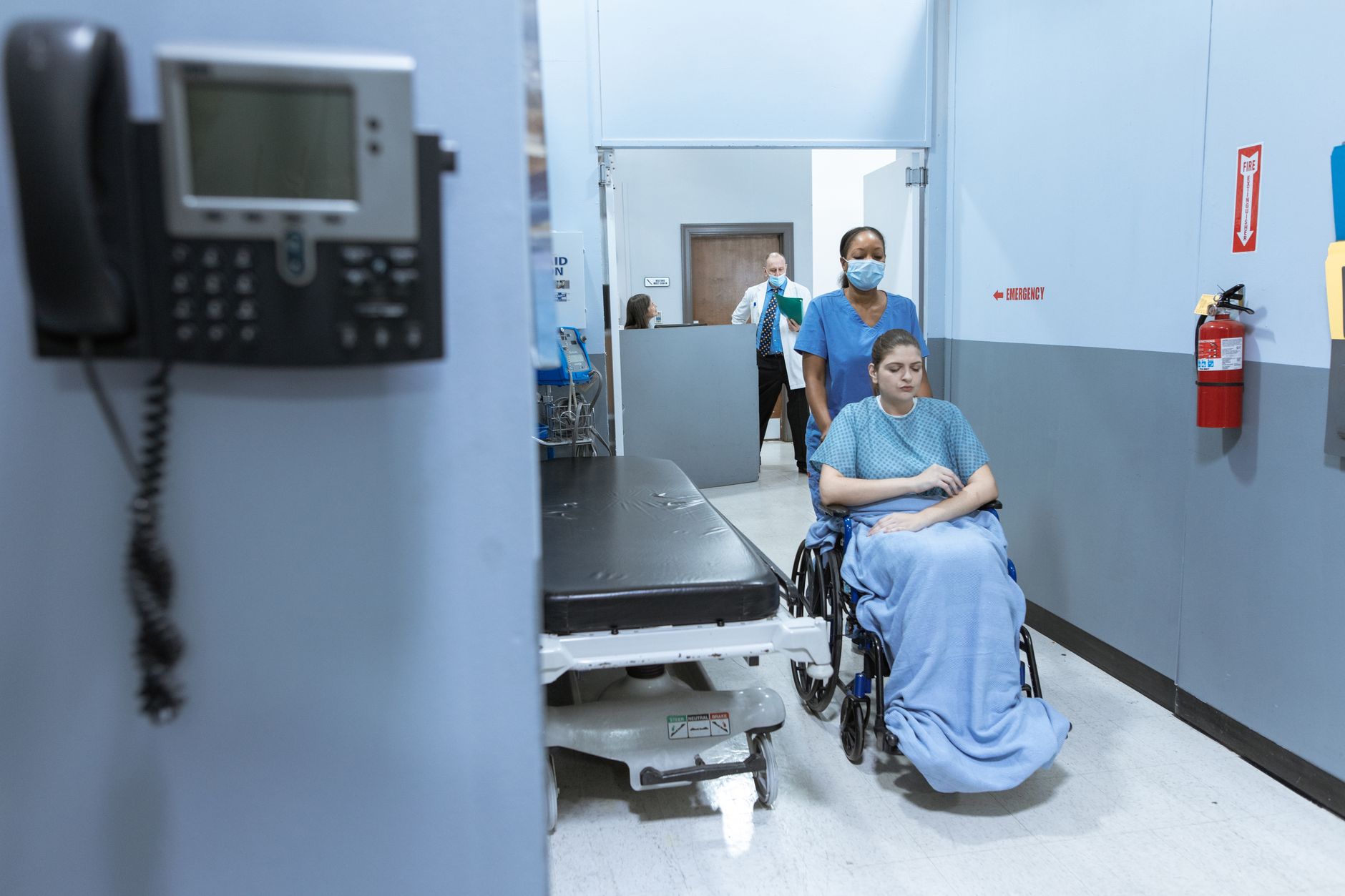
The autonomous mobile robot ROI for hospital supply chains is the value of staff hours returned when a robot takes over repeat supply runs between storerooms and care units. Those runs are a strong fit for automation because they follow the same route many times a shift, with the same stops, the same carts and the same handoffs. In many units the trips fall to whoever is free, which means clinical staff often absorb work that is really carrying.
This page explains where the return comes from, how the savings range is calculated, what moves it up or down, the risks to the return, a realistic timeline from assessment to payback, and how a free site assessment turns a range into a precise figure. Nothing here is a promise. The range is a starting point for your own timing and your own lease quote.
How many hospitals could run this kind of supply loop?
According to the American Hospital Association Fast Facts 2025 report, the United States had 6,093 total hospitals in the 2023 Annual Survey data, including 5,112 community hospitals and 913,136 staffed beds. Each of those facilities runs storerooms, par levels and unit restocking, so the pool of sites with a fixed supply loop is large.
The count matters less than the pattern inside each building. A single hospital often has several storerooms, multiple floors and many unit stops, and the route from a central supply area to each unit repeats on a schedule. A national hospital count or a bed count does not tell you how many runs a shift holds. That number comes from the site walk and a short run log, which is the first thing the assessment collects.
Size also shapes the case. A large campus with long corridors and several elevators has more repeat distance per run, while a smaller facility may have fewer runs but shorter ones. Both can produce a return, and the assessment sorts out which pattern you have.
Median hourly wage, Laborers and Freight, Stock, and Material Movers, Hand
$4,380
Monthly cost of one full-time worker, at the median wage plus payroll costs (an estimate, not a quote).
Where does the return come from in a hospital supply loop?
The return comes from hours spent on the work the robot takes over. For supply runs, that is picking up carts and bins, carrying them between a storeroom and care units, waiting at elevators and doors, and returning empty equipment. That work is priced at the local wage for laborers and freight, stock, and material movers, hand, the occupation that does this kind of carrying. Nurses and other clinical staff are not priced in this model. When a robot takes the laborers and freight, stock, and material movers, hand type of work off their plate, the hours that come back are the ones spent on that carrying, and clinical time is left alone.
Published hospital results point the same direction, but they need careful reading. Reports of delivery robots in hospitals describe staff time returned on medication and supply runs, and many of those figures are vendor reported or projected rather than independently measured. The research behind this page found no independent per-shift measurement for supply runs, so the hours at your site should come from timing, not from a case study.
The labor side is one part of the return. Steady restocking can reduce how often a unit runs short of stock, and fewer emergency trips for empty carts keep the day more predictable. Those benefits are real but harder to price, so the calculator uses labor hours as its core and treats other effects as upside to check on site.
How does the math work for a leased robot?
The calculator on this page takes four inputs: repeat runs per shift, minutes per run, the share of those runs a robot can realistically take, and the lease cost quoted for your site. Hours returned equal runs per shift, times minutes per run, times the robot share, times the shifts worked in a year. Each returned hour is then valued at the local wage for the laborer and material mover work, using the government wage data shown on this page, and the total is set against the lease cost.
The share is the input managers most often overestimate. A robot does not take every run. Urgent requests, unplanned deliveries, controlled or sensitive items, and runs through areas outside the mapped route stay with staff. A realistic share is the fraction of runs that are fixed, scheduled and inside the route, and in many units that is well below the total trips a unit makes in a day.
The result is a range. Two sites with the same run count can produce very different numbers if one has a single elevator and the other has four floors and locked doors. That is why the calculator asks for minutes per run measured on site instead of a guess, and why the lease cost is a quote after the assessment rather than a figure set in advance.
| Task | Today | With a robot |
|---|---|---|
| Fixed storeroom to care unit restock run | One staff member makes the trip, timed on site | The robot runs the mapped route while staff load and unload |
| Waiting at elevators, doors and handoffs | Staff wait and sometimes carry twice | Stops are queued and staff stay on unit work |
| Urgent or unplanned requests | Staff drop other work and go | These stay with staff, outside the robot share |
No independent per-shift measurement is published for this setting, so the timed values from your site assessment replace these descriptions in the calculator.
What changes the number up or down?
Staffing conditions change how hard it is to keep runs covered by people. According to NSI's 2026 report, as summarized by nurse.org, RN turnover rose to 17.6 percent in calendar 2025, up from 16.4 percent in 2024. Becker's reports that national hospital staff turnover was 18.3 percent in 2024, with the RN rate at 16.4 percent. High churn means more time spent on training and on covering open shifts, and that time competes with the runs.
The number moves up when runs are long, frequent and fixed, when the site has many floors or long corridors, when hard-to-fill shifts leave carrying undone, and when the robot route is mapped well and kept clear. It moves down when runs are short and irregular, when unit needs change every day, when access rules block elevators or doors at busy times, or when a single robot has no backup and sits idle during repairs.
Two inputs deserve special attention. The first is the share of runs that are truly fixed, which a short run log reveals. The second is the lease term and what the quote includes for maintenance, since downtime is the quiet cost that lowers every other input.
Can a robot do what a person does on a supply run?
Not all of it, and being clear about that is what keeps the return honest. A robot is strong on the same route, the same stops and the same carry, repeated on time, without fatigue or interruptions. A person is stronger on judgment, changing plans, handling a request that does not fit the queue, and any task that involves a patient or a controlled item. The return comes from the first group of tasks, and the second group stays with staff.
Decide in advance which items a robot may carry, since anything that needs a handoff by a clinician stays with staff. Staff rules and unit culture matter too. A unit should not expect a robot to cover a run that a nurse was going to make anyway for a patient, and writing those boundaries into the deployment protects both the return and the people who rely on the unit.
- Repeat fixed route
Autonomous Mobile Robot
Runs the same mapped path on time every shift
Staff
Does it well, but tires and gets pulled to other tasks
- Urgent or unplanned request
Autonomous Mobile Robot
Needs a queued or scheduled request to run well
Staff
Changes plans on the spot and wins here
- Judgment and handling
Autonomous Mobile Robot
Carries cleanly loaded carts and bins only
Staff
Makes calls on condition, substitution and clinical context
- Patient contact
Autonomous Mobile Robot
No patient contact or bedside task
Staff
Provides the care and the handoff
- Off-hours coverage
Autonomous Mobile Robot
Can run overnight routes once access rules allow
Staff
Covers off hours only if a shift is filled
- Downtime
Autonomous Mobile Robot
Stops when a unit is down without a backup
Staff
Can cover a gap the same day
What are the risks to the return and how do you avoid them?
The biggest risk is an idle robot. If it waits on an unmapped route, a blocked door, an elevator that is out of service or a queue no one has loaded, the hours do not come back. Avoid this by mapping the real route on site, agreeing on access rules for elevators and doors with the people who run them, and setting a clear request process so runs enter the queue on schedule. A backup unit or spare coverage keeps runs moving when one robot is down.
The second risk is over-counting. Vendor and projection figures tend to run high because they assume a busy robot on a clear route. Treat any projection as a hypothesis, and replace it with measured hours after go live before the business case is finalized. That single change protects the decision from optimism more than any other step.
The third risk is injury. According to the Bureau of Labor Statistics, transportation and material moving occupations recorded 835,040 DART cases, meaning days away from work, restricted work or job transfer, for 2021 to 2022, the most of any major occupation group. Contact with an object or equipment caused 112,230 days away cases in that group over the same period. A robot takes heavy carrying off staff, but the route, the docks and the elevator still need written safety rules, and those rules belong in the install scope.
What is a realistic timeline from assessment to payback?
Most sites move through four stages: assessment and mapping, lease and integration, go live with staff training, then a measured period. The first two depend on how quickly the floor plan, run log and access rules can be gathered, and the quote follows the assessment. Integration takes longer where elevators, doors and network access need coordination with building staff, which is why a phased start with one unit is common.
Payback is the point where hours returned cover the lease cost on the calculator. Its timing depends on the share of runs the robot takes and on how fast that share is reached after go live, since a new route usually needs a few shifts of tuning before it runs clean. Plan a measured first period, compare the numbers with the range from the assessment, then decide whether to add units or routes.
A useful check during the first period is to log runs the robot did not take and why. Those records show whether the share is too high, whether a route needs remapping or whether an access rule is blocking runs. Fixing those causes early is the most direct way to bring the measured return closer to the assessed range.
How do you get a precise figure from a free site assessment?
Service Robot Co. starts with a free site assessment. We map the real route, count fixed runs per shift, time a sample of them, record floor access and elevator rules, and check how the robot would connect with your doors and network. From that we select the robot that fits the floor, lease it through financing, deploy and integrate it, train the staff and service it nationwide.
The lease payment comes as a quote after that assessment, not from this page. The quote draws on your run count, your share of runs, the local wage for the laborer and material mover work, and the service terms included with the lease. You leave with a precise figure to test against your own numbers, plus a clear view of which inputs would move it most.
Bring three things to the first call: a rough floor plan, your existing restocking schedule and the staffing gaps you already feel. Those are enough for the assessment to start, and they make the first quote more useful.
Frequently asked questions
Want a warehouse robot at your hospital supply chain?
Tell us about your site. We will recommend the robot, quote the lease, and keep it serviced.
Sources
- US Bureau of Labor Statistics, Occupational Employment and Wage Statistics (OEWS May 2024)
- AHA Fast Facts on U.S. Hospitals 2025
- NSI 2026 nurse turnover report, summarized by nurse.org
- Becker's Hospital Review, hospital nurse turnover and vacancy rates
- BLS TED: nonfatal injuries and illnesses, 1992 to 2022
- BLS Occupational Outlook Handbook: Hand Laborers and Material Movers