

The short answer
A cobot ROI for pharmacy repackaging operations comes mainly from taking repetitive counting, filling and packing motions off the people who repeat them every shift, so the return is measured in labor hours freed. The share of that work a robot realistically takes, the fixed robot lease payment quoted after a site assessment, and how cleanly the line is set up decide whether the savings range lands near the low or high end. The free site assessment replaces the estimate with a figure built on your own volumes.
Key takeaways
- Repackaging returns come from freed hours on counting and packing, not from extra output alone.
- A robot takes a share of the repetitive steps, and trained staff keep the judgment steps.
- Independents are nearly 36% of US retail pharmacies, so the setting is large and varied.
- Repetitive motion is a leading injury category, so plan for it as a safety benefit too.
- A precise figure needs your own volume and baseline from a free site assessment, not a national average.
Run the numbers for your site
Pick your city or state for a real regional number - we use the real BLS wage there. (On the live site this auto-detects from your location.)
What do you want to automate?
The cobot stacks the repetitive end-of-line pallets; your team handles changeover and QA.
What is a cobot ROI for pharmacy repackaging operations?
A cobot ROI for pharmacy repackaging operations is the return a collaborative robot arm produces when it takes over the repetitive counting, filling and packing steps that a repackaging line runs all shift. The return shows up as labor hours moved off those steps, which staff then spend on verification, exceptions and patient-facing work. It is not a claim that the robot replaces the team.
The base of sites is large and uneven. According to the NCPA release, there were 18,960 independent pharmacy locations as of July 2025, and independents are nearly 36% of US retail pharmacies. PCMA, which counts from NCPDP-based data, reports 23,046 independent and 33,081 chain pharmacies in 2026. Those counts are not comparable to each other, so read them as scale rather than as one total. IBISWorld classes 51,210 US businesses as Pharmacies and Drug Stores in 2025.
The share of repetitive work varies widely from one site to the next, which is why a national figure cannot stand in for your own baseline. The rest of this page explains how to build that baseline and what the calculator on this page does with it.
Where does the return come from in repackaging?
Repackaging is a chain of short, identical motions: draw a count, drop it into a vial or pouch, seal, label, check and stack. Each motion is small, but across a full shift the same hand and wrist movements repeat thousands of times. That repetition is why the work suits a cobot, and also why it carries injury exposure.
The exposure is measured at national scale. Citing BLS data for 2023 and 2024 combined, the National Safety Council reports about 946,000 DART cases from overexertion, repetitive motion and related bodily conditions, the most of any category. Private industry reported 2.5 million nonfatal workplace injuries and illnesses in 2024, down 3.1% from 2023, according to the same National Safety Council summary of BLS data.
The return therefore has two parts. The first is labor hours moved off the repetitive steps, which the calculator on this page prices. The second is a lower repetitive load on the people who keep the other steps, which is real but harder to put a clean number on. Ask your safety lead to log repetitive-strain reports before and after, so the second part has evidence behind it.
Median hourly wage, Laborers and Freight, Stock, and Material Movers, Hand
$4,380
Monthly cost of one full-time worker, at the median wage plus payroll costs (an estimate, not a quote).
How does the ROI math work?
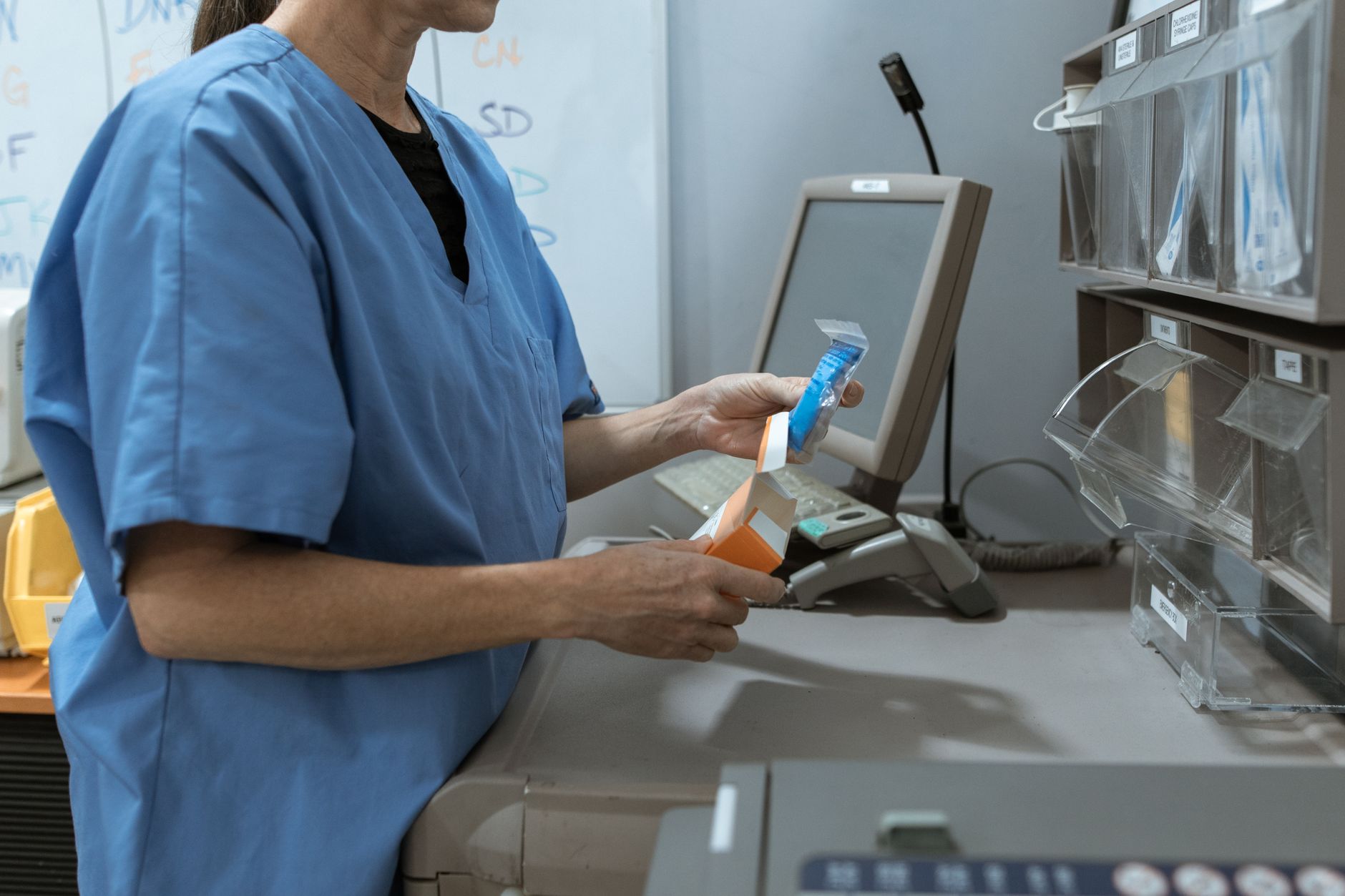
The structure is simple. Start with the hours a week that the repetitive steps take at your site. Multiply by the share of that work a cobot realistically takes, which is less than the full total because some steps need judgment. The result is the labor hours offset. The people who mainly work this setting are pharmacy technicians, which is another job, so the robot takes the laborers and freight, stock, and material movers, hand type of work off their plate, and the government wage data on this page prices those hours.
Lease cost is then set against that offset. A fixed robot lease payment, quoted after a site assessment, is compared with the value of the offset hours over the lease term. The savings range is the spread between a conservative and an optimistic case for share of work taken and volume. It is a range, not a promise, and the lower end is the number to test your decision against.
Published studies give a sense of scale, though none is a repackaging line. An ISPOR abstract from a Michigan independent pharmacy, using a self-controlled before and after design, reports that counting labor per prescription fell from 2.63 to 2.07 minutes with an automated prescription filling system, about 0.56 minutes saved per prescription. The overall labor savings across the workflow came to about 0.22 minutes per prescription.
- Hours a week the repetitive steps take at your site
- Share of that work a cobot realistically takes
- Labor hours offset, priced at the government wage data on this page
- Fixed robot lease payment, quoted after a site assessment
- Savings range between a conservative and an optimistic case
How many hours does the work take per shift?
Hour estimates vary because sites differ in volume and in how much of the line is repetitive. A University of Central Florida campus pharmacy states, in its own estimate that has not been independently verified, that an automated counting and labeling system saves nearly 40 hours of pharmacist labor a week and handles 80 to 100 prescriptions a day. It counts and labels a prescription in about 30 seconds. Treat that as a reference from another setup, not as a benchmark for your line.
Staffing sets the scale. An older NCPA Digest figure, reported in a bank infographic, put the average pharmacy at 3.5 full-time pharmacy technicians. The PTCB 2025 Workforce Survey, with 17,112 responses from technicians in all 50 states, DC, Guam and Puerto Rico, is framed as the field moving from post-pandemic volatility toward stability. Pull current headcount from your own payroll before you set the baseline.
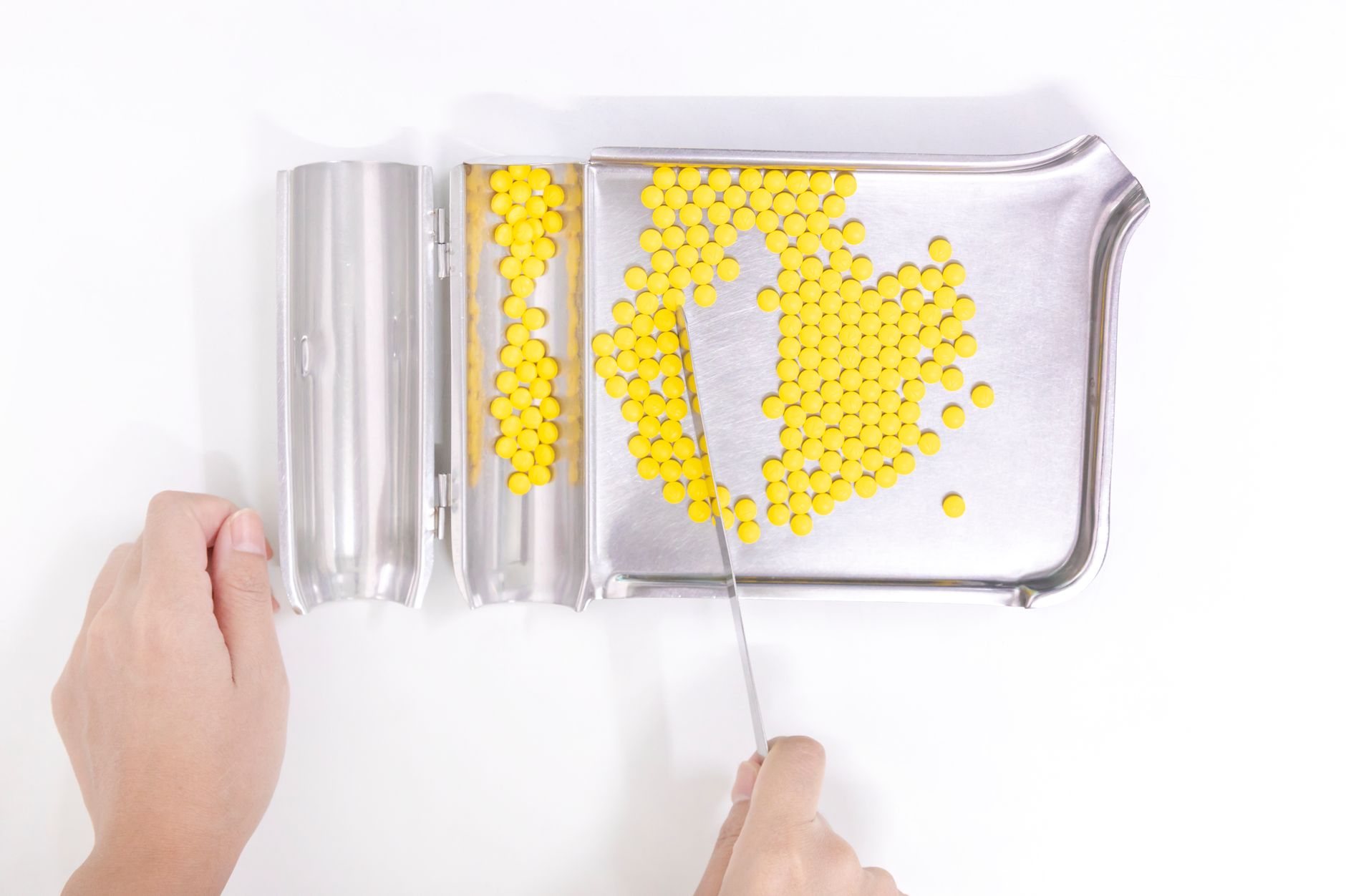
How do a cobot and staff compare for repackaging?
A cobot is good at repeating one motion the same way for a whole run. It does not tire at the end of a double, and it does not drift in pace. People are better at judgment: spotting a damaged unit, catching a label that does not match the record, changing a setup, and answering a question from a prescriber. The return comes from pairing the two, not from choosing one over the other.
The comparison matters because it sets what the robot should be given. Hand the cobot the steps where pace and motion stay fixed, and keep the steps where a person decides what happens next. A line built the other way round loses the offset hours to rework.
Where people stay in the loop is a design choice. Staff can load the station, clear a jam and inspect output at the end of each run, so the robot's work feeds a human check instead of replacing it. Put the check where an error costs the most, which is usually the point where a miscount or a wrong label could reach a patient, and let the robot carry the repeated motion in between.
- Consistency over a shift
Cobot
Repeats the same motion at the same pace for the whole run
Staff
Pace and accuracy drift as the shift goes on
- Judgment on exceptions
Cobot
Needs a person to handle odd units, damage or mislabels
Staff
Spots problems and decides what to do next
- Hours of availability
Cobot
Runs the hours it is scheduled and set up for
Staff
Covers breaks, leave and shift changes with flexibility
- Changeovers
Cobot
Slower to change over when product changes often
Staff
Adapts quickly to a new product
- Contact with prescribers and patients
Cobot
None
Staff
Handles questions, counseling and calls
- Training
Cobot
Set up and trained by the integrator on the station
Staff
Trained over time, and the knowledge leaves when people do
What changes the number up or down?
Volume is the largest driver. A line that runs a high, steady count of identical units gives the robot more repetitive work per hour, and the offset hours grow with it. A line that changes product often spends more time on changeovers, and changeovers pull the share of work taken down. Layout moves the number too, since a cramped station limits how much the robot can reach.
Staffing turnover moves the number from the cost side. Training repeats each time people leave, and that recurring load comes out of the offset. A stable team lets you count the hours in full. The PTCB survey gives useful context, though the published framing reports no turnover percentage, so measure turnover at your own site.
What risks could weaken the return, and how do you avoid them?
The main risks are a share of work set too high, a line not ready for a cobot, and weak handoffs between the robot and staff. Plan for a share below the best case, and test on one station before expanding. Clear reach, a stable bench height and a defined pick zone keep the robot from stalling and keep people from working around it.
Downtime is the second risk. A stopped cell hands its steps back to people, so the return depends on fast service. We lease the robots through financing, deploy and integrate them, train the staff and service them nationwide, so the people who set up the robot are also the people who keep it running.
Watch for the wrong comparison too. A demonstration is not a line running on your schedule, so measure the robot against your baseline across a full run rather than against a short showing.
How long does it take from assessment to payback?
The timeline runs in phases. First, a free site assessment maps the line, measures the repetitive steps and sets a baseline. Second, the lease quote and the savings range are reviewed against that baseline. Third, the robot is deployed and integrated at one station, staff are trained and go-live support is provided. Fourth, the line runs while the offset hours are logged.
Payback depends on when the offset hours become steady, not on the day the robot arrives. Early weeks carry setup, training and tuning, so read the range against a full run rather than against a demo. Expanding to more stations after the first one proves the share is the safer order, since each added station repeats a test on a line already known to work.
Plan the first stretch around measurement. Log the offset hours at the same times each day, record every stoppage and its cause, and compare the log with the baseline from the assessment. That record is what turns the savings range into a figure your finance lead can check.
How do I get a precise figure from a free site assessment?
Bring your own counts: prescriptions per day, runs per shift, the steps that repeat, staff hours spent on each, and recent repetitive-strain reports. The assessment converts those into a share of work the robot can take and a fixed robot lease payment, quoted after the site review. Ask for the savings range built from your baseline, and ask what would move it up or down.
Ask the assessor to show the offset hours separately from the lease cost, so the math can be checked line by line. National counts and published studies set context, and the government wage data on this page sets the labor price, but neither replaces a measurement of your own line. The quote is the figure to decide on.

Frequently asked questions
Want a cobot at your pharmacy repackaging operation?
Tell us about your site. We will recommend the robot, quote the lease, and keep it serviced.
Sources
- US Bureau of Labor Statistics, Occupational Employment and Wage Statistics (OEWS May 2024)
- NCPA 2025 Digest release
- PCMA independent pharmacy counts, 2026
- IBISWorld Pharmacies and Drug Stores industry count
- PTCB 2025 Workforce Survey
- National Safety Council, overexertion and bodily reaction (BLS summary)
- ISPOR abstract, automated prescription filling and staff labor
- UCF pharmacy automated counting and labeling news