
The short answer
Cobot ROI for stamping plants comes mainly from the labor hours the arm takes over on press tending and part transfer, two fixed-cycle jobs an operator otherwise repeats across a shift. The return is a range, not a promise, and it depends on how many press stations one cobot can cover, what share of each cycle it realistically handles, and the lease payment quoted after a free site assessment.
Key takeaways
- Press tending and part transfer are fixed-cycle jobs, the kind of repeat handling a cobot can carry through a shift.
- The savings range depends on the share of each cycle the cobot realistically handles, not on the press count alone.
- Die changes, defect checks and jam recovery stay with people, so the return has to be sized around them.
- Press guarding and a safety review come before installation, and they shape the cell layout.
- The lease payment is quoted after a free site assessment, which turns the range into a figure for your floor.
Run the numbers for your site
Pick your city or state for a real regional number - we use the real BLS wage there. (On the live site this auto-detects from your location.)
What do you want to automate?
The cobot stacks the repetitive end-of-line pallets; your team handles changeover and QA.
What return should a stamping plant expect from cobot ROI?
Cobot ROI for stamping plants starts with hours. A stamping line runs a sequence of presses, and each press needs blanks loaded and formed parts moved to the next station on a fixed cycle. That repetition is why press tending and part transfer suit a collaborative arm working beside an operator, who stays on the line for the work that still needs judgment.
The return is the labor hours the cobot takes over, valued at the hours of laborers and freight, stock, and material movers, hand type of work it replaces, using the government wage data on this page. It is never a fixed saving. The number moves with three things: how much of each cycle the arm can realistically cover, how many press stations it serves, and the fixed lease payment set after assessment.
We pick the robot for the site, lease it through financing, deploy and integrate it, train the staff and service it nationwide. This page shows how the math works so you can test our assessment against your own cycle times.
Where does the return come from on a stamping line?
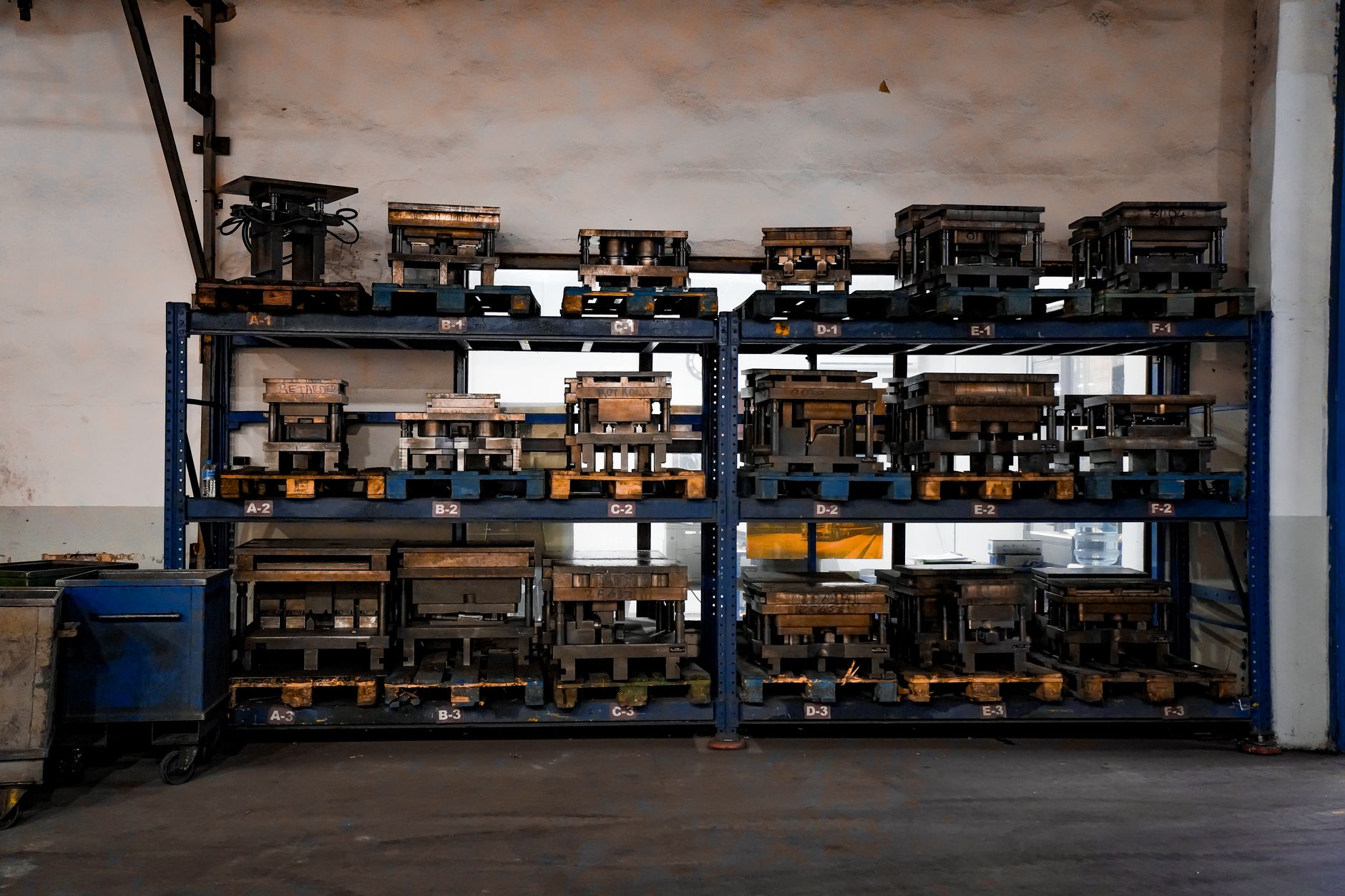
Most of the offset comes from handling work at each press. An operator loads a blank, lifts the formed part out, places it at the next station, and stacks finished parts at the outfeed. A cobot can carry the repeat motion of those moves, provided the blank feed, fixtures and part presentation are set up for it. The areas that matter are the blank infeed, the press station, the transfer path between presses, the outfeed stack, the inspection bench and the die change area.
A second source of return is cycle time. According to Metal Forming magazine, a press tending case reported a 30 percent cycle time improvement. On a line where one press sets the pace, a faster cycle adds parts per shift from equipment the plant already owns, and that gain can outweigh the labor hours. The same case framed its payback around operator headcount, going from three operators on the cell. That is the only headcount figure we could verify for this setting, so treat it as one example rather than a norm.
Scope depends on what the plant stamps. The Census Bureau defines NAICS 332116 Metal Stamping as covering unfinished metal stampings and spun products, and it excludes automotive, can, cooking, closure, crown and coin stampings. A plant stamping automotive parts sits outside that code, so size the job from your own process list rather than from the code.
Median hourly wage, Laborers and Freight, Stock, and Material Movers, Hand
$4,380
Monthly cost of one full-time worker, at the median wage plus payroll costs (an estimate, not a quote).
How does the cobot ROI math work?
The math has four inputs and one result. Each input is measured on your floor, which is why the result is a range rather than a single figure. Work through the steps in this order.
Start with the handling hours at one press per shift from the assessment. The share the cobot realistically takes is the number to be careful with. The arm carries the repeat moves, but people still set dies, check parts and clear faults, so the offset is smaller than the full handling task. Only the share taken counts toward the return.
The lease side is a fixed payment set after the assessment, so the return rises with each extra hour offset and falls if the arm covers less of the cycle than planned. Check the low end of the range first. A plan built on the best share and the lowest handling hours will overstate the return.
- Measure the cycle time at each press, and the seconds the operator spends loading, unloading and transferring per part.
- Multiply the handling hours per shift at each station by the number of shifts the line runs.
- Apply the share the cobot realistically takes, which is less than the whole task because people still set dies and check parts.
- Value those hours at the government wage data on this page for the laborers and freight, stock, and material movers, hand type of work.
- Subtract the fixed lease payment quoted after assessment, and add any throughput gain from a faster cycle.
What changes the number up or down?
Press count and cycle time move the number most. An arm that serves several stations on a steady cycle takes more handling hours off the line than one that waits between parts. A faster press can also outrun the arm, which turns the cell into the bottleneck, so the cycle has to be matched to the arm before the count is set.
Part variability pushes the number down. Heavy, oily or irregular blanks change the gripper, the fixtures and the cycle, and each new part number can need engineering time. Die change frequency works the same way, since a person still does most of that work. Long runs of stable parts do the most for the return.
Shifts and guarding also count. The hours offset scales with the shifts the line runs, while the lease is a fixed payment. Guarding that is not yet in place adds cost and delay before go-live, which pushes the payback point out.
What are the risks to the return and how do you avoid them?
The biggest risk is safety, not savings. OSHA 29 CFR 1910.217 requires employers to supply point-of-operation guards or properly applied devices on mechanical power presses and to ensure they are used. The standard covers full-revolution and part-revolution presses. Hydraulic presses fall under a different standard, and the presence-sensing initiation provisions are under review. Calling the cobot collaborative does not settle the press guarding question.
Injury rates show the stakes. Secondary reporting of BLS data puts manufacturing's total recordable case rate at 2.7 per 100 full-time workers in 2024, above the 2.3 reported for private industry overall. According to CPA Practice Advisor, the private industry rate for 2024 was 2.2, down from 2.4 in 2023. The sources differ slightly, so check the rate for your own plant from your injury log. A cell designed around the press point, not only around the arm, keeps an incident from undoing the return.
ANSI B11.1 covers mechanical power presses as consensus guidance rather than an OSHA regulation, and it is a sound reference for the cell design review. Other risks are jams and downtime, tooling changes that go beyond the cell, and dependence on the one operator who knows the cell. Name a backup trained operator and plan a service window in advance.
- Repeat loading on a fixed cycle
Cobot
Holds the same cycle for the whole programmed run
Staff
Holds the cycle well but slows and varies as the shift wears on
- Die change and setup
Cobot
Not the job; a person changes and verifies the tooling
Staff
Sets dies, adjusts shims and checks the first parts
- Defect spotting
Cobot
Catches the dimension and presence faults its sensors are set for
Staff
Spots surface marks, burrs and unusual material that sensors miss
- Jam and fault recovery
Cobot
Stops safely and alerts; restart needs a trained person
Staff
Clears the jam and works out the cause
- Part variety
Cobot
Works best on stable part numbers and fixed fixtures
Staff
Adapts quickly to mixed runs and short orders
- Shift coverage
Cobot
Runs when the line runs, with a planned service window
Staff
Needs breaks, relief staffing and handover between shifts
How long does it take from assessment to payback?
The payback clock starts when the cell runs the agreed share of the cycle, not when the arm arrives. The path has a fixed order. The site assessment measures cycle times, part samples and shifts at each press, and records the guarding status. Integration and layout follow, then the safety review and sign-off, then installation and operator training, and then go-live support while the cell settles.
The overall timeline depends on how many presses are in scope and how much guarding is missing. Starting with one press and one part family usually shortens the first payback window, and a phased rollout adds presses once the first cell holds its cycle. Data from the first weeks of running gives the basis for the second cell.
Treat any single date as an estimate until the first cell has run a full set of shifts. The estimate becomes a measured payback point only after the arm is running the agreed share.
Why does turnover in manufacturing matter to the press cell?
Turnover affects a press line more than headcount on paper suggests. According to the BLS JOLTS release, total separations across all industries ran at a 3.3 percent rate in the 2025 annual average, unchanged from 2024. According to Manufacturing Dive, manufacturing separations were about 294,000 in January 2026, down about 12 percent year over year, including 162,000 quits and 112,000 layoffs and discharges.
Each quit on a press line means someone new learns the feed, the fixtures and the fault codes. A cobot cell that holds a fixed cycle reduces how much of the repeat handling depends on one trained person at one station. It does not remove the need for trained people, so the return should include training and backup coverage.
The government wage data on this page sets the value of each hour offset. Turnover adds recruiting and training cost on top of that, and those costs belong in the assessment rather than in a separate guess.
How fast is cobot adoption growing in North America?
Adoption is climbing, and cobots are where growth shows most clearly. According to A3 data reported by The Robot Report, North American cobot orders reached 7,212 units in 2025, which was 19.6 percent of total robots ordered and 10.7 percent of revenue. These are orders, not shipments, so read them as demand signals rather than installed counts.
Cobots reached 28.6 percent of robots ordered in Q4 2025, with 2,953 units, the highest quarterly volume since A3 began tracking cobots separately in Q1 2025. For a plant planning a line change, that means the assessment and integration calendar should be set early rather than at the last minute.
How do you get a precise figure from a free site assessment?
The assessment turns the range into a figure. We map the cell, time the cycle at each press, sample the parts, and record the shifts and die change frequency. We also check guarding against the press standard and note what training and backup coverage the line needs. Nothing in this step commits you to a lease.
From those inputs we select the robot that fits the site and quote the lease. The payment is fixed and comes with the quote, so you can compare it against the hours offset from the same assessment. Deployment and integration follow, then staff training and go-live support.
After go-live we service the arm nationwide, with on-site dispatch and remote triage for faults. One partner and one number cover the line, so uptime has a single point of contact. Ask for the assessment before you commit to a line change, because the number that matters is the one measured on your presses.
Frequently asked questions
Want a cobot at your stamping plant?
Tell us about your site. We will recommend the robot, quote the lease, and keep it serviced.
Sources
- US Bureau of Labor Statistics, Occupational Employment and Wage Statistics (OEWS May 2024)
- Bureau of Labor Statistics injury and illness chart
- CPA Practice Advisor, reporting 2024 workplace injury data
- Bureau of Labor Statistics, JOLTS release
- Manufacturing Dive, reporting BLS JOLTS data for January 2026
- The Robot Report, reporting A3 North American robot orders
- Metal Forming magazine, press tending case
- OSHA 29 CFR 1910.217, mechanical power presses
- US Census Bureau, NAICS 332116 definition (archived)