
The short answer
Cobot ROI for switchgear assembly plants comes mainly from fewer hours of handling, kitting and staging work and fewer repetitive-strain injuries at the same station, not from replacing skilled assemblers. The savings range is set by how many of those hours a robot can realistically take, the lease cost quoted after a site assessment, and how much rework the robot removes. Only a site assessment that measures the hours on your own floor produces a precise figure.
Key takeaways
- The return comes mainly from handling, kitting and staging hours, plus fewer strain injuries at the station.
- Skilled torque and wiring work stays with assemblers, and the robot takes the repeated work around it.
- Savings are a range set by the share of work a robot realistically takes, never a fixed promise.
- Sector injury rates are modest on average, so measure your own station before counting injury gains.
- A pilot on one station tests the measured hours before any wider rollout is committed.
Run the numbers for your site
Pick your city or state for a real regional number - we use the real BLS wage there. (On the live site this auto-detects from your location.)
What do you want to automate?
The cobot stacks the repetitive end-of-line pallets; your team handles changeover and QA.
Cobot ROI for switchgear assembly plants: what the return looks like
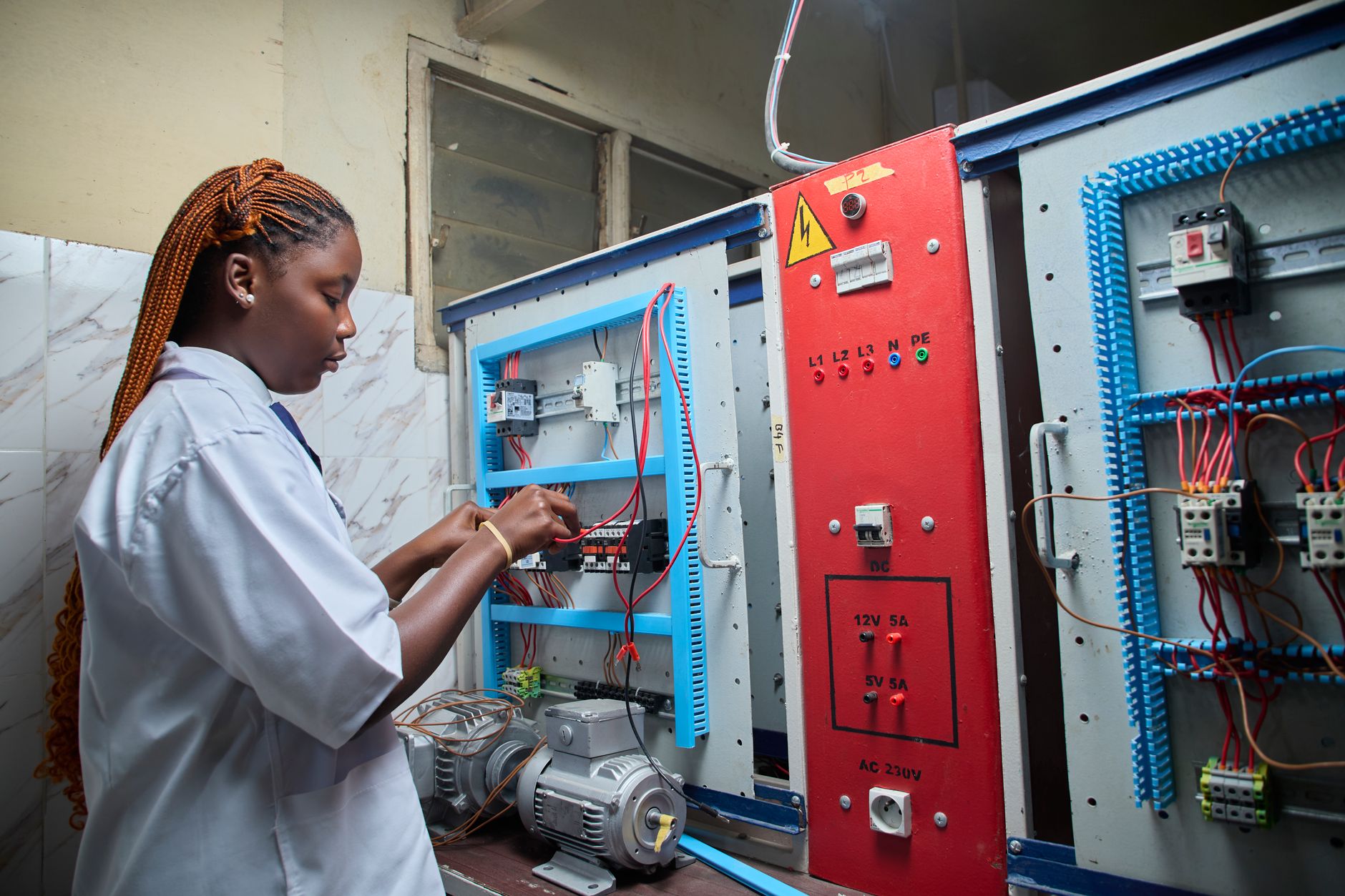
The return on a cobot in switchgear assembly rarely comes from one large saving. It comes from several smaller, steady ones: fewer hours spent fetching, staging and carrying parts, less repeated handling of heavy hardware, and fewer strain injuries at a station where a person and a robot share the work. The gains are largest where the same bench runs the same cycle all shift.
This page explains where those gains come from, how the savings range is built, what moves it up or down, and what a free site assessment has to measure before anyone can state a precise figure. The ROI calculator on this page is set for switchgear assembly. The range it shows is a planning estimate, not a promise.
Switchgear work is skilled, and the calculator treats it that way. The robot takes the repeated work around the skilled work. The sections below separate the two, so you can see which hours are valued and which are only reduced in strain and rework.
How many switchgear assembly plants are there in the US?
The Census County Business Patterns 2023 summary, as shown in an industry data aggregator, counts 449 establishments in Switchgear and Switchboard Apparatus Manufacturing (NAICS 335313), employing about 35,801 people. An earlier aggregator snapshot of the same code, with no year stated, shows 467 establishments, 399 firms and 34,788 employees. The counts shift between releases, so use them for scale rather than exact totals.
The wider electrical equipment group is much larger. FRED, which republishes BLS employment data, shows 435.8 thousand people employed in electrical equipment, appliance and component manufacturing in March 2026. Only part of that employment is switchgear, but it shows how many stations share the same fastening and handling work.
Adoption is rising. According to the International Federation of Robotics (IFR), preliminary 2025 figures show US industrial robot installations rose 11 percent to about 38,000 units. In the IFR World Robotics summary we reviewed, cobot installations were about 66,000 units globally in 2025, roughly 11 percent of 603,000 industrial robot installations, and cobot growth of 7 percent ran below the overall market for the first time. Confirm the global figures on the full IFR page before quoting them.
Median hourly wage, Laborers and Freight, Stock, and Material Movers, Hand
$4,380
Monthly cost of one full-time worker, at the median wage plus payroll costs (an estimate, not a quote).
Where does the labor return come from at a switchgear station?
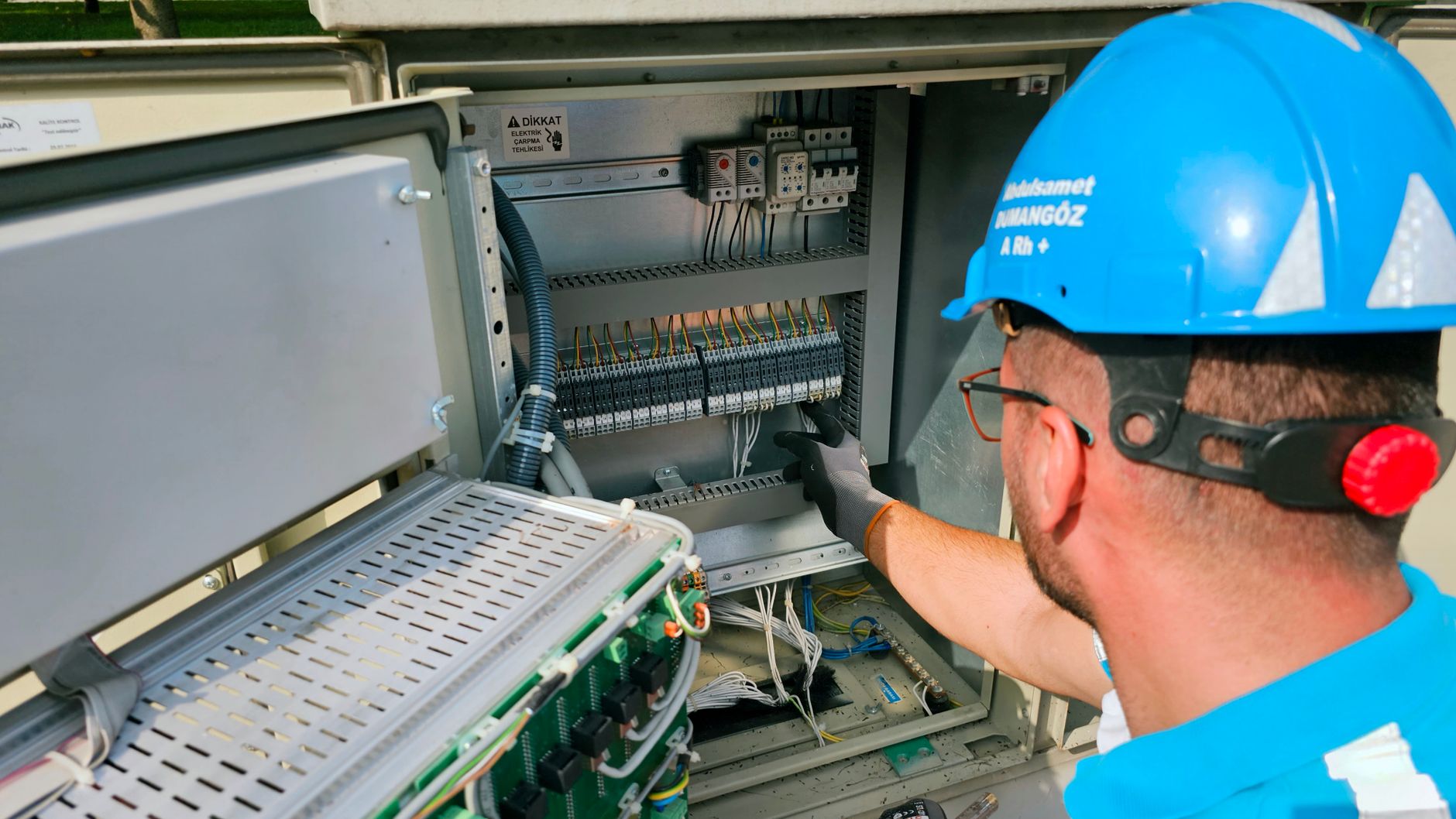
Switchgear assembly is mostly skilled work: torque sequences on busbar and enclosure hardware, wiring and terminations, and inspection. A cobot does not take that skill away. What it takes over is the repeated handling around it: fetching hardware kits, staging parts at the bench, holding a panel while a fastening sequence runs, and moving finished subassemblies to the next cell.
That handling is the labor the savings math values. The calculator values those hours at the government wage data on this page for laborers and freight, stock, and material movers, hand, which is the work a robot most directly replaces. Assembler time is not valued as a saving. Torque and wiring hours still matter, but they show up as fewer strain injuries and less rework, unless your site chooses to count them as labor.
The Bureau of Labor Statistics (BLS) May 2023 OEWS counted 30,740 electrical and electromechanical assemblers employed in electrical equipment manufacturing. Dividing that count by the 449 establishments gives roughly 68 per site, but the two counts cover different scopes, so treat that figure as a rough ceiling. Turnover matters too. BLS JOLTS data, as summarized in a secondary report, shows an annual average total separations rate of 3.3 percent across all industries in 2025, unchanged from 2024. That is an all-industry rate, so measure your own station's separations before assuming it applies.
On injuries, the BLS industry profile for NAICS 335 lists a total recordable case rate of 2.0 per 100 full-time workers and a days-away rate of 0.6. The year is not confirmed in the text we extracted, so check it on the BLS page before citing it internally. Sector averages say little about one station, which may run above or below them, and that is why the assessment measures the station itself.
How does the cobot ROI math work?
The model has four inputs. The first is the handling and staging hours per shift that the robot can take over at the station. The second is the number of shifts and working weeks per year. The third is the labor rate from the government wage data on this page. The fourth is the lease cost, a fixed robot lease payment quoted after the site assessment, plus service. Annual return is the valued hours minus what the lease and service cost over that year. Rework saved and strain avoided are added separately, and only when the site can measure them.
The range comes from running that model at a low and a high share of takeover, not from one assumed number. The low end assumes the robot takes only clean, repeated handling. The high end adds restaging and cart runs once the cell is laid out. Neither end is a promise, and both move with the shift pattern and how well the station is laid out.
How much of the work can a cobot realistically take?
No public source we reviewed gives hours per shift for torque or wiring tasks in switchgear assembly, so this page does not state them. The honest approach is to measure. During the assessment, the station is timed across several shifts, each task step is logged, and each step is marked as repetitive and fixed, or variable and skilled.
Repetitive, fixed steps are candidates for the robot. Variable steps, such as diagnosing a wiring fault or fitting a non-standard panel, stay with a person. The table shows the split a site usually works through once the hours are measured. The robot column is what the robot does, and everything else stays with staff.
| Task | Today | With a robot |
|---|---|---|
| Fetch hardware kits to the bench | Logged per shift during the site assessment | Robot delivers kits on a fixed route, staff confirm counts |
| Stage parts for each assembly cycle | Timed across several shifts | Robot places parts into fixtures, staff check fit |
| Hold panel or enclosure during fastening | Measured as a share of cycle time | Cobot holds and positions the workpiece, staff verify torque |
| Carry finished subassemblies to the next cell | Counted per cart run | Robot moves subassemblies on a set route between cells |
| Diagnose wiring faults and rework | Logged as separate time, outside the cycle | Stays with the assembler |
Hour figures are not published for these tasks. Each row is filled with the site's measured hours during the free site assessment, never with an industry average.
What are the risks to the return, and how do you avoid them?
The biggest risk is overestimating the share of work the robot takes. If parts vary by panel type, the robot needs more setup and its share falls. Start with the stations whose cycle is most stable, and plan the rollout around them rather than the whole line.
The second risk is downtime. A cell that stops when the robot stops loses more than the robot's hours. Plan a backup for the cell, keep spare or loaner units available, and agree on a fault response path before go-live. Nationwide service with on-site dispatch and remote triage shortens the time a station sits idle.
The third risk is that freed hours never leave the payroll on paper. Agree before go-live how those hours will be used: overtime cut, open roles left unfilled, or staff moved to inspection and wiring. A return with no plan behind it tends to vanish at the first budget review.
Also match the lease term to the life of the task. If the station's process is likely to change within a few years, a long term reduces flexibility. Ask for the lease options side by side in the quote.
Cobot or person: which one wins at each step?
The useful question is not which one is better. It is which tasks each does reliably at the same station. A cobot repeats the same motion and sequence all shift and does not tire by the tenth hour. A person adapts when a part is off-spec, judges fit by feel, and reads a drawing to trace a wiring fault.
Keep that split explicit in the plan. Assemblers keep the diagnostic and exception work, and the robot carries the repeated handling. The table compares the two point by point, including where the person clearly wins.
- Repeating the same torque sequence
Cobot
Holds the same motion and sequence on every cycle
Staff
Quality drifts with fatigue and time on shift
- Lifting and carrying hardware kits
Cobot
Moves kits on a fixed route without bending or lifting
Staff
Needs lifting, bending and reaching, which drives strain risk
- Adapting to off-spec parts
Cobot
Needs new setup, fixtures or reprogramming
Staff
Adjusts on the spot and judges fit
- Diagnosing wiring faults
Cobot
Can flag a fault but not find its cause
Staff
Reads drawings, tests circuits and finds the root cause
- Unplanned or one-off jobs
Cobot
Only what was set up in advance
Staff
Handles interruptions, rush jobs and training others
- Hours available on a shift
Cobot
Runs through the shift when charged and serviced
Staff
Limited by breaks, shift length and availability
What is the timeline from site assessment to payback?
A typical path runs from a free site assessment to a pilot on one station, then to wider rollout. The assessment times the station across several shifts, maps the floor and confirms the cell layout. The lease is quoted against measured hours, not estimates. The steps below show the order.
Payback arrives when the freed hours, counted against the lease cost over the term, have covered that cost. Timing depends on the measured share, the shift pattern and the lease term, so no typical period is stated here. The pilot is the test: it shows whether the measured share holds before a second station is committed.
- Free site assessment, with the station timed across several shifts
- Quote and lease agreement based on the measured share
- Integration, staff training and go-live support
- Pilot on one station, then a review of measured hours against the plan
- Expansion station by station, once the pilot holds
How do you get a precise figure from a free site assessment?
A precise figure needs measured data from your floor. The free site assessment times the station across several shifts, maps the workspace, checks parts and fixtures, and asks for injury and rework history where the site will share it. The output is a planned share of takeover, a range built on measured hours, and a lease quote.
We pick the robot for the site, lease it through financing, deploy and integrate it, train the staff who work beside it, and service it nationwide. Ask for the measured hour table and the assumptions behind the range, not just the final number. A range you can check line by line is worth more than a single figure you cannot check.
Frequently asked questions
Want a cobot at your switchgear assembly plant?
Tell us about your site. We will recommend the robot, quote the lease, and keep it serviced.
Sources
- US Bureau of Labor Statistics, Occupational Employment and Wage Statistics (OEWS May 2024)
- Census County Business Patterns 2023 summary via industry data aggregator
- Earlier industry code snapshot for NAICS 335313
- BLS OEWS May 2023, occupation 51-2028
- BLS industry profile for NAICS 335
- FRED, BLS employment series CES3133500001
- BLS JOLTS summary, secondary report
- IFR preliminary 2025 US robot industry release
- IFR World Robotics 2026 president's report