

The short answer
Cobot ROI in Cincinnati, OH comes from repetitive handling hours that a leased cobot takes over from staff who are already working, not from cutting people out of a shift. The savings range on this page is computed from the hours your site assigns to that work, the share a cobot can realistically take, and the lease payment quoted after a free site assessment. Treat the range as an estimate that the assessment confirms or corrects.
Key takeaways
- The return comes from hours of repetitive handling that existing staff spend now, measured at your own site.
- The local wage for laborers and material movers sets the value of each hour a cobot takes over.
- Payback moves most with how repeatable the task is, not with the headline features of the arm.
- Material moving carries real injury exposure, so the ergonomic case deserves a place in the decision.
- A free site assessment turns the estimated range into a lease quote you can check against your own log.
Run the numbers for your site
Auto-detected from your location - we use the real BLS wage here. Not right? Pick your city or state above.
What do you want to automate?
The cobot stacks the repetitive end-of-line pallets; your team handles changeover and QA.
What is cobot ROI in Cincinnati, OH?
Cobot ROI in Cincinnati, OH is the return a business gets from a collaborative robot arm that takes repetitive handling work off people who are already on the clock. In this model the return is not a smaller headcount. It shows up as hours that were spent tending a machine, carrying parts between stations, or stocking and loading, and that now go to other work or stop running into overtime.
Cincinnati has a substantial manufacturing base, and that shapes where cobots fit. According to the Federal Reserve Bank of St. Louis, FRED series for the Cincinnati metro area, durable goods manufacturing employed about 71.2 thousand people in December 2025, up from 69.9 thousand in October 2025. Plants and production lines of that size are the setting this page models.
We lease, deploy and service these systems. This page explains how we size the return before a lease is quoted, so you can test our reasoning against your own hours instead of taking a number on trust.
Where does the labor return come from?
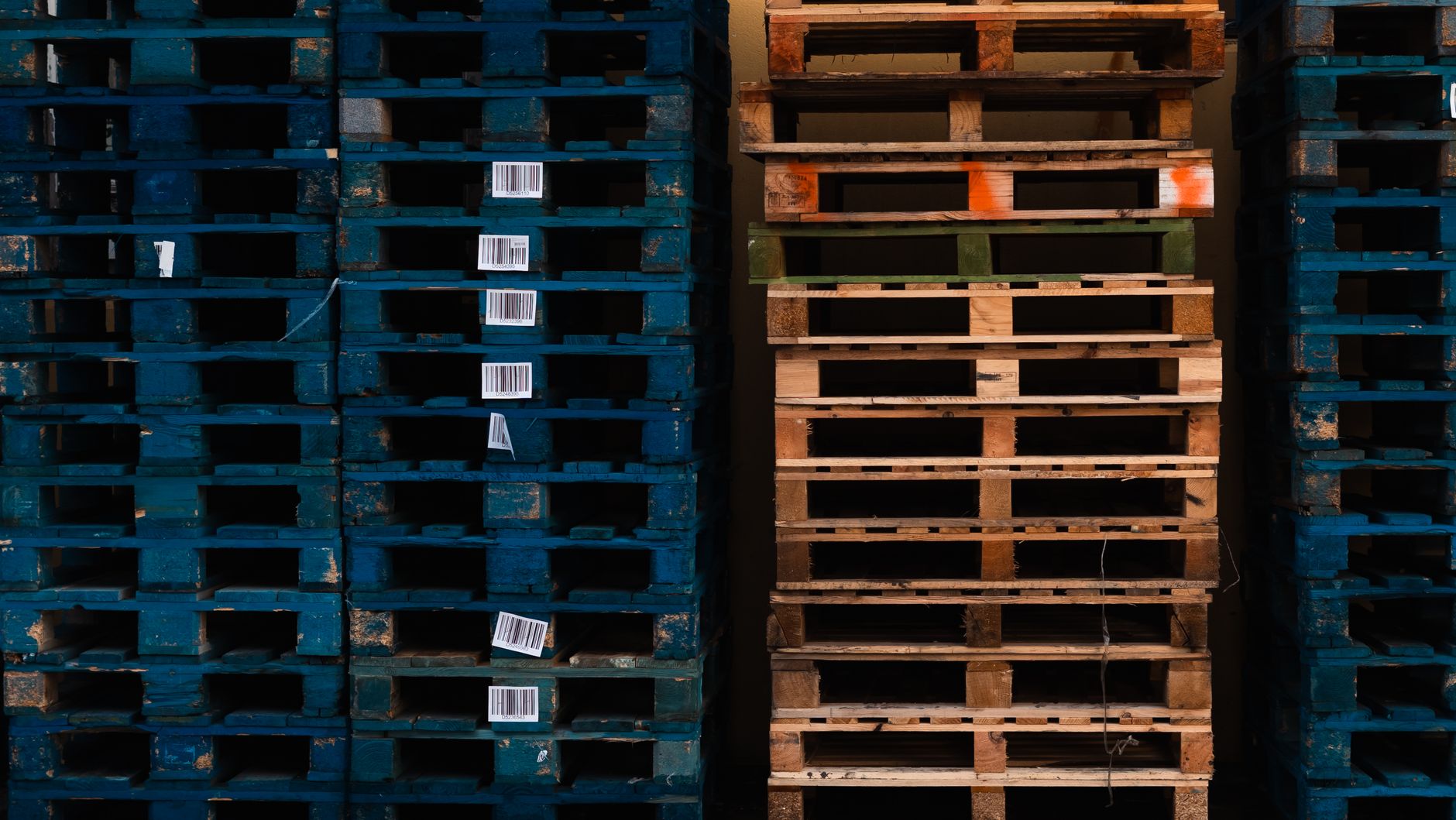
The labor side is priced on the hours of one kind of work: laborers and freight, stock, and material movers, hand. The government wage data on this page, from the Bureau of Labor Statistics May 2024 OEWS for the Cincinnati metro, gives the local wage for that job. Each hour a cobot takes off a person's plate is valued at that wage, which is why hours are the input that matters most.
Hours come from three kinds of work. The first is repeating a load and unload cycle at a fixed station, such as feeding or tending a machine. The second is moving parts or materials between two nearby points on a fixed route. The third is staging product at the end of a line, where the same lift and stack repeats through the shift. Work that changes every cycle, needs judgment on each piece, or switches product every shift is harder to hand off and counts for less in the range. Staffing for this work also varies by site, so the number of people on a station is set in the assessment rather than assumed.
The return is not only about labor. Material moving is physically demanding. According to the Bureau of Labor Statistics, laborers and freight, stock, and material movers, hand had 64,930 nonfatal injury and illness cases with days away from work in 2020, an incidence rate of 289.8 per 10,000 full-time equivalent workers. Published rates for the same occupation from 2016 through 2020 ranged from 252.1 to 306.8. Fewer repetitive lifts is a real benefit to the people on those lines, though this page does not assign a dollar value to it.
Median hourly wage, Laborers and Freight, Stock, and Material Movers, Hand
$4,572
Monthly cost of one full-time worker in Cincinnati, OH, at the median wage plus payroll costs (an estimate, not a quote).
How does the ROI calculator math work?
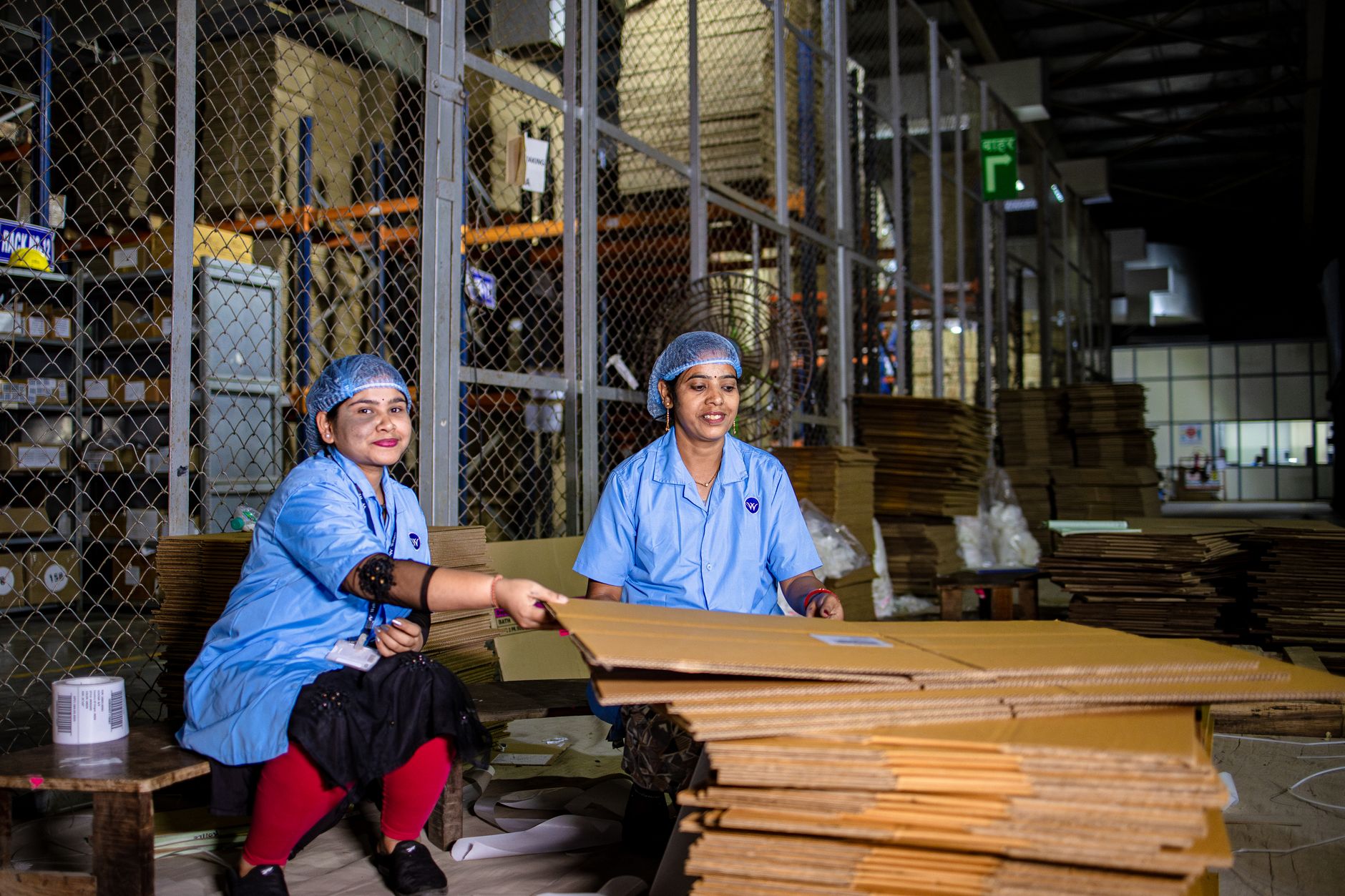
The calculator starts with the hours a site assigns to repetitive handling in a typical week, then applies the share of those hours a cobot can take over. That share is set during the site assessment by watching the work, not by reading a spec sheet. Hours that stay with people, such as setup, exceptions, inspection and changeovers, remain in the labor base and are not counted as savings.
Next the calculator nets out the lease. The lease is a fixed robot lease payment through financing, quoted after a free site assessment, and it covers deployment, integration, staff training and service. Each period, the value of the hours recovered is compared with that payment. Payback is the point where the cumulative result turns positive, and it moves whenever the hours or the payment move.
The output is a range, not a single figure. The low end assumes a smaller share of hours taken and a slower ramp after go-live. The high end assumes a steady share from the first full period. A range is the honest way to present an estimate that depends on hours measured at your site, and the assessment narrows it.
What changes the cobot payback up or down?
Four factors move the range more than anything else: how repeatable the task is, how many hours of it exist in a shift, how long the cobot waits between cycles, and how much staff time goes to exceptions. A task that repeats on a steady cycle through a full shift pays back differently from one that repeats in short bursts with long gaps.
The local labor pool also moves. FRED reports metro durable goods manufacturing employment rising from 69.9 thousand in October 2025 to 71.2 thousand in December 2025, and non-durable goods manufacturing at 53.1 thousand in November 2025. A single site's staffing can change faster than metro totals, so set the hours baseline from the site and refresh it before the quote is final.
Two smaller factors matter too. Product mix decides how often the setup has to change, and floor layout decides how far a unit can travel and how cleanly it can reach a station. Both belong in the checklist below before you trust any range.
What are the risks to the return and how do you avoid them?
The biggest risk is an overstated hours baseline. Estimates from memory tend to run high or low, and a range built on them will look better or worse than the site can deliver. Log the work for representative shifts before the assessment and compare that log with the assumptions in the quote.
Turnover is a second risk. Frequent new hires mean more training time, and training hours are not savings in the calculator. Ask how much of the labor base is new to the work, and whether a stable automated station would reduce the training load on the line.
Downtime is the third risk. A cobot that sits idle after a layout change, a faulty part or a missing spare recovers no labor value. Before you sign, ask how dispatch works, how remote triage is handled, and what happens to coverage if a unit needs repair or replacement.
- Repetitive loads
Cobot
Repeats a fixed cycle at a steady pace
Staff
Adjusts pace, grip and reach on each load
- Exceptions
Cobot
Stops or waits for staff when a load falls outside its scope
Staff
Decides what to do with a damaged or unusual load
- Product changes
Cobot
Needs setup and a program change for each new product
Staff
Learns a new product through instruction and practice
- Cost structure
Cobot
Fixed robot lease payment through financing, with service included
Staff
Wages and benefits that scale with hours worked
- Physical load
Cobot
Takes the repeated lifts off the staff member's hands at that station
Staff
Carries the physical load of the repetitive task when no robot is assigned
What is the timeline from assessment to payback?
Start with the free site assessment, which maps the floor, measures the hours, and confirms which part of the work a cobot can take. From there the usual sequence runs through scope and quote, agreement, delivery and installation, integration with the existing process, staff training and go-live support. Each step has a clear handoff, so the team knows what it owes and what it will receive.
Payback is measured after go-live, not in the quote. The first stretch of operation is used to prove the hours baseline, so early results often look slower than the top of the range. That is expected, not a warning sign. Review measured hours against the range at fixed intervals, and adjust the task scope if the work turns out to differ from the log.
How common are cobots in North American plants?
Adoption is rising. According to the Association for Advancing Automation, North American companies ordered 7,212 cobot units in full-year 2025, equal to 19.6 percent of robots ordered and 10.7 percent of robot revenue. Total North American robot orders rose 6.6 percent in units and 10.1 percent in revenue in 2025 compared with 2024.
The cobot share climbed through the year. A3 reported cobots at 11.6 percent of robots ordered in the first quarter of 2025, with 6.8 percent of revenue, and at 28.6 percent of robots ordered in the fourth quarter, with 14.7 percent of revenue. A3 began tracking cobots as a separate category in the first quarter of 2025, so the series is short and should be read as direction rather than a long trend. A3 also counted 3,085 cobot units ordered in the first half of 2025.
Order data show demand, not installations or the returns any one site achieved. Use it to judge the market, and use your own hours log to judge the site.
Is cobot ROI worth it for a Cincinnati facility?
It is worth testing when a site has a steady, repeatable block of handling work, a product mix stable enough to hold a setup, and staff hours that are being spent on that work now. It is less clear when the work changes every shift, when floor space is tight, or when power and access cannot support a unit at the station.
A useful test is a short, measured pilot on one station. Start with one leased unit, set the hours baseline, and let the measured result decide whether to expand. This keeps the first commitment small and gives the range a real result to test against, which is more useful than any projection on a page.
A pilot also shows how the team works with the unit. The people who run the station day to day find exceptions faster than anyone reading a plan, and their log is the best input for the next station.
How do I get an exact figure from a free site assessment?
The free site assessment turns the range on this page into a number you can sign off on. We map the floor, log hours with your team, identify the stations or transport legs that can be handed to a cobot, and check power, space and access. Then we quote the lease through financing, with deployment, integration, staff training and service included.
Bring what only your site knows: who does the work now and for how many hours, how often the process changes, what the injury and near miss log shows for that task, and how exceptions are handled. The more accurate those inputs, the narrower the range becomes and the more reliable the payback timing.
We are a vendor neutral robot integrator, so the cobot is chosen for your site rather than for a single product line. Service runs nationwide with on-site dispatch and remote triage, so a unit that needs attention in Cincinnati gets the same support as one anywhere else in the country. Once the assessment is done, you receive a fixed robot lease payment through financing to compare against your hours.
Frequently asked questions
Put a robot to work in Cincinnati.
We walk your site, learn the job, and recommend the unit that fits. Then we quote the lease, deploy it, and keep it serviced.
Sources
- US Bureau of Labor Statistics, Occupational Employment and Wage Statistics (OEWS May 2024)
- Bureau of Labor Statistics, Cincinnati OEWS May 2024 release
- Bureau of Labor Statistics, injuries and illnesses snapshot 2020, laborers and material movers
- Bureau of Labor Statistics, injuries and illnesses snapshot 2016 to 2020, laborers and material movers
- Federal Reserve Bank of St. Louis, FRED, Cincinnati durable goods manufacturing employment
- A3, North American robot orders full-year 2025
- A3, North American robot orders Q1 2025 with first cobot tracking