

The short answer
Cobot ROI in Houston comes from the steady, repetitive hours that a cobot takes over at one station, priced on the local wage for that work and then compared with a fixed lease payment and service cost. The savings range depends on logged hours and the realistic share of the task the cobot can handle, so it is a range, not a promise. A free site assessment turns those inputs into a precise figure and a lease quote.
Key takeaways
- Cobot ROI in Houston comes from steady repetitive hours at one station, not from the size of the building.
- The local wage for this job prices each hour the cobot takes over, and the savings range is an estimate, not a promise.
- The realistic share of a task matters more than the headline task time, so log the hours before you count them.
- Exceptions, restocking and product changes stay with people, so plan the handoffs first.
- The fixed lease payment and service terms are quoted only after a free site assessment.
Run the numbers for your site
Auto-detected from your location - we use the real BLS wage here. Not right? Pick your city or state above.
What do you want to automate?
The cobot stacks the repetitive end-of-line pallets; your team handles changeover and QA.
Cobot ROI in Houston: where the return starts
Cobot ROI in Houston depends on one thing you can measure: how many hours a week of laborer and material mover work sit in a task a cobot can repeat at a fixed station. Houston is a large freight and distribution market, so that kind of work is common. The Greater Houston Partnership put transportation and warehousing at about 172,900 jobs in the metro, roughly 5.0 percent of the regional total, in a regional outlook presentation from mid-2025. The figure is approximate, but it shows the size of the labor pool that operators here draw from.
This page covers where the return comes from, how the payback math works, what moves the number up or down, and how a free site assessment turns the estimate into a precise figure. The calculator on this page is set for Houston, and the savings range it shows is built from your inputs, not guaranteed.
Where does the return come from in a Houston facility?
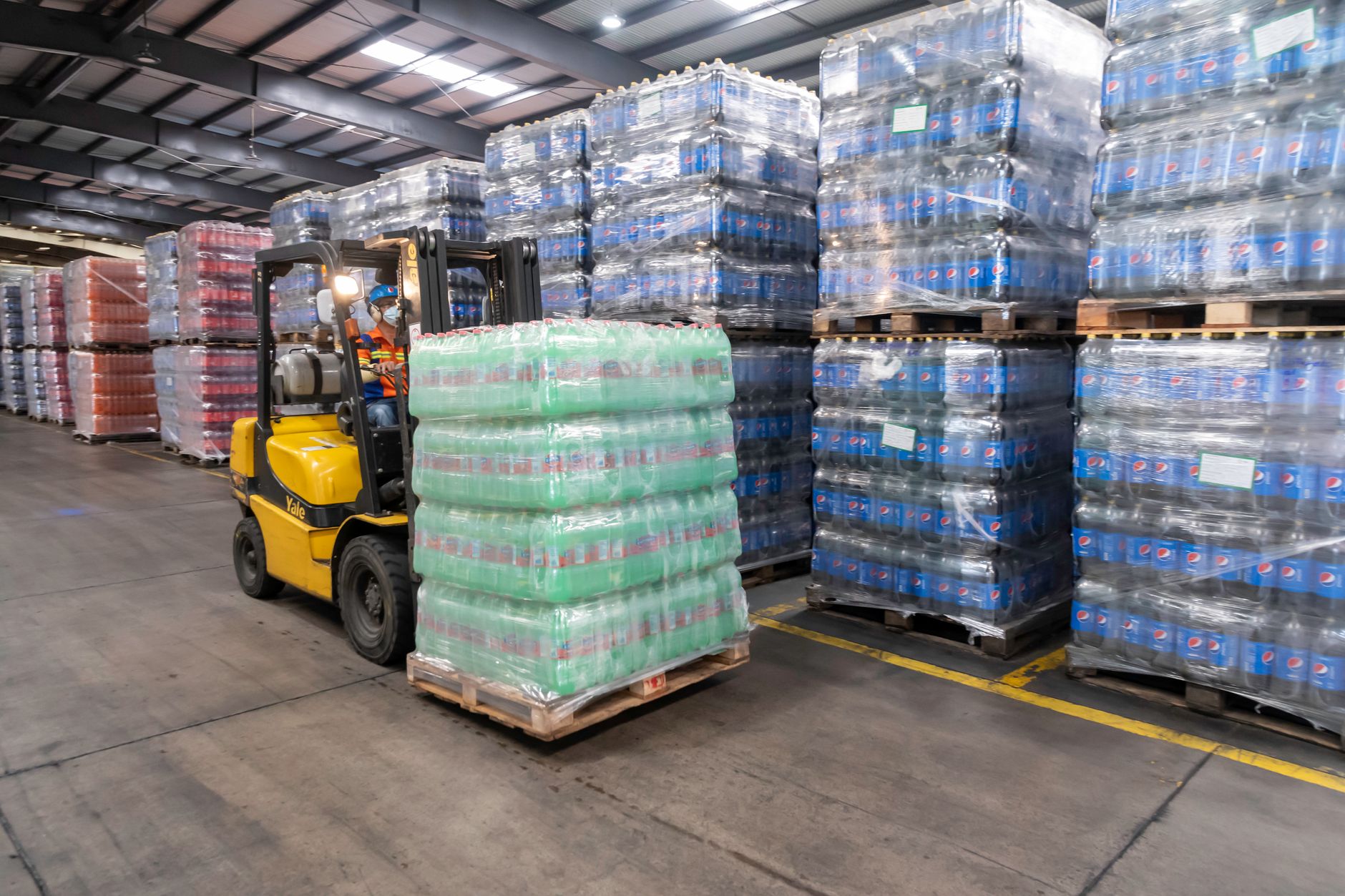
The return comes from repetitive handling work that a cobot takes off the laborer and material mover workload. In a Houston warehouse or plant that is usually palletizing mixed cases, feeding and clearing an infeed, picking from totes at a fixed station, or handling the last step of a packing line. Each of these is a motion a person repeats many times in a shift, and it is the part of the shift an arm can hold steady.
The labor side is priced on the local wage for this job. The government wage data on this page, for the Laborers and Freight, Stock, and Material Movers, Hand occupation in the Houston metro, sets the value of each hour the cobot takes over. We do not price any other role, and we do not count hours that do not belong to the task.
Adoption is growing, so operators now have a track record to compare against. The International Federation of Robotics counted 66,000 cobot installations in 2025, about 11 percent of industrial robot installations, and reported total industrial robot installations above 600,000 for the first time, at 603,000, up 11 percent.
Median hourly wage, Laborers and Freight, Stock, and Material Movers, Hand
$4,231
Monthly cost of one full-time worker in Houston, TX, at the median wage plus payroll costs (an estimate, not a quote).
How is the payback calculated?
Payback compares two sides. On the savings side, take the weekly hours of the target task, multiply by the weeks worked in a year, and price that labor at the local wage for this job. The share of that work the cobot realistically takes is the input that moves the result most. A cobot that takes part of a task is worth less than one that takes the whole task, and the gap shows up on your floor, not in a headline.
On the cost side is the fixed robot lease payment, plus any cell, guarding or integration work your site needs and the service coverage you choose. The lease is quoted after a free site assessment, so the cost line is tied to your building and task. Staff time for training and for handling exceptions also belongs on the cost side, even when it is small.
Payback is the point where cumulative labor value minus cumulative cost turns positive. Because the savings rest on hours and a realistic share, we show a range: a conservative case where the cobot takes a smaller share of the task, and a fuller case where it runs the task for most of the shift. The range is an estimate built from your numbers, and it is reviewed once the cell runs real shifts.
What hours does a cobot take over, task by task?
The hours that count are the ones a person spends on the same motion again and again. The table below lists the tasks we see most often in this kind of setting and what changes when the cobot runs them. The hour figures for these specific tasks are not published in the sources we checked, so we measure each one on your floor during the site assessment and use your logged figures in the calculator.
Two points shape the math. First, not all of a task's time is removed. Someone still restocks, checks labels, clears jams and handles exceptions, so the offset is smaller than the total task time. Second, the best candidate is steady, high volume work with a stable product pattern, not work that changes every hour.
For the calculator we use four people doing this work at one site as a planning placeholder. We could not find a published count of laborers and material movers at one Houston site of this kind, so the figure is a working assumption to replace with your actual roster during assessment.
Robot or person: where each one wins
A cobot does one defined task at a steady pace for as long as it is set to run, which is valuable on a long shift when the work is the same. A person handles what the cobot cannot: a damaged carton, a new product, a mispallet, a change in layout. Neither wins in general. The useful question is which part of the work is steady enough to hand to the arm and which part needs judgment.
The comparison below goes point by point and includes where the person does better. Read it against your own task, because the answer changes with the product mix and the shift pattern.
- Steady repetitive work
Cobot
Repeats the same motion through the shift without breaks, within the set pattern
Staff
Works steadily but needs breaks, rotation and a change of pace
- Changing products or case mix
Cobot
Handles the pattern it was set up for, and a new pattern needs reprogramming
Staff
Adapts to a new product or carton on the spot
- Damaged or mispacked goods
Cobot
Stops or sends the item to a handoff point
Staff
Judges the item, repairs it or rejects it
- Training and onboarding
Cobot
Staff learn the cell and its stop controls once, during deployment
Staff
Each new hire needs training, and turnover repeats that cost
- Floor space and layout
Cobot
Needs a fixed station with clearance for the arm and its guarding
Staff
Moves across the floor as the work requires
- Off-hours coverage
Cobot
Depends on the staffing plan, since someone must be available to clear exceptions
Staff
Needs a staffed shift, with the cost that comes with it
What changes the number up or down?
A few inputs move the savings range more than any other. The checklist below lists what to check before you decide and why each item matters.
The Bureau of Labor Statistics reports the quits rate for transportation, warehousing and utilities, not seasonally adjusted, at 2.2 percent in January 2025, 2.3 percent in December 2025 and 1.7 percent in January 2026, which is preliminary. That national figure is context only. Low quits mean fewer replacement hires to train, so the case rests more on the hours of the work itself. Your own turnover sets the training cost you carry, and that belongs in the calculator.
Where in the building does the cobot work?
A cobot works at a fixed station, not across the whole building. That is why floor space and the path of material matter more than total square footage. A large facility does not by itself mean a return. What matters is how much repetitive movement sits at one or two stations, and whether those stations can be reached without pulling product through a crowded aisle.
Layout also decides how much of the work the cell can hold. A station needs clearance for the arm and its guarding, a feed path that keeps product steady, and a handoff point where a person can take exceptions without stopping the cell. We check those in the assessment and draw them into the layout before any lease is quoted.
Power, network access and the hours the dock is open also belong on the list, because they decide whether the cell can run the shifts you plan. Adding them early keeps the estimate close to what the site can actually do.
What are the risks to the return, and how do you avoid them?
The biggest risk is counting hours the cobot cannot take. Product variety and uneven upstream work lower the realistic share, and a station that starts and stops often loses hours to restarts. Plan the handoffs, keep a trained person on exceptions, and measure the first weeks against the assumption, not against the brochure.
Safety is the second risk, and handling it well strengthens the case. The Bureau of Labor Statistics reports that warehousing and storage (NAICS 493) had a total recordable rate of 4.8 cases per 100 full-time workers in 2024, with a days-away rate of 1.5 and 32 fatalities, up from 28 in 2023. Taking a repetitive lift off the line can reduce exposure, but only with guarding, a clear handoff point and training on the stop controls.
Service is the third risk. A stopped cell costs hours on the line, so confirm how service visits, repairs and remote triage work in your metro before you sign, and ask what happens while a unit is out.
How long from assessment to payback, and how do you get a precise figure?
The path runs in stages. The free site assessment comes first, where we map the task, log hours on your floor, and check space, power, network and access. Next comes the quote, which covers the fixed lease payment, install, integration, training and service terms. Then deployment and staff training, followed by go-live support while the cell settles. Payback is measured from go-live against the logged hours, not from the day the lease is signed.
How long each stage takes depends on the building and on your internal approvals, so we set the timeline during assessment rather than quoting a standard time. The payback review comes after the cell has run a full set of shifts with the real product mix, because that is when the realistic share becomes visible.
We are a US commercial robot integrator. We pick the robot that fits the site, lease it through financing, deploy and integrate it, train the staff and service it nationwide. To get a precise figure, send us the task, your weekly hours, the shift pattern and a floor plan. We run the calculator on your numbers, show the savings range with its assumptions, and quote the lease. The range is an estimate, not a promise.
Frequently asked questions
Put a robot to work in Houston.
We walk your site, learn the job, and recommend the unit that fits. Then we quote the lease, deploy it, and keep it serviced.
Sources
- US Bureau of Labor Statistics, Occupational Employment and Wage Statistics (OEWS May 2024)
- Greater Houston Partnership regional outlook presentation (mid-2025)
- Bureau of Labor Statistics, JOLTS news release (January 2026 preliminary)
- Bureau of Labor Statistics, Injuries, Illnesses and Fatalities: warehousing and storage (NAICS 493), 2024
- International Federation of Robotics, President's report 2026