

The short answer
Drone ROI for shipyards comes mainly from replacing the scaffolding, rigging and confined-space entry that hull and tank surveys normally need with drone passes that often finish in a fraction of the time. The savings range is set by the labor hours the drone takes off the inspection crew, costed at the local wage for security-guard-type work, minus the lease payment and the time people still spend on prep and sign-off. A free site assessment turns those inputs into a range for your specific yard.
Key takeaways
- Drone ROI for shipyards comes from hours of access work that scaffolding, rigging and entry would otherwise take.
- The savings range is an estimate built from hours, the share of work a drone can realistically do, and the lease cost.
- Confined spaces carry the highest risk in yard work, so every survey that avoids entry counts for safety as well as cost.
- Class society and owner acceptance decide whether drone findings count, so settle the evidence standard before go-live.
- A free site assessment is the only route to a precise figure for your yard.
Run the numbers for your site
Pick your city or state for a real regional number - we use the real BLS wage there. (On the live site this auto-detects from your location.)
What do you want to automate?
The unit runs the repetitive patrol and watch; guards handle the judgment calls.
Drone ROI for shipyards: where the return comes from
Most of the return from a drone on a shipyard comes from access work. Hull and tank surveys often depend on scaffolding, rigging, staging and entry into confined spaces before an inspector can see the steel. A drone can photograph and survey tall hulls and tank interiors in hours, so the labor that would have built and torn down that access is the main thing it takes off the crew. Drone ROI for shipyards starts there, and it works differently from the return in a warehouse or a parking garage.
The savings range on this page is a calculation, not a promise. It counts the hours of work the drone takes over, costed at the local wage for security-guard-type work from the government wage data shown beside this text. It then subtracts the lease payment and the staff time that still goes into planning, data review and sign-off. Those three inputs decide the range, and a free site assessment is where they get measured for your yard.
We are a US commercial robot integrator. We pick the drone that fits the site, lease it through financing, deploy and integrate it into your survey process, train your staff and service the unit nationwide. Integration matters more in a yard than it sounds, because a drone that flies well but produces findings your class surveyor will not accept does not return anything.
How many shipyards and workers are in the US?
The count of yards is older than most figures on this page. A 2013 economic study by the US Maritime Administration reported 117 shipyards across 26 states. A maritime news article citing 2013 data put the count at 124 active shipbuilders in 26 states. The two numbers differ because the counts depend on how a yard is defined, so treat any single figure as a rough base rather than a census.
Employment is more concentrated than the yard count suggests. The same MARAD study says five states, Virginia, Louisiana, Mississippi, Connecticut and California, hold 62 percent of private direct shipbuilding employment, and about 107,000 direct jobs outside federal employment. A private market-research estimate puts US shipbuilding employment at 104,433 as of 2026. A BLS-based series shows about 145,100 workers in ship and boat building as of November 2025, down from about 148,200 in November 2024. These sources measure different things, so match the one to your own scope before you use it.
Median hourly wage, Security Guards
$4,317
Monthly cost of one full-time worker, at the median wage plus payroll costs (an estimate, not a quote).
How long does a hull or tank survey take by hand?
Hand access sets the schedule. In a vendor-reported oil tanker survey covered by a trade publication, scaffold setup, removal and inspection took about seven days per tank, against about one day per tank for a two-person drone crew. That comes from the provider, not an independent audit, so run your own pilot and log the hours before you put the figure into a business case.
The time is not only the inspector's. Scaffolding crews, riggers, ventilation and gas testing before entry, and a standby person for each confined-space entry all sit on the critical path, and they often run one after another. A drone pass removes most of those steps for the visual survey. It does not remove the need to make a tank safe for any person who still has to go inside.

How does the drone ROI math work?
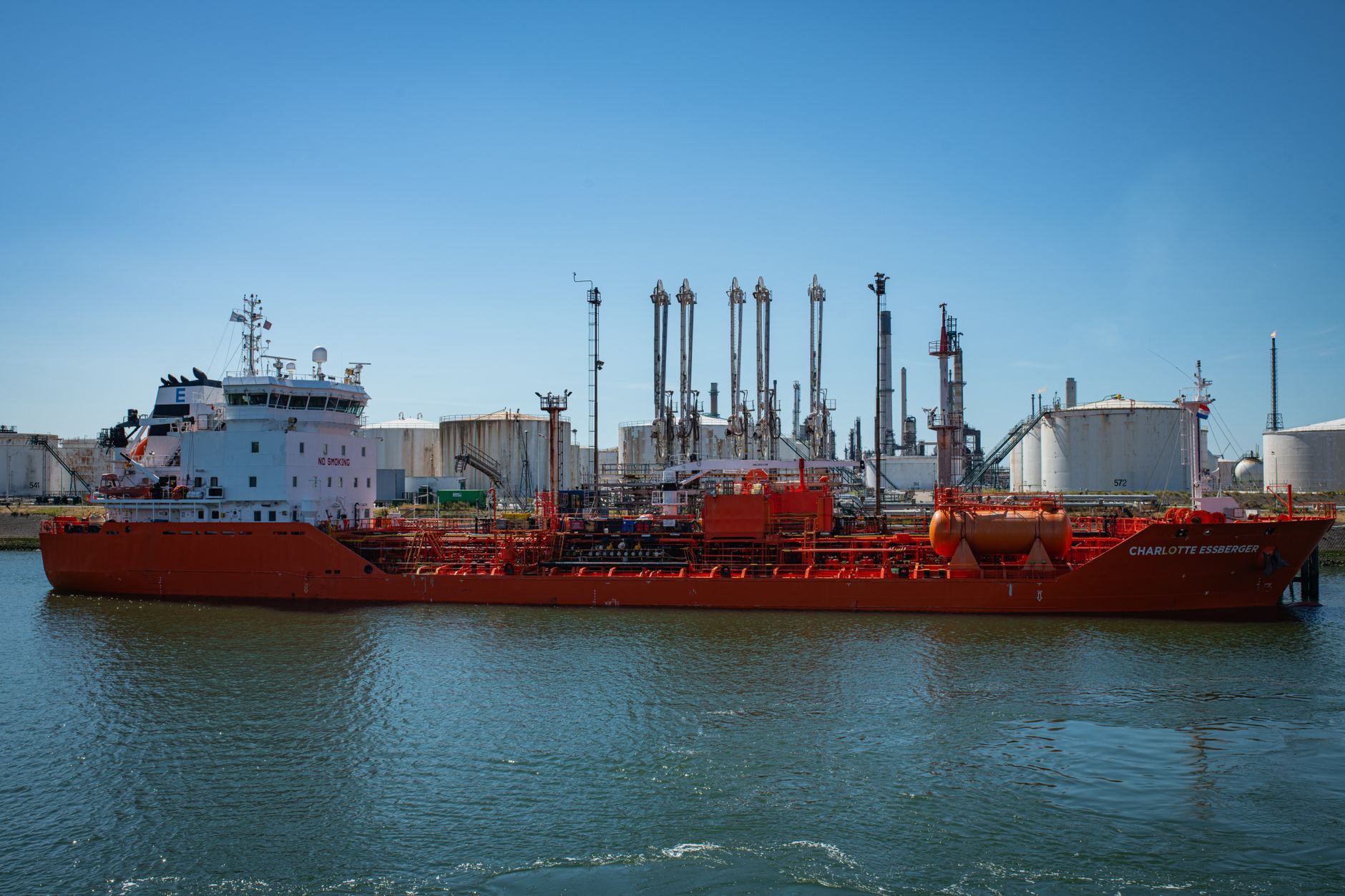
The calculation is simple to state. Take the hours of inspection and access work the drone takes over in a year, cost those hours at the local wage for security-guard-type work from the government wage data on this page, then subtract the annual lease payment and the staff time the drone still needs. The result is a savings range, and it is only as sound as the hours that go into it.
The share of work matters as much as the hours. A drone will not handle every survey on every yard. Some tanks need a person to touch the steel or take thickness readings, and some sections are better reached from the dock or a boat. A realistic model takes only the share of the survey a drone can perform and assumes the rest still needs access. If you assume the drone does everything, the range will come out too high.
The lease cost is a fixed commitment that enters the math as a known amount. It is quoted after a free site assessment, so the number reflects your access map, your survey schedule and your team's time rather than a generic estimate.
What changes the number up or down?
Three things push the number up. The first is a yard with many tanks and tall hulls that need repeat surveys. The second is a schedule where access work holds up other trades. The third is a staffing shortage that makes rigging and inspection shifts hard to fill, which the workforce data in the earlier sections supports.
Three things push it down. A yard that surveys only a few spaces a year gets fewer hours of value. A survey program that still needs a person in the tank for most findings keeps those hours on the crew. A class or owner process that asks for extra steps before it accepts drone imagery adds time. A yard in that position may find a modest range, and it is better to learn that before committing.
What are the risks to the return and how do you avoid them?
The largest risk to the return is misreading the safety picture. OSHA's shipyard guidance says confined and enclosed space work carries a greater likelihood of fatalities, severe injuries and illnesses than any other shipyard work. A drone that cuts the number of entries is worth something for that reason, but it does not remove the need to test, ventilate and plan rescue for any space a person must enter. Keep the entry program as a fixed cost, and count only the entries the drone actually avoids.
The second risk is acceptance. Class surveyors and owners decide whether drone imagery counts. A survey that is faster but not accepted is extra work, not savings. Agree the evidence standard, image resolution, report format and sign-off before go-live, and put those terms in writing.
The third risk is the crew. A July 2025 commentary from a policy research center, CNAS, reports attrition of 20 percent or more among younger shipbuilding workers, based on shipyard reports. A maritime trade publication, citing BLS 2022 to 2032 projections, expects about 39,000 fewer jobs in ship and boat building and related trades, and says shipyard employment is down nearly 30 percent from the 1980s. A thinner crew makes access work harder to staff, which strengthens the case for drones, but it also means your drone team needs training and a backup pilot.
Where does a drone fall short of a person?
A drone is a good first pass and a poor last word. It can show a coating breakdown, a crack line or a corroded plate from a distance, and it can cover a tall hull without rigging. It cannot tap a plate for a sound, read a gauge at contact or confirm a defect the way an inspector at close range can. Plan on people finishing the job wherever contact or judgment is needed.
Enclosed tanks are the hardest case. Low light, dust, cramped geometry and the lack of satellite positioning inside steel structures make flight slower and riskier than open hull work. Tethered or caged units and pilots trained for confined interiors add cost to a tank program. Ask any provider how their unit navigates a tank with no GPS before you accept a time estimate.
- Reach to tall hull sections
Drone
Covers tall sections from the air or a close pass, with no rigging
Staff
Reaches the same steel with rigging, staging or a lift, which is slower but gives direct contact
- Speed on a large tank
Drone
Flies the interior in one pass where light and layout allow
Staff
Works the tank section by section, slower but thorough
- Touch and measurement
Drone
Flags areas; contact readings need a separate tool or a person
Staff
Taps, measures and judges defects at close range
- Confined-space entry
Drone
Cuts the number of entries needed for a visual survey
Staff
Must enter for any contact work, with testing, ventilation and standby
- Judgment and sign-off
Drone
Records imagery for review
Staff
Interprets findings and stands behind them with the class and owner
- Weather and setup
Drone
Needs calm air, good light and a flight plan; wind and rain stop work
Staff
Keeps working in most conditions within safety limits
What is a realistic timeline from assessment to payback?
Timelines depend on the yard, the class schedule and how quickly your team can share drawings and access maps. The sequence matters more than any single duration. The first step is the site assessment, which maps tanks, hulls and entry points and records today's access hours. The second is a pilot survey run alongside the conventional method on one or two spaces, so the team can compare results and the class surveyor can review the evidence.
After the pilot, the team sets the survey procedure, trains the crew and agrees the report format with the owner and class. Go-live is a planned step rather than a switch, with support during the first real surveys. Payback is measured on logged surveys, not on the estimate. The review should compare hours actually saved against the lease payment and the staff time that still runs.
- Site assessment and access map
- Pilot survey alongside the conventional method
- Acceptance agreement with the class society and owner
- Crew training and go-live support
- Payback review against logged survey hours
How do you get a precise figure from a free site assessment?
Bring three things to the assessment: your survey schedule for the year, your scaffold, rigging and confined-space entry records, and a list of tanks and hulls with their access points. We use those to set the share of work a drone can realistically take, the hours it removes and the lease cost. The output is a savings range and a lease quote built on your numbers, with the assumptions written out so you can challenge them.
We are a US commercial robot integrator, so the assessment also covers integration: which drone fits your tanks and hulls, how it is deployed, how the crew is trained and how service works across the country. We stay vendor neutral when we choose the unit. The range you receive is a range, not a promise, and it moves with the inputs. If the numbers do not work for your yard, we say so in the assessment.
Frequently asked questions
Want a drone at your shipyard?
Tell us about your site. We will recommend the robot, quote the lease, and keep it serviced.
Sources
- US Bureau of Labor Statistics, Occupational Employment and Wage Statistics (OEWS May 2024)
- US Maritime Administration 2013 economic study (archived)
- Maritime news article citing 2013 data
- Private market-research estimate of US shipbuilding employment
- BLS-based series, ship and boat building employees
- Maritime trade publication on US maritime labor shortage
- CNAS commentary on shipbuilding workforce strategy, July 2025
- OSHA shipyard eTool, confined space (archived)
- Trade publication on drone tanker survey