
Key takeaways
- Repeat pallet moves on the same aisles and dock routes are the work to hand off first.
- OSHA estimates that over 855,900 powered industrial trucks operate, so forklift traffic on shared floors is a safety question as well as a labor one.
- The robot runs fixed routes while your staff handle exceptions, damaged loads, counter work and customers.
- We did not find verified hours-saved figures for this kind of site, so the free site assessment measures your own repeat moves and crew hours.
- The lease is quoted after a free site assessment, and the payment comes in that quote.
Can autonomous forklifts for marine supply distributors take over the repeat pallet moves?
Yes, for the part of the day that repeats. Autonomous forklifts for marine supply distributors work best on pallet moves that follow the same aisles and dock routes every shift, such as carrying hardware cartons from the receiving dock to reserve racking or moving parts pallets to the outbound staging lanes. A machine on a fixed route runs the last load of the day the same way it ran the first.
Interest in this kind of automation is growing. A market research forecast carried by a wire service in April 2025 projects the autonomous forklift market to grow at a 9.3% compound annual growth rate through 2032, and that report cites labor shortages, warehouse automation and e-commerce growth as drivers. Marine trade is growing too. According to the National Marine Manufacturers Association, recreational marine industry jobs rose from 691,000 in 2018 to 812,000 in 2023, though that scope covers more than marine supply alone.
For a distributor, the useful question is narrower than whether the technology works. We want to know which pallet moves are predictable enough to hand off, and which still need a person at the controls. We start every site there, and the answer is usually a short list of routes rather than the whole building.
What does pallet work look like at a marine supply distributor today?
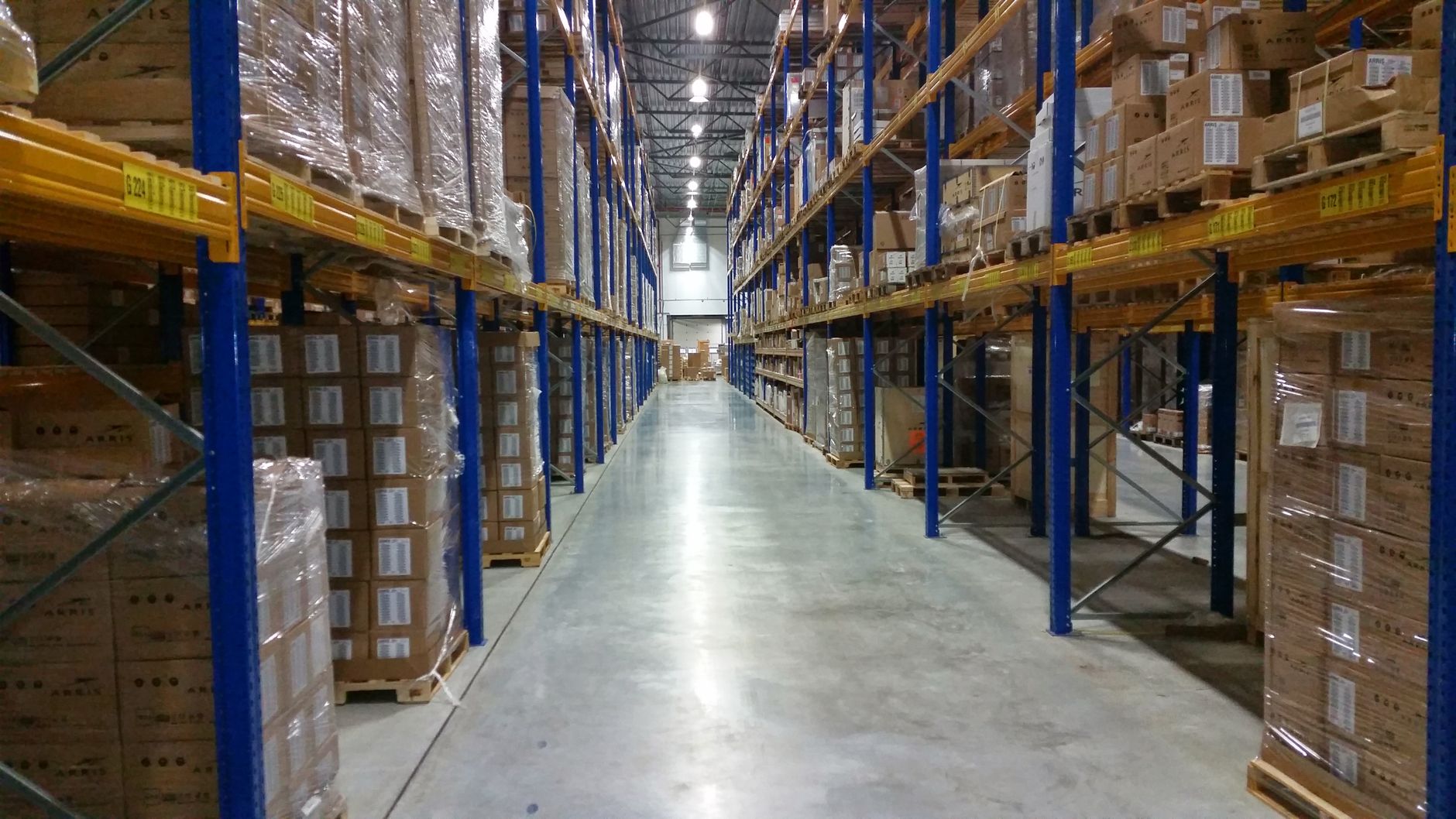
Most marine supply distributors handle a steady mix of heavy and light goods. Hardware and parts pallets come off inbound trucks, go into reserve racking, and return to pick faces and dock lanes through the day. Much of that travel follows the same few aisles, driven again and again by people who are also taking orders, checking receipts and answering the phone.
The floor carries real risk. According to OSHA, about 1.5 million workers operate over 855,900 powered industrial trucks, and the agency estimates roughly 85 forklift fatalities and 34,900 serious injuries a year. These are older estimates from a regional OSHA directive, but they show how much forklift traffic moves through shared floors every day.
The repeat work is where the hours go. A pallet that sits in staging because the only driver is at the far dock is a cost that rarely appears on a report. It shows up as a late outbound cutoff, a counter clerk who walks back to the dock, or an overtime shift on a Friday.
What are the main benefits?
The first benefit is consistency. A route that runs the same way at the start of the day and at the end of the shift leaves fewer surprises, fewer shortcuts and fewer pallets stranded in the wrong lane. Your staff spend less time hunting for the next load and more time on the counter, the phone and the customer who needs one specific part.
The second is coverage outside the busiest hours. Inbound trucks often arrive in clusters, and outbound cutoffs bunch up in the afternoon. A forklift that runs reserve moves during a second shift lets the day crew start with staged pallets rather than a backlog, and the building keeps moving freight after the crew has gone home.
The third is fewer manual trips through busy aisles. A robot on a mapped route does not remove forklift risk, and it still needs clear walkways and trained people nearby. It does cut the number of manual forklift passes a person makes through the same aisles where pickers and counter staff are working, and that is where most shared-floor contact happens.
How does the robot work there day to day?
Before any move, the site is mapped. Aisles, dock doors, racking heights, floor slopes and staging lanes are recorded, and the route is set around them. Walkways and office doors are marked as keep-clear areas, so the route never depends on someone stepping aside.
Once it is running, the forklift takes a pallet request from the warehouse system or from a staff member at a terminal. It drives to the pickup point, lifts, travels its route, and sets the load in the assigned lane. If an obstacle blocks the aisle, it stops and waits until a staff member clears the way and the route resumes.
Between tasks, the robot returns to a charging point, and charging is scheduled so a unit is not pulled from a dock during a truck unload. Remote monitoring shows status and faults, and when a problem needs hands, the service team dispatches on site. Speed is set for the building rather than for the machine's maximum, because a steady pace keeps the route predictable for the people working around it.
Which areas of the building does it cover?
The best first areas are the ones where a route repeats and the floor stays clear. Most marine supply buildings have three or four of these, and the zones below are the usual candidates. Start with one zone, prove the route, then add the next.
We would not pick areas by floor size alone. A large outdoor yard with mixed traffic can be a harder first site than a smaller indoor building with clean aisles and a single dock. Those are the sites where we spend more time on the assessment before we quote a lease, because the route and floor conditions decide the fit.
How does it work alongside your existing staff?
A robot does not replace the whole crew, and a site that tries to run with no staff on the floor is not one we would recommend. The forklift handles fixed moves. People handle damaged pallets, hazardous material paperwork, the counter, orders that change at the last minute, and the daily shift check.
The projected growth is small. According to one third-party occupational outlook, employment for industrial truck and tractor operators is projected to grow 1.1% from 2024 to 2034, which it describes as slower than average for all occupations. Slow growth means your crew may not expand much, so each route a robot covers is one less route your team must cover on every shift.
Training is part of the work. Staff learn how to read the robot's status, clear an aisle safely, and know when to call for support. We train your staff during deployment and service the unit nationwide with on-site dispatch and remote triage, so a fault is handled by a team that knows your building.
What drives the savings?
The main driver is labor hours on repeat moves. Each pallet move a robot takes is a trip a person does not make, and across a week of shifts those trips add up. The hours saved depend on how many moves repeat, how long the routes run, and how much time the crew now spends waiting for a driver or searching for a load.
We have not found published hours-saved figures for marine supply sites that we can verify, so we will not offer one. Measuring your own floor is the honest route. The site assessment records your repeat moves, dock timing and crew hours, and those numbers, not an industry average, are what the lease is quoted against.
Labor savings also depend on the handoff. If a person still walks each pallet from the dock to the lane after the robot delivers it, the saving disappears, so the handoff is planned with your staff before deployment. Track damage, incidents and overtime on your own floor after go live, and compare them with the numbers you measured before.
What can the robot not do?
It is not a general-purpose forklift. It handles a defined pallet route on a mapped floor. It will not judge the condition of a damaged load, handle an unmapped ramp, or work an open yard in heavy rain without a planned route and a suitable surface.
Some loads stay with a person. Hazardous materials, oversized or unusually shaped pallets, and anything that needs a visual check before it moves belong with a trained operator. Floor condition matters too. Cracked concrete, standing water and heavy debris can stop a route until they are cleared.
Upfront cost is often the first hurdle, and one market report cites high initial capital expenditure as a barrier to adoption. Leasing through financing spreads that expense over the lease term. The payment comes in the quote, after the site assessment shows the route and floor needs, and a robot that does not fit the building makes a poor lease, so we say so when it does not fit.
How do you get started?
Start with a free site assessment. We walk the floor, map the aisles and docks, identify the repeat moves, and check whether the building suits the machine. We then pick the right robot for the site and quote the lease. The payment comes in that quote, so you can compare robot lease options side by side before you decide.
We are a commercial robot integrator. We pick the robot, lease it through financing, deploy and integrate it, train your staff and service it nationwide. You work with one partner for the lease, the deployment, the training and the service, and the same team answers when something needs attention.
The sensible next step is a conversation about your repeat moves and your floor. Bring your pallet counts, dock layout and shift schedule. We will tell you whether autonomous forklifts for marine supply distributors fit your site, and if they do not, we will say so.
Frequently asked questions
Want an autonomous forklift at your marine supply distributor?
Tell us about your site. We will recommend the robot, quote the lease, and keep it serviced.