

Key takeaways
- Paper distributors lose forklift time to empty travel between storage and dock doors.
- Repeat roll and pallet moves follow a predictable schedule, which suits autonomous forklifts.
- Staff stay on picking, inspection and loading while the robot covers the repeat runs.
- Savings depend on your own routes, so measure empty travel before you decide.
- Start with one leased unit, and get the lease quoted after a free site assessment.
How can autonomous forklifts for paper distributors help?
Autonomous forklifts for paper distributors take over the repeat moves that tie up people and machines all shift long. A typical run pulls a full pallet or a heavy roll from reserve racking, carries it to a staging lane, and brings it to the dock door where a trailer is waiting. The forklift follows a mapped route, stops at marked locations and returns for the next job without a driver riding along on every leg.
The benefit is clearest where the work repeats. Outbound schedules at a paper distributor are set by truck departures and customer orders, so the same storage to dock pattern comes around day after day. That is the kind of work an autonomous forklift handles well, because it runs a fixed loop consistently. Your forklift operators then spend their time on tasks that need a person, such as checking roll condition, building mixed pallets and reconciling counts.
The sections below cover the staffing pressure behind the decision, where forklift time goes today, the main benefits, how a shift runs, which areas the robot works in, how staff and robot share the work, what drives the savings and what it cannot do, and how to start.
What pressure does this put on paper distributors today?
Most paper distributors are not short of orders. They are short of people for the physical jobs that move product. A 2026 Supply Chain Hiring Outlook reports average turnover of 11.6 percent across warehouse and distribution operations, according to that outlook. The survey behind the figure is not named, so treat it as a planning number rather than a fixed benchmark for your site.
The 2025 State of Warehouse Labor Report found that most respondents reported facility turnover below 10 percent, but a notable share reported 20 percent or higher. Forklift operators, pick and pack workers and shift leads were named the hardest roles to staff. For a paper distributor, the forklift seat is often the hardest to keep full, and each open shift pushes roll and pallet moves onto whoever is left.
The pressure shows up in automation plans too. A study fielded in January 2025 of 217 professionals involved in robotic automation, reported by Supply Chain 247, found that 55 percent cited labor availability as the top motivator for automation, and 42 percent cited labor costs. The sector itself is sizable. According to Data USA, the paper and paper product merchant wholesaler workforce, NAICS 4241, was about 40.5k in 2024, and in 2022 the top state had 1,215 establishments, with California and New York having the most.
Where does forklift time go today?
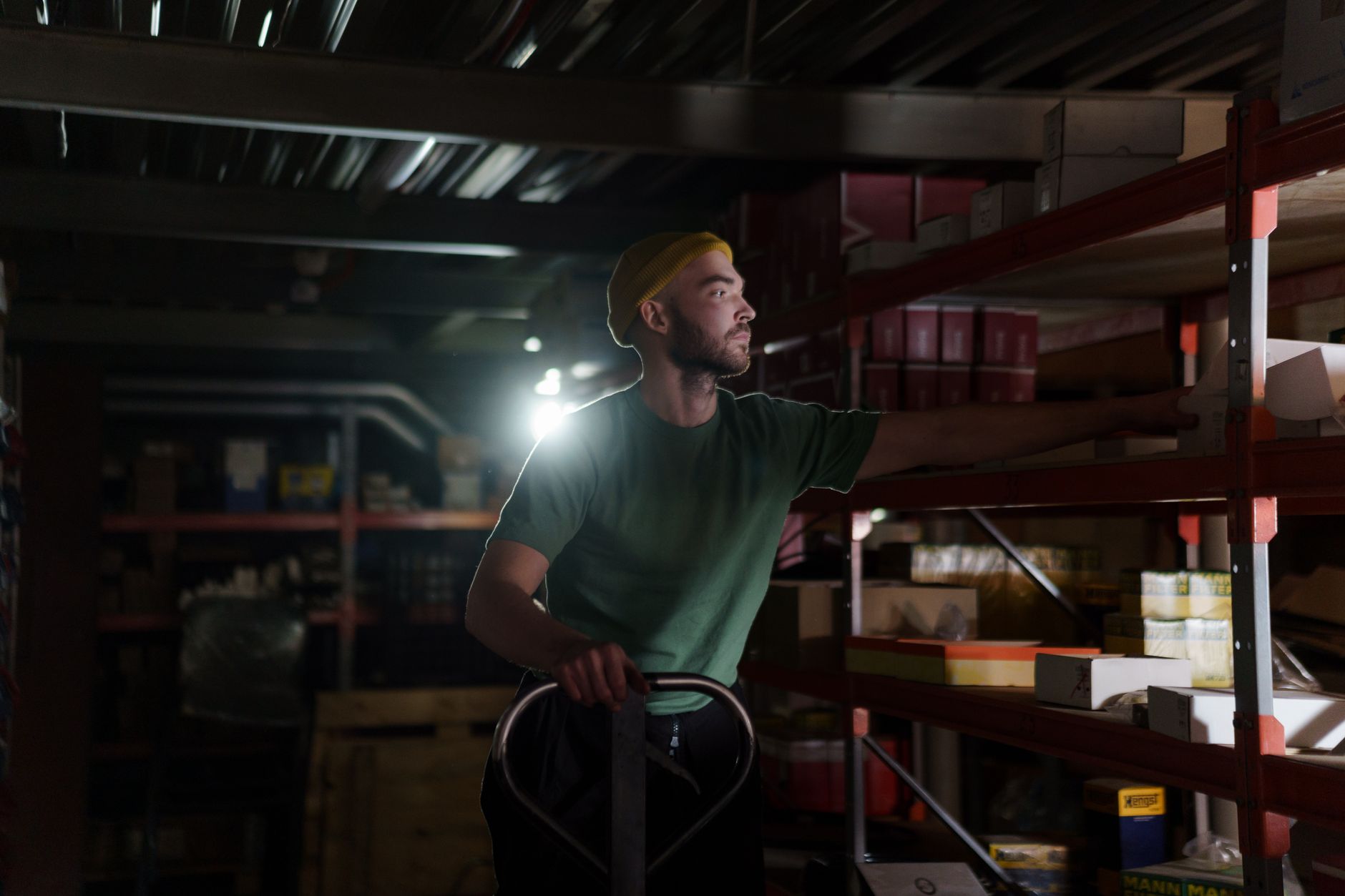
Ask most distributors where forklift hours go and the answer is rarely the lift itself. The larger loss is travel with nothing on the forks. A fleet software vendor's analysis, which is vendor-reported and undated, says that empty, or deadhead, travel accounts for 35 to 50 percent of total travel time.
A case study of an automotive parts plant found that warehouse and transport forklifts spent 17 percent and 25 percent of their time in the parking area, respectively, and the authors treated that time as lost. Parking is not travel, but it shows the same pattern: the machines are available while the work is not arriving when it could.
At a paper distributor this often shows up in the repeat legs. A roll is staged far from its dock door, a forklift returns empty after drop-off, and the next pick waits for a free operator. Each empty leg is small on its own. Across a shift of repeat runs, the total is where the hours hide, and it is the part of the day that a fixed route can address.
What are the main benefits for a paper distributor?

The first benefit is more time spent moving product rather than waiting to move it. Route work is where autonomous forklifts for paper distributors earn their place. A university thesis simulation found that improved routing reduced forklift travel distance by 11.1 to 35.6 percent. That is a simulation, not a site result, but it shows the range that better routing can reach, and it is a reason to look at your routes before anything else.
The second benefit is predictability. Dock appointments and carrier pickups have fixed times, and a late pallet can cost a trailer its departure. When repeat runs happen on a set schedule, staging lanes are ready before a trailer is backed in. The robot does not call out sick or stretch a break, so the schedule holds on the early and late shifts that are hardest to cover.
The third benefit is that people move to the work that needs them. Operators still matter. They spend more time on picking accuracy, roll inspection, damage checks and count reconciliation, and less time waiting in line for the next free forklift. When forklift operators are the hardest seats to fill, moving routine runs to the robot keeps the people you have on the work where a person makes the difference.
How does the robot work on a typical shift?
Setup happens before the shift starts. Routes are mapped to your floor, dock doors and racking, and the warehouse system or a simple task list tells the robot which pallets and rolls to move. The team sets the priority, such as trailers due first, and the robot works through the queue in that order. Each change to the layout is entered as a route update, not a rebuild.
During the shift the robot moves between reserve storage, staging lanes and dock doors on its loop. It stops at marked locations, waits when a path is blocked and follows the aisle rules your staff already use, with a few additions for the places it can and cannot go. Operators can take manual control for exceptions, so a damaged load or an odd pallet never has to wait in the robot's queue.
At the end of the shift, the robot returns to its charging point, and the team reviews its log for stops, blocked paths and missed locations. That log is what turns the first few weeks into a tuned route plan rather than a set of guesses. Over time the queue order, the staging positions and the aisle rules get adjusted to match what the log shows.
Which areas of a paper distributor does it work in?
A paper distributor is a chain of linked zones, and the robot works best in the ones with the most repeat travel. Start where the same type of move happens every shift, and leave the zones that need hand work with your people. The sequence below is a common starting point, not a rule.
Receiving and reserve storage usually come first, because inbound pallets and rolls travel from the dock to racking on a set pattern. Staging and dock doors come next, since outbound loads are sorted by carrier and must reach the right door on time. Replenishment of pick faces can follow where the aisles are wide enough and the picks are predictable enough to schedule.
Some areas stay with people. Mixed-case picking, damaged-stock review and any load that needs a visual check of a roll remain staff work. Your site assessment shows which zones have clear, repeatable routes and which need a layout change first, so the first leased unit goes where it will earn its keep.
What drives the savings, and what can the robot not do?
Savings come from four places: less empty travel, less idle time at staging, fewer late or missed moves, and staff hours freed for work that needs a person. The hours that matter are the ones your own logs already show, counted per shift, so start there. The published ranges are useful as a test, not a promise. The 35 to 50 percent empty travel share and the 11.1 to 35.6 percent travel reduction both describe other operations.
Measure your empty travel and waiting time for a few weeks before the site assessment, then compare the robot's log after go live. That comparison tells you more than any general range, and it is the basis for the quote. Hours saved on repeat runs do not all turn into hours cut, so decide in advance whether freed time goes to picking, checking or growth.
The robot has limits. It cannot handle loads beyond its rated capacity, oversized or irregular items, or unlabeled pallets without a person checking them. It needs clear, repeatable paths, so trailers left in aisles, unplanned stacking and frequently changing layouts reduce its usefulness. It does not judge whether a damaged roll can ship. Those decisions stay with your team.
It also does not manage itself. Routes need maintenance when the layout changes, and someone has to review the log. A robot maintenance service plan with remote triage and on-site dispatch covers the equipment, but the floor still needs an owner.
How do you get started?
Start with a free site assessment. We map the floor, review your repeat moves, dock schedule and aisle widths, and recommend the right robot for the site. Most distributors begin with one leased unit and a phased deployment, so the floor keeps running while the robot goes live. The robot is leased through robot lease financing, and the payment comes in the quote after the assessment.
Deployment covers integration with your warehouse system, staff training and go live support. After go live, a robot maintenance service plan covers remote triage and on-site dispatch, and a backup robot program keeps a stopped unit from stopping your dock. For a paper distributor, the first useful step is measuring empty travel and repeat moves for a few weeks, so the quote reflects your floor and not a generic layout.
If you want to see how the numbers look for your warehouse, request the site assessment and bring a few weeks of shift logs. A good assessment should tell you plainly where the robot fits and where it does not, and if the answer is a smaller first step, that is a sound place to begin.
Frequently asked questions
Want an autonomous forklift at your paper distributor?
Tell us about your site. We will recommend the robot, quote the lease, and keep it serviced.
Sources
- 2025 State of Warehouse Labor Report
- 2026 Supply Chain Hiring Outlook
- Warehouse robotics adoption trends 2025, Supply Chain 247
- Data USA profile for NAICS 4241
- Fleet software vendor analysis of forklift travel (vendor-reported, undated)
- Vilnius University thesis on forklift travel routing
- Automotive parts plant forklift utilization case study