
Key takeaways
- Seed bags move along fixed corridors, so the same paths stay clear every shift.
- Hand-carried pallets between racks and docks are the work most worth automating first.
- Vendor-reported figures point to hours saved per shift, but a site assessment measures your own travel time.
- Staff shift from hauling toward exceptions, lot checks and dock coordination.
- Robots are leased through financing, and the payment comes in a quote after a free site assessment.
How can autonomous forklifts for seed warehouses help?
Autonomous forklifts for seed warehouses take over the repeat pallet moves that crews now make by hand, carrying heavy bags between storage racks and loading docks. The main benefit is less time spent on those trips, fewer heavy lifts by people, and the same routes cleared every shift. For a seed operation, that matters because the bags are heavy, the moves follow a pattern, and volume rises and falls with planting seasons.
The fit is strongest where the work repeats. Palletized bags travel from storage to dock doors along the same corridors day after day. A vehicle that follows those corridors exactly is easier to keep reliable than one improvising across a floor that changes often.
Published figures specific to seed warehouses are scarce, so the numbers in this article come from wider warehouse and vendor sources. Treat them as a starting point for measuring your own site, not as a forecast for yours.
What does hand-moving seed bags take from a warehouse today?
Most seed warehouses run on the same sequence: receive bags, put them in storage, pull them for outbound loads, and stage them at the dock. Each handoff is a person with a pallet jack or a forklift, walking the same corridors for hours. The work is physical, and it falls on the people who are hardest to replace in a tight labor market.
Labor is the constant pressure. Warehouses draw from the same local workforce, and turnover means someone new has to learn the racks, the lifts and the dock rules all over again. According to the Bureau of Transportation Statistics, citing County Business Patterns, US warehousing establishments grew by just over 100% from 1998 to 2005. More sites drawing on the same labor pool makes each open role harder to fill.
Scale matters too. A large operation runs many moves each shift, so hand hauling adds up across the whole building. The people who do that work know which bags go where, and their time is worth protecting.
What are the main benefits?
The first benefit is hours. A logistics provider's automated forklift infographic says one unit can save 3 to 4 hours of travel time per 8-hour shift when moving pallets point to point. That is a general claim, not a documented case, so time your own travel before you count on it.
The second is throughput. In a vendor-reported study of a third-party logistics warehouse, an autonomous vehicle increased productivity by 33%. That is one vendor's result at one site, not a forecast for seed bags, but it shows the direction a steady route can take.
The third is consistency. A robot runs the same path at the same pace, so dock timing becomes easier to plan. Your crew knows when the next load will reach the door, and fewer trailers wait on pallets that are still sitting in storage.
How does the robot work day to day?
The vehicle is mapped to your building. Routes run between storage racks and dock doors, and the robot follows them, slowing or stopping when a person or obstacle enters its path. A move request comes from your system or a staff member, and the robot picks up the pallet, carries it and sets it down at the assigned spot.
Your team keeps control of what moves and when. Staff set the day's priorities, confirm lot and bag counts, and handle anything the route does not cover, such as a damaged pallet or a load that needs a second look before it leaves.
Most of the day is one loop repeated: pick up, carry, drop, return. That loop depends on the corridors staying clear. A blocked aisle or a pallet staged in the wrong place is a common reason routes slow down, so keeping the path clear is part of the routine.
Which areas of a seed warehouse does it work in?
A seed warehouse has several areas, and the robot earns its place where pallets move the same way each day. The zones below are a common footprint. Your layout may group them differently.
The strongest candidates are the paths between inbound trailers, storage, the bagging line and the dock doors. Each is a fixed corridor with a clear start and end point, which is the pattern automated routes handle best.
Keep the more variable work with people for now, such as irregular pallet builds, odd-shaped loads, or any spot where the floor changes often. The site assessment sorts out which areas fit before any route is set.
How does it work alongside your existing staff?
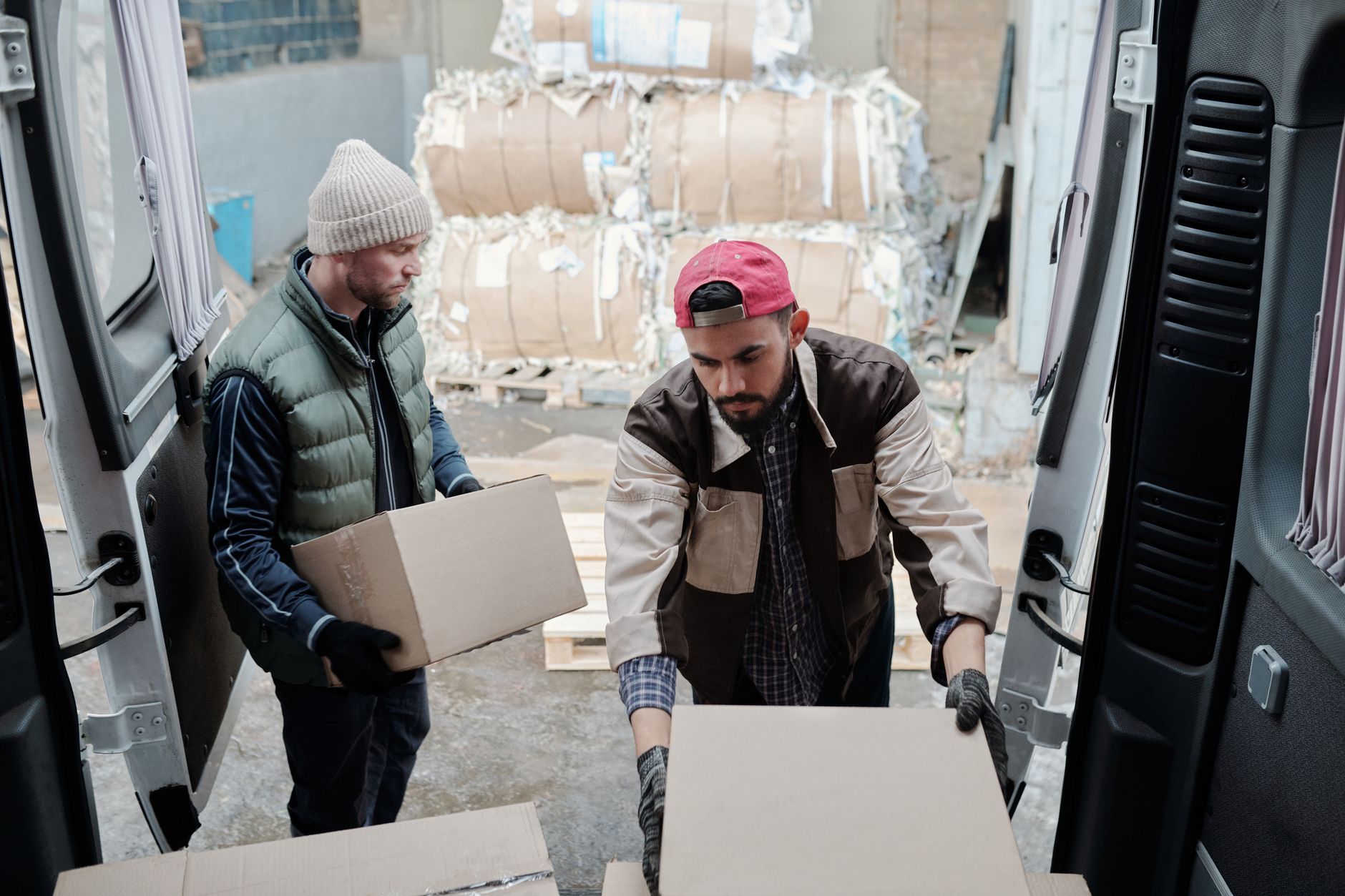
The robot does not replace the team. It takes over the repeat hauling so people can spend more time on work that needs judgment: checking bag counts, coordinating dock timing, building outbound loads and catching problems early.
Staffing changes do happen in some sites, and the change is about job type more than headcount on paper. In a single vendor write-up of an AMR deployment, 32 of 36 forklift operators were redeployed to other work, according to that write-up. The AMRs in that case were not forklifts, and the write-up has not been independently verified, but it shows the kind of change to plan for.
Our design goal is a smaller hauling crew, with the same people available for exceptions, loading, lot checks and dock work. Plan the handoff before go live, so the team knows who answers when the vehicle stops on its route.
What drives the savings?
The savings come from labor hours and how they get used. The main drivers are the travel and hauling hours removed from each shift, the steadier flow that cuts stop-and-wait time, and the overtime that can ease during peaks. Results depend on how many moves your site makes and how many shifts run.
Vendor material gives a sense of scale. According to one vendor case study, an autonomous tugger, a cart-pulling vehicle, automated 60 labor hours each week. In a separate AMR study, the vendor reported a 91% reduction in manual material handling. Both come from other kinds of facilities and are vendor-reported, so treat them as scale indicators, not targets.
The honest way to build your number is to log hauling hours for two weeks, match them to the routes, and go through the figures during the site assessment. The hours your team gets back are the savings, and your team decides where to put them.
What can an autonomous forklift not do?
It runs fixed, mapped routes. It is not a general worker that improvises a new job on the spot, and it will not handle every pallet configuration in the building. Plan around that limit rather than against it.
Expect a planning period. Layout changes, new dock doors or a new storage plan mean the route is mapped again and tested before it goes back into service.
A robot also needs a plan for downtime. Ask what happens when a unit is off its route for service, and make sure manual moves can continue during that time.
- Reroute itself around a corridor that stays blocked for a long time
- Make judgment calls on damaged bags, mixed loads or unlabeled pallets
- Replace the people who check lots, counts and paperwork
- Run well on a floor that is not mapped or not kept clear
How do you get started?
Start with a free site assessment. We map the building, walk the storage and dock routes, review your move volume and recommend the right vehicle for the site. Nothing is committed at that stage.
Robots are leased through financing. The payment comes in the quote after the free site assessment, once the route scope and deployment plan are clear. Many operators begin with one leased unit on one route, then add units as the results show up in their own hours. These robot lease options are built around the site.
After the quote, we integrate the vehicle with your dock and storage processes, train the staff who work beside it, and provide go live support through the first weeks. Service covers units nationwide, so one partner handles deployment and ongoing support for autonomous forklifts for seed warehouses.
Frequently asked questions
Want an autonomous forklift at your seed warehouse?
Tell us about your site. We will recommend the robot, quote the lease, and keep it serviced.
Sources
- Automated forklift infographic from a logistics provider
- Autonomous tugger case study, vendor-reported
- Autonomous vehicle warehouse case study, vendor-reported
- AMR deployment case study, single write-up
- Bureau of Transportation Statistics, State Transportation Statistics Table 6-1
- News summary of US Census County Business Patterns