
Key takeaways
- Most heavy hauling in a kitchen runs the same routes every shift, which suits a mobile robot.
- The robot takes the carrying, while cooks, prep staff, dishwashers and shift leads keep the kitchen running.
- Start with one leased unit on one fixed route, then add routes once the first one runs cleanly.
- Injury and turnover figures on this page come from vendor compilations and safety reprints, so measure your own kitchen too.
- The payment comes in a quote after a free site assessment, so the number reflects your building.
How can autonomous mobile robots for commercial kitchens help?
Autonomous mobile robots for commercial kitchens take over the repeated hauling that fills a shift. A robot carries heavy bins, trays and stock carts between receiving, storage, prep, cooking and the dish room along routes that are set once and then repeated, so cooks and dishwashers spend their steps on food and cleaning instead of on carts.
The main benefit is less manual carrying of heavy loads on busy prep lines. Fewer trips with full hotel pans and loaded bins mean fewer strained backs and shoulders by the end of a long shift, and a steadier pace when the lunch rush arrives. The robot does not replace the people who cook, plate and wash. It removes the part of the job that is hardest to repeat.
If you run a kitchen, the useful question is how well a fixed route fits your building, and that is answered on site. We pick the right robot for the space, lease it through financing, deploy and integrate it, train your staff and service it nationwide. The payment comes in a quote after a free site assessment.
What problem does hauling create in a commercial kitchen today?
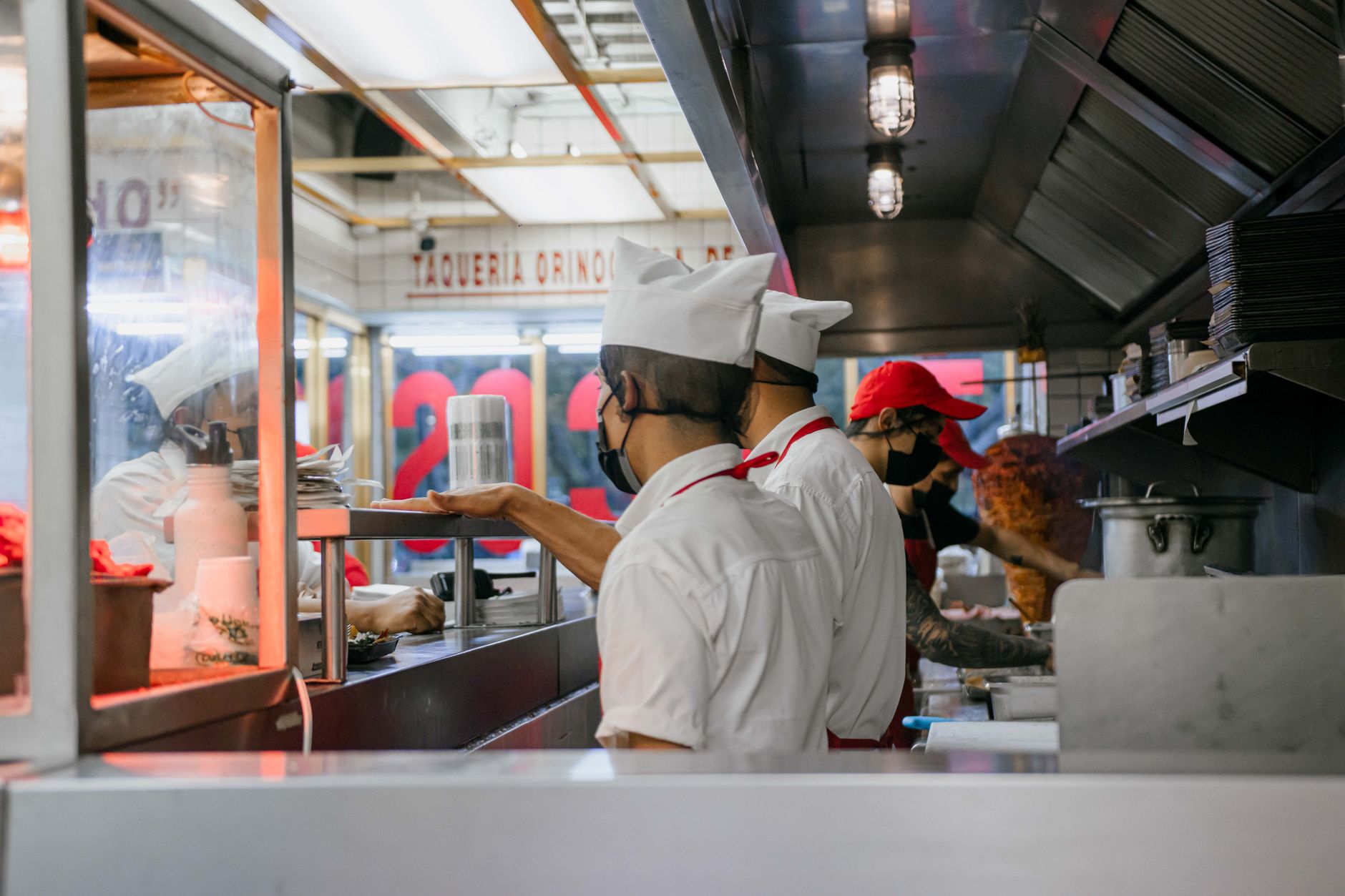
A commercial kitchen runs as a loop of carrying. Stock arrives at receiving, moves to dry storage and the walk-in, travels to the prep tables, goes to the cooking line, and comes back as soiled ware to the dish room. Each leg is done by hand, often with a heavy bin, a full hotel pan or a cart of trays, and the same person may walk the same path many times in one shift.
The people doing this work are already stretched. According to a 2025 restaurant turnover compilation, which repeats figures from a restaurant scheduling software vendor, back-of-house staff turnover is about 43% a year and front-of-house turnover is about 41%. A separate 2025 vendor statistics page puts average restaurant employee turnover at about 75%. These are vendor-reported figures rather than government statistics, but they point the same way: a new hire has to learn the carrying routes while the line is already running.
A 2026 South African study of kitchen staff in Cape Town reports the highest churn in kitchen departments. That is one city and one country, but it points to the same pattern, with the loss landing hardest on the kitchen departments.
Why does manual carrying lead to injuries in food service?
Overexertion and bodily reaction were the leading causes of food service injuries, according to a safety consultancy reprint of federal data. Strains, sprains and tears made up 42% of days-away cases in food service in 2019 in the same reprint. Another safety reprint says overexertion and lifting account for 37% of restaurant injuries and illnesses, though it does not name the table behind that figure.
NIOSH, citing Bureau of Labor Statistics data, reports that musculoskeletal injuries from overexertion were about 30% of occupational injuries that resulted in time away from work. The same data show that laborers and freight, stock and material movers had the highest number of overexertion injuries. A porter or line cook moving a full bin is doing a smaller version of the same motion, over and over.
Incidence rates disagree across the reprints. One cites 2.8 injury and illness cases per 100 full-time food service workers in 2019, from federal data, while another cites 5.7 per 100 for 2018 from CDC. Treat any exact rate as something to check against your own loss records, not as a benchmark.
What are the main benefits for kitchen operators?
The benefits show up in four places on a typical shift.
A fixed route is also easier to review than habits built up over years. A manager can see where a line slows down, check whether a stop is in the right place, and adjust the layout or the timing. That is a practical advantage over informal carrying that only the most experienced person knows how to do.
The clearest cases are meal tray transport between the dish room and the pass, and the morning stock run from the walk-in to the prep tables. Those trips repeat the same way every day, which is why a robot fits them better than a one-off errand.
- A fixed route runs the same way at the end of a shift as at the start, so the carrying does not slow down when people are tired.
- Cooks stay on their stations instead of leaving the heat and the pass to fetch stock or clear trays.
- The prep team gets its bins when it needs them, so the line does not wait on a cart still sitting in the back hall.
- A steadier process gives a new hire one less thing to learn in the first week.
How does the robot work in a kitchen day to day?
Day to day, the robot runs the stops your team agrees on during site mapping. A cook or porter loads a bin or cart at a station, makes the call and destination step we set up in training, and the robot carries the load to the next area. Staff unload at the destination, and the robot moves on to the next call or returns to its charging spot.
Routes are where most of the setup time goes. We map the building, note the floors, thresholds and dock doors, and set the stops so the robot avoids the busiest spots during service. Staff keep their place on the line, and the route is set to keep people working by hand out of the path.
Timing matters as much as the route. Early delivery runs, mid-service trips and end-of-night dish returns each have their own rhythm, so the schedule is set for each part of the day instead of being left to chance.
Which areas of a kitchen does the robot cover?
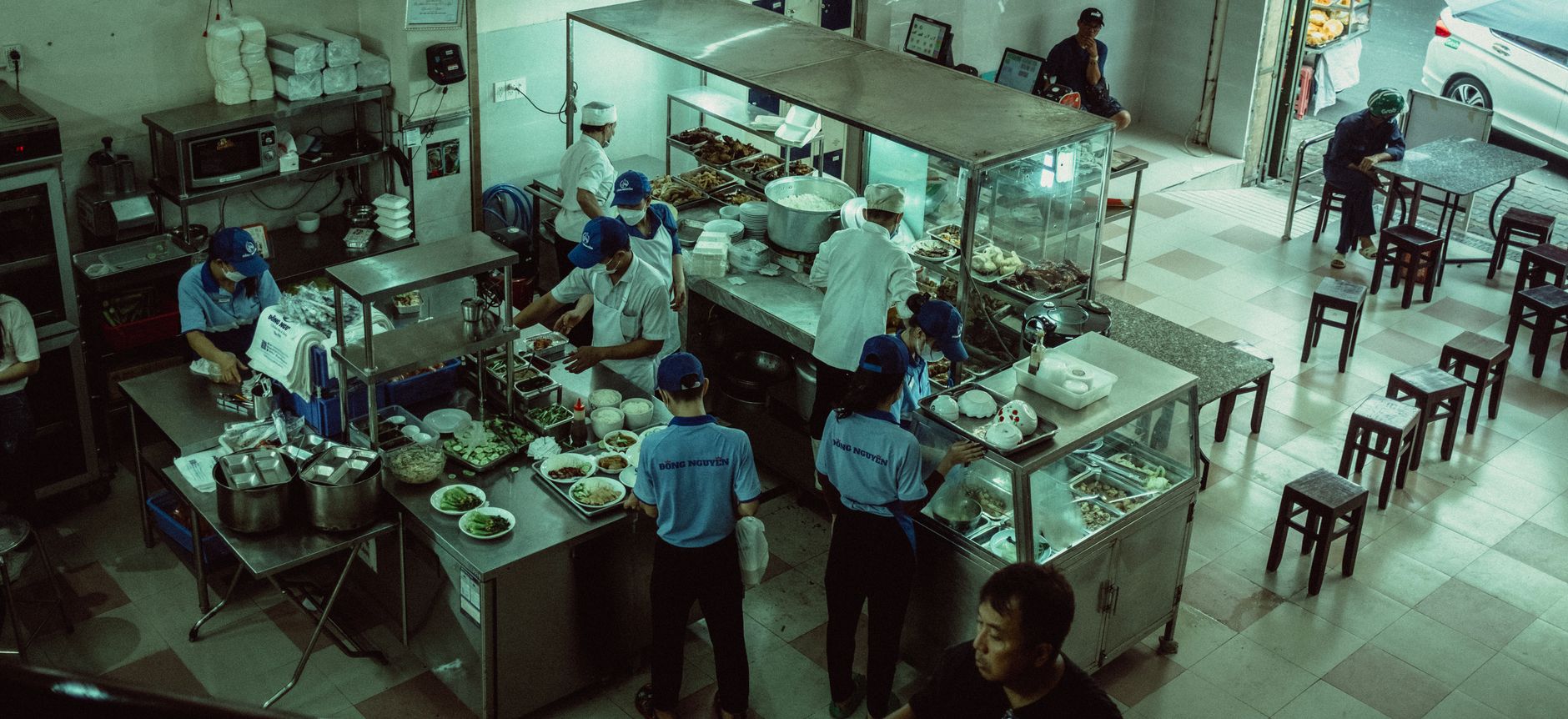
Autonomous mobile robots for commercial kitchens earn their place where heavy material moves between fixed points, and that is a short list in most kitchens. The zones below are the areas we plan for most often. Each has its own floor, traffic and load pattern, which is why the site assessment comes first.
Not every corner needs it. Small items a person can carry in one hand, and jobs that change every hour, usually stay with staff. The robot takes the repeated legs, and the team keeps the rest.
How does the robot work alongside your existing team?
The robot does not run the kitchen alone, and it does not replace the team. A kitchen with a robot still needs cooks, prep staff, dishwashers and a shift lead. The robot takes over the carrying that pulls those people away from their stations, so the same team spends more of its shift on food and on cleaning.
A practical approach is to keep the team at its existing size during the first weeks and measure how many carrying steps move to the robot. If a person is still pulled from the line to handle a stop, we adjust the route, the call points or the timing. Training covers the call steps, the safety stops and what to do when a route is blocked, so anyone on a shift can run it.
Our team trains your staff as part of deployment, then checks in during go live support so the first service days run with people who know the routine.
What drives the savings, and what can the robot not do?
Savings come from hours that were spent carrying, from fewer injury-related absences and from less retraining on the same routes each time turnover pulls someone off the line. We do not have a verified hours figure for kitchens on this page, so measure your own carrying time for a few weeks before you plan. Your shift logs will give a better range than any general number.
The limits matter as much as the gains. The robot does not cook, plate, wash dishes or lift a load onto a high shelf for a person. It cannot carry a load that is too heavy or too wide for its platform, and it needs clear floors and a route that has been set. Tasks that change every hour, such as a special run to a far table, are usually a person's job.
The building also decides the fit. Stairs, a high threshold or a dock that is not level can rule out a route, and we will say so in the assessment rather than force a fit.
How do you get started with a leased robot?
Start with a free site assessment. We walk the kitchen, measure the routes between receiving, storage, prep, cooking and the dish room, and note the doors, floors and peak hours. The assessment shows which zones make sense first and whether your building is a good fit.
Once the assessment is done, the lease is set up through financing. The fixed robot lease payment comes in the quote that follows the assessment. We pick the right robot for the site, deploy and integrate it, and set go live support for the first service days. A sensible first step is one leased unit on one fixed route, then a second route after the first one runs cleanly.
After go live, we service the robot nationwide, so a kitchen that starts with one unit is not left to manage repairs alone. Until a unit is back in service, staff keep their usual manual routes, and the rest of the kitchen keeps running.
Frequently asked questions
Want a warehouse robot at your commercial kitchen?
Tell us about your site. We will recommend the robot, quote the lease, and keep it serviced.
Sources
- 2025 restaurant turnover statistics compilation
- Restaurant employee turnover statistics, 2025 vendor report
- 2026 South African study of kitchen staff churn
- Food service injury statistics reprint, BLS-based data
- Restaurant lifting injury statistics reprint
- NIOSH update on overexertion injuries, citing BLS data