

Key takeaways
- Roll and stack hauling between converting lines, storage and the dock is repeat work that suits fixed routes.
- Robot order and labor pool figures show automation is spreading, but independent box-plant hours data is thin.
- A robot plus a smaller crew keeps machines running when roles stay hard to fill.
- Savings should be measured on your own routes before any number is promised.
- Start with a free site assessment and one leased unit on the busiest route.
See what a autonomous mobile robot costsRun the numbers in the ROI calculator
How can autonomous mobile robots for corrugated box plants help?
Autonomous mobile robots for corrugated box plants help most where crews spend shift time moving heavy material over the same paths. In a plant with a corrugator, converting machines, a finished goods area and a loading dock, that means paper rolls, sheets, bundles and stacked cartons traveling between the same points hour after hour. An autonomous mobile robot follows set routes, stops for people and returns to charge, so the operator can stay at the machine.
The gain is not a promise of fewer people. It is shift time returned to work that needs a trained operator, such as setup, quality checks and clearing jams, while the robot takes the trips that repeat all day. When those trips fall on the same few crew members, the line waits whenever they are away from it, and overtime is a poor fix for a gap that repeats every shift.
We lease these robots through financing, deploy and integrate them into your workflow, train your staff and service them nationwide. The rest of this page covers the problem at a typical plant, how the robot works day to day, which areas it serves, what it cannot do and how to start with a free site assessment.
Where does shift time go at a corrugated box plant today?
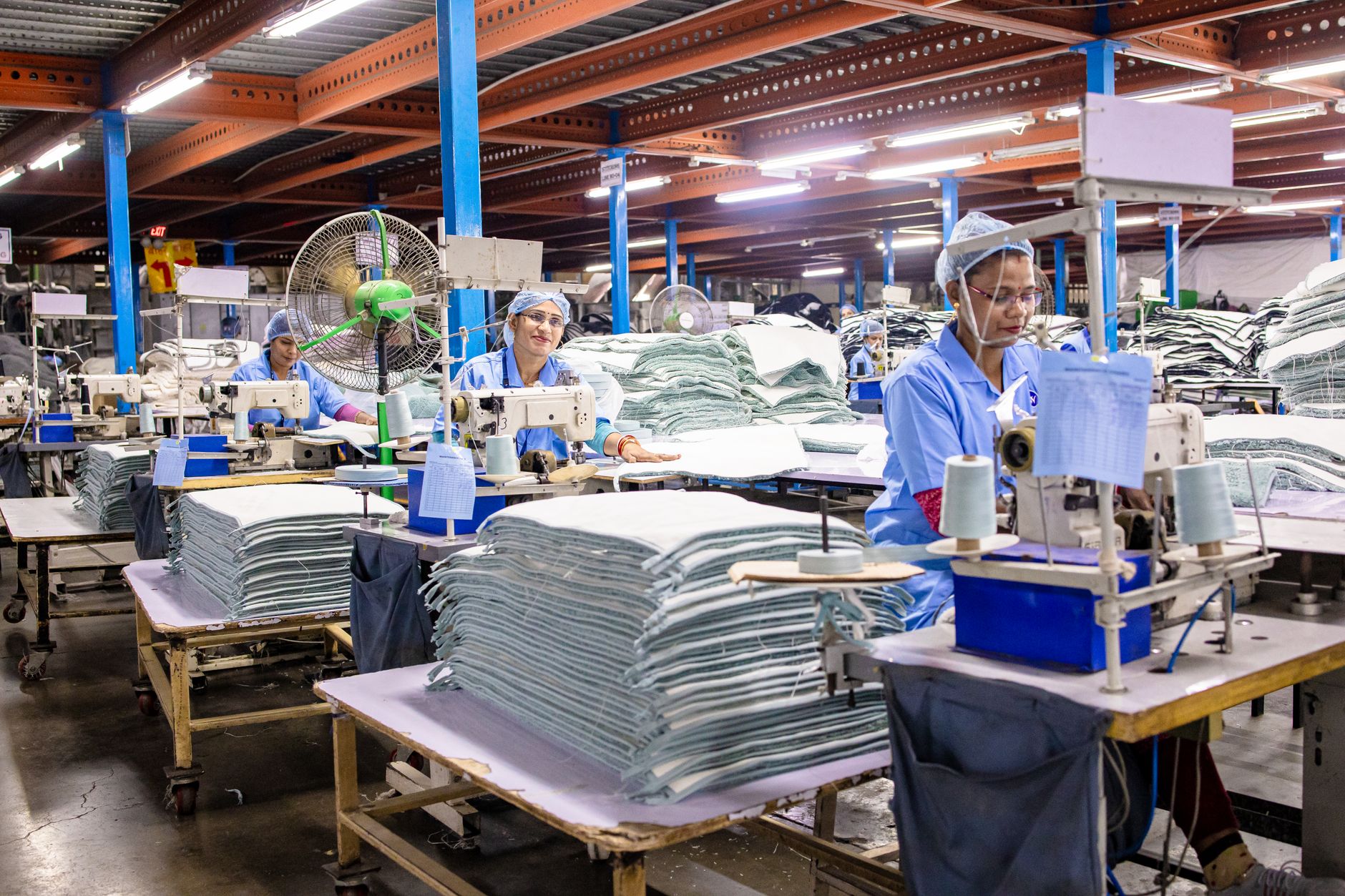
A corrugated box plant is a chain of machines that each need material on time. Rolls of paper come off storage and head to the corrugator, sheets come off the corrugator and move to converting, and finished stacks leave converting for storage and the dock. Much of that connecting work falls to forklift drivers, pallet handlers and machine crews who step away from their stations to carry material to the next point.
Those trips add up. When an operator leaves a converting line to fetch a roll or clear a stack, the machine waits, and the shift loses minutes that no one scheduled. When roles stay open, the people who remain get pulled into hauling, which leaves less time for setup, quality work and the machines that need them most.
The labor pool for this work is large on paper. According to the U.S. Bureau of Labor Statistics, the hand laborers and material movers group had 6,917,800 jobs in 2025, and it projects 4 percent growth from 2025 to 2035, about as fast as the average for all occupations. A national count does not tell you who will take a night shift in your town, which is why repeat hauling is worth taking off the crew even where people are available.
What are the main benefits for a box plant?

The first benefit is steadier material flow. A robot on a fixed route arrives on a schedule the crew can plan around, so the converting line is less likely to wait for a roll or a stack. Steady flow also makes it easier to see where the bottleneck really sits, because the waiting is no longer hidden inside a hauling habit.
The second is that trained operators spend more of the shift on the machine they were trained to run. The third is consistency across shifts. Routes and stop points stay the same at 2 am, on a holiday and on a short-staffed Saturday, which matters for a plant that runs several crews.
The fourth is fewer manual trips through the aisles where forklifts also travel. Fewer people carrying loads through shared space makes a simpler floor to manage, and it gives the safety lead a clear list of where people and mobile equipment cross.
How does the robot work there day to day?
A deployment starts with a site assessment and a map. We survey the routes between storage, the corrugator infeed, the converting cells and the shipping area, then set stop points at each machine and staging location. Staff load the robot at a station, it takes a route, and it delivers to a marked point where a person or a conveyor takes over.
The plant decides what the robot carries. Some sites use a robot with a conveyor top module to carry sheets from storage to box-making machines, which is one vendor's published example. Others use a cart-pulling robot to move carts of stacked product to the dock. The choice depends on the load, the route length and how the floor is laid out.
Between runs the robot returns to a charging point and waits. If a path is blocked, it stops and signals, and staff clear the obstacle or send the job by another route. The aim is predictable movement on a route the crew already knows, not speed for its own sake, and a supervisor can see every open job on the fleet view.
Which areas of the plant does the robot work in?
The robot works in the corridors where material crosses from one area to another, not inside the machine cells themselves. Six areas cover most of the hauling at this type of plant, and each one is a handoff point where a person would otherwise make a trip.
A first deployment usually starts in one or two of these areas, often the route with the most trips. Once the logs show how the time is spent, the route can grow to include the next handoff, and the same map and fleet view carry over.
How does the robot work alongside existing staff?
A robot does not replace the crew. It takes the repeat trips, and people keep the work that needs judgment: setup, roll changes, clearing jams, quality checks, and any move that needs a licensed driver in the shipping area. In practice the typical setup is a robot plus a smaller team, not a plant with no one on the floor.
One published 2023 summary of a corrugated maker shows how the split can look. That plant used outfeed conveyors and an automation system so that no forklifts were needed between the corrugator and converting machines, and fork trucks operated only in the shipping area. That approach uses fixed conveyors rather than mobile robots, but it shows one way a plant can divide the flow between fixed and mobile equipment.
Plan training for the people who load, supervise and clear the robot, and for the drivers who still work the dock. Clear escalation paths matter more on day one than any feature on the robot, because the first weeks are when staff learn what the robot does when a route is blocked.
What drives the savings, and how much time is at stake?
The savings come from hours moved off hauling. The best evidence we found comes from other industries and is vendor reported. In a furniture plant, operators spent an average of 9 hours per day walking materials across the facility. According to the vendor case study, two AMRs with 24 staging carts automated more than 9 hours of walking per day there. A furniture plant is not a box plant, so treat that as a measure to test on your own routes, not a forecast.
A second vendor case study, from a manufacturer using a tugger AMR, reports 60 labor hours automated each week. That is also vendor reported and from another setting. The useful question for your plant is how many hours your crew spends on the trips a robot would take, measured over a normal week.
Adoption is rising across industry. According to the Association for Advancing Automation (A3), as reported in trade press, North American companies ordered 36,766 robots in full-year 2025, up 6.6 percent in units from 2024, and revenue rose 10.1 percent. That was the sixth consecutive quarter of year-over-year growth. A3 does not break out mobile robots separately, so this figure covers robots broadly, not AMRs.
For your plant, the right way to measure savings is to log the trips and minutes on your own routes for a week, then compare the same measures after go-live. We do not give a savings figure before that measurement exists.
What can an autonomous mobile robot not do at a box plant?
A robot does not run a corrugator, load a roll clamp, change a die or fix a jam. It does not replace a driver for moves in the shipping area, and it does not handle loads or routes outside the design it was leased for. Dust, debris, wet floors, uneven thresholds and blocked aisles can slow it or stop it, so the floor is checked before go-live.
We also do not have independent, box-plant-specific figures for hours saved per shift or per week. The hours on this page come from other industries and from vendors, and the box plant examples we found report no hours figure at all. An honest pilot on your routes will show what your plant actually gains.
A robot also adds a system to maintain. It needs charging points, a network it can reach, someone who watches the fleet view and a plan for the day a unit is down. Service and spare unit coverage belong in the decision from the start, not after the first stoppage.
How do you get started with a robot at a box plant?
Start with a free site assessment. We walk the route between storage, converting and the dock, measure the paths, check floor conditions and charging points, and talk with the crew about where time goes. From that we recommend a robot type and a number of units, and we state what the setup requires.
The robot is leased through financing, and our lease options are built that way. The payment comes in the quote, and we give that quote after the site assessment, so you can compare it with the overtime and open roles you carry today. A sensible start is one leased unit on the busiest route, then more units once the logs show where the time goes.
Deployment and integration include route mapping, connection to your workflow, go-live support and training for the crew. Service includes on-site dispatch and remote triage, along with spare unit coverage, which lowers the risk that a single unit going down stops the route. If repeat hauling between converting and the dock is slowing your shifts, the next step is the site assessment.
Frequently asked questions
Upcoming manufacturing events
- Trade showBrats & RobotsNov 10, 2026Alliant Energy Center Exhibition Hall, Madison, WI
- Trade showMATE Farm & Ranch ShowFeb 11 to 13, 2027MetraPark, Billings, MT
- ExpoPFMA Expo 2027Feb 17 to 18, 2027Washington County Fair Park, West Bend, WI
- ExpoLouisville Facilities Maintenance ExpoApr 15, 2027Mellwood Art Center, Louisville, KY
Want a warehouse robot at your corrugated box plant?
Tell us about your site. We will recommend the robot, quote the lease, and keep it serviced.
Sources
- Fibre Box Association 2024 annual report
- U.S. Bureau of Labor Statistics, Occupational Outlook Handbook: Hand laborers and material movers
- A3 robot orders 2025, as reported by trade press
- Vendor example, corrugated sheet handling with a mobile robot and conveyor top
- 2023 summary of a corrugated plant automation approach
- Vendor case study, furniture plant walking hours
- Vendor case study, tugger AMR labor hours