

Key takeaways
- Pulp mills lose time to walking parts and bales between process areas on every shift.
- Fixed routes suit repeated moves from mill stores, maintenance shops and the bale warehouse.
- Reported hours saved come from other plants, so a site assessment should measure your own trips.
- Robots take over the walking while staff keep the repair, judgment and handling decisions.
How can autonomous mobile robots help a pulp mill?
Autonomous mobile robots for pulp mills take over one of the least visible jobs on the site: carrying parts, bales, totes and tools between process areas on a fixed schedule. A pulp mill covers a large footprint. The digester house, bleach plant, chemical storage, mill stores and bale warehouse can sit a long walk apart, so almost every trip begins with someone walking, driving or waiting. A robot that runs the same routes each shift frees skilled people for work that needs a trained eye.
The fit is strongest for repeated, predictable moves. Replacement bearings, valves, belts and fittings leave the stores on set runs, and finished bales travel from the line exit to the warehouse in a steady stream. A robot handles that repetition well. It does not decide which part a failing pump needs, and it does not replace the mechanic who knows the equipment.
Service Robot Co. is a US commercial robot integrator. We pick the robot that fits your floor, lease it through financing, deploy and integrate it, train your staff and service it nationwide. A mill project starts with a free site assessment. The lease is quoted after that assessment, and the payment comes in the quote.
Where does material handling take time at a pulp mill today?
Pulp mills run around the clock, and the material side of the operation rarely pauses. Stores staff, mechanics and operators spend part of every shift retrieving parts, carrying them across the site and returning empties. Much of that time sits in the walk, not in the repair. According to IBISWorld, a market research firm, an estimated 9,307 people were employed in US wood pulp mills in 2026, and IBISWorld notes that this is a commercial estimate rather than an official count.
Public counts are uneven. An EPRI report based on 2007 data put pulp mill employment at almost 7,300 people nationwide, and it named Florida, Georgia, Alabama, Mississippi and Tennessee as the states with the most mills. That report is older and describes the sector as it stood then. For a mill manager, the practical lesson is to measure your own routes rather than lean on national totals.
Public data on how far parts travel inside a mill is thin, and no pulp mill specific figure for spare parts travel was found for this page. Other plant floors give a sense of scale, labeled here as analogues. According to a vendor blog for a furniture manufacturer, operators had been walking about nine hours a day to carry materials, and two robots and 24 staging carts took over nine hours of that walking off the floor.
What are the main benefits for a pulp mill?
The first benefit is time returned to skilled staff. According to a material handling trade publication, three mobile robots at a New York plant were reported to save nearly 100 labor hours per day, and a second account gave 94.2 hours per day. The same report said on-time delivery rose from 85% to 99.92%. Treat those as reported results from one plant, not a forecast for a mill.
The benefits that matter most to a mill manager are steadiness, not only the big number. Parts arrive on a schedule instead of when a clerk gets free. Maintenance crews stop losing the start of a shift to a missing part. Fewer people push carts or lift loads by hand, a safety gain that is harder to put a figure on. In practice, a pulp mill tends to see these gains:
- Shorter waits for parts at each process area, so repairs start sooner.
- Fewer manual lifts and push-pull moves for stores and maintenance staff.
- Routes that run through nights and weekends with a smaller crew on site.
- A record of every trip, so the mill can see where its time goes.

How does the robot work at a pulp mill day to day?
Autonomous mobile robots for pulp mills run fixed routes mapped to your site. A call is placed from the stores or maintenance desk, usually through a simple request screen. The robot collects the item from a staging station, follows its path past other equipment, and stops at a marked drop point where a person confirms receipt. It then picks up the return, such as empty totes, drums or tools, and heads back to start the next run.
Route design is where most of the work happens. Each loop needs a clear path, a staging station, drop points that a person can reach, and a schedule that matches the mill's rhythm. Most mills start with a few core loops and add calls as staff come to trust the schedule. In one vendor case study from a Tennessee plant, a single tugger handled 5 to 10 stops per route and completed nearly 4,000 missions.
Which areas of a pulp mill does the robot work in?
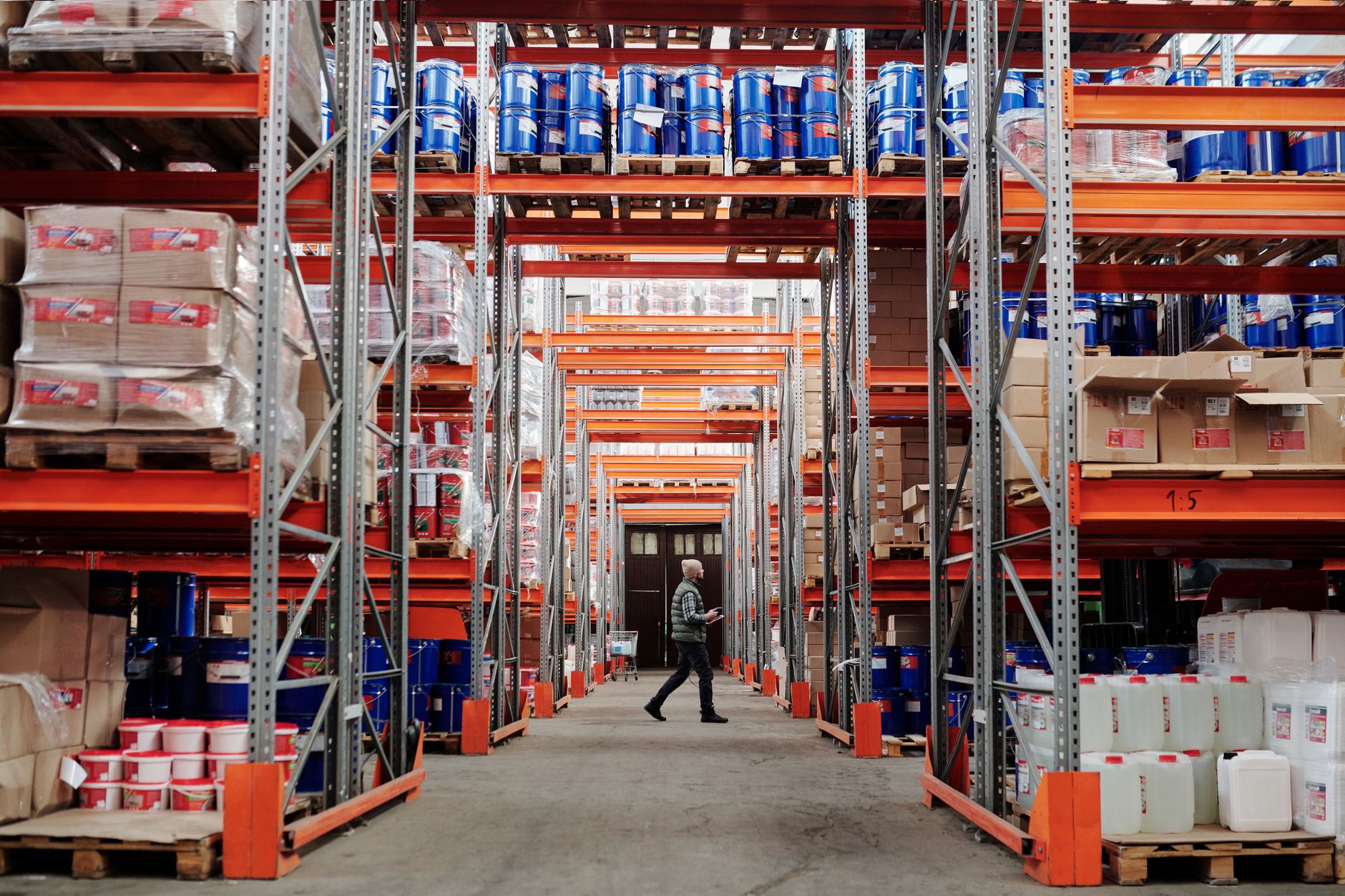
Most mills start where the walking is heaviest. The loop from mill stores to process areas is usually the first, followed by maintenance shops, chemical storage and the bale warehouse. The zones below describe six of the areas where these routes make sense. Each area has its own handling rules, and some stay off the route until the mill writes procedures for them.
Outdoor yards, areas with open piles, and floors with wet spills or standing water usually get a separate review. A site assessment maps which doors, elevators and floors the route can use, and it flags floor repairs that must come before the robot can run. Mapping also shows how many loops are worth building in the first phase.
How does the robot work alongside existing staff?
The robot takes over the walking, not the judgment. Stores staff still decide what goes on the next run and what gets rushed. Mechanics still diagnose equipment and sign off the work. Operators still handle drums and totes at the cell. The usual pattern is a robot plus a smaller team, with staff time moved toward repair, checks and planning, not a robot standing in for the people on shift.
Training matters here. Staff learn how to place a call, confirm a drop, clear a blocked path, and when to stop the robot and call for help. Service Robot Co. trains the people who will use the robot, and our service team starts with remote triage and sends an on-site dispatch only when the fault needs hands on the machine.
What drives the savings at a pulp mill?
Savings come from inputs you can measure: how many trips the mill makes each shift, how far each trip runs, how long a person waits for a delivery, and how many shifts a route covers. Hours are the honest unit here. Any cost comparison depends on your own staff and site, and it comes out of the quote after a site assessment.
Vendor and trade figures show a range. A vendor estimate for an injection molding plant put up to 16 hours a day of human labor saved, from two robots running three shifts. In the Tennessee plant case above, the vendor reported 60 labor hours saved each week and about 1.5 material-handling roles redeployed. These are what plants reported, so a mill should expect its own pattern to differ.
A warehouse case from a 2026 vendor-style write-up adds another angle, though it is not a mill. Fifty robots there cut manual material handling by 91% and raised throughput from 185 to 253 pallets per shift. That is a throughput result, not an hours figure, so use it as a sign of direction only.
What can the robot not do at a pulp mill?
The robot does not repair equipment, fix a failed valve or load a crane. It cannot climb stairs, and it cannot carry loads above its rated payload. It does not judge a process problem. When a route is blocked by a spill, a fallen pallet or a trailer in the wrong lane, it stops and waits, and a person has to clear the path before it moves again.
Chemical transfer needs careful line drawing. Your handling procedures, containment rules and permit conditions come first, and some transfers may stay with trained staff. Layout changes need planning too. A new wall, a moved line or a seasonal stockpile can break a route, so the map should be updated along with the schedule. Floor condition matters as well, since cracked surfaces and standing water slow the robot and raise the chance of stops.
How does a pulp mill get started?
Autonomous mobile robots for pulp mills usually start small. Pick one high-walking route, such as mill stores to the digester house and bleach plant, or the line to the bale warehouse, and run it long enough to see the trip pattern before adding loops. Many mills start with one leased unit and a clear measure of trips and hours, then decide the next step with their own data. A backup robot program keeps a loop running while a unit is in service.
The process begins with a free site assessment. We map route options, check floors and doors, flag areas that need separate handling, and measure the trip volume we can see. The lease is quoted after that assessment, through financing, and the quote sets out deployment and integration, go live support, staff training and maintenance included in the service plan. The payment comes in that quote. Service runs nationwide, with remote triage first and on-site dispatch when needed.
Frequently asked questions
Want a warehouse robot at your pulp mill?
Tell us about your site. We will recommend the robot, quote the lease, and keep it serviced.
Sources
- IBISWorld, wood pulp mills employment (2026 commercial estimate)
- EPRI report, pulp mill employment (2007 data)
- Vendor blog, furniture manufacturer walking time
- Material handling trade publication, mobile robots at a New York plant
- Vendor estimate, injection molding plant
- Vendor case study, Tennessee plant tugger
- Vendor-style case study, consumer goods warehouse (2026)
- A3 North American robot orders 2025, reported by a robotics trade site