
Key takeaways
- Harvest moves of bins and pallets are repetitive work that pulls cellar crews away from the press and the bottling line.
- Seasonal staffing is the biggest gap for wine producers, which makes repeated transport a practical place to start.
- A robot plus a trained crew is the model, and people stay at the center of cellar work.
- Savings come from hours counted on your own site, not from a promise or a general figure.
- No published winery results exist for bin and pallet robots, so a site assessment is the honest first step.
Can autonomous mobile robots help a winery during harvest?
Yes, for one specific job. Autonomous mobile robots for wineries are most useful on the repeated moves that take crew hours during crush: carrying full bins from receiving to the crush pad, shuttling tank room pallets, and moving finished cases from bottling staging to storage. The robot follows a mapped route, slows for people and returns to charge without a driver.
The fit is strongest where the same routes repeat many times a day. A winery links receiving, cellar, barrel and bottling areas through aisles and doors, which is the kind of layout a mobile robot can learn once and run every shift. It does not pick fruit, run the press or blend the wine. It moves material so skilled people spend more of the shift on the work that needs them.
A caution before the detail. We have not found published results for bin and pallet robots inside wineries, so the figures on this page describe the labor pressure around the work, not measured robot output. The honest first step is a site assessment that counts your own moves.
What does harvest do to bin and pallet work today?
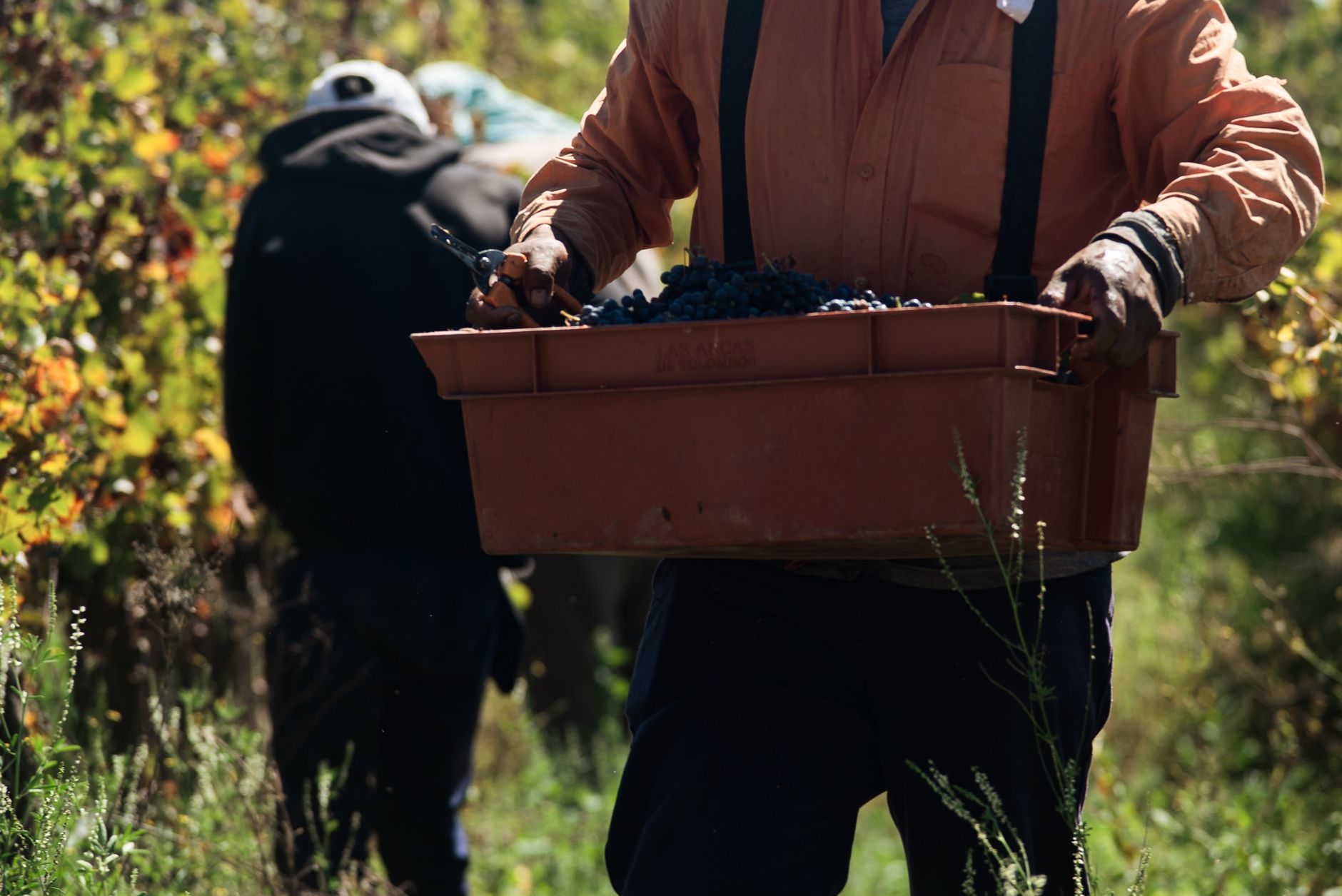
Harvest squeezes a year of cellar work into a few weeks. Fruit arrives in bins that have to be staged and moved to the press or tanks quickly, while empty bins and pallets flow back out. The crew that runs the press is also pulling bins, stacking pallets and clearing aisles, so the moves compete with the work that shapes the wine.
Staffing is the pressure point. A 2023 industry survey found that seasonal workers are the biggest staffing gap for wine producers, at 63 percent. The worst shortages were reported in Portugal at 94 percent, Spain at 77 percent and California at 73 percent. Growers face larger vineyards and fewer workers, according to a 2021 report on California growers.
Hours are long. Oregon legislative testimony notes that employees often work the maximum of 13 hours a day during crush. A crew on that schedule is tired by the second week, and tired crews take shortcuts on moves that look simple, like a bin left in an aisle or a pallet staged in the wrong bay.
What are the main benefits for a winery?
The most direct benefit is fewer hours spent on transport that does not need a person. A robot running the same bin route between receiving and the crush pad frees the crew for hand sorting, press loading and cleaning. Fewer carts and pallet jacks crossing a busy cellar floor may also reduce close calls, though that is something to measure on your own floor.
The second benefit is steadiness. A crew at hour twelve moves more slowly than at hour two, and the bin waiting at the press does not care. A mobile robot runs the same route at the end of the shift as at the start, which keeps the press fed when the day is at its longest.
The third is hiring pressure. When the biggest gap is seasonal workers, a robot that covers repeated runs means fewer hands are pulled off the press in the busiest weeks. A robot does not call in sick during the second week of crush. The category is also becoming common. North American robot orders rose 6.6 percent in 2025, according to the Association for Advancing Automation, the sixth consecutive quarter of year-over-year growth. That is general industry data, not winery data, but it shows the equipment is mainstream.
How does the robot work day to day in a winery?
Before the first move, the site is mapped. Walls, pillars, racking, bin staging, doors and busy crossings are recorded, and the routes are set with the cellar lead so the robot follows the paths your crew already uses. The robot then runs as part of a fleet, picking up a load at a pickup point, delivering it to a drop point and returning to charge when the battery reaches the level set in the plan.
Calls come from the people already running the cellar. A tag on a bin or a button at a station summons a unit, and a shared list shows what is waiting. When a person or a cart enters a narrow aisle, the robot slows or stops, then continues once the path is clear. Staff can see status and pause a route when a hose line or a tank is out of place.
Charging and checks fit the day rather than cutting into it. Units are checked at shift start and between harvest waves, and charging windows are planned into slow periods so no unit is charging at the height of the crush. A short written routine for the lead keeps the robot's job predictable from one shift to the next.
Which areas of a winery does the robot cover?
A winery is not one room. The robot works best in areas where bins and pallets move on fixed paths, and the six zones below show where that happens. Each area brings its own floors, drains, wet spots and traffic, so the route plan changes from room to room.
Keep the robot out of places where the floor is unsafe to drive, where a person must check something on every move, or where the path changes every time. Those spots need hand work or other equipment, and they stay outside the plan.
Floor condition matters more than most people expect. Wet crush pads, sticky cellar floors and worn thresholds need a check before the first route is set. We walk the space with the cellar lead during the site assessment and mark the spots to avoid.
How does the robot work alongside existing staff?
The robot is an addition to a crew, not a replacement for it. A winery still needs cellar hands, a cellar master, lab and bottling staff, and people who can fix a line when it stops. The robot takes the repeated walks and heavy transport between those people and their work, so the crew spends its hours where judgment is needed.
Training is short for the people who use the robot and focuses on the handoff points: loading a bin correctly, calling a unit, clearing a blocked lane and pausing a route. Each shift names one person who owns the robot, so nobody assumes someone else is watching it. A smaller team of trained people is the minimum staffing the robot needs.
The comparison below shows what changes in the job. The steps of the work stay the same, and the hands on the cart change.
What drives the savings, and how big can they get?
Savings come from hours, not from a promise. The hours that matter are the ones spent moving bins and pallets during crush, which already runs long. Oregon testimony notes employees often work up to 13 hours a day, so every hour spent walking an empty bin back to the crush pad is an hour that could go to the press.
Australian government data for winery cellar hands gives an average of 39 full-time hours a week, against 44 hours across all occupations. That is a separate labor market, so use it as a reference for how cellar work is scheduled rather than as a US benchmark. Your own hour count will come from your moves on your floor.
Payback is measured over seasons, not a single harvest. A 2021 report said vineyard automation has higher upfront costs but becomes more economical after about two seasons, citing university research. That was about vineyard harvest automation, not robots inside the winery, so it shows the shape of the math rather than your result.
What can the robot not do?
It cannot pick fruit, run the press, blend, sample or work in the lab. It cannot lift a bin onto a press or open a tank, and it cannot handle a hose. Those tasks stay with your crew, and the robot is only useful if it is kept out of them.
It is a poor fit for some routes. Steep ramps, loose wet floors, unmapped gaps and yards that change every day are weak starts. Loads above the unit's rating and moves that need a crane stay on the existing equipment, and they should stay off the plan so nobody has to improvise them mid-harvest.
It also does not repair a weak process. If bin tags are wrong, the cellar map is out of date or the team parks things in the robot's path, the robot exposes the problem rather than solving it. Expect a settling period in the first harvest, and plan for downtime by keeping manual carts ready and assigning someone to cover a unit that is out of service.
How do we get started at your winery?
Start with a free site assessment. We walk the cellar with your lead, map the bin and pallet routes, check floors, doors and charging points, and count how many moves happen on a typical crush day. From that work we propose the route plan, the number of units, the training and the service plan, and the payment comes in the quote.
The robot is leased through financing, so you do not have to put the equipment capital up front. Many wineries start with one leased unit on the busiest bin path, then add units once the crew sees the hours it frees. A pilot before crush gives the team time to learn the handoffs before the rush.
We are a commercial robot integrator. We choose the robot that fits the floor, deploy and integrate it, train the staff who use it and service it across the US, with on-site dispatch for faults and remote triage for simpler ones. Go live support runs through the first harvest. For autonomous mobile robots for wineries, the next step is a site assessment and a quote built from your own moves.
Frequently asked questions
Want a warehouse robot at your winery?
Tell us about your site. We will recommend the robot, quote the lease, and keep it serviced.
Sources
- The Drinks Business, staff shortages in the wine trade (2023)
- Oregon legislative testimony on winery labor
- Jobs and Skills Australia, winery cellar hands profile
- Robotics 247, A3 robot orders in 2025
- WAFF, amid labor shortage California vineyards look to robots (2021)
- WBAY, amid labor shortage California vineyards look to robots (2021)