
Key takeaways
- Cobots can take the stacking and case work that is hardest to staff at the end of a bottled water line.
- Packing and palletizing draw on a large national labor pool, with about 371,600 packaging and filling machine operators counted by BLS.
- A cobot works beside line staff at defined stations, so your people stay on the line and move to work that needs judgment.
- Savings come from hours counted in your site assessment, not from a promise.
- Start with a free site assessment, then one leased unit at one station.
Can cobots for bottled water plants take the packing jobs that are hard to fill?
Yes, for the packing and palletizing work at the end of a bottled water line. A collaborative robot, or cobot, is built to work beside people without a cage around it, so it can sit at a palletizing or case packing station while your line staff keep running the line. The first use is usually stacking filled cases onto pallets, with case packing and end-of-line inspection following once the first station runs well.
The reason it fits is that these roles are repetitive and physically hard, and they are often the last to get filled when labor costs climb. A project with cobots for bottled water plants usually starts with one station, one shift and a clear count of the hours people spend on that task now.
We are a US commercial robot integrator. We pick the robot that fits your site, lease it through financing, deploy and integrate it, train your staff and service it nationwide, so you have one partner and one number for the whole job.
What does packing look like at a bottled water plant today?
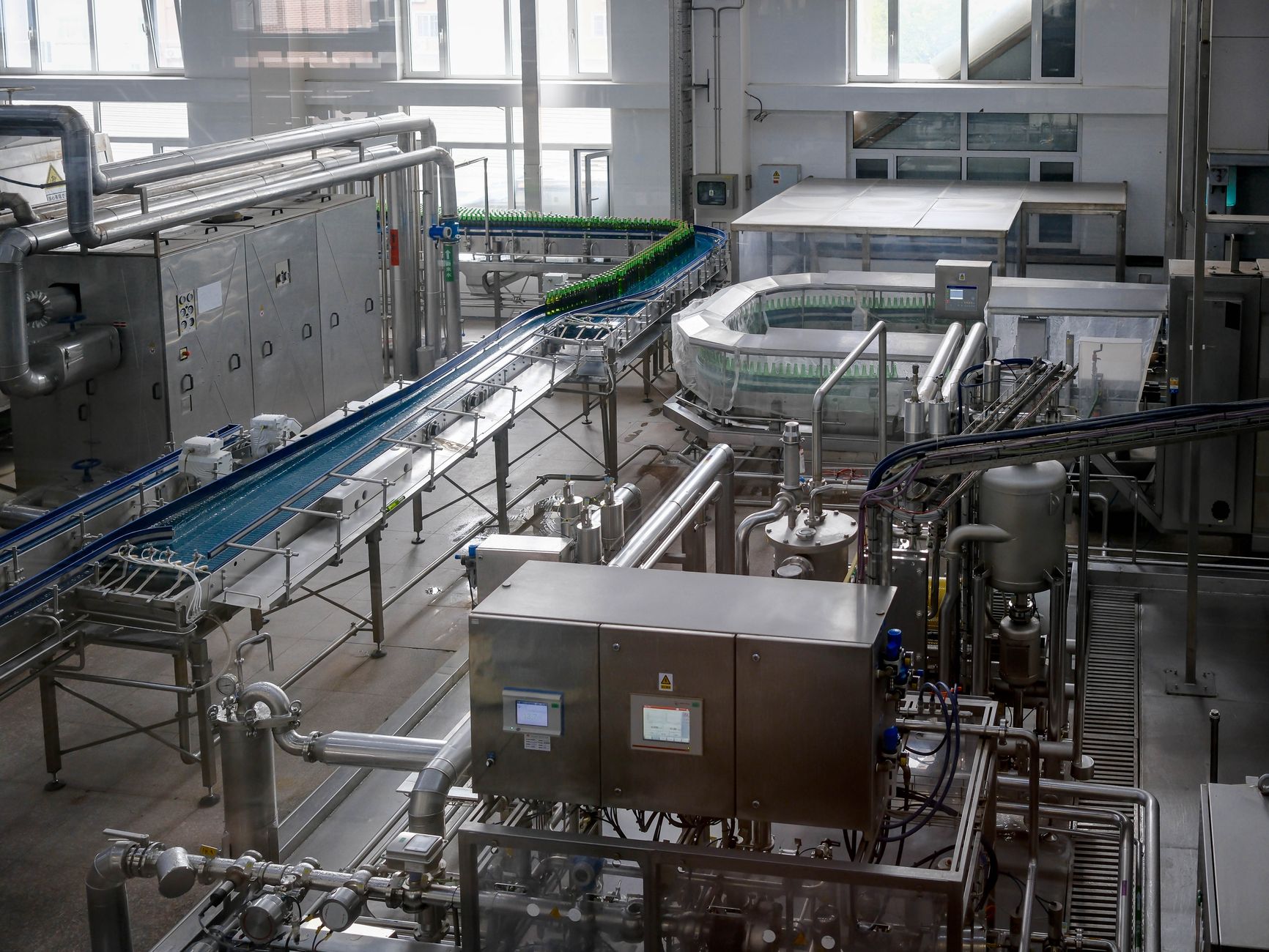
At most bottled water plants the end of the line is still manual. Filled cases come down a conveyor, people lift each one and build layers on a pallet, then the pallet moves to staging. The motion repeats for hours, and the same loads go to the same shoulders every shift.
According to the International Bottled Water Association, bottled water production was 26.9 million kiloliters in its 2018 benchmarking study, which it reported as over half, or 55 percent, of total 2017 US bottled water consumption. According to IBISWorld, there were 479 bottled water production businesses in the US as of 2026, up 0.6% from 2025. That counts businesses, not plants, but it shows an industry growing slowly rather than shrinking, so the packing work is not going away.
The people doing this work form a large group. According to the U.S. Bureau of Labor Statistics, about 371,600 people work as packaging and filling machine operators, although the BLS page is labeled with May 2023 estimates. Staffing is the pressure point: according to FRED, manufacturing job openings were 495 thousand in January 2026, seasonally adjusted, a measure across all of manufacturing rather than water plants alone.
Why do packing jobs stay open longer?
According to allwork.space, a summary of July data, job openings rose to 7.27 million as hiring fell by 278,000, and the rise was attributed to a manufacturing surge. Plants are posting more jobs while fewer people are hired into them, so the gap sits longest in roles that are hard to fill.
Repetitive packing work also gets less attractive over time. The same station, the same lift and the same shift pattern make a posting harder to fill, and a plant running multiple shifts has to cover every one of them. A cobot does not remove the need for people on the line, but it can take over the stacking share of the job so the people you hire spend their hours on setup, checks and line flow.
What are the main benefits for a bottled water plant?
The first benefit is fewer hours spent on the most repetitive motions. Stacking and palletizing by hand is a common source of strain, so moving that motion to a cobot changes the daily load on your team. People can then rotate into jobs that need judgment, like setup, cleaning, changeovers and quality checks.
The second benefit is footprint. According to trade press coverage of a trade show, a cobot palletizing system for bottles can be built into a case packer, combining palletizing and case packing to save space. That is a product announcement rather than a plant result, but the space point matters in a plant where the floor is already full of conveyors.
The third benefit is that a cobot can work without a cage. According to a product page, one vendor says its cobot case packer needs no special guarding and minimal training. Treat that as a vendor claim, and check it against your own safety review and site assessment before you assume it applies to your line.
How does the robot work there day to day?
A typical day at the palletizing station starts with a check. An operator confirms the pallet, the case pattern and the infeed, then the cobot begins picking cases from the conveyor and building layers to the set pattern. The person stays close, watching the output and watching for faults.
Through the shift, the cobot keeps working while people handle the parts that still need a hand. Staff load empty pallets and cases, clear faults and move full pallets on to staging. A cobot is not a set and forget machine, and the people beside it are part of how the station runs.
Inspection tasks follow the same logic. Where your check system flags a case, the cobot can move it to a check table or reject position, and a person decides what happens next. Your quality team keeps the judgment, and the robot does the repeated handling.
Which areas of the plant does it work in?
Cobots for bottled water plants work best in defined stations at the end of the line rather than across the whole building. The main areas are the palletizing bay, the case packing station, the inspection point, the empty case and pallet feed, and the outbound staging lane. Each area has a fixed task, which makes the cobot easier to train and easier to measure.
Your floor plan decides the order. We would usually start with the one station that has the most manual stacking, then add the next area once the first runs cleanly. Cobots fit best where the same motion repeats all shift, and they fit less well where every product changes without warning.
How does it work alongside your existing staff?
A cobot works best as part of a team, not in place of one. A typical station keeps a line operator who watches the output, a person who loads empty pallets and cases, and a technician who handles faults and changeovers. The robot takes the repeated lifting, and people handle everything around it.
We set the staffing plan with you during the site assessment and train the people who will run the station before go-live. The goal is a robot plus a smaller team at that station, with clear roles, never a station with zero staff. Operators who learn the cobot understand both the line and the machine, which makes them more useful when something changes.
What drives the savings?
The savings come from hours, not from a promise. The hours that matter are the staff hours spent on manual stacking and palletizing each shift, the overtime that covers gaps while a posting stays open, and the time lost when a strained worker is off the line. We measure those hours in your site assessment before we quote anything.
The research we gathered did not include a sourced hours-per-shift figure for this task at a water plant, and we will not invent one. Instead, the assessment counts the hours on your station now, the shifts you run, the cases per shift and how long postings have stayed open, then shows the hours a cobot could take over.
Uptime and throughput matter too. A station that builds consistent layers with fewer manual pauses keeps the line moving, which matters most when a short shift is the reason output falls behind. Vendor figures are a starting point, and your own counts are the numbers that decide.
What can a cobot not do?
A cobot is not a full line replacement. It handles defined tasks at a set pace and within payload, reach and speed limits. Very fast lines or heavy loads beyond the robot's rating need a different machine or a different layout.
We would rather tell you that up front. The right test is a site assessment, a pilot at one station and your own counts before you commit to more.
- It does not replace the people who run, check and repair the line.
- It does not handle every product change or pallet pattern without setup.
- It does not make quality judgment calls, so inspection decisions stay with your team.
- We did not find an independent case study showing a cobot doing both case packing and palletizing in a bottled water plant, so we will not promise that result.
How do you get started?
Start with a free site assessment. We map the station, count the current hours and shifts, and talk through the staffing plan. From there we choose the robot that fits your floor and your line, and we lease it through financing, so the cost is spread out rather than paid at once.
The quote follows the site assessment, and the payment comes in the quote. After you sign, we deploy and integrate the cobot, train your staff and provide go live support. Our service runs nationwide, and you call one number for the robot and its service.
According to the U.S. Geological Survey, its inventory of water bottling facilities covers all 50 states, Washington DC and three territories, so the plants you run are part of a national picture that our service covers. A sensible way to start is one leased unit at one station. Prove the hours on that station, then expand to the next area only when the first one runs well.
Frequently asked questions
Want a cobot at your bottled water plant?
Tell us about your site. We will recommend the robot, quote the lease, and keep it serviced.
Sources
- U.S. Bureau of Labor Statistics, Occupational Employment and Wage Statistics
- FRED, Federal Reserve Bank of St. Louis
- IBISWorld, bottled water production businesses
- International Bottled Water Association benchmarking study
- allwork.space, July job openings report
- U.S. Geological Survey, inventory of water bottling facilities
- Packaging trade press, cobot palletizing system for bottles
- Packaging trade press, cobot case packer guarding and training