
Key takeaways
- Cobots for fire equipment manufacturers fit repetitive fastening, handling and test-loading steps on standardized lines.
- Output limits usually sit in hand work around fixed work orders, not in a single machine.
- A cobot works alongside a smaller team, so people still set up, check and sign off.
- Savings come from hours recovered on one repetitive station, which you measure on your own floor.
- A free site assessment comes first, and the lease quote follows it.
How can cobots for fire equipment manufacturers help?
Cobots for fire equipment manufacturers help most where a plant builds the same products on the same work orders and skilled people spend their shifts on fastening, handling and testing. A collaborative robot is an arm built to work beside people without a safety cage, so it can take the repetitive steps that tie up assemblers while those people move to the checks that need judgment.
The output limit in most fire equipment plants is rarely one big machine. It is the hand work around the machines: driving fasteners, moving parts from bins to fixtures, loading test equipment and carrying finished units to the test station. Those steps repeat with little variation, and a cobot can hold that pace across a shift, then move to another cell when the order changes.
Service Robot Co. is a US commercial robot integrator. We pick the robot that fits your floor, lease it through financing, deploy and integrate it, train your staff and service it nationwide. The payment comes in a quote after a free site assessment, so you can see what the robot would do on your line before you commit to anything.
What slows output at fire equipment plants today?
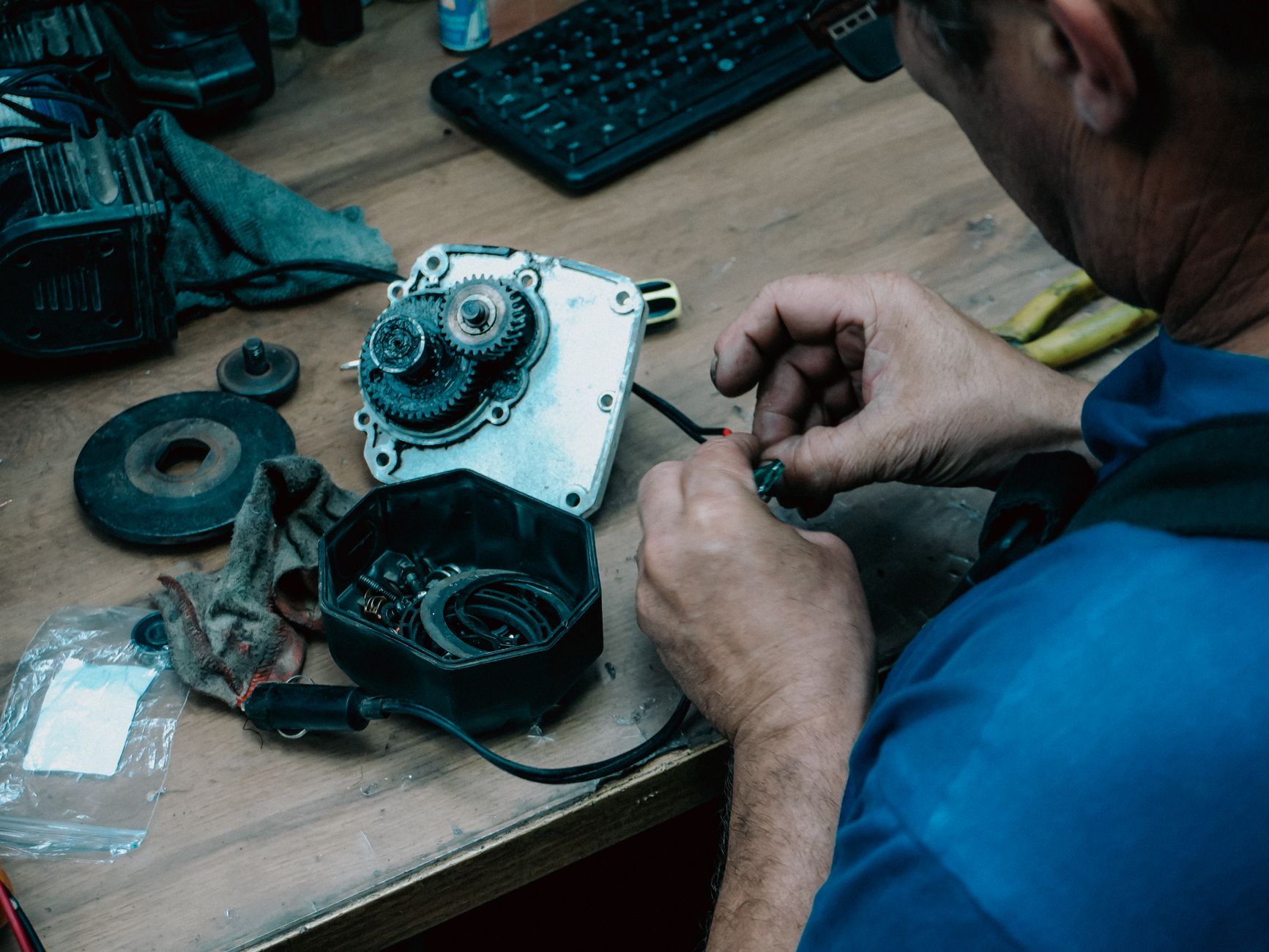
Most fire equipment makers run a mix of standard products, such as valves, fittings, nozzles and alarm or sprinkler components, built to fixed work orders. The labor is skilled but thin. According to IBISWorld, US fire and smoke alarm manufacturing employed 4,314 people in 2025 across 58 businesses, and automatic fire sprinkler system manufacturing employed 1,192 across 27 businesses. In pools that small, one open position on an assembly bench can hold up a whole order.
The bottleneck usually shows up in three places: the assembly bench where small parts are fastened by hand, the test station where units are loaded and unloaded for pressure or function checks, and the staging area where finished units wait for packing. Each one needs a person to lift, align and repeat the same motion many times a shift. When someone is out, the order waits.
What are the main benefits of cobots here?
The first benefit is steadier throughput on work orders you already have. A cobot runs the same fastening or loading sequence on every unit, which helps when customers expect the same build from one lot to the next. Your skilled staff then spend more time on inspection, rework and setup, the steps a robot cannot judge.
The second benefit is flexibility on the floor. In a case study a cobot vendor published about a firefighting equipment maker, four cobots were installed to tend machining cells, and the company chose them because its earlier robots were fixed to single machines. The vendor reported a return on investment in 34 days for that installation. That is one vendor's account from 2016, not a promise for your plant.
The third benefit is that the robot takes the hardest repetition out of a shift without changing the product. Fire equipment is a regulated, documented product, so the work stays the same: same parts, same fixtures, same test procedure. The robot does the handling and fastening, and your people keep the sign-off.
How does a cobot work on the floor day to day?
A typical cell has a fixture, a tray or bin of parts, and a cobot mounted on a bench or rail. The operator loads a tray and starts the program. The cobot picks each part, places it in the fixture, drives the fastener or presses the snap, and sets the finished unit on a pallet or conveyor. The operator checks torque, labels and the work order record.
Some cobots are designed to work with people nearby. A vendor case on a lighting manufacturer's assembly line describes arms that switch between full-speed industrial mode and a safe collaborative mode, so a person can load or check parts while the arm is still in the cell. That matters on a fire equipment line, where people reach into the same cell many times a shift.
Vision matters when parts vary. For fixed fixtures with known part positions, the cobot can run from a stored program. When parts arrive loose in a bin, the firehose valve case used vision guidance to find each part before picking it. Your integrator sets this up during the site assessment and the first weeks of go live support.
Which areas of the plant does the robot work in?
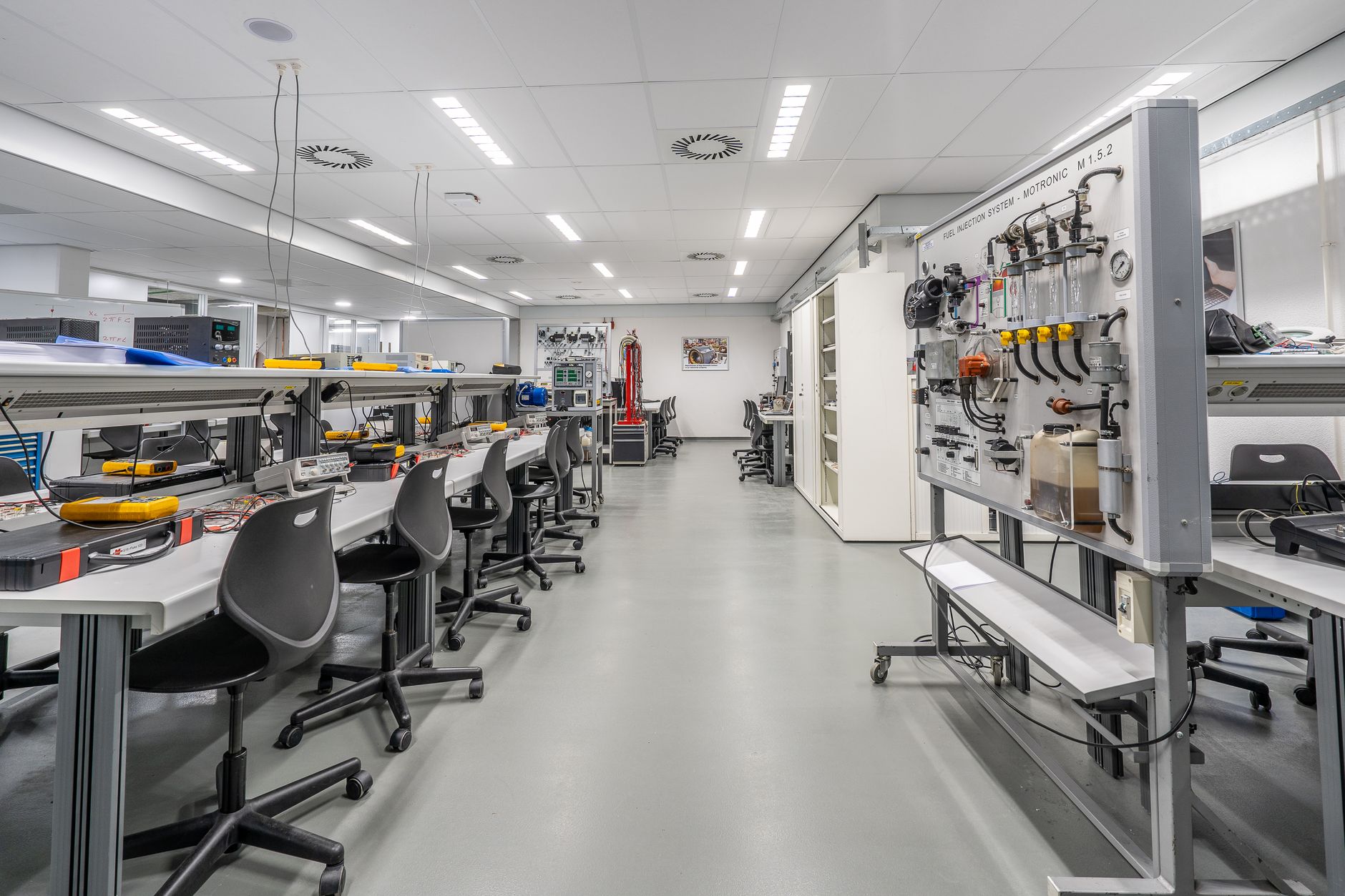
Cobots in fire equipment plants usually work in a few defined areas rather than across the whole building. The zones below are the ones we see most often. Each is a fixed station with repeated handling, close enough to people that a collaborative arm makes sense.
Start with the zone that holds your slowest hand step. For many plants that is the assembly bench or the test station, because both repeat the same motions on nearly every unit. Once one cell is running, the same arm or a second unit can move to the next zone on the line.
How does the robot work alongside existing staff?
A cobot never replaces the whole crew. It takes the repetitive motion and leaves setup, changeover, inspection and decisions with people. The plant still needs trained operators who can load trays, watch the cell, clear a jam and sign off the output. In most deployments the robot works with a smaller team, not with no team, and that is the setup we plan for.
Adoption is growing across manufacturing. According to the International Federation of Robotics, cobots held a 10.5% share of industrial robots installed worldwide in 2023. The IFR also reports that new cobot installations reached 66,000 units in 2025, which is 11% of all industrial robot installations. A secondary report citing IFR data says more than 64,500 cobots were sold in 2024, a nearly 12% share of new installations. The sources do not explain why the share moved from nearly 12% to 11%, so plan around your own numbers rather than an industry average.
Training is part of the deployment. Service Robot Co. trains the staff who will run the cell, so an operator can load trays, read the status screen and call for service without waiting on a specialist.
What drives the savings, and how big are they?
The savings come from hours. Count the hours per shift that your people spend on the repetitive fastening, loading and carrying steps, then estimate how many of those hours a cobot can cover on the same station. That gap, multiplied by your shift pattern, is the number to bring to the site assessment. We do not promise a fixed saving, because the result depends on your order mix, part variation and cell layout.
The strongest signal from the research is that cobot installations keep climbing across manufacturing, while the fire equipment employment base stays small, as the IBISWorld figures show. The firehose valve case reported a return on investment in 34 days, but that account is from 2016 and reflects one plant and one vendor. Treat it as an example of what a well-chosen cell can do, not as an estimate for yours.
Two things drive the number most. The first is how many hours the robot can take off one repetitive station each shift. The second is how long the robot sits idle because a part or order is missing. A plant with steady, standardized orders gets more value from the same arm than one that changes product every day.
What can a cobot not do?
A cobot is not a general factory worker, and it is not a fix for poor fixtures or unclear work instructions. It handles payload and reach only within its design limits, so heavy castings, large sheet parts or hot metal stay with people or other equipment. It does not judge a weld, a seal or a pressure reading the way a trained inspector does, so test and sign-off steps stay with your staff.
Variable parts add work. A bin of loose parts needs vision and a grasp program, and each new part version may need setup time. A cobot also needs a stable fixture and clear part presentation to repeat cleanly. If your order mix changes daily, plan for changeover time rather than assuming the arm will adapt on its own.
Some tasks never suit a cobot, such as work that requires a person to walk the plant, reach into an enclosure, or make a quick call about a defective unit. The best candidates are repeated, bounded and visible. The rest stays with your team.
How do you get started with a robot lease?

Start with a free site assessment. We map the cell, measure the reach and payload needed, check power and network, and walk the flow of parts with your supervisors. From there we recommend the robot that fits your floor and describe the work it would take on in plain terms. The lease quote follows that assessment, with the payment spelled out before you decide.
Robots are leased through financing, so the plant does not need to fund the robot up front. Service Robot Co. deploys and integrates the cell, trains the staff who run it, and services the unit nationwide, with on-site dispatch and remote triage when something stops. Many plants that start with cobots for fire equipment manufacturers begin with one leased unit and one pilot cell, then add a second once the first proves the hours it takes off the line.
Plan the first step around one station with a clear hour count. Bring current cycle times, your shift schedule, the product list and the three steps your people repeat most. That gives the assessment something concrete to measure and gives you a number to compare against the quote.
Frequently asked questions
Upcoming manufacturing events
- Trade showBrats & RobotsNov 10, 2026Alliant Energy Center Exhibition Hall, Madison, WI
- Trade showMATE Farm & Ranch ShowFeb 11 to 13, 2027MetraPark, Billings, MT
- ExpoPFMA Expo 2027Feb 17 to 18, 2027Washington County Fair Park, West Bend, WI
- ExpoLouisville Facilities Maintenance ExpoApr 15, 2027Mellwood Art Center, Louisville, KY
Want a cobot at your fire equipment manufacturer?
Tell us about your site. We will recommend the robot, quote the lease, and keep it serviced.