
Key takeaways
- Jar packing and case palletizing are repetitive stations that a cobot can run beside existing filling equipment.
- Food manufacturing had 74,000 open jobs in 2024, according to FTI Consulting.
- A cobot covers one station, so the crew still runs changeovers, inspection and quality checks.
- Savings come from fewer open shifts and less turnover training, measured at your site rather than promised.
- Start with a free site assessment, then get a lease quote through financing.
Can cobots help pickle plants keep packing and palletizing running?
Yes, at the stations where the work is repetitive and the staffing runs thin. Cobots for pickle plants fit best at the packing and palletizing end of the line, where filled jars are placed into cases and cases are stacked onto pallets. A cobot is a collaborative robot arm built to work near people, so it can take one station without forcing a rebuild of the whole line.
Cobots are no longer a niche tool. According to IFR data as summarized by Robotics Tomorrow, cobot installations reached about 66,000 units in 2025, roughly 11% of all industrial robot installations. Total industrial robot installations passed 600,000 for the first time, reaching 603,000, up 11%. That means the technology has enough field history to plan around.
The payoff is not that a robot replaces the team. A cobot keeps a station moving when a position is open, which closes gaps in the packing run and cuts the overtime that often covers them. The rest of the crew stays on loading, changeovers, inspection and quality work that still needs a person.
This page covers the problem at a typical pickle plant, the main benefits, the day-to-day work, the areas where a cobot runs, how staff and robots share a shift, what drives the savings, what a cobot cannot do, and how to get started.
What makes jar packing and case palletizing hard to staff?
Packing and palletizing are some of the most repetitive jobs on a food line. The same reach, grip and lift repeat through every shift, and the work sits exactly where a plant needs a steady pace. When a shift opens up, the line either slows down or runs short handed.
The labor pool is tight across food manufacturing. According to FTI Consulting, food manufacturing had 74,000 open jobs in 2024, and one-third of the food manufacturing workforce is over 55. A plant recruiting for physical roles in that pool is competing with the rest of the sector and with an aging workforce.
Turnover makes it worse. In a 2023 UKG Workforce Institute survey of US manufacturers, as reported by Food Logistics, 62% saw higher employee turnover, 57% saw more unfilled jobs, and 54% reported annual turnover above 20%. That survey covered all manufacturing, not food only, but it describes the same kind of packing floor. Every new hire needs training before they keep pace, so the line pays for turnover again and again.
What are the main benefits of a cobot at the packing station?
The most direct benefit is steady pace. A cobot does not tire at the end of a long shift or drift from the pattern when a shift changes hands. Once the pattern is set, every case is packed the same way, which helps with fill, layer count and pallet stability.
The second benefit is coverage. A station with a cobot keeps running when a position is open, so the plant does not need to pull workers from other lines or shorten a run. Staff who would have worked that station move to tasks that need judgment, such as inspection and changeover support.
The third benefit is fit. A cobot is a compact arm that sits beside existing filling equipment and conveyors, so the plant does not have to rebuild the line around it. The work stays in place, and the people who know the product stay close to it.
The fourth benefit is predictability for planning. When the station runs on a known schedule, production planners can build shifts around steady output rather than around who called in sick that morning.
How does the robot work day to day on a pickle line?
A cobot at the packing station runs from a programmed pattern. Filled, capped jars come off the conveyor from the filler, and the arm picks them and places them into case trays in a set arrangement. When a case is full, it moves on and the next empty case is already in position.
Operators stay in the loop. They load empty cases and jars, swap patterns when the product or jar size changes, clear jams, and respond to alarms. Changeovers are routine steps the crew learns during training, not one-off engineering projects.
The palletizing cell follows the same logic at the end of the line. Full cases come off the conveyor and the arm stacks them into a layer pattern on a pallet. Forklifts or staff move finished pallets to staging, and the robot's work ends at the pallet.
Safety settings are configured during integration, and the team learns the stop and reset steps before go live. That way the crew knows what the arm does, where it stops and how to restart it without guessing.
Which areas of a pickle plant does a cobot work in?
The work sits near the filling and packing end of the line, where product is already in jars and the repetitive motions start. Michigan is described as the largest US pickle producer, with cucumber farms near processing plants, according to Michigan Public. Michigan State University notes that pickle processing is concentrated near major cucumber growing areas, so many plants sit close to their raw material.
Plant counts show how common this kind of packing work is. According to USDA Economic Research Service, the US had 36,555 food and beverage processing plants in 2017, and California alone counted 333 fruit and vegetable processing plants that year. Those are broad counts rather than pickle counts, but they show how many sites share the same packing and palletizing needs.
Inside the plant, six areas matter. The cobot does the placing work in two of them, and the others are where the crew keeps control. The zones below walk through each one.
How do cobots work alongside existing staff?
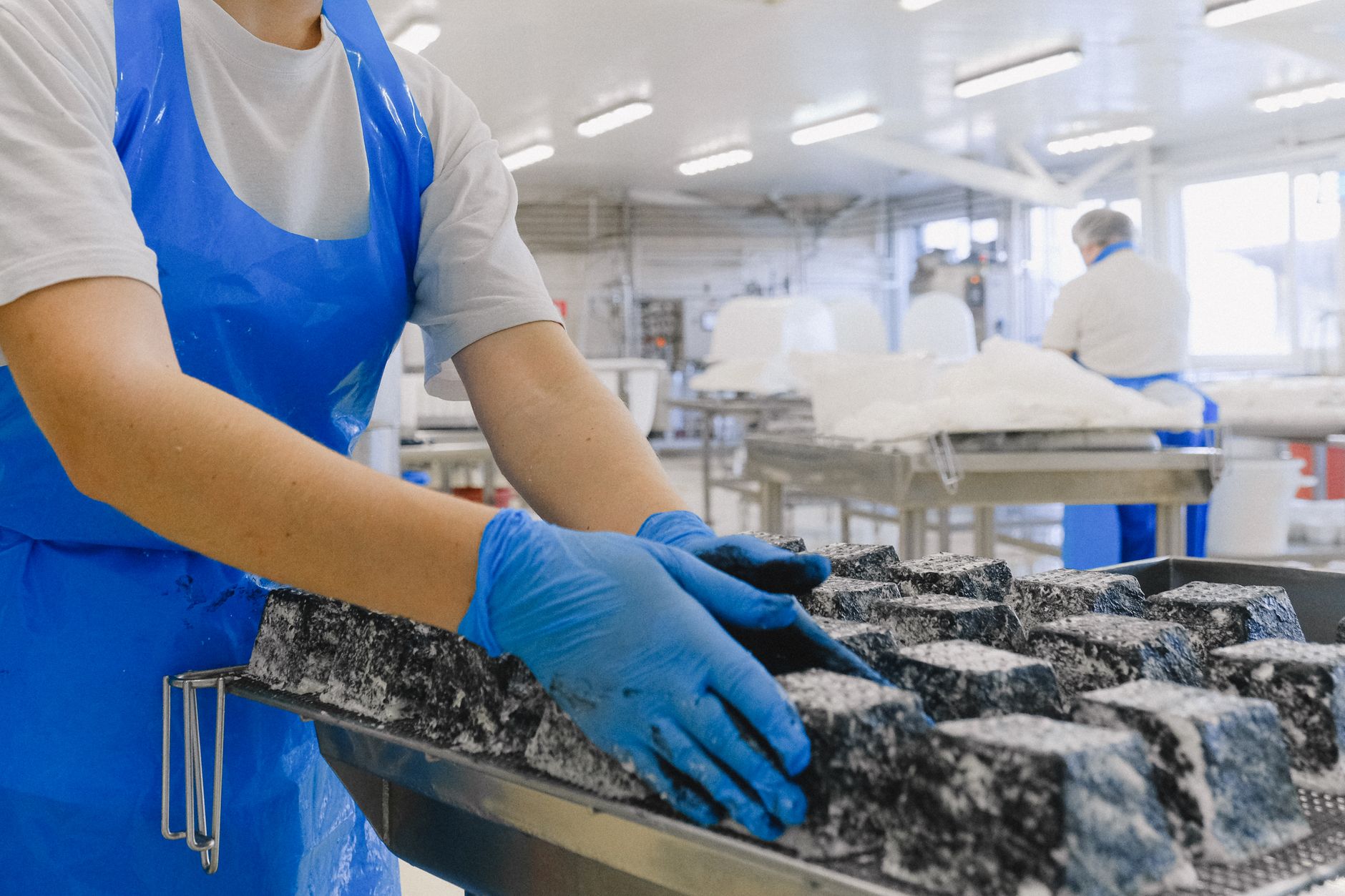
A cobot should never be the only worker on a line. The pattern is a robot plus a smaller team: people who set up the station, clear jams, run changeovers, check labels and fill, and keep pallets moving. The robot covers the repetitive motion, and the people cover what the robot cannot judge.
In practice, the crew often shifts from several people placing jars by hand to a smaller group that runs the station and checks quality. Staff who stop doing the repetitive lift gain time for inspection, sanitation and support tasks, where experienced operators add the most.
We support the crew on our side. We train the staff who will run the station, support go-live, and service the robot nationwide, with on-site dispatch when a repair is needed. The goal is a team that understands the station well enough to keep it running on a normal shift.
What drives the savings from a cobot on a pickle line?
The savings come from a few places. The first is shifts the plant no longer has to cover with overtime or shortened runs. The second is hours lost to training new hires on the same repetitive station. The third is steadier output from a station that does not depend on a full crew every shift.
We cannot give a range for hours or labor saved at your plant from the sources reviewed for this page, and we will not guess one. The figure depends on how many shifts are open today, how long the station runs, how often the product changes, and how much turnover the line sees. A site assessment measures those inputs at your plant.
Turnover is the input most plants underestimate. The UKG figures above cover manufacturing in general, but they show how common that pressure is. If your packing crew turns over fast, the case for a steadier station gets stronger, and the assessment will show it in your own numbers.
What can a cobot not do at a pickle plant?
A cobot is useful at the right station, not at every station. Plan around these limits from the start, because they decide whether the project works.
A good site assessment will name these limits for your line. If the station needs something a cobot cannot do, the assessment should say so before any lease is quoted.
- It does not fix upstream problems, such as a filler that breaks jars or a process that changes fill levels.
- It does not replace the judgment of a trained inspector checking labels, lids and seals.
- It does not move pallets across the floor, which remains a forklift or staff task.
- It does not handle every jar or case size without setup and a changeover routine.
- It does not run unattended, because staff load it, clear jams and respond to alarms.
- It is not the best fit for the very highest line speeds, where a purpose-built machine may suit the run better.
How do you get started with a cobot lease?
Start with a free site assessment. We map the packing and palletizing area, look at your jar and case sizes, filler output, shift pattern and where the team is short, and then recommend the robot that fits the floor. It is a walk-through, not a sales pitch, and it gives you a clear scope before any commitment.
Once the scope is set, the robot is leased through financing, and the payment comes in the quote after the site assessment. Lease financing programs spread the spend over the lease term rather than asking for a large upfront outlay. Many plants start with one leased unit on one station, prove the pattern across a few shifts, and then decide whether a second station makes sense.
Deployment covers integration with the existing filler and conveyor, staff training on setup and changeovers, and go-live support. Service runs nationwide, with on-site dispatch for repairs and remote triage to sort problems quickly. Ask for the quote to show exactly what is included, such as installation, training and service coverage.
Bring a list of open shifts and product changes from the past year to the walk-through. That list gives the assessment the real pattern of your line rather than a generic one.
Frequently asked questions
Want a cobot at your pickle plant?
Tell us about your site. We will recommend the robot, quote the lease, and keep it serviced.