
Key takeaways
- A cobot keeps the bender fed so the machine waits less on a person.
- Robot makers call loading and unloading the simplest way to automate a bender.
- The arm takes the repeated handling while setup, bend checks and inspection stay with your team.
- Heavy or long tube can exceed a cobot's reach or payload, so the site assessment decides the arm.
- A shop can start with one leased unit on one bender and measure its own handling time first.
How can cobots benefit tube bending shops?
Cobots for tube bending shops take over the handling that leaves a bender waiting. A collaborative arm picks a straight tube from a rack, sets it in the die, waits for the bend cycle to finish, and lifts the part out to a rack or fixture. Because the arm works on set cycle times, the machine keeps running while the operator checks the last part, measures an angle, or stages the next tube.
The gain is not a faster bend. The gain is fewer minutes of idle time between cycles, and the operator stops being the item that sets the pace. For a shop running one or two benders, that often matters more than any single headline figure.
Robot makers call loading and unloading bending machines the simplest way to automate bending. The rest of this page covers the shift itself, where the arm works, what it cannot do, and how a shop starts with a leased unit after a free site assessment.
What does hand loading do to bender time today?
In most tube shops, an operator carries a bundle to the bender, lifts each tube onto the die, starts the cycle, and then waits. When the bend finishes, the operator unloads, walks the part to a rack, and comes back for the next tube. Each of those trips is time when the bender sits idle or nobody is checking quality.
The strain is physical as well. Long tube is heavy and awkward to position, and the same lift repeated through a shift wears on backs and shoulders. One industrial robot case on tube bending gave removing operator injury risk as its stated main motive, and the same case added a second cell to raise throughput for smaller pipes.
The labor pool is tightening too. According to the U.S. Bureau of Labor Statistics, employment of metal and plastic machine workers is projected to fall 7% from 2024 to 2034. A shop that depends on one skilled person for every load has little room to cover a missed shift on its second bender.
What are the main benefits for a tube bending shop?
The first benefit is bender uptime. When the arm stages the next tube as a bend finishes, the bender does not wait for someone to walk back from the rack. Shops often find the bottleneck moves to the cutting or inspection stations, which is a better problem to have, since it is visible and can be scheduled.
The second is repeatable presentation. The arm sets each tube at the same spot in the die, so the bend program starts from the same position every cycle. Consistent gripping is where the work is hardest, not the motion. One job shop reported that its first install took effort, mainly in consistent part gripping, and that finding the right program and gripper took time.
The third is how people spend their hours. The operator moves from lifting to the inspection table, tooling, and first article checks, which keeps skilled people on the tasks that need judgment. One person can often supervise the bender and the arm from one station while checking parts between cycles.
How does the cobot work at the bender day to day?
A shift starts with the operator loading the correct bend program and the gripper for that tube size, then refilling the infeed rack. The arm and bender exchange simple signals, such as cycle complete and clamp open, so the arm only moves when the machine is ready. Each tube lands at the same spot, which is what makes the cycle predictable.
Programming is where many shops hesitate. One approach runs the arm's motion through the CNC control, so operators who already set machine parameters can adjust positions without learning a separate robot language. That matters in a shop where the CNC operator is also the person who sets up the bender.
Changeovers are the daily friction. Grippers are often swapped between jobs, and each workspace may need its own fixtures. Treat the changeover as a planned step at job start rather than a surprise in the middle of a run, and build it into the schedule.
Which areas of the shop does the cobot cover?
The arm works best where tube moves between one fixed point and the bender. Its reach sets how close it can sit to the machine, so the bender layout and the floor decide how much of the shop is in play. The site assessment maps those distances before any arm is placed.
Beyond the bender, the arm can serve the infeed rack, the discharge rack, the inspection or gauging table, and the staging point for finished parts. Each of those zones has its own handling step. The zone cards below show the six areas where the arm usually works in a bender shop.
The arm does not need to cover the whole floor to matter. A shop with one bender and a short tube path may only need the arm in two or three zones. A shop with more benders can add a second cell and stagger jobs between them, which keeps the same handling pattern and spreads uptime across more machines.
How does the cobot work alongside your existing staff?
The arm takes the repeated lift. Your people keep everything that needs a decision. Setup, tooling changes, checking the first article, reading a bend that drifts, clearing a stuck part, and deciding what to do with a scrapped piece all stay with the team.
A cobot is not a shop that runs itself. A robot plus a smaller team means at least one trained operator is always present for setup, supervision and inspection. Cross training matters here, because a second person who knows the gripper and the program covers absences without stopping the bender.
Training is part of the deployment. The integrator trains staff on the program, the gripper swap, and the stop and recovery steps, then supports the first weeks on site. Operators who already know what a good bend looks like tend to catch a drifting part sooner, and that judgment is the thing the arm cannot supply.
What drives the savings, and what do the numbers say?
The savings come from three places: bender minutes that used to go idle, operator hours moved from lifting to checking, and fewer repeated lifts. Those hours belong to your shop, so the site assessment measures existing handling time per shift before any lease is quoted. No generic chart stands in for that measurement.
The wider market is moving too. According to the International Federation of Robotics, about 66,000 new cobot installations were recorded in 2025, about 11% of all industrial robot installations. The same body reports total 2025 industrial robot demand of 603,000 units, up 11%.
On the labor side, a manufacturing jobs roundup citing Bureau of Labor Statistics JOLTS data reported 477,000 manufacturing job openings in April 2026, a 3.7% openings rate, compared with 3.5% in March 2026. The Federal Reserve Bank of St. Louis employment series for fabricated metal product manufacturing showed 1,445.7 thousand workers in March 2026, up from 1,440.5 thousand in February, seasonally adjusted. That sector sits close to the labor pool a tube shop hires from, so planning handling around fewer skilled hands is a sensible question to ask early.
Treat these numbers as context. They say the arm is an established tool and the labor pool is tight. They do not say your bender will gain a set amount of hours. The gain on your floor is the one your own handling records show.
What can a cobot not do at a tube bending shop?
A cobot does not replace the bender's tooling, and it does not fix a worn die. It does not decide whether a bend is in tolerance, and it will not catch a tube that was cut short upstream unless an inspection step is added. Those judgments stay with the operator.
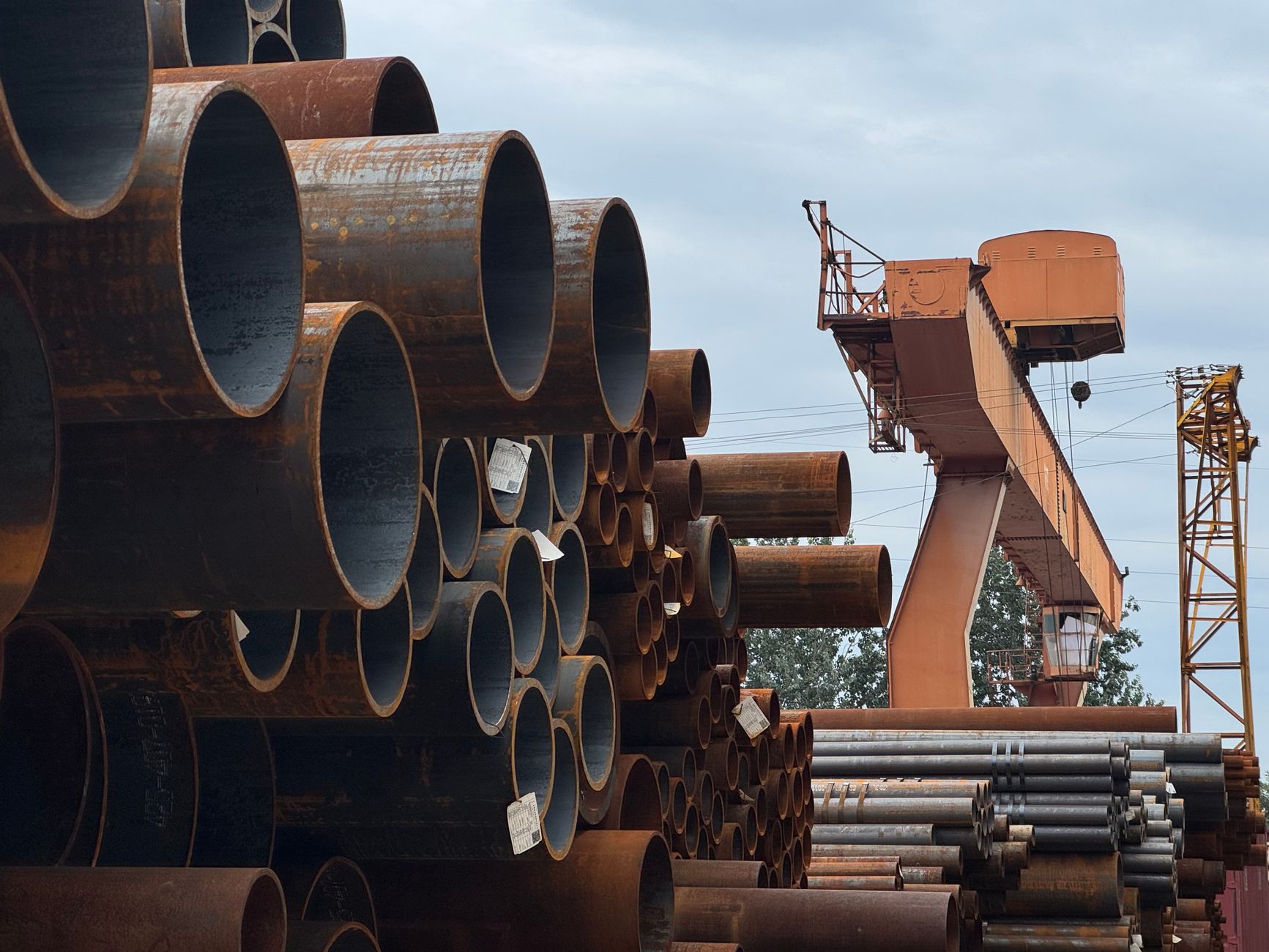
Payload and reach are real limits. Heavy or long pipe can exceed what a collaborative arm lifts or reaches. Press bending also brings reaction forces and moments into the arm's work, which is one reason robot maker guidance points cobots toward smaller parts. One industrial robot case used a larger industrial arm for heavy pipes. In those cases a bigger arm or another cell layout may fit better, and the site assessment says so before a lease is quoted.
Speed claims need a trial on your own tube. Cycle times depend on the tube, the grip, the bender and the layout, and published cases come from specific setups. Treat any headline gain as a direction to test on your floor, not a promise for your shift.
How do you get started with a cobot lease?
Getting cobots for tube bending shops started begins with a free site assessment. We measure your tube sizes, bender layout, reach, floor space and existing handling time, then recommend an arm that fits the site. The lease is quoted after that assessment, and the payment comes in the quote, so you can weigh it against the hours you already spend on handling.
The arrangement is a lease through financing. Our role is to pick the right robot for the site, lease it, deploy and integrate it, train your staff, and service it nationwide. A shop can start with one leased unit on one bender and add a second once its own handling data is in.
Go live support covers the first weeks on site, so the crew is not left alone with a new arm. Service after that runs through our team nationwide, and the terms of that service are set out in the quote.

Frequently asked questions
Upcoming manufacturing events
- Trade showBrats & RobotsNov 10, 2026Alliant Energy Center Exhibition Hall, Madison, WI
- Trade showMATE Farm & Ranch ShowFeb 11 to 13, 2027MetraPark, Billings, MT
- ExpoPFMA Expo 2027Feb 17 to 18, 2027Washington County Fair Park, West Bend, WI
- ExpoLouisville Facilities Maintenance ExpoApr 15, 2027Mellwood Art Center, Louisville, KY
Want a cobot at your tube bending shop?
Tell us about your site. We will recommend the robot, quote the lease, and keep it serviced.
Sources
- International Federation of Robotics, president's report 2026
- U.S. Bureau of Labor Statistics, Occupational Outlook Handbook, metal and plastic machine workers
- Manufacturing job outlook roundup citing BLS JOLTS data
- Federal Reserve Bank of St. Louis economic data, fabricated metal product manufacturing employment
- Industrial robot vendor case study on tube bending
- Robot maker guidance on bending machine loading
- Machine tending workbook on CNC control programming
- Cobot machine tending best practices, gripper changeovers