

Key takeaways
- Delivery robots for office buildings take steady mail and supply trips off staff hours.
- The work follows fixed routes between the mailroom, lobby, floors and supply room.
- Savings come from hours your own log proves, not from a promise.
- A robot plus a smaller team works better than a robot alone or staff alone.
- Start with a free site assessment before any lease quote.
How can delivery robots for office buildings help?
Delivery robots for office buildings take over the repetitive job of carrying mail, packages and supplies between the mailroom, the loading area and the floors. In a multi-floor office that work is steady and predictable. Someone has to gather items, ride the elevator, drop them at desks and come back, several times a day, and that time comes out of the same staff who run reception, facilities and the front desk.
A delivery robot follows fixed routes that it learns from a map of the building. It calls the elevator, rides to the right floor, makes its stops and returns to a home dock. The office decides what goes out and when, and people stay on the work that needs judgment.
The main gain is not that a robot replaces the mailroom or the front desk. The recurring trips leave people's day, and deliveries happen on a schedule rather than whenever someone has a free minute.
What problem does this kind of building have today?
Office buildings run a large, quiet logistics operation. According to the BOMA 2026 study from BOMA International, operation and maintenance of office, retail and industrial buildings across 79 US markets support 3.9 million jobs, and the study covers 35.4 billion square feet of property. The earlier BOMA 2022 office study counted 8.6 billion square feet of office space in 85 markets, directly employing an estimated 866,000 workers.
Inside one building the problem is smaller and more constant. Mail and packages arrive at a central point and must reach a specific floor or desk, while supplies move the other way. When an assistant or facilities staffer carries these items, the trips compete with the work they were hired to do, and they bunch up around meetings and lunch hours.
The pattern is old. The FBI history page describes a guidepath mail robot that took about 30 minutes per round and replaced two messengers who made complete runs every 45 minutes, delivering to 30 stops. Those are historical figures, but they show how much walking a fixed mail route can absorb.
What benefits should an operator expect?
The benefits follow the routine nature of the work. Most of them show up in the first weeks, as runs stop depending on who happens to be free.
The honest caveat is speed. A robot is usually slower than a person in a hurry. A peer-reviewed study of a robot delivery service in a large office building, based on a survey run in September and October 2022, invited 636 employees, received 220 responses (35% response rate), and found that travel time and distance affected whether employees intended to keep using the robots. For an operator, route length and elevator waits matter more than top speed.
- Scheduled runs that happen even when no one has time to walk them.
- Fewer interruptions for reception, assistants and facilities staff.
- Enclosed compartments that keep documents and small packages out of sight in transit.
- A log of each run that helps when an item is late or missing.
- Predictable delivery windows for teams that need supplies before a meeting.
Which areas of the building does the robot work in?
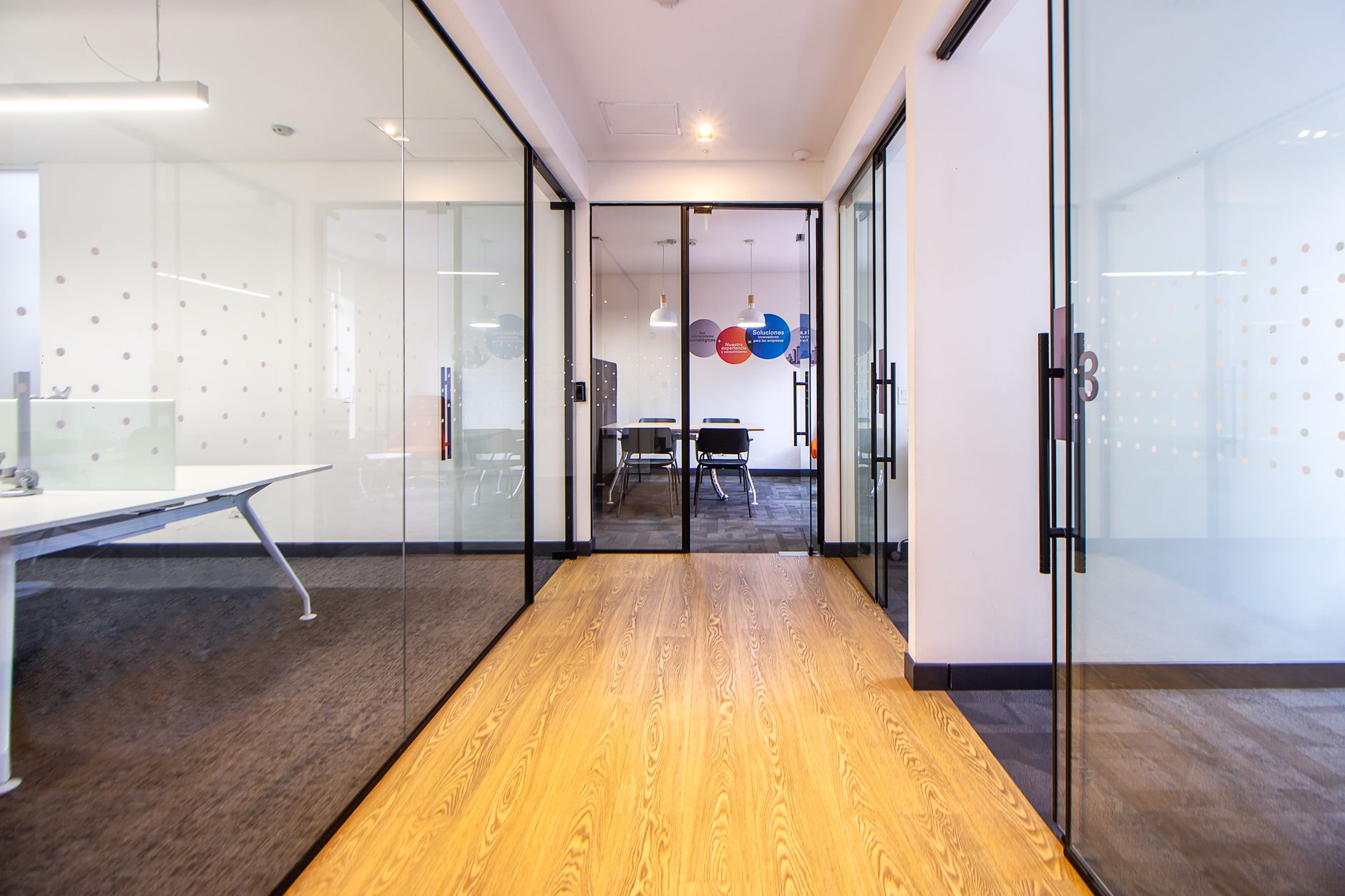
Most office deliveries run between a small set of fixed points: the mailroom or loading area, the lobby, each floor's reception or pantry, and the supply room. A route planner sets these as stops, and the robot runs its loops between them.
Some routes also reach shared spaces people walk through all day, such as a café or print room, when building management allows it. Access control decides which doors and turnstiles the robot can use. The integrator checks those with the building manager before anything is mapped, so the first route is one the building actually approves.
How does the robot work day to day?
A robot's day is mostly routine. It waits at its dock, takes a load in a locked compartment, plans the route, calls the elevator, and makes each stop. At each stop it notifies the recipient, waits for pickup, and moves on.
Elevator integration varies by system, so the early weeks go to getting the lift handoff right. Maps also need updates when layouts change significantly, such as a team moving floors or a conference room becoming desks. Plan a short review after each office move.
How does it work alongside existing staff?

The robot does not run without people. Someone owns the schedule, someone loads and unloads, someone handles a blocked hallway or a jammed elevator call, and someone collects feedback from the tenants who use the service. The right setup is a robot plus a smaller team, not a robot in place of a team.
Office work is less predictable than a warehouse floor, and people in offices have low tolerance for disruption, so the robot has to fit around their day. Industry guides on office robots generally describe the robots as complementing staff. A common pattern is one robot with the existing mailroom or facilities person as the day-to-day owner, plus a backup plan for the days the robot is out of service.
What drives the savings, and how do you measure them?
The savings come from staff hours. Count the hours your team spends on runs each week, including the walk, the elevator wait and the return. That log is your baseline, and the value of the robot is the share of those hours that moves to other work.
Labor data gives useful context. An aggregator citing BLS OEWS May 2025 data counts 68,640 workers employed as couriers and messengers in the US, which shows how many people in the country do this carrying as their main job.
Adoption is still early. A market research blog estimates that office buildings and corporate campuses make up 25% of end-use demand for smart building delivery robots. That is an estimate, not a measured share, but it suggests other operators are testing the same routine work.
Expected hours savings depend on route count, floor count and how often runs happen. The site assessment turns your own log into a realistic range before you commit to anything.
What can the robot not do?
A delivery robot does not handle everything. It carries items along a defined route, it cannot open a door for someone or fix a stuck elevator, and it does not replace a person for any handoff that needs identity checks. Anything outside the route stays with your team.
Speed is a real limit. In the same peer-reviewed office study, employees who rated delivery as very slow had an actual delivery time with a mean of 0:11:26 in the sample. Robots yield to foot traffic and wait at congestion points, which is the right behavior in a busy lobby but adds time to each run.
Wi-Fi gaps, locked doors and crowded elevator lobbies slow the work. Plan for them in the assessment rather than finding them on go-live day.
How do you get started?
Start with a free site assessment. The integrator maps floor plans, elevator types, Wi-Fi coverage and access control points, then marks where the robot will stop and where it will need a workaround.
We are a US commercial robot integrator. We pick the robot that fits your site, lease it through financing, deploy and integrate it, train your staff and service it nationwide. The payment comes in the quote, which we prepare after the assessment so it reflects your actual routes.
Many operators begin with a pilot on one or two routes, review the hours that moved, and then add floors. That keeps the first decision small and the evidence specific to your building.
Frequently asked questions
Sources
- BOMA International 2026 market study, via Retrofit Magazine
- BOMA 2026 study on building operations economic activity, via Facility Executive
- BOMA International 2022 Office Market Study
- FBI history page on the guidepath mail robot
- Peer-reviewed ACM study on robot delivery in an office building
- IndexBox market research on smart building delivery robots
- Aggregator citing BLS OEWS May 2025 data for couriers and messengers